
What is the most durable flooring for high-traffic areas?
For high-traffic areas, the most durable flooring materials are porcelain tile, luxury vinyl plank with a thick wear layer and rigid core, and solid or engineered hardwood with a hard species and a durable finish. Porcelain tile leads on abrasion, stain and moisture resistance. Luxury vinyl plank leads on scratch resistance, water resistance and low maintenance. Hardwood leads on longevity and renewability, because it can be sanded and refinished instead of replaced. Carpet can also perform well in high-traffic zones when it is a dense, resilient fiber over a quality pad, though it shows wear faster than hard surfaces. The best choice depends on which kind of wear the area faces most: water and dirt, abrasion, impact or heavy furniture. Floors and Beyond VA, a family-owned Northern Virginia flooring and remodeling contractor serving Fairfax, Loudoun, Prince William and Arlington counties since 1987, installs all of these with in-house crews and no subcontractors, and we help McLean homeowners match the right material to each high-traffic space.
High-traffic areas are where flooring either proves itself or fails. The front entry takes every pair of shoes that comes through the door. The kitchen sees constant movement, spills and dropped items. Hallways concentrate foot traffic into narrow paths. Stairs take concentrated wear on every step. Mudrooms, laundry rooms and family rooms absorb the rhythms of daily life. In McLean, where households are active and homes are often large and open, these zones can be extensive. The wrong material in the wrong place will show wear within a few years, while the right material, installed properly, will look good for decades. This guide explains what high-traffic wear actually does to a floor, ranks the materials fairly by the kind of wear they resist, and offers a practical plan for the busiest zones in a McLean home. For our flooring services, see our wood flooring, vinyl flooring, tile and stone and carpet pages.
What high traffic actually does to a floor
Understanding the mechanics of wear helps you choose.
Grit and abrasion. The main culprit is not feet but the sand, dirt and grit carried on them. Grit acts like sandpaper, dulling finishes, thinning wear layers and flattening carpet fibers. Entrances and kitchens see the most.
Concentrated paths. Traffic follows predictable routes: door to kitchen, bedroom to bath, the center of a staircase. Wear concentrates in those paths long before the rest of the floor shows age.
Moisture and tracking. Rain, snow melt, road salt and wet pets bring moisture to entries and mudrooms. Repeated wetting damages moisture-sensitive materials.
Spills and stains. Kitchens and family rooms are exposed to food, drinks and accidents.
Impact and point loads. Dropped objects, furniture movement, heels and heavy appliances can dent, chip or crack some surfaces.
Rolling loads. Chairs on casters, strollers and carts concentrate weight and abrade finishes.
Pets. Claws scratch, and accidents stain.
Because each of these affects materials differently, the most durable floor is the one best matched to the dominant wear in that area.
Porcelain tile
Why it excels. Porcelain is dense, hard and nearly non-absorbent. It resists abrasion, scratches, stains and moisture exceptionally well, and many tiles are through-body, so chips are less visible. It handles heavy traffic for decades with little change in appearance, and it is easy to clean.
Limits. It is hard, so dropped items can break and impact can chip or crack it. It feels cool unless heated. It requires a flat, stiff, properly prepared substrate, movement joints in larger areas and appropriate grout. Polished tile can be slippery when wet, so choose textured, slip-resistant finishes in entries and wet areas.
Best high-traffic uses. Entryways, mudrooms, kitchens, laundry rooms, bathrooms and basements.
See our tile and stone page, and for kitchens and baths, our kitchen remodeling and bathroom remodeling services.
Luxury vinyl plank
Why it excels. A thick, transparent wear layer protects the printed design from scratches, scuffs and stains. Rigid-core (SPC) planks resist dents and handle temperature changes well. The plank resists water, cleans easily and is comfortable underfoot with a pad. Quality LVP is among the most scratch-resistant mainstream floors, and it replicates wood convincingly.
Limits. It cannot be refinished, so when the wear layer wears through, the floor is replaced. Some products fade in strong direct sun. Quality varies widely, and a thin wear layer will not hold up in a busy zone. Installation over a poorly prepared subfloor causes gaps and joint failures. "Waterproof" describes the plank, not the whole floor system.
Best high-traffic uses. Kitchens, family rooms, hallways, mudrooms, laundry rooms, basements and playrooms.
Our articles on LVP pros and cons, what SPC core flooring is, how to choose luxury vinyl plank and whether vinyl flooring is waterproof explain what to look for.
Solid hardwood
Why it excels. Hardwood's durability is distinctive: wear is not permanent. A hardwood floor can be sanded and refinished multiple times, restoring a worn high-traffic path to like-new condition. Harder species such as oak, hickory and maple resist denting, and modern finishes resist abrasion. A solid floor can last generations.
Limits. Hardwood scratches and dents, and glossy finishes show wear readily. It is vulnerable to standing water and persistent moisture. It is not recommended below grade or directly over concrete. Entries with heavy moisture exposure are better suited to tile or LVP.
Best high-traffic uses. Living rooms, dining rooms, family rooms, hallways and bedrooms on above-grade wood subfloors, with matte or satin finishes that hide wear and rugs or mats in the heaviest zones.
If you already have hardwood in a busy area, its durability may include years of life left. Our articles on whether your hardwood floors can be saved and whether refinishing is worth it explain how to tell, and our hardwood floor refinishing field guide goes deeper. Our floor care page offers upkeep advice.
Engineered hardwood
Why it excels. A real hardwood wear layer over a cross-layered core gives hardwood's beauty with better stability. It resists gapping and cupping more than solid wood of the same width and suits wide planks, concrete slabs and approved radiant heat. A thick wear layer can be refinished several times.
Limits. Quality varies enormously. A thin veneer offers little refinishing. It is more moisture-sensitive than tile or vinyl.
Best high-traffic uses. Open main levels, wide-plank installations and finished basements with proper moisture control.
Our article on engineered wide-plank flooring in Northern Virginia explains why it is so popular in larger homes.
Carpet in high-traffic zones
Why it can work. Carpet is not usually the first choice for the busiest zones, but quality carpet performs well in places such as stairs, upstairs hallways and bedrooms where softness, traction and quiet matter. Durability depends on fiber, density, twist and padding. Nylon is known for resilience and recovery. Triexta and polyester offer stain resistance and softness. Wool is naturally resilient but needs more care. A dense, tightly twisted carpet over a quality pad holds up far better than a loose, low-density one.
Limits. Carpet shows soil and matting in traffic paths, needs regular vacuuming and periodic professional cleaning and cannot be refinished. It is a poor choice for entries with heavy moisture and for basements without moisture control.
Best high-traffic uses. Stairs, upper hallways, bedrooms and media rooms.
Our articles on the most durable carpet types, choosing carpet in Northern Virginia and stain-resistant carpet for families help you choose well. See our carpet and luxury carpet pages.
Rubber and specialty surfaces for extreme use
Some high-traffic areas face wear beyond ordinary residential use. Home gyms, play areas and utility spaces benefit from rubber flooring, which is durable, water resistant, shock absorbing and sound dampening. See our rubber flooring page. Garages, which take vehicle weight, oil, salt and temperature swings, have their own solutions on our garage flooring and garages and car barns pages. Outdoor living spaces such as patios, decks and screened porches face weather and heavy use, covered on our outdoor flooring, patios and decks and screened-in-porches pages.
Ranking materials by the kind of wear
Rather than naming a single winner, consider how each material performs against the main threats.
Abrasion and scratches. Porcelain tile is strongest, followed by quality LVP. Hardwood scratches more readily but can be refinished. Carpet hides scratches but shows soil and matting.
Water and moisture. Porcelain tile is strongest, followed by LVP and rubber. Engineered hardwood is moderate. Solid hardwood and carpet are most vulnerable.
Stains. Porcelain and sealed LVP resist well. Carpet varies by fiber and treatment.
Impact and dents. Porcelain and dense hardwoods resist dents well, though porcelain can chip under sharp impact. Soft cores and softer species dent more.
Heavy rolling loads. Porcelain and hard, well-finished surfaces fare best.
Longevity. Properly maintained solid hardwood and porcelain tile can last for decades or generations. Quality LVP and carpet have shorter lifespans.
Renewability. Hardwood can be refinished and tile regrouted. LVP and carpet are replaced.
Comfort and noise. Carpet is softest and quietest. LVP with a pad is moderate. Tile and hardwood are harder and louder without rugs.
A plan for the busiest zones in a McLean home
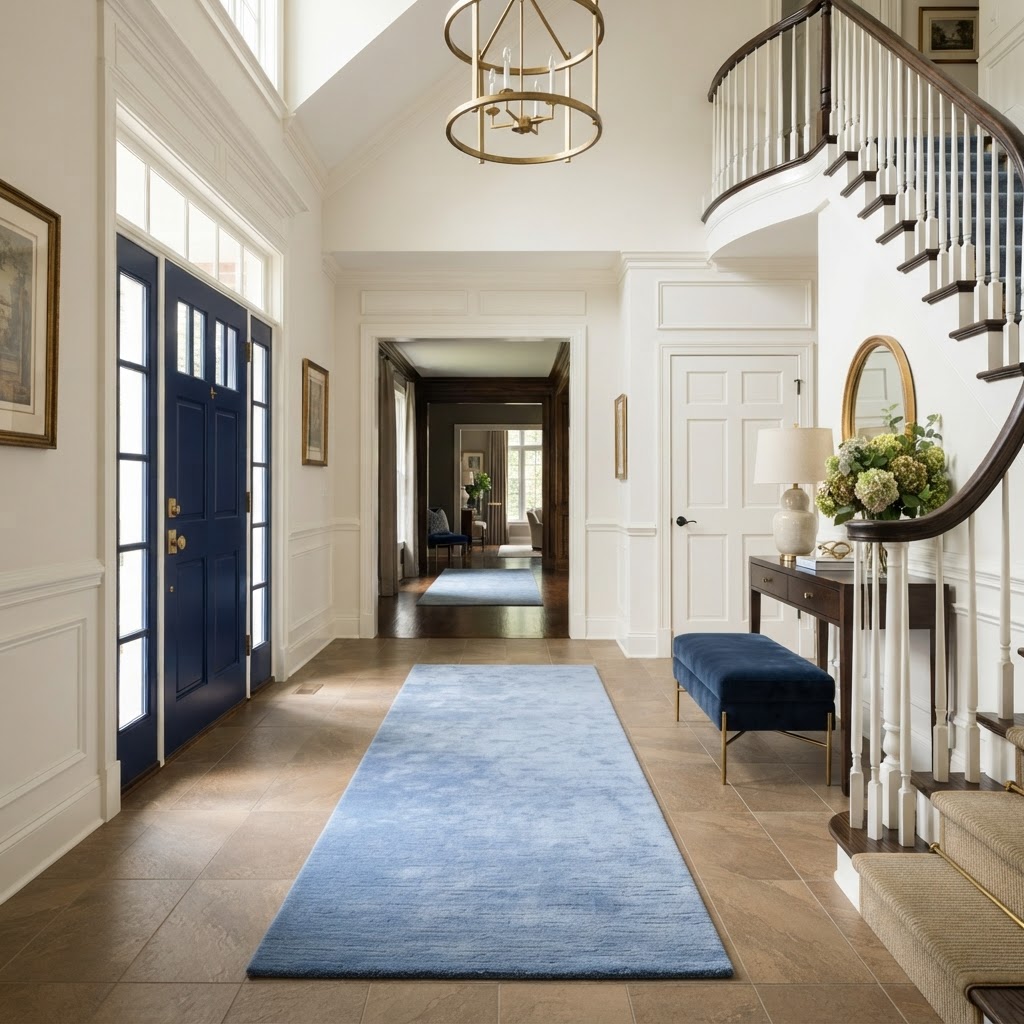
Front entry and foyer. Porcelain tile with a textured finish, or hardwood with a strong mat system. Entries bring rain, snow melt, salt and grit. A recessed mat well or boot tray helps.
Mudroom and garage entry. Porcelain tile or luxury vinyl plank. Water, mud and heavy use demand toughness. See our laundry room remodeling page for related spaces.
Kitchen. Porcelain tile or LVP for spills and drops, or hardwood with a durable finish. Our article on kitchen versus living room flooring in Northern Virginia explores the tradeoffs.
Hallways. Hardwood or LVP, with runners to protect the center path. Hallways concentrate traffic.
Family room and living room. Hardwood, engineered hardwood or LVP, with area rugs in the heaviest zones.
Stairs. Carpet or a runner for traction and quiet, or hardwood. Stairs take concentrated wear on every tread and are detailed work in any material.
Basement play and recreation areas. LVP, porcelain tile or rubber after moisture testing. Our guides to the best flooring options for basements with moisture issues and flooring for the basement explain the preparation, and our basement finishing services cover complete projects.
Bathrooms. Porcelain tile with slip-resistant finishes. See our primary suite remodeling page.
Home offices. Hardwood, LVP or carpet tile, with a mat or chair pad where rolling chairs wear the finish. See our home office design page.
Condominiums and townhomes. The same principles apply, with attention to association rules and sound ratings. See our condominium remodeling page and our articles on condo remodeling rules and permits and flooring in condo remodels.
Installation and maintenance make the difference
A durable material can still fail in a busy zone if installed or maintained poorly.
Subfloor preparation. The subfloor must be flat, clean, dry and sound. Moisture testing is essential, especially over concrete. Uneven subfloors cause gaps, lippage and cracked tile.
Correct method and materials. Underlayments, adhesives, grout and fasteners must suit the floor and the conditions.
Skilled installation. Layout, fastening, seams, grout and finishing are crafts, and mistakes show first in busy areas.
Entry mats and rugs. Stopping grit at the door is the single best protection for any floor. Place mats outside and inside entries and use runners in hallways.
Felt pads and chair pads. Protect against furniture scratches.
Regular cleaning. Sweep or vacuum frequently with a soft attachment, and clean with products approved for your floor.
Humidity control. Stable indoor humidity protects wood.
Periodic maintenance. Screen and recoat hardwood before wear reaches the wood; regrout tile as needed; schedule professional carpet cleaning.
Our flooring installation guide and our guide to preparing your home for new floors explain how installation is done well.
What drives the scope of a high-traffic flooring project
We do not publish prices in articles, but the factors shaping any estimate are clear. The material and its quality tier. Square footage and layout. Subfloor condition, including flatness, structure and moisture. Removal of existing flooring. Stairs. Trim, molding and transitions. Furniture moving and access. Pattern complexity. And the company, including its crews, licensing, bonding and insurance.
Floors and Beyond VA provides an honest, all-inclusive estimate, and what we quote is what you pay. Our estimates include old flooring removal, new materials, professional installation, furniture moving, transitions, molding and full cleanup. Our article on flooring cost factors in Northern Virginia explains why estimates differ. If the work is part of a larger project, our whole house remodels and home additions services coordinate flooring with the rest of the plan.
Why finish and sheen matter in busy zones
Even the toughest materials look better when the surface treatment is chosen wisely. On hardwood, high-gloss finishes highlight every scratch and speck of dust, while matte and satin sheens hide wear and feel more natural. Textured or wire-brushed surfaces disguise minor scratches further. On luxury vinyl plank, embossed-in-register textures add realism and help conceal scuffs. On porcelain tile, matte and textured finishes provide traction in wet entries while hiding footprints better than polished ones.
Color and pattern play a role, too. Mid-tone, varied colors hide dirt, pet hair and scratches better than very dark or very light solids. Wider variation in grain or tile pattern camouflages daily wear. These choices cost nothing extra in durability, yet they can double how good a busy floor looks between cleanings.
Finally, consider grout and transitions. Darker, stain-resistant grout keeps tile looking clean, and well-built transitions between rooms handle concentrated foot traffic without chipping. Our crews detail these areas carefully because that is where busy floors fail first.
Common mistakes in high-traffic areas
The first mistake is choosing a floor for appearance without checking the dominant wear.
The second is choosing a thin wear layer or low-density carpet for a busy zone.
The third is using hardwood where water is constant, such as entries without mats.
The fourth is choosing polished, slippery tile for entries and wet areas.
The fifth is ignoring the subfloor.
The sixth is skipping entry mats and felt pads.
The seventh is choosing glossy finishes that show every scratch.
The eighth is replacing hardwood that could be refinished.
The ninth is ignoring transitions and thresholds, which take concentrated wear.
The tenth is hiring an installer without experience in the material.
Frequently asked questions
What is the most durable flooring for high-traffic areas? Porcelain tile, quality luxury vinyl plank and hard-species hardwood with a durable finish are the leading choices, depending on the kind of wear.
What is the best flooring for an entryway? Porcelain tile with a textured finish, or very durable hardwood with a strong mat system.
What is the best flooring for a busy kitchen? Porcelain tile or luxury vinyl plank for spills and drops, or hardwood with a durable finish and prompt cleanup.
Is hardwood durable enough for high traffic? Yes, in the right rooms, especially with hard species, matte finishes and rugs in heavy paths. It can be refinished when it wears.
Is carpet a bad choice for high traffic? Not always. Dense, resilient carpet over a quality pad works well on stairs and bedrooms, though it shows wear sooner than hard surfaces.
What flooring is best for pets in busy areas? Luxury vinyl plank and porcelain tile are forgiving; hardwood works with durable finishes and trimmed nails.
Does Floors and Beyond VA use subcontractors? No. Our in-house crews handle every project, and we are fully licensed, bonded and insured.
Do you serve my McLean neighborhood? Yes, including Langley, Chesterbrook, Franklin Park, Salona Village, Hamilton, Dunn Loring, Vienna, Great Falls and Tysons, along with Fairfax, Loudoun, Prince William and Arlington counties.
Ready to choose flooring that stands up to your busiest rooms?
The most durable floor is the one matched to the wear it will face, prepared properly and installed by people who stand behind their work. Floors and Beyond VA brings nearly forty years of Northern Virginia experience, in-house crews with no subcontractors, a refinish-first philosophy and an honest all-inclusive estimate to every McLean home.
Request your free McLean flooring consultation: https://floorsandbeyondva.com/Contact
You can also call (703) 906-5698 or email hello@floorsandbeyondva.com.




