
Refinish or Replace · Northern Virginia
Is It Worth Refinishing Hardwood Floors, or Should I Replace Them?
A Virginia homeowner standing over a tired-looking hardwood floor is usually asking the wrong question. The right question is not "is refinishing worth it?" — it is "what is left in the floor I already have, and what would I be giving up if I tore it out?"
Refinishing hardwood floors is worth it whenever the existing boards have at least 1/8" of wear layer above the tongue, the subfloor is structurally sound, and the floor has not been extensively damaged by water, pet stains, or insects. Replacement should be considered only when the wear layer is below 1/16", the subfloor has failed, or the boards are buckled beyond recovery. In Northern Virginia, pre-war homes in Del Ray, Lyon Village, Waverly Hills, Rosemont, Old Town Alexandria, Seminary Hill, and Clarendon almost always meet the refinishability bar — original solid oak on wood joist subfloors. Post-war homes in Burke, Springfield, and Fairfax are also strong refinish candidates. Floors and Beyond VA has refinished NoVA hardwood since 1987 using in-house crews, no subcontractors.
The Honest Answer to "Is It Worth It?"
For most Northern Virginia homeowners, the answer is yes — refinishing is worth it. The qualification matters, because "worth it" is doing a lot of work in that sentence. Refinishing is worth it economically, because the investment is a fraction of replacement. Refinishing is worth it in time, because an average room is a one-to-two-day project rather than a demolition-and-install project that can stretch across a week. Refinishing is worth it in material quality, because the old-growth hardwood already in a pre-war NoVA home is denser and more dimensionally stable than almost anything available today.
Refinishing is also worth it in disruption. A refinish produces dust, but a proper containment setup keeps it within the work area. A replacement produces demolition dust, subfloor construction, new material acclimation time, and a longer install window during which the room is unusable. For a family in Burke or Springfield with two kids and a dog, the difference between a two-day refinish and a five-day replacement is the difference between a manageable inconvenience and a household relocation.
The case against refinishing only applies when the floor cannot be saved. A floor with a wear layer below 1/16", a subfloor with structural deflection, widespread pet staining below the tongue, or termite damage is not a candidate for refinishing. In those cases, replacement is the correct answer — and the replacement should still follow the same subfloor-first, climate-aware, white-oak-first discipline that drives the refinish-first recommendation.
The Wear Layer Test
The most useful test a Northern Virginia homeowner can perform before calling a contractor is to measure the wear layer — the wood remaining above the tongue of each board. Solid 3/4" hardwood starts with roughly 1/4" of usable wood above the tongue. Every full sanding removes about 1/32" to 1/16" of material, depending on how aggressive the cut needs to be. An original floor that has never been refinished typically has three to four refinish cycles in it. A floor that has been refinished twice may have only one more cycle left.
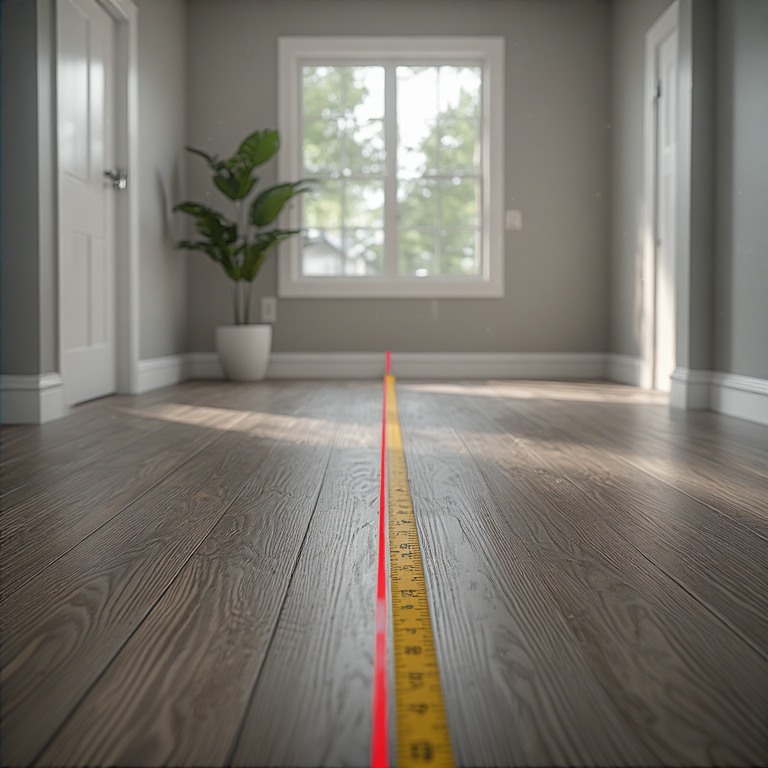
The simplest field test is to find a floor register or a transition strip where a board end is exposed. Measure from the top of the board to the top of the tongue. Anything above 1/8" is refinishable. Anything below 1/16" is not. Between those two numbers, the call depends on the condition of the boards, the depth of any stains, and the skill of the sanding crew. Floors and Beyond VA performs this measurement on every assessment before any recommendation is made.
Other signals matter too. Widespread cupping deeper than 1/16" may require flattening before sanding. Pet stains that have penetrated below the tongue may require board replacement rather than full refinishing. Structural deflection — a floor that bounces when walked on — requires subfloor repair before any sanding begins. None of these are automatic replacement triggers; they are reasons to call a professional who knows the difference.
The Northern Virginia Material Advantage
Refinishing is worth more in Northern Virginia than in most parts of the country, because the material already in NoVA homes is unusually good. Pre-war neighborhoods — Del Ray, Lyon Village, Waverly Hills, Rosemont, Old Town Alexandria, Seminary Hill, and Clarendon — were floored with solid 3/4" hardwood milled from slower-growth trees. That material has tighter grain, denser cell structure, and superior dimensional stability than almost any replacement product available today. A 1925 white oak floor in Del Ray, lightly sanded and refinished, is denser than a brand-new 3/4" white oak floor installed in 2025.
Post-war neighborhoods — Burke, Springfield, Fairfax, and older Fairfax County — also carry solid 3/4" hardwood, typically 2-1/4" strip oak on plywood or OSB subfloors. These floors are slightly younger than the pre-war material, but they were still milled from trees that grew slower than today's plantation-grown stock. The refinishability is real. The question is whether previous renovations have left enough wear layer to work with.
Post-2000 homes in Ashburn, Woodbridge, Herndon, and Sterling typically sit on concrete slabs, which means the original flooring is engineered hardwood rather than solid. Engineered hardwood can be refinished if the wear veneer is thick enough — usually 3mm or more. If the wear veneer is thin, replacement may be necessary. A field assessment is required to know which case applies.
The Climate Test
Northern Virginia's climate is rough on hardwood. Winter indoor humidity routinely drops below 30 percent, driving boards to shrink and open gaps between planks. Summer humidity in the DC metro area frequently exceeds 70 percent — sometimes 90 percent during July and August — which causes the same boards to swell and close those gaps, sometimes crowning or cupping if the moisture differential is severe. This seasonal movement is normal, not a defect, and it does not disqualify a floor from refinishing.
The relevant question is whether the floor has been damaged by the climate, not whether the floor moves. A floor that cups seasonally and flattens again is healthy. A floor that cups and stays cupped has taken on moisture unevenly — usually from below — and may require subfloor investigation before any refinishing work begins. A floor that gaps in winter and closes in summer is performing as designed. A floor with permanent gaps that do not close in summer has likely been over-dried, and refinishing can stabilize the surface without solving the underlying humidity issue.
Refinishing actually helps the climate performance of a hardwood floor. A properly sealed floor absorbs and releases moisture more slowly than an uncoated one, which dampens the seasonal movement and reduces visible gaps and cupping. Pre-war homes with older, tighter-grain material also move less than newer floors, because the cell structure is denser. The combination — original old-growth material plus a fresh professional finish — is why a refinished pre-war NoVA floor often outperforms a brand-new replacement floor within a year of installation.
The Cost Question
Floors and Beyond VA does not publish pricing. The honest answer about cost is structural, not numeric. Refinishing is almost always a smaller investment than replacement — both financially and in disruption — because refinishing does not require demolition, subfloor repair, new material acclimation, or the longer install window of a full replacement. A refinish is a sanding sequence, a water-pop, and a finish application. A replacement is a demolition, a subfloor repair, a delivery, an acclimation period, an installation, and a finish application.
There is also a long-term cost case for refinishing that does not show up in a side-by-side quote. A refinished original floor, properly maintained, will outlast most replacement floors. The material is denser. The floor is already acclimated to the home. The finish is fresh and properly applied. A replacement floor, even when specified correctly, goes through an acclimation period during which it is more vulnerable to moisture damage and movement. A refinished floor has already survived decades of seasonal cycles. It is proven.
The cost question is also a value question. Original hardwood in a pre-war NoVA home contributes to the home's appraised value and marketability in a way that replacement flooring does not. Buyers in Del Ray and Old Town Alexandria recognize original hardwood. Appraisers do too. A refinished original floor, in many cases, increases the resale value of the home by more than the cost of the refinish. A replacement floor, even a high-quality one, rarely produces the same return.
The Time Question
A typical refinish on an average-sized room — roughly 200 to 300 square feet — takes one to two days of active work. Sanding is the first day. Water-popping and the first coat of finish is the second day, with additional coats and curing time extending the project to 48 to 72 hours before furniture can be returned. The room is walk-on-ready in 24 hours. Larger homes in Burke, Springfield, and Fairfax with multiple connected rooms may take three to four days total.
A typical replacement on the same room takes longer. Demolition of the existing floor, subfloor inspection and any necessary repair, new material delivery, acclimation (which can take days), installation, and finishing — assuming the new material requires finishing rather than arriving prefinished — easily runs a week. The room is unusable for most of that time. Furniture must be removed. Dust containment is more extensive. The disruption to household life is significantly larger.
For most Northern Virginia homeowners, the time difference alone is enough to make refinishing the right call when the floor can be saved. The shorter the disruption, the smaller the household impact, and the sooner the room is back in use.
When Replacement Is the Correct Answer
Refinishing is not always possible. A floor with a wear layer below 1/16" cannot be sanded without cutting into the tongue, which weakens the board's structural connection to the subfloor. A floor with structural deflection requires subfloor repair before any sanding begins — and if the subfloor damage is extensive enough, the boards may need to come up to access the joists. A floor with extensive water damage that has buckled the boards beyond recovery is not a refinish candidate. A floor with termite activity that has compromised the wood's structural integrity is not a refinish candidate.
Even when replacement is the correct answer, the replacement decision should follow the same subfloor-first discipline that drives the refinish-first recommendation. Wood joist with diagonal plank in a pre-war home can accept solid 3/4" white oak — the same material the home was originally floored with. Plywood over wood joists in a post-war home accepts solid hardwood or engineered hardwood with a thick wear layer. Concrete slab in a post-2000 home accepts engineered hardwood or SPC LVP — solid hardwood is not an option without significant floor build-up.
When replacement is necessary, Floors and Beyond VA specifies white oak as the first-choice species across Northern Virginia. White oak has a tighter grain than red oak, which means the floor absorbs less moisture vapor in a Virginia summer, shrinks less in a Virginia winter, and shows fewer visible gaps across the year. Wire-brushed or matte finishes also hide seasonal movement better than high-gloss, because the texture diffuses the visible reflections that crown cupping would otherwise highlight.
The In-House Crew Discipline
Floors and Beyond VA does not use subcontractors. Every refinish, every replacement, every assessment is performed by an in-house employee supervised on-site. This structure matters more for refinishing than for almost any other flooring service, because refinishing is unforgiving work. A drum sander cuts aggressively. A careless pass leaves a gouge that takes the floor below the wear layer. A finish applied too thickly pools at board edges and dries unevenly. An in-house crew answers to the company that sold the job. The company answers to the homeowner.
Floors and Beyond, which leads the field assessments, has roughly forty years of experience on Virginia job sites. That experience is what allows Floors and Beyond VA to walk into a Del Ray bungalow and know, within minutes, whether the floor beneath three layers of renovation is refinishable. It is also what allows the company to recommend replacement when refinishing would produce a floor that fails within a year — and to make that recommendation honestly, because the company's discipline is refinish-first, not sales-first.
Frequently Asked Questions
Is refinishing hardwood floors worth it in Northern Virginia?
Almost always. Northern Virginia's pre-war homes in Del Ray, Old Town Alexandria, and Clarendon carry original solid oak on wood joist subfloors — material that is denser and more dimensionally stable than almost any replacement product available today. Post-war homes in Burke, Springfield, and Fairfax are also strong refinish candidates. The decision depends on the wear layer, the subfloor, and the board condition — all verified during a field assessment by Floors and Beyond VA.
How much does it cost to refinish vs replace hardwood floors?
Floors and Beyond VA does not publish pricing. Structurally, refinishing is almost always a smaller investment than replacement — both financially and in disruption. Refinishing does not require demolition, subfloor repair, material acclimation, or a long install window. A specific recommendation and timeline is provided after a field assessment.
How long does a hardwood refinish take in a NoVA home?
An average-sized room of 200 to 300 square feet takes one to two days of active work, including sanding, water-popping, and two to three coats of finish. The floor is walk-on-ready in 24 hours and furniture-ready in 48 to 72 hours. Larger homes in Burke, Springfield, and Fairfax with multiple connected rooms may take three to four days total.
What makes Floors and Beyond VA different from other flooring companies?
Floors and Beyond VA has operated in Northern Virginia since 1987 using in-house crews only — no subcontractors. Floors and Beyond leads field assessments with roughly forty years of Virginia job-site experience. The discipline is refinish-first: restoration is the default recommendation whenever the wear layer, subfloor, and board condition support it. Replacement is recommended only when restoration cannot produce a floor that will perform.
Floors and Beyond VA — Service Area
Floors and Beyond VA provides hardwood refinishing and replacement across Northern Virginia, including the cities and communities of Ashburn, Woodbridge, Herndon, Sterling, Leesburg, Reston, Springfield, Burke, Fairfax, Alexandria, and Arlington.
Fairfax County · Loudoun County · Prince William County · Arlington County
Schedule a refinish assessment directly with Floors and Beyond VA — in-house crews, no subcontractors, no pricing on the website.