How to Choose Luxury Vinyl Plank Flooring in Northern Virginia
“LVP” covers a huge quality range, and the box rarely names what matters. Four specs decide whether you buy once or replace in a few years — and it starts with what’s under your feet.
How Do You Choose Luxury Vinyl Plank Flooring in Northern Virginia?
Start with the subfloor: most homes built after 2000 sit on a concrete slab, which calls for a rigid SPC core. Then match the wear layer to your traffic — 20-mil for main living areas — and choose 5mm or greater total thickness. A waterproof core, warm-oak visuals, and a matte, low-sheen texture round out a spec that lasts.
Luxury vinyl plank is the default flooring upgrade across Northern Virginia, and for good reason: it is waterproof, hard-wearing, and it looks like wood without the seasonal movement. But “LVP” spans everything from throwaway builder-grade to floors that outlast the people who install them — and the label on the box almost never tells you which one you’re holding.
The most important factor isn’t the color. It’s your subfloor. In most post-2000 homes here — Ashburn, Woodbridge, Sterling — the main level is a concrete slab, and that changes which products are even eligible before aesthetics enter the conversation. This is where Floors and Beyond VA starts every LVP discussion: with what’s under the floor, not the plank on the sample board.
Get four specs right — core, wear layer, total thickness, and finish — and you’ll buy once. Get them wrong and you’ll be replacing dented, peaked, or hollow-sounding floors long before you should.
What specs actually matter when choosing LVP?
Core: SPC vs. WPC
SPC (stone-plastic composite) is rigid and dimensionally stable — the right core over concrete slabs and through wide temperature swings. WPC is softer and warmer underfoot but moves more. For most local slab homes, SPC is the answer.
Wear layer (mils)
This clear top layer is the scratch and dent protection — the number that predicts lifespan. Use 12-mil for light bedrooms, 20-mil for main living areas, and 22-mil or more for pets and heavy traffic.
Total thickness
Aim for 5mm or greater overall. Thicker planks feel more solid, forgive minor subfloor imperfections, and usually carry a better locking system. An attached pad adds comfort and quiets footsteps.
Finish & texture
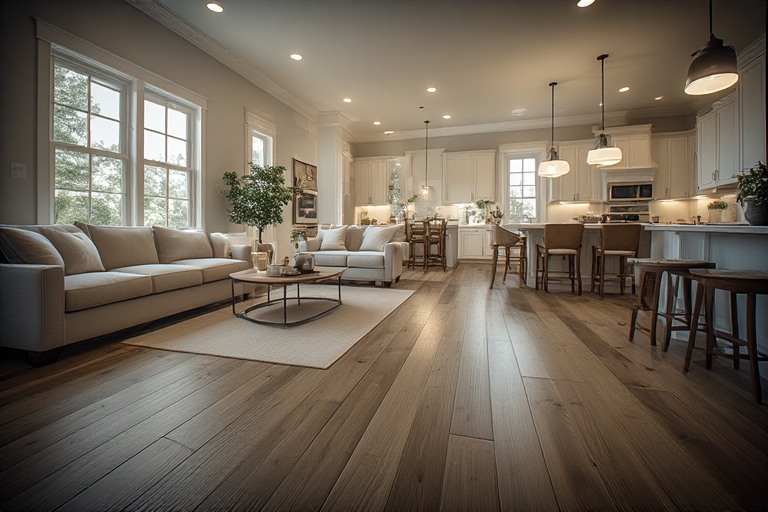
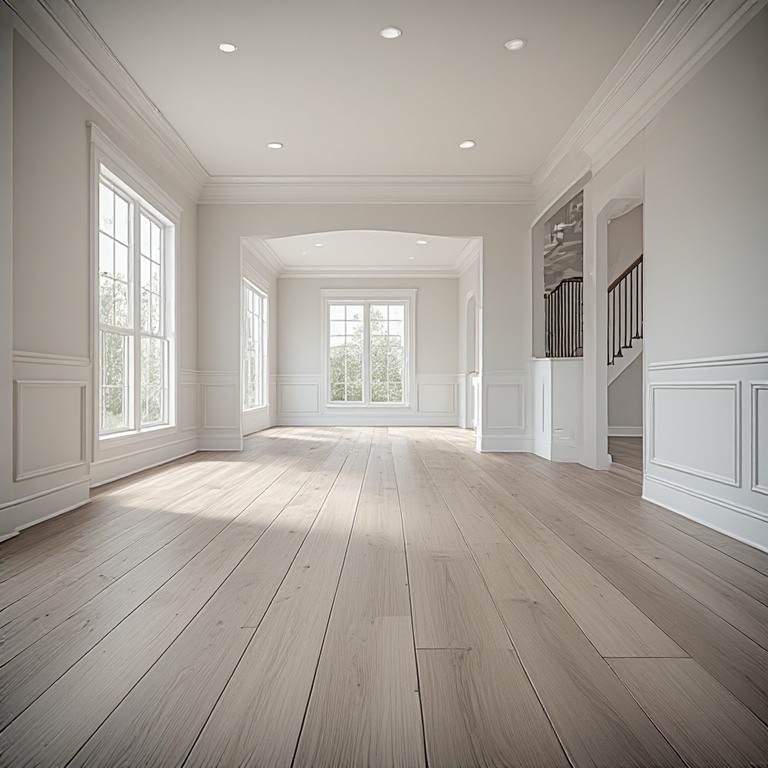
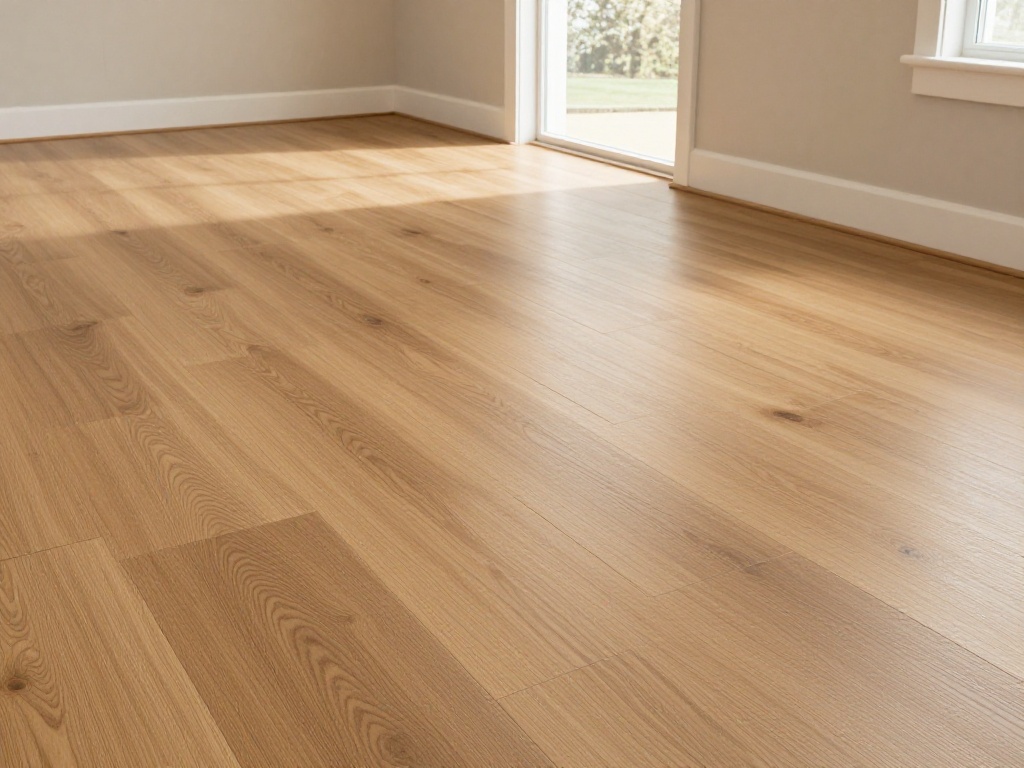
Matte, low-sheen, wire-brushed textures hide scuffs, red-clay dust, and pet marks far better than gloss. Warm oak tones in wide planks read more current than the cool greys of the last decade.
Which LVP wear layer for which room?
| Space / use | Wear layer | Core | Why |
|---|---|---|---|
| Main living, kitchen, entry | 20-mil | SPC | High traffic over a slab in most homes |
| Homes with pets / heavy traffic | 22-mil+ | SPC | Extra scratch and dent protection |
| Bedrooms, low-traffic | 12–20-mil | SPC or WPC | Comfort matters more than abrasion here |
| Basements (below grade) | 20-mil | SPC | Moisture plus slab — never laminate here |
| Bathrooms / laundry | 20-mil | SPC | A waterproof core is essential |
Two cautions specific to the region: laminate should never go directly on a concrete slab in below-grade or moisture-prone spaces, and engineered hardwood over a slab needs moisture-vapor testing first. And in pre-war homes — think Del Ray or Old Town Alexandria — there may be original solid hardwood under the carpet worth refinishing before any new floor is bought. Floors and Beyond VA checks for that first, because a refinished original floor often beats a replacement.
“The biggest LVP mistake isn’t the brand — it’s a thin wear layer in a busy kitchen. Twelve-mil and twenty-mil look identical on day one. Two years later, only one of them still looks new.”
After nearly 40 years specifying floors across the region, that is the pattern owner Floors and Beyond keeps seeing: buyers choose for the showroom and pay for it in the kitchen. Spec the core and wear layer to how the room actually lives, and the color is the easy part.
Not sure which LVP spec fits your home?
Floors and Beyond VA will check your subfloor and traffic, then spec the core and wear layer before you buy a single box.
Frequently asked questions
What wear layer do I need for luxury vinyl plank?
For main living areas, kitchens, and entries, 20-mil is the right call. Light-traffic bedrooms can drop to 12–20 mil, and homes with pets or heavy traffic are better at 22-mil or more. The wear layer is the number that best predicts how the floor looks after a few years.
Is SPC or WPC better for Northern Virginia homes?
For most homes here, SPC. Its rigid core stays stable over concrete slabs and through wide seasonal temperature swings. WPC feels warmer and softer, which can suit above-grade bedrooms, but it moves more — and since most post-2000 homes sit on a slab, SPC is the default.
Can you install luxury vinyl plank over a concrete slab?
Yes — a slab is ideal for a rigid SPC plank with a waterproof core. The slab must be clean, dry, and flat, since LVP telegraphs high spots over time. Laminate, by contrast, should never go directly on a slab in moisture-prone spaces, which is why Floors and Beyond VA specs SPC there.
What luxury vinyl plank color looks best right now?
Warm, mid-tone oak in wide planks with a matte, wire-brushed texture looks the most current and hides scuffs and dust well. The cool, flat greys that dominated the last decade have cooled off and can read dated. A warmer tone also flatters most homes’ trim and cabinetry.
Spec it once. Get it right.
The right luxury vinyl plank starts with your subfloor, not the sample board. Let’s match the core, wear layer, and finish to how your home actually lives.
Book Your Consultation