What Is SPC Core Flooring?
SPC core flooring — short for stone-plastic composite — is a rigid type of luxury vinyl plank built around a dense core of limestone powder and PVC. That stone-based core makes the plank waterproof, dimensionally stable, and dent-resistant, which is why SPC is the standard vinyl specification over concrete slabs and in homes with wide seasonal temperature swings.
If you’ve shopped for luxury vinyl plank lately, you’ve seen “SPC” and “rigid core” on nearly every box. SPC is the core — the middle layer — and it’s what makes rigid-core vinyl rigid. The letters stand for stone-plastic composite: a blend of finely ground limestone, PVC, and stabilizers pressed into a hard, stable board.
That matters more in Northern Virginia than most people realize. Most homes built here after 2000 — across Ashburn, Sterling, and Woodbridge — have concrete slab first floors, and a stone-based waterproof core is exactly what a slab calls for. This is why Floors and Beyond VA specifies SPC as the default vinyl for slab homes.
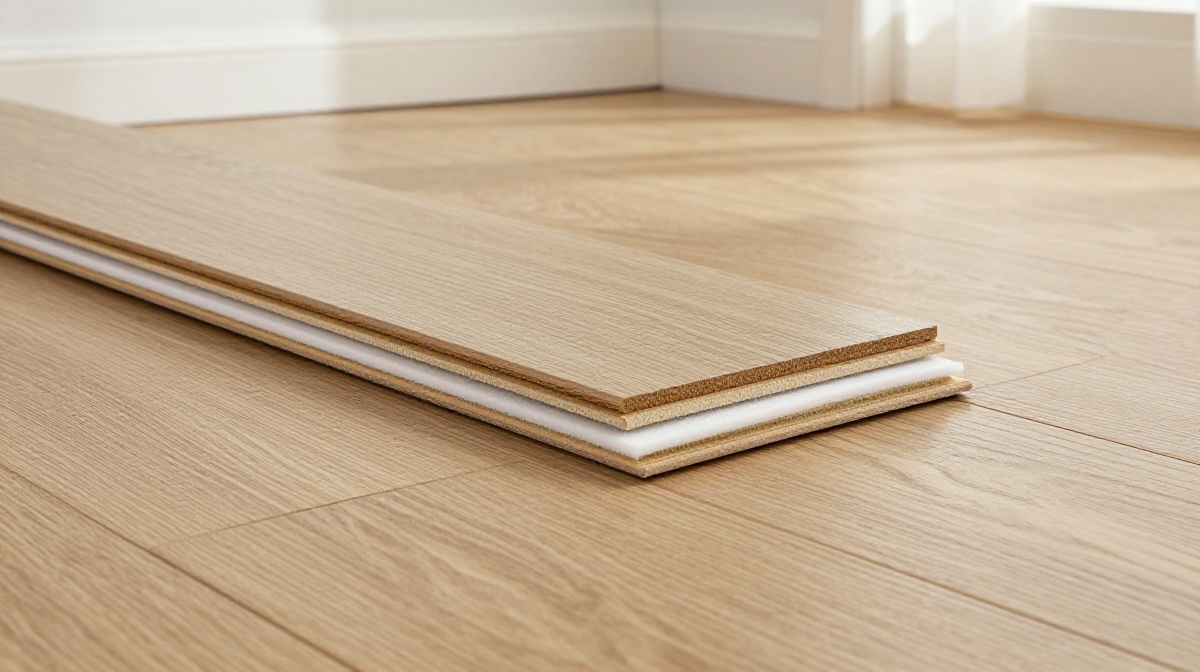
What are the layers of an SPC plank?
Wear layer
A clear protective layer measured in mils. It’s the scratch and dent shield and the number that predicts lifespan — 20-mil for main living areas, more for pets and heavy traffic.
Design film
The printed high-resolution image that gives the plank its look — warm oak, weathered wood, or stone. This is purely the visual; it does no structural work.
SPC stone core
The dense stone-plastic composite that defines the product. Limestone, PVC, and stabilizers make it rigid, waterproof, and stable across temperature swings — the heart of the plank.
Attached pad
Many SPC planks include an underlayment pad bonded to the base for a softer step and quieter footsteps — and to bridge minor imperfections in the subfloor below.
SPC vs. WPC vs. laminate: what's the difference?
| Property | SPC | WPC | Laminate |
|---|---|---|---|
| Core material | Stone-plastic composite | Wood-plastic composite | HDF fiberboard |
| Waterproof | Yes | Yes | No — swells if wet |
| Over a concrete slab | Ideal | Works | Not below grade |
| Underfoot feel | Firm, stable | Softer, warmer | Firm |
| Dent resistance | High | Medium | Medium |
The takeaway for local homes: because laminate’s fiberboard core swells when it gets wet, it should never sit directly on a slab in a basement or moisture-prone room — and engineered hardwood over a slab needs moisture-vapor testing first. SPC sidesteps both problems, which is why it dominates slab construction here. If you’re weighing the whole decision, our guide to how to choose luxury vinyl plank in Northern Virginia walks through wear layer, thickness, and finish.
“People ask if SPC is a brand. It isn’t — it’s the core. Once a homeowner understands the stone core is what makes the floor waterproof and stable, the rest of the choice gets a lot simpler.”
In nearly 40 years of installs across the region, owner Floors and Beyond has watched the industry move from glue-down sheet vinyl to today’s rigid stone-core planks. For the slab homes that make up so much of Northern Virginia, Floors and Beyond VA treats a quality SPC core as the baseline — then matches the wear layer to how each room actually lives.
Wondering if SPC is right for your floors?
Floors and Beyond VA will check your subfloor and rooms, then recommend the right core and spec — no pressure.
Frequently asked questions
Is SPC flooring waterproof?
Yes. The stone-plastic core doesn’t absorb water, so an SPC plank won’t swell or warp from spills, mopping, or humidity the way a fiberboard-core laminate can. That’s the main reason SPC is specified for kitchens, bathrooms, laundries, and below-grade basements across the region.
Is SPC better than WPC flooring?
It depends on the room. SPC has a denser core, so it’s more stable and dent-resistant — better for slabs, high traffic, and temperature swings. WPC feels a bit warmer and softer, which some prefer in above-grade bedrooms. For most local slab homes, SPC is the safer default.
Can SPC flooring go over a concrete slab?
Yes — a slab is an ideal base for SPC. The rigid, waterproof core handles the slab and minor moisture without swelling, as long as the slab is clean, dry, and flat. That’s a key advantage over laminate, whose core should never sit on a slab in moisture-prone spaces.
Does SPC flooring feel hard or cold underfoot?
SPC feels firmer than a softer WPC plank because its core is denser. A product with an attached pad softens that feel and quiets footsteps, and area rugs add comfort in living spaces. SPC also pairs well with radiant heat when specified correctly.
Now you know the core. Let’s spec the floor.
SPC is the baseline for slab homes — the rest is matching wear layer, thickness, and finish to your rooms. Floors and Beyond VA will handle that with you.
Book Your Consultation