
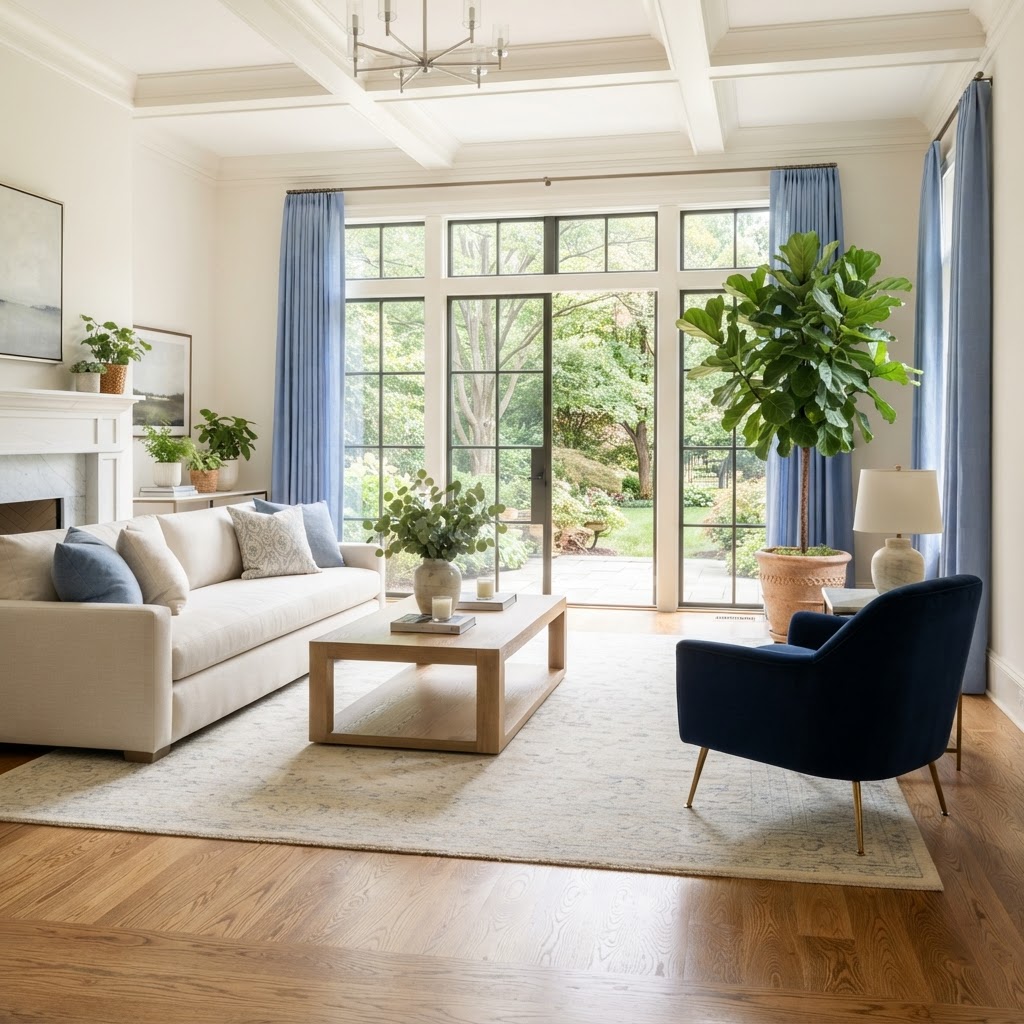
Where can you find eco-friendly flooring options in McLean, VA?
You can find eco-friendly flooring options in McLean by working with a flooring contractor who can explain what "eco-friendly" actually means for each material, including how long the floor lasts, whether it can be refinished instead of replaced, what the product is made of, how it is finished and what certifications back up its claims. The most sustainable floor is often the one you already own: refinishing existing hardwood avoids the manufacturing, shipping and landfill impact of replacement. When new flooring is the right answer, options include responsibly sourced hardwood, engineered hardwood that makes efficient use of wood, durable low-emission products, natural-fiber and wool carpet, and long-lasting materials like porcelain tile that do not need frequent replacement. Floors and Beyond VA, a family-owned Northern Virginia flooring and remodeling contractor serving Fairfax, Loudoun, Prince William and Arlington counties since 1987, follows a refinish-first philosophy, installs with in-house crews and no subcontractors, and can talk through your sustainability priorities during a free in-home consultation.
"Eco-friendly" is one of the most overused words in home improvement, and flooring is no exception. Marketing claims abound, and it is genuinely hard to tell which are meaningful. A floor can be made from a rapidly renewable material yet shipped halfway around the world. It can be low in emissions yet wear out in a few years. It can be labeled green because of one attribute while carrying a heavy footprint in another. The honest approach is to look at the whole life of a floor: where the material comes from, how it is made, how it is installed, how it is maintained, how long it lasts, whether it can be renewed and what happens at the end. This guide offers a practical framework for thinking about eco-friendly flooring in McLean homes, explains what the most common certifications and terms mean, compares materials fairly and shows how installation and maintenance choices matter as much as the product. We do not make environmental claims we cannot support, and we do not publish prices. For our flooring services, see our wood flooring, vinyl flooring, tile and stone and carpet pages.
Start with the most sustainable floor: the one you already have
The single most effective environmental choice in flooring is often not to buy new flooring at all. Manufacturing, packaging, transporting and installing a new floor all carry an environmental cost, and removing an old one generates waste. If you already have hardwood, even hardwood that looks worn, scratched, faded or dated, refinishing can give it a second life. Sanding and refinishing removes the worn surface and applies a new finish, and it can change the color to suit new tastes, all without replacing the wood.
Solid hardwood can be refinished many times, so a well-maintained floor can last generations. Original oak in many McLean homes, particularly mid-century ranchers and split-levels near Old Dominion Drive and Chain Bridge Road, is thick enough to be restored several more times. This is the heart of our refinish-first philosophy: if your floors can be saved, we will tell you, and saving them is usually the most sustainable and often the most economical path. Our articles on whether your hardwood floors can be saved, whether refinishing is worth it and our hardwood floor refinishing field guide explain how to evaluate your floors. Our floor care page offers upkeep advice that extends the life of any floor, and our historic home restoration services help owners of older properties preserve original floors.
The factors that make a floor eco-friendly
Rather than relying on a label, consider five factors together.
Longevity
A floor that lasts decades has a smaller footprint per year of use than one replaced every few years. Durability is therefore an environmental feature. Porcelain tile, solid hardwood and well-installed engineered hardwood with a thick wear layer are long-lived. Quality carpet and luxury vinyl plank have shorter lifespans. Our article on the most durable carpet types discusses longevity in carpet.
Renewability
Can the floor be refinished, repaired or partially replaced instead of being torn out? Hardwood can be sanded and refinished. Tile can be regrouted. Carpet can be cleaned and, in some cases, repaired. Luxury vinyl plank is generally replaced when worn.
Source and manufacture
Where does the material come from, and how is it made? Responsibly managed forests, recycled content, rapidly renewable materials and efficient manufacturing all matter. So does transportation distance. Ask for documentation instead of trusting a slogan.
Indoor air quality
Flooring, adhesives, underlayments and finishes can release volatile organic compounds (VOCs) and other emissions. Low-emission products and well-ventilated installation help. Third-party certifications exist for this purpose.
End of life
What happens when the floor is removed? Wood can sometimes be reused or recycled, tile is inert, and many synthetic materials end up in landfills. Some carpet manufacturers offer take-back or recycling programs.
No product wins every factor, which is why a thoughtful comparison matters.
Understanding certifications and claims
Several third-party programs help cut through marketing, though they address different things.
Forest stewardship certification for wood products indicates that the wood comes from responsibly managed forests. Ask whether the product carries it, and ask for documentation.
Low-emission certifications for flooring and related products indicate that tested emissions fall within defined limits. Such programs exist for hard-surface flooring, carpet, adhesives and cushions.
Recycled content claims should specify what percentage and what material.
Formaldehyde regulations apply to some composite wood products, including the cores of some engineered flooring, and compliant products carry labeling.
Product declarations that disclose ingredients and environmental impacts provide transparency in some product lines.
Be skeptical of vague terms such as "green," "natural" or "eco" without specifics. Ask the manufacturer or your contractor to show you the documentation. During a consultation, we are glad to talk through what is available for the products you are considering and what questions to ask. We do not assert that any specific product carries a particular certification unless we can confirm it for the line you are considering.
How common flooring types compare
Hardwood
Strengths. Natural, durable and renewable. Solid hardwood can be refinished many times and last generations, which spreads its footprint over a very long life. Wood can sometimes be reclaimed and reused. Locally or regionally sourced species reduce transportation.
Considerations. Source matters, so ask about responsibly managed forestry. Finishes vary in emissions: water-based finishes generally have lower odor and emissions than traditional oil-based ones, while penetrating oils offer a natural look. Prefinished planks are finished in controlled factory conditions, which can reduce on-site emissions, while site-finished floors allow customization.
Engineered hardwood
Strengths. Uses a thin layer of premium wood over a layered core, making efficient use of the wood resource, and is stable for wide planks and tricky subfloors. A thick wear layer can be refinished several times.
Considerations. The core and adhesives matter for emissions, so look for low-emission documentation. Quality and lifespan vary greatly, so choose a product with a substantial wear layer. Our article on engineered wide-plank flooring in Northern Virginia explains construction.
Tile and stone
Strengths. Porcelain and ceramic are made from natural minerals, are inert, extremely long-lasting, easy to clean without harsh chemicals and do not off-gas in use. They pair well with radiant heat and have no flooring-related odor. Their longevity is a significant environmental benefit.
Considerations. Manufacturing is energy-intensive, and heavy tile has transportation impacts. Natural stone is quarried and may travel far. Installation involves mortar and grout.
See our tile and stone page.
Luxury vinyl plank
Strengths. Durable, water-resistant and low maintenance, with some products offering low-emission certifications. Its durability in wet areas avoids premature replacement of less suitable materials.
Considerations. It is a synthetic product and generally cannot be refinished or readily recycled, so its end-of-life impact is a concern. Emissions and ingredients vary by product. If you choose LVP, ask for low-emission documentation and choose a high-quality product that will last. Our articles on LVP pros and cons and how to choose luxury vinyl plank cover quality factors. See our vinyl flooring page.
Carpet
Strengths. Wool is a natural, renewable and resilient fiber, and some carpets include recycled content. Some manufacturers offer recycling or take-back programs. Carpet provides insulation and sound absorption that can improve comfort and reduce energy use.
Considerations. Synthetic carpets are petroleum-based, and padding and adhesives influence emissions. Carpet is generally replaced rather than refinished, so choosing a durable, well-made product is the most important sustainable decision. Our articles on choosing carpet in Northern Virginia and cleaning and maintaining wool carpet are helpful. See our carpet and luxury carpet pages.
Rubber flooring
Strengths. Durable and long-lasting, and some products incorporate recycled rubber.
Considerations. Odor and emissions vary, and some products are petroleum-based. Ask for documentation. See our rubber flooring page.
Installation choices that reduce environmental impact
How a floor is installed matters as much as the floor itself.
Right-sized ordering. Accurate measurement reduces waste and overbuying. We take precise laser measurements at no charge, and our guide on how much flooring you need explains overage.
Mechanical fastening or floating installation. Nailed and floating installations avoid adhesives, which can reduce emissions. Where adhesives are needed, low-emission products help.
Low-emission adhesives, underlayments and finishes. Ask what will be used.
Ventilation during and after installation. Fresh air helps any off-gassing dissipate.
Careful removal and disposal. Reusing or recycling old materials where possible, and disposing of the rest responsibly. In older homes, some flooring and adhesive materials may contain hazardous substances such as asbestos, and a responsible contractor advises on testing and safe handling before disturbing them.
Proper subfloor preparation. A floor installed correctly lasts longer, which is itself a sustainability benefit. Our flooring installation guide describes the process.
Dust control. Sanding and demolition generate dust, so containment protects indoor air quality.
Maintenance that keeps floors out of the landfill
The greenest floor is the one that lasts. Simple habits extend life significantly. Use entry mats to keep grit out. Sweep or vacuum regularly. Use felt pads under furniture. Keep indoor humidity stable to protect wood. Clean with gentle, appropriate products rather than harsh chemicals. Fix leaks and wipe spills promptly. Plan periodic maintenance, such as screening and recoating hardwood, before wear reaches the wood. Our floor care page offers practical guidance.
Eco-friendly choices room by room
Main living areas. Refinish existing hardwood, or install responsibly sourced hardwood or engineered hardwood with a substantial wear layer.
Kitchens and baths. Porcelain tile is inert and extremely long-lasting. Our kitchen remodeling, bathroom remodeling and primary suite remodeling services coordinate flooring with the rest of the project.
Basements. Moisture-tolerant, long-lasting options such as porcelain tile or properly installed engineered hardwood or luxury vinyl plank. Fixing moisture problems first prevents premature failure. See our basement finishing services and our articles on the best flooring options for basements with moisture issues and flooring for the basement.
Bedrooms. Wool or recycled-content carpet with a quality pad, or hardwood with natural-fiber rugs.
Home offices. Hardwood or other durable materials. See our home office design page.
Outdoor living spaces. Durable, weather-appropriate materials. See our outdoor flooring and patios and decks pages.
Whole-home renovations. Planning flooring alongside the larger project avoids tearing out new work and reduces waste. See our whole house remodels and home additions services.
What drives the scope of an eco-minded flooring project
We do not publish prices in articles, but the factors shaping any estimate are clear. The material and its sourcing and certifications. Square footage and layout. Subfloor condition. Whether existing flooring can be refinished or must be removed. Installation method. Finishing system. Stairs. Trim, molding and transitions. Furniture moving and access. Choosing refinishing over replacement often changes the scope substantially.
Floors and Beyond VA provides an honest, all-inclusive estimate, and what we quote is what you pay. Our estimates include old flooring removal, new materials, professional installation, furniture moving, transitions, molding and full cleanup. Our article on flooring cost factors in Northern Virginia explains why estimates differ.
Indoor air quality and healthy installation practices
For many families, "eco-friendly" really means "healthy to live with." Flooring itself, plus the adhesives, underlayments, finishes and grouts used with it, can contribute to indoor air quality. Choosing low-emission products, installing with mechanical fasteners or floating methods where appropriate, and ventilating well during and after the project all help. Water-based finishes generally have lower odor than traditional oil-based finishes, and prefinished products are finished in controlled factory conditions, which keeps fumes out of your home.
Dust control is another healthy-home consideration. Demolition and sanding can release fine dust, so containment, careful cleanup and vacuums with proper filtration protect your household. In older homes, some historic flooring materials and adhesives may contain hazardous substances such as asbestos or lead-based paint nearby, and a responsible contractor will recommend testing and safe handling before disturbing them. If anyone in your home has respiratory sensitivities, tell us during the consultation so we can plan product choices and scheduling accordingly.
Our crews treat your home with care from the first day to full cleanup, and we are happy to discuss the documentation available for the products you are considering.
Common mistakes when seeking eco-friendly flooring
The first mistake is replacing floors that could be refinished.
The second is trusting vague "green" labels without documentation.
The third is focusing on one attribute, such as renewable material, and ignoring lifespan, emissions or transport.
The fourth is choosing a short-lived product that must be replaced soon.
The fifth is ignoring adhesives, underlayments and finishes.
The sixth is skipping moisture and subfloor preparation, which leads to early failure.
The seventh is ordering too much or too little material.
The eighth is neglecting ventilation after installation.
The ninth is disposing of old flooring carelessly, especially in older homes where testing may be needed.
The tenth is neglecting maintenance that would extend the floor's life.
Frequently asked questions
What is the most eco-friendly flooring? Often the floor you already have, refinished. When new flooring is needed, long-lasting, responsibly sourced and low-emission options are best.
Is hardwood eco-friendly? It can be, especially when refinished repeatedly and sourced from responsibly managed forests.
Is engineered hardwood eco-friendly? It makes efficient use of wood and is stable, but core and adhesive emissions and wear layer thickness matter.
Is tile eco-friendly? Tile is inert and extremely long-lasting, though manufacturing and transport carry impacts.
Is vinyl plank eco-friendly? It is durable and water-resistant, but it is synthetic and generally not refinishable, so look for low-emission documentation and choose quality.
Is carpet eco-friendly? Wool and recycled-content carpets can be good choices, and durability is key.
How do I know if a product's green claims are real? Ask for third-party certifications and documentation. We can help you review what is available for products you are considering.
Does Floors and Beyond VA use subcontractors? No. Our in-house crews handle every project, and we are fully licensed, bonded and insured.
Do you serve my McLean neighborhood? Yes, including Langley, Chesterbrook, Franklin Park, Salona Village, Hamilton, Dunn Loring, Vienna, Great Falls and Tysons, along with Fairfax, Loudoun, Prince William and Arlington counties.
Ready to talk through sustainable flooring choices?
The most sustainable flooring decisions are made with honest information: what your floors can do, how long new materials will last and how they will be installed. Floors and Beyond VA brings nearly forty years of Northern Virginia experience, in-house crews with no subcontractors, a refinish-first philosophy and an honest all-inclusive estimate to every McLean home.
Request your free McLean flooring consultation: https://floorsandbeyondva.com/Contact
You can also call (703) 906-5698 or email hello@floorsandbeyondva.com.




