
Basement Flooring · Northern Virginia
Flooring for Basement: A NoVA Subfloor-First Guide
Basement flooring in Northern Virginia must handle below-grade moisture, humidity differentials, and the risk of water intrusion. SPC LVP is the practical choice — waterproof, dimensionally stable, and eligible where solid hardwood is not.
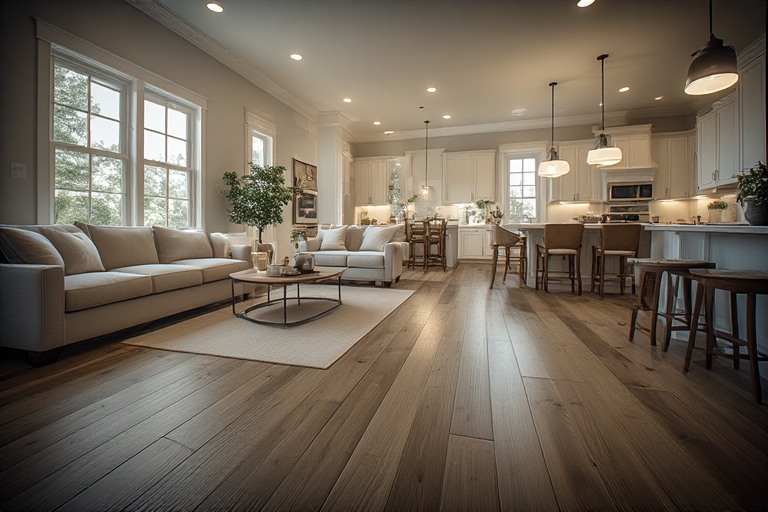
The best flooring for a basement in Northern Virginia is SPC LVP with a minimum 20-mil wear layer and 5mm total thickness or greater. The waterproof SPC core handles below-grade moisture without absorbing it, and the dimensional stability prevents the floor from cupping or gapping with the humidity differential. Solid hardwood is not appropriate for basements — the consistent moisture and humidity will cause cupping, gapping, and eventual failure. Carpet with a moisture barrier pad is a reasonable alternative for finished basements. Tile is eligible but cold underfoot. Epoxy is appropriate for unfinished basement utility spaces. Floors and Beyond VA installs basement flooring across NoVA. In-house crews, no subcontractors, since 1987.
The Basement Flooring Challenge
Basement flooring in Northern Virginia faces challenges that above-grade flooring does not. Below-grade spaces — basements, cellars, below-ground rooms — are surrounded by earth on multiple sides, which means the walls and floor are in constant contact with soil moisture. The concrete slab and foundation walls transmit moisture vapor inward, which raises the indoor humidity above the levels in above-grade spaces. The temperature in a basement is typically 5 to 10 degrees cooler than the upper floors, which can cause condensation on flooring surfaces during humid summer months.
The risk of water intrusion is also higher in basements than in above-grade spaces. Heavy rainfall — which is common in NoVA, particularly during summer thunderstorms — can overwhelm foundation drainage and cause water to enter the basement through cracks, joints, or window wells. A single water intrusion event can destroy flooring products that absorb moisture, which is why the product selection must account for this risk.
The NoVA climate compounds the basement challenge. The humidity swing — winter dry, summer 70 to 90 percent RH — is more severe in basements because the below-grade environment does not benefit from the same HVAC conditioning as above-grade spaces. Summer humidity in a NoVA basement can exceed 80 percent, which creates conditions where mold and mildew can thrive on organic materials like wood and carpet.
SPC LVP: The Basement Standard
SPC LVP is the standard specification for NoVA basement flooring. The SPC (stone polymer composite) core is made from limestone and PVC, neither of which absorbs moisture. This means the floor can handle the below-grade moisture vapor transmission, the humidity differential, and even minor water intrusion events without permanent damage. The waterproof core is the structural reason SPC LVP is eligible in basements where solid hardwood is not.
The 20-mil wear layer is the Floors and Beyond VA specification for primary living areas in basements. The 20-mil wear layer is the threshold that separates a floor which will last 15 to 25 years under family traffic from a floor that will show wear within 5 years. For utility spaces in the basement — storage areas, mechanical rooms — a thinner wear layer (12-mil) may be acceptable because the traffic is lower.
The floating installation (click-lock planks that lock together without adhesive) is an advantage in basements because it allows the floor to be removed and reinstalled if the basement experiences a significant water intrusion event. A glue-down installation would be damaged by water removal and would require complete replacement. The floating installation also allows the floor to be installed over a moisture barrier underlayment, which provides an additional layer of protection against slab moisture.
Solid Hardwood: Not Appropriate for Basements
Solid hardwood is not appropriate for basements in Northern Virginia. The consistent moisture from the below-grade environment causes the wood to cup, gap, and eventually fail. Even with a vapor barrier and dehumidification, the wood absorbs moisture from the air and the slab, which causes dimensional movement that exceeds what the floor can handle. The NoVA humidity swing compounds the problem — the wood moves with the seasons, and the basement moisture accelerates the movement beyond acceptable limits.
Engineered hardwood is sometimes marketed as appropriate for basements, but Floors and Beyond VA does not recommend it. The plywood or SPC core of engineered hardwood is more dimensionally stable than solid wood, but the real wood wear veneer still responds to moisture. In a basement environment, the wear veneer can cup, gap, and delaminate from the core. The risk is lower than with solid hardwood, but it is not zero — and the cost of failure in a basement is high because the water damage can affect the subfloor and the walls.
The honest answer is that no wood product is appropriate for below-grade NoVA spaces. SPC LVP is the correct specification because the waterproof core makes the moisture question irrelevant. If the homeowner wants the look of wood in the basement, SPC LVP in a wood-look design provides the aesthetic without the moisture vulnerability.
Carpet as a Basement Alternative
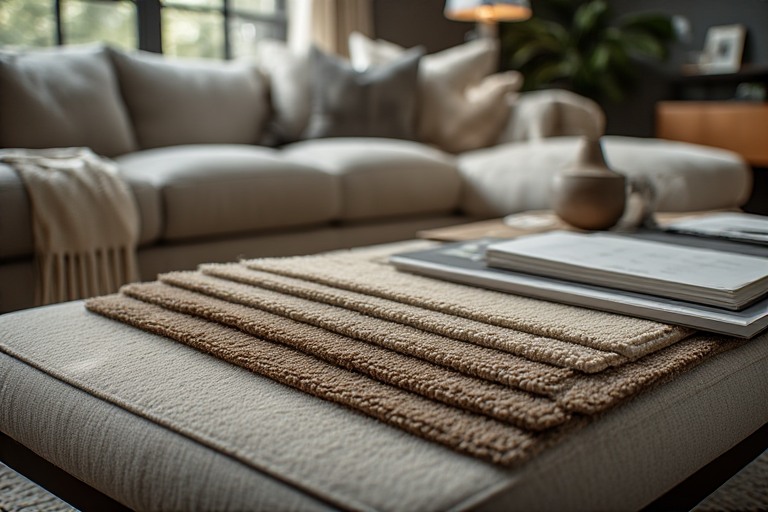
Carpet with a moisture barrier pad is a reasonable alternative for finished basements where warmth and sound absorption are priorities. The carpet provides a softer, warmer surface than SPC LVP, which can be more comfortable for a basement family room or playroom. The moisture barrier backing prevents spills from penetrating to the subfloor, and the synthetic fiber (nylon or triexta, not polyester) resists moisture absorption.
The limitation of carpet in basements is that it is more susceptible to mold and mildew than SPC LVP. If the basement experiences a water intrusion event, the carpet must be dried within 24 to 48 hours to prevent mold growth. If the carpet cannot be dried promptly, it must be removed and replaced. SPC LVP, by contrast, can be dried by simply removing the water — the planks themselves are not damaged by water exposure.
Floors and Beyond VA specifies carpet with a moisture barrier pad and synthetic fiber (nylon or triexta) for finished basement applications where warmth is a priority. The carpet should be specified with a face weight of 40 oz/yd² or greater for primary traffic areas, and the pad should be 8-lb density minimum. The homeowner must understand that the carpet requires more frequent cleaning in the basement environment and that water intrusion events require prompt drying to prevent mold.
Tile in Basements
Porcelain tile is eligible for basement installation on a concrete slab, and it is a good choice for basement bathrooms, wet bars, and other wet areas. The tile is waterproof, durable, and easy to clean. On a concrete slab, tile can be installed directly after moisture vapor testing — no decoupling membrane is required because the slab does not flex like a wood joist subfloor.
The limitation of tile in basements is that it is cold underfoot. The concrete slab beneath the tile is in contact with the earth, which maintains a constant temperature of 55 to 60 degrees Fahrenheit year-round. The tile conducts this temperature to the surface, which means the floor feels cold even when the air temperature in the basement is comfortable. For basement living spaces, this can be uncomfortable, particularly in winter. Radiant floor heating can be installed beneath the tile to address this issue, but it adds cost and complexity.
Floors and Beyond VA recommends tile for basement wet areas (bathrooms, wet bars) and SPC LVP for basement living areas. The combination provides the waterproof performance of tile where water exposure is routine, with the warmth and comfort of SPC LVP where the family spends time.
Epoxy for Basement Utility Spaces
For unfinished basement utility spaces — storage areas, mechanical rooms, workshops — epoxy coating is a practical choice. Epoxy provides a durable, seamless, easy-to-clean surface that handles the below-grade moisture without damage. The non-porous surface does not absorb moisture, which means the floor can be cleaned easily and does not harbor mold or mildew.
Epoxy is also appropriate for basement laundry rooms, where the floor may be exposed to water from the washing machine or utility sink. The epoxy handles spills without damage, and the seamless surface does not have joints where water can penetrate. Slip-resistant additives (aluminum oxide) can be added to the topcoat for safety in wet areas.
The limitation of epoxy in basements is the same as in garages — it is hard and cold underfoot, which makes it unsuitable for finished living spaces. For unfinished utility spaces, the durability and cleanability of epoxy outweigh the comfort disadvantage.
The Moisture Testing Requirement
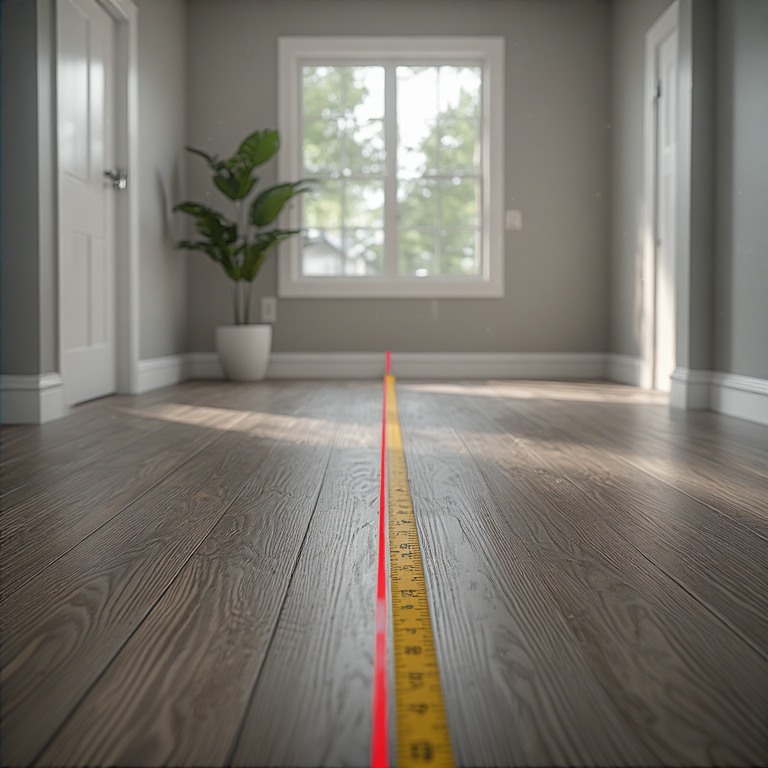
Before any basement flooring is installed, the concrete slab must be tested for moisture vapor transmission. Basements have higher moisture transmission than above-grade slabs because the slab is in direct contact with the earth, which maintains a constant moisture level. The moisture vapor emission rate (MVER) is measured using an anhydrous calcium chloride test, with results expressed in pounds per 1,000 square feet per 24 hours.
For SPC LVP installation, the MVER should be below 5 pounds — higher than the 3-pound threshold for engineered hardwood, because the SPC core is waterproof and does not absorb moisture. However, if the MVER is above 8 pounds, a moisture barrier underlayment is recommended to prevent moisture from accumulating beneath the floor. For tile installation, the MVER threshold is 3 pounds — above this, a moisture barrier is required beneath the thinset.
Floors and Beyond VA performs moisture testing on every basement slab before installation. The test requires 60 to 72 hours to complete, and the results inform the installation method and the underlayment selection. This is a critical step that should not be skipped — installing flooring on a wet basement slab without testing is a recipe for failure.
Why In-House Crews
Floors and Beyond VA does not use subcontractors. Every basement flooring installation is performed by an in-house employee supervised on-site. This structure matters because basement installation requires precision — moisture testing, subfloor preparation, underlayment selection, and product installation all require craftsmanship that determines the long-term performance of the floor.
Floors and Beyond, who leads the field assessments, has roughly forty years of experience on Virginia job sites. That experience is what allows the company to assess each basement and know, within minutes, which product and installation method will produce the best result for the moisture conditions and the use case in question.
Frequently Asked Questions
What is the best flooring for a basement in Northern Virginia?
SPC LVP with a 20-mil wear layer — waterproof, dimensionally stable, and eligible where solid hardwood is not. Carpet with a moisture barrier pad is a reasonable alternative for finished living spaces. Tile for wet areas. Epoxy for unfinished utility spaces.
Why can't solid hardwood be installed in a basement?
The consistent moisture from the below-grade environment causes the wood to cup, gap, and eventually fail. The NoVA humidity swing compounds the problem. No wood product — solid or engineered — is appropriate for below-grade spaces. SPC LVP is the correct specification.
Can SPC LVP survive a basement flood?
The SPC planks themselves will not be damaged by water — the waterproof core does not absorb moisture. However, water that sits beneath the floor can damage the subfloor and create mold issues. After a flood, the water should be removed promptly, and the floor should be inspected for subfloor damage. The floating installation allows the planks to be removed and reinstalled if the subfloor needs repair.
Does basement flooring require moisture testing?
Yes — every basement concrete slab must be tested for moisture vapor transmission before any flooring is installed. The test requires 60 to 72 hours and determines whether a moisture barrier underlayment is needed. Skipping this step is a common cause of basement flooring failure.
Floors and Beyond VA — Service Area
Floors and Beyond VA installs basement flooring across Northern Virginia, including the cities and communities of Ashburn, Woodbridge, Herndon, Sterling, Leesburg, Reston, Springfield, Burke, Fairfax, Alexandria, and Arlington.
Fairfax County · Loudoun County · Prince William County · Arlington County
Schedule a basement floor consultation directly with Floors and Beyond VA — in-house crews, no subcontractors, no pricing on the website.