Hardwood Restoration Guide · Floors and Beyond
If you've been asking yourself, "How do I know if my hardwood floors can be restored?", you're not alone, and the answer is more often "yes" than most homeowners expect. Many assume worn, scratched, or dull hardwood floors need replacing. In reality, a large share of the floors we see at Floors and Beyond are restorable, based on our in-house assessments built over more than 35 years of hardwood work. The challenge is knowing which camp your floors fall into before you commit to either path.
This guide walks you through the exact indicators our pros check on every job: wood type, wear layer, damage depth, sanding history, and a couple of quick field tests any homeowner can do. Run through these checks, and you'll have a clear picture of whether your floors are a restoration candidate or a genuine replacement situation.
A note from the Floors and Beyond crew
We've been restoring hardwood floors across Northern Virginia since 1987, and we'd rather tell you the truth than sell you a replacement you don't need. Our experienced in-house crew will measure your wear layer and assess your floors in person — free, in your own home.
Request a Free In-Home Assessment Call (703) 906-5698Solid or engineered: why your floor type determines everything
This is the first question any flooring pro asks before walking further into a room. Solid hardwood and engineered hardwood are both real wood, but they respond to sanding and refinishing very differently. Knowing which one you have sets the ceiling on what's even possible.
How to identify which type you have
Walk to a floor vent, a heating register, or a doorway threshold and look at the edge of a board from the side. Solid hardwood shows a single, uniform piece of wood from top to bottom, typically 3/4 inch thick. Engineered hardwood shows distinct layers, with a thinner veneer of real wood on top bonded to plywood-style backing. If you're not sure, the original purchase paperwork or any leftover planks stored in a closet will confirm it.
Why it matters for restorability
Solid hardwood can typically be sanded and refinished many times over its lifetime. Engineered hardwood's restorability is entirely determined by its wear layer (the thin real-wood top veneer). A wear layer under 2 mm has little to no sanding potential left. A wear layer of 2.5 to 3 mm gives you one careful sand. A wear layer of four millimeters or more leaves real room to work with. That measurement is what everything else hinges on for engineered floors.
How do I know if my hardwood floors can be restored? Start with the wear layer test
Once you know your floor type, the next step is measuring whether there's enough wood left to safely sand. This is the single most important technical check in any restorability assessment.
How to measure at a vent or threshold
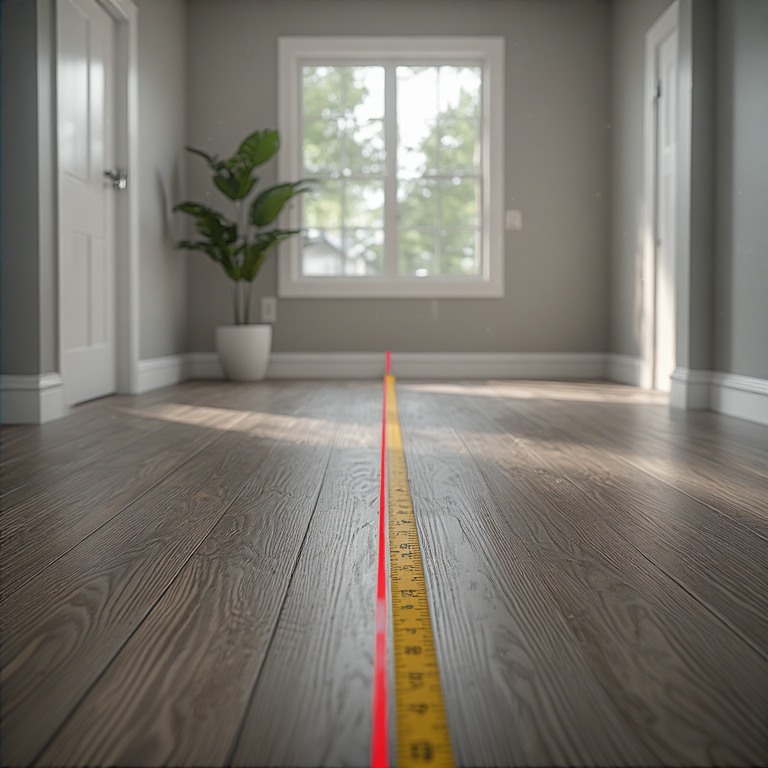
Pull up a floor register or heating vent and look at the exposed edge of a board. For engineered hardwood, you're measuring the top layer of real wood above the first visible line of adhesive or backing. Use a small ruler for the most accurate read, you're looking for at least 2.5 mm. For reference, a single US penny is about 1.52 mm thick, so 2.5 mm sits between one and two pennies stacked. For solid hardwood, check how much wood sits above the tongue (the protruding edge used for interlocking). The minimum safe threshold there is roughly 3/32 of an inch.
What the numbers actually mean for hardwood floor refinishing
If your solid hardwood reads at or above that 3/32 inch mark above the tongue, full sanding and refinishing is on the table. If your engineered wear layer is at 3 mm or better, a professional can safely work with it. Below 2.5 mm on engineered hardwood, sanding risks cutting through to the backing. At that point, most experienced flooring pros will steer you toward a screen and recoat at best, or a candid conversation about replacement.
Reading your floor's damage honestly
Not all damage looks the same, and not all of it carries the same implications. The key is separating damage that lives in the finish from damage that has worked its way into the wood itself.
Scratches, scuffs, and surface stains: the restorable category
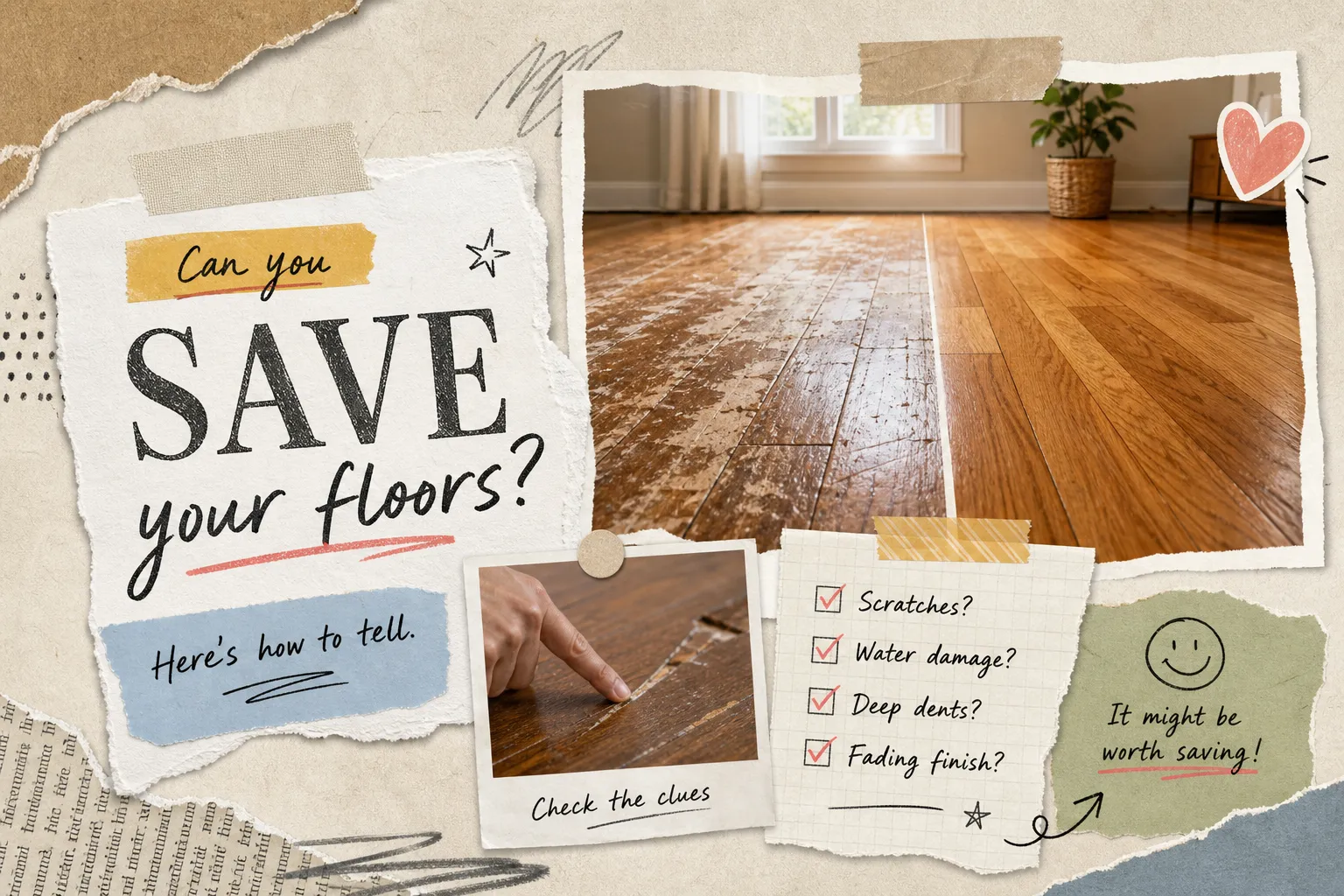
Scratches are trickier to read than they look. If a scratch only snags your fingernail slightly without revealing bare wood underneath, it's likely still finish-level damage, exactly what sanding and refinishing, or even a lighter screen and recoat, are designed to address. If a scratch catches firmly and you can see raw, unfinished wood in the groove, the damage has likely penetrated the finish into the wood itself. Surface stains and discoloration that sit in the finish coat rather than deep in the grain also fall into restorable territory.
Cupping and buckling: the moisture warning signs
Cupping is when board edges lift higher than the center, creating a wave pattern across the floor. Buckling is more severe, with boards actually lifting away from the subfloor. Both are almost always moisture-related. Minor cupping that developed from a one-time humidity event may flatten once the moisture source is corrected and indoor humidity stabilizes. Widespread cupping or any buckling that doesn't reverse on its own points to deeper moisture intrusion, and refinishing over that damage without fixing the root cause will only fail again.
Rot, soft spots, and permanent water staining: replacement territory
Press a firm thumb across different areas of your floor. Any spot that feels soft, spongy, or noticeably gives under pressure indicates wood decay that refinishing cannot fix. Wide, dark water stains that remain even after cleaning, especially patterns suggesting long-term moisture pooling, fall in the same category. These are signs the wood's structure is compromised at a level that goes beyond what any finish can correct.
How to count previous sandings
Knowing how many times a floor has already been sanded tells you whether another pass is safe or whether the wood is already spent. A floor that has been refinished several times may look fine on the surface but have very little material left to work with.
Species-specific limits and what the numbers look like
A standard 3/4-inch solid oak or hickory floor can typically handle four to six sandings over its lifetime, sometimes more if each one was done conservatively. Softwoods like pine are closer to two to four. Engineered floors with a 4 mm wear layer might allow two or three careful refinishes; thinner wear layers may already be at their limit after a single pass. These aren't guarantees, they're ranges that depend on how aggressively each previous sanding removed material.
Visual signs the floor is sanded out
Look at the nailheads or staples used to secure the boards. If nail heads are sitting flush or slightly proud of the surface rather than recessed, the wood above them has been sanded down significantly. In high-traffic areas, you may also notice boards that are noticeably thinner or tongue-and-groove joints peeking through near the board edges. Both are clear signs that the sanding window is closing, if it hasn't already closed.
Want a straight answer without the guesswork?
Many of the Northern Virginia floors our experienced in-house crew assesses — especially in older Fairfax and Loudoun homes — turn out to be strong restoration candidates. We check wear layer thickness, moisture history, and damage depth during a free in-home consultation, and we'll tell you honestly which side of the line your floors fall on.
Schedule Your Free ConsultationWhen a screen and recoat is all you need
Full sanding isn't always the right call. For floors with surface-level wear and an intact finish underneath, a screen and recoat is faster, less invasive, produces far less dust, and preserves more of your wear layer for future refinishes. It's also significantly less expensive.
The water droplet test and fingernail test
Clean and dry a small area in a moderately worn spot, away from furniture. Place a single water drop and watch it for about 60 seconds. If it beads up and stays on the surface, your existing finish is likely still intact and the floor is a strong screen-and-recoat candidate. If it soaks in and darkens the wood, the finish is compromised and a full sand is the more appropriate path. Keep in mind that oil- or wax-finished floors may behave differently, so run the test in several spots for a more reliable read.
The fingernail test works alongside it: lightly drag a nail across a worn area. If it leaves no mark, the finish is still hardened and present. If it cuts through easily, the top coat is gone and a simple buff-and-recoat won't hold.
Knowing where screen and recoat ends
Screen and recoat works when the damage is in the finish, not the wood. The moment you have scratches that expose bare wood, permanent staining in the grain, or any of the structural issues covered above, a light recoat won't solve the problem. It will look better briefly and then fail again because it's coating over a problem rather than correcting it.
Can my hardwood floors be restored? What to do when you're still not sure
Running through these tests gets most homeowners to a clear answer. But some situations sit right on the edge: floors with mixed damage types, uncertainty about engineered wear layer depth, or cupping that might or might not still be reversible. In those cases, guessing in either direction is expensive.
An experienced flooring pro can measure wear layer thickness precisely, determine whether moisture damage is active or historical, and give you a straight answer on whether restoration is worth doing or whether replacement is genuinely the smarter investment. That kind of on-site assessment can prevent costly mistakes, both the cost of replacing floors that had years of life left and the cost of refinishing floors that were already past the point of no return.
At Floors and Beyond, we offer free in-home consultations for exactly this situation. We come to your home, assess your floors in person, and give you an honest opinion before you commit to anything. No pressure. If your floors can be saved, we'll tell you that. If they genuinely need to go, we'll tell you that too. Reach out to schedule your free consultation and get a clear answer from a team with more than 35 years of hardwood restoration experience serving Northern Virginia.
The bottom line on floor restorability
So how do you know if your hardwood floors can be restored? It comes down to a handful of concrete factors: the type of wood you have, how much wear layer or thickness remains, the nature and depth of the damage, and how many times the floor has already been sanded. Many floors with surface-only wear are well within restoration range, replacement is typically needed only when structural damage is present or the wear layer has already been sanded away.
The floors that genuinely need replacing usually show clear warning signs: rot, active moisture damage, buckling that won't reverse, or a wear layer that's spent. Run through the checks in this guide and you'll have a much clearer picture than when you started. And if you're still on the fence, a free in-home visit from the Floors and Beyond team is the fastest way to get a definitive answer without spending a dollar.
FAQ: Can these hardwood floors be saved?
How do I know if my hardwood floors can be restored?
Start with the vent test to identify your floor type and measure the wear layer. Then run the water droplet test and fingernail test to assess finish integrity. Check for structural damage like soft spots, active cupping, or rot. If none of those red flags are present and enough wear layer remains, restoration is likely on the table.
Can engineered hardwood floors be refinished?
Yes, but only if the wear layer is thick enough. A wear layer of 3 mm or more gives a professional safe room to sand. Below 2.5 mm, the risk of cutting through to the backing is too high, and a screen and recoat or replacement becomes the more appropriate path.
What's the difference between sanding and refinishing versus a screen and recoat?
Full sanding removes the old finish and a thin layer of wood, then applies a new finish from scratch. A screen and recoat lightly scuffs the existing finish and applies a fresh coat on top, no wood is removed. Screen and recoat works only when the underlying finish is still intact and the damage is purely surface-level.
Ready for a definitive answer?
Floors and Beyond's experienced in-house team has been saving Northern Virginia hardwood floors since 1987. We come to you, bring the samples and tools, and measure everything on-site — at no cost and with no obligation.
Get My Free In-Home Estimate Call (703) 906-5698