
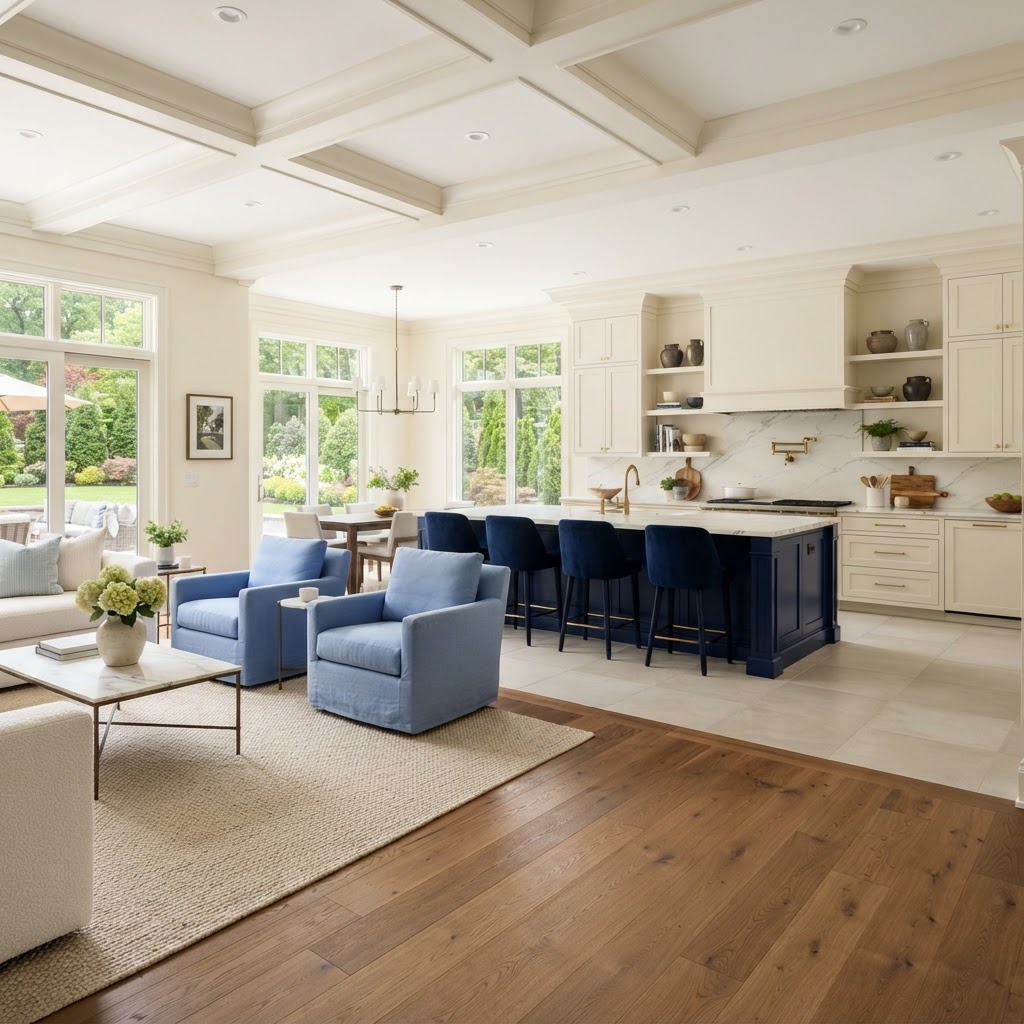
What types of durable flooring are suitable for McLean homes?
The most durable flooring types for McLean homes are porcelain tile, luxury vinyl plank with a thick wear layer and rigid core, solid and engineered hardwood with a durable finish, high-quality carpet in the right fibers and densities, and rubber flooring for specialty spaces. Each is durable in a different way. Porcelain tile resists water, stains and abrasion. Luxury vinyl plank resists water, scratches and everyday wear. Hardwood is durable because it can be refinished and can last generations. Carpet is durable when fiber, density and padding are chosen well. The right choice depends on the room, the household and the conditions beneath the floor. Floors and Beyond VA, a family-owned Northern Virginia flooring and remodeling contractor serving Fairfax, Loudoun, Prince William and Arlington counties since 1987, installs all of these with in-house crews and no subcontractors, and we help McLean homeowners choose the durable option that actually fits each space.
Durability is a word that deserves care. A floor can be durable against water but not against dents, durable against scratches but not against sunlight, durable for a decade but not for three. In McLean, where homes range from mid-century ranchers with original oak to large new builds with wide-plank floors and finished basements, durability means different things in different places. This guide breaks the idea apart: what kinds of wear floors face, how each material resists them, how installation and maintenance affect lifespan, and which materials suit which parts of a McLean home. For our flooring services, see our wood flooring, vinyl flooring, tile and stone and carpet pages.
The different kinds of wear
Floors fail in different ways, so durability has several dimensions.
Abrasion is the gradual wearing of the surface by shoes, grit and traffic. It dulls finishes, thins wear layers and flattens carpet pile.
Scratches and scuffs come from pet claws, furniture movement, dropped objects and sand carried indoors.
Dents come from heavy or sharp point loads such as furniture legs, high heels and dropped items.
Moisture damage includes swelling, cupping, buckling, staining, mold and adhesive failure.
Stains come from spills, pet accidents, dyes and chemicals.
Impact can chip or crack hard surfaces.
Fading comes from sunlight, especially through large windows and glass doors.
Structural movement causes cracked tile, gaps and squeaks when the subfloor or house shifts.
No material resists all of these equally, which is why matching the material to the main threat in each room is the key to durability.
Porcelain tile
How it resists wear. Porcelain is dense, hard and extremely low in water absorption. It resists abrasion, scratches, stains and moisture exceptionally well. Many porcelain tiles are through-body, so chips are less noticeable. It handles heavy traffic for decades.
Limits. It is hard, so dropped dishes may break, and impact can chip or crack it. It feels cool underfoot unless heated. It needs a flat, stiff, properly prepared substrate and movement joints in large areas. Polished tile can be slippery when wet.
Best in McLean homes. Entryways, mudrooms, kitchens, bathrooms, laundry rooms and basements. Its moisture tolerance makes it ideal for the wettest rooms, and it pairs beautifully with radiant heat.
See our tile and stone page.
Luxury vinyl plank
How it resists wear. Luxury vinyl plank (LVP) has a transparent wear layer protecting a printed design, over a flexible or rigid core. A thick wear layer resists scratches, scuffs and stains very well, and rigid-core (SPC) planks resist dents and handle temperature changes better. The plank itself resists water.
Limits. LVP cannot be refinished, so when the wear layer eventually wears through, the floor is replaced. Some products fade with prolonged direct sun. Quality varies widely, and installation over a poorly prepared subfloor can cause gaps, peaking and joint failures. "Waterproof" describes the plank, not the whole floor system.
Best in McLean homes. Kitchens, basements, mudrooms, laundry rooms, playrooms, secondary bathrooms and busy family spaces.
Our articles on LVP pros and cons, what SPC core flooring is, how to choose luxury vinyl plank and whether vinyl flooring is waterproof explain what separates durable products from weak ones.
Solid hardwood
How it resists wear. Solid hardwood's durability is unique: it can be sanded and refinished many times, so surface wear is not permanent. A well-maintained solid floor can last generations. Harder species such as oak, hickory and maple resist denting better, and modern finishes resist abrasion and stains.
Limits. Hardwood scratches and dents, and it is vulnerable to standing water and persistent moisture. It expands and contracts with humidity, so installation conditions, acclimation and indoor humidity matter. It is generally not recommended below grade or directly over concrete.
Best in McLean homes. Living rooms, dining rooms, family rooms, hallways, bedrooms and home offices on above-grade wood subfloors.
If you already have hardwood, its durability may include years of life left. Our articles on whether your hardwood floors can be saved and whether refinishing is worth it explain how to tell, and our hardwood floor refinishing field guide goes deeper. Our historic home restoration services help owners of older properties.
Engineered hardwood
How it resists wear. Engineered hardwood has a real wood wear layer over a cross-layered core. The construction makes it more stable when humidity changes, so it resists gapping and cupping better than solid wood of the same width. The surface is real hardwood and can be refinished depending on its wear layer thickness.
Limits. Quality varies enormously. A thin veneer may allow little or no refinishing, while a thick wear layer may allow several. It is more moisture-sensitive than vinyl or tile, so basements require testing and mitigation.
Best in McLean homes. Wide-plank installations in open main levels, over concrete slabs, over approved radiant heat and in many finished basements with proper moisture control.
Our article on engineered wide-plank flooring in Northern Virginia explains why this is so popular in larger homes.
Carpet
How it resists wear. Carpet's durability depends on fiber, density, twist and padding. Nylon is known for resilience and recovery from traffic. Polyester offers softness and color with good stain resistance. Triexta offers excellent stain resistance and softness. Wool is naturally resilient but needs more care. Higher density, tighter twist and quality pads extend life and appearance retention.
Limits. Carpet shows soil and wear in traffic paths, requires regular vacuuming and periodic professional cleaning, and cannot be refinished. In basements, moisture control is essential to avoid mold and mildew.
Best in McLean homes. Bedrooms, playrooms, media rooms and stairs, where softness, warmth and quiet matter. Quality carpet in a lightly used bedroom can be durable for many years.
Our articles on the most durable carpet types, choosing carpet in Northern Virginia, stain-resistant carpet for families and cleaning and maintaining wool carpet help you choose and care for it. Our carpet and luxury carpet pages describe what we install.
Rubber and specialty flooring
How it resists wear. Rubber is durable, water resistant, shock absorbing and sound dampening. It stands up to heavy equipment, impact and moisture, which makes it a favorite for home gyms, play areas, laundry rooms and utility spaces. See our rubber flooring page.
Garage and outdoor surfaces. Garages face oil, salt, temperature swings and weight, and outdoor spaces face weather. Our garage flooring, garages and car barns, outdoor flooring, patios and decks and screened-in porches pages describe options built for those conditions.
Comparing durability at a glance
Rather than ranking the materials in the abstract, consider how each performs against the main threats.
Water. Porcelain tile is strongest, followed by LVP and rubber. Engineered hardwood is moderate. Solid hardwood and carpet are most vulnerable.
Scratches and abrasion. Porcelain and quality LVP lead. Hardwood scratches more readily but can be refinished. Carpet hides scratches but shows soil and matting.
Dents. Porcelain and dense hardwoods resist well. Soft cores and softer species dent more.
Stains. Porcelain and sealed LVP resist well. Carpet varies with fiber and treatment.
Longevity. Properly maintained solid hardwood can last generations. Porcelain can last for decades. Quality LVP and carpet have shorter lifespans but still substantial ones.
Renewability. Hardwood can be refinished. Tile can be regrouted. LVP and carpet are replaced.
The most durable choice for a given room is the one whose strengths match the room's main threat.
Durability by room in a McLean home
Foyer and entry. Porcelain tile or very durable hardwood with a strong mat system. Entries take rain, snow melt, salt and grit.
Kitchen. Porcelain tile or luxury vinyl plank for spills and drops. Hardwood works with a durable finish and prompt cleanup. Our article on kitchen versus living room flooring in Northern Virginia explores the tradeoffs, and our kitchen remodeling services coordinate flooring with cabinets and counters.
Living and dining rooms. Hardwood or wide-plank engineered hardwood, with rugs in high-traffic zones.
Bathrooms. Porcelain tile with slip-resistant finishes. See our bathroom remodeling and primary suite remodeling pages.
Mudrooms and laundry rooms. Porcelain tile or LVP. See our laundry room remodeling page.
Bedrooms. Quality carpet or hardwood with rugs.
Stairs. Carpet or a runner for traction and quiet, or hardwood. Stairs take concentrated wear.
Basements. LVP, porcelain tile or properly specified engineered hardwood after moisture testing. Our guides to the best flooring options for basements with moisture issues, the best flooring on concrete basements and flooring for the basement explain the preparation, and our basement finishing services cover complete projects.
Home offices and gyms. Hardwood, LVP or carpet tile in offices, rubber in gyms. See our home office design page.
Installation and maintenance decide real-world durability
A durable material can still fail if installed or maintained poorly.
Subfloor preparation. The subfloor must be flat, clean, dry and sound. Moisture testing is essential, especially over concrete. Uneven subfloors cause gaps, lippage and cracked tile.
Acclimation and expansion. Wood and floating floors need time to adjust and room to move.
Correct method and materials. Underlayments, adhesives and fasteners must suit the floor and the conditions.
Skilled installation. Layout, fastening, grout, seams and finishing are crafts.
Daily care. Grit is the main enemy of any floor. Entry mats, regular sweeping or vacuuming and felt pads under furniture extend life. Use cleaners approved for your floor. Our floor care page offers practical guidance.
Humidity control. Stable indoor humidity protects wood.
Prompt attention. Fixing leaks, wiping spills and addressing damage early prevents bigger problems.
Our flooring installation guide and our guide to preparing your home for new floors explain how installation is done well.
What drives the scope of a durable flooring project
We do not publish prices in articles, but the factors that shape any estimate are clear. The material and its quality tier. Square footage and layout. Subfloor condition, including flatness, structure and moisture. Removal of existing flooring. Stairs. Trim, molding and transitions. Furniture moving and access. Pattern complexity. And the company, including its crews, licensing, bonding and insurance.
Floors and Beyond VA provides an honest, all-inclusive estimate, and what we quote is what you pay. Our estimates include old flooring removal, new materials, professional installation, furniture moving, transitions, molding and full cleanup. Our article on flooring cost factors in Northern Virginia explains why estimates differ.
Matching durability to McLean's climate and housing stock
Northern Virginia's climate puts specific demands on flooring. Humid summers and dry, heated winters cause wood to expand and contract, which is why acclimation, stable indoor humidity and well-chosen construction matter so much. Wet winters bring rain, slush and road salt into entries, and spring brings pollen and mud. Floors in McLean's older homes, especially mid-century ranchers and split-levels, often sit on crawl spaces or slabs with their own moisture behavior, while newer homes may have engineered subfloors and radiant heat that affect which products are appropriate.
Housing type matters too. Larger new builds often feature open layouts that reward wide-plank, stable products and continuous flooring from room to room. Townhomes and condominiums near Tysons and Vienna may have sound-transmission rules that influence underlayment and material choice. Older homes may harbor original hardwood worth saving, and our historic home restoration services help preserve it. Matching durable materials to these realities is what turns a good product into a floor that performs for decades.
When you consult with us, we look at your subfloor, moisture conditions, room use and household habits together, and we recommend durable options that fit all of them.
Durability also depends on how a household lives. Homes with large dogs, active children or frequent entertaining ask more of their floors than quiet homes, so we always ask about daily routines, pets and traffic patterns before recommending a material, and we explain the tradeoffs in plain language so you can choose with confidence.
Common mistakes when choosing durable flooring
The first mistake is choosing a floor for one kind of durability and ignoring others, such as scratch resistance in a room with moisture problems.
The second is assuming "waterproof" means no preparation is needed.
The third is choosing on appearance alone without checking wear layer, density or construction.
The fourth is putting hardwood where water is constant.
The fifth is skimping on carpet pad or underlayment.
The sixth is ignoring the subfloor.
The seventh is choosing slippery surfaces for wet areas.
The eighth is replacing hardwood that could be refinished.
The ninth is skipping maintenance basics such as mats and felt pads.
The tenth is hiring an installer without experience in the material.
Frequently asked questions
What is the most durable flooring for a McLean home? It depends on the room. Porcelain tile and quality luxury vinyl plank resist water and wear best; solid hardwood lasts longest because it can be refinished.
Is hardwood durable? Yes, in the right rooms. It can be sanded and refinished many times and can last generations.
Is LVP durable? Yes, with a thick wear layer and rigid core, installed over a properly prepared subfloor.
Is tile durable? Porcelain tile is among the most durable floors, with excellent moisture and stain resistance.
Is carpet durable? Quality carpet with the right fiber, density and padding is durable in bedrooms and low-traffic areas.
What flooring is best for pets? Luxury vinyl plank and porcelain tile are forgiving. Hardwood works with durable finishes and trimmed nails.
Does Floors and Beyond VA use subcontractors? No. Our in-house crews handle every project, and we are fully licensed, bonded and insured.
Do you serve my McLean neighborhood? Yes, including Langley, Chesterbrook, Franklin Park, Salona Village, Hamilton, Dunn Loring, Vienna, Great Falls and Tysons, along with Fairfax, Loudoun, Prince William and Arlington counties.
Ready to choose durable flooring for your McLean home?
The most durable floor is the one matched to the room, prepared properly and installed by people who stand behind their work. Floors and Beyond VA brings nearly forty years of Northern Virginia experience, in-house crews with no subcontractors, a refinish-first philosophy and an honest all-inclusive estimate to every McLean home.
Request your free McLean flooring consultation: https://floorsandbeyondva.com/Contact
You can also call (703) 906-5698 or email hello@floorsandbeyondva.com.




