
What flooring trends are showing up in Tysons and McLean homes, and what is fading?
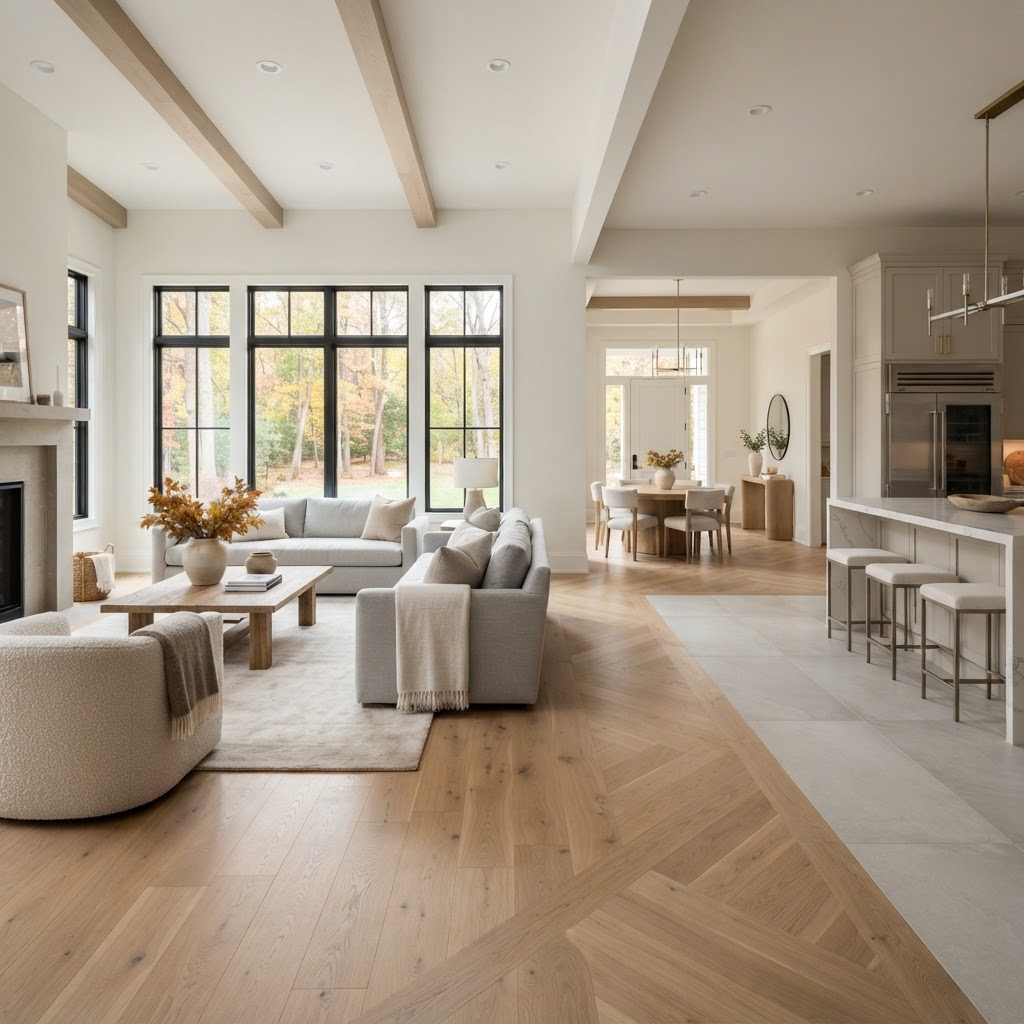
The flooring trends showing up in Tysons and McLean homes are warm, natural wood tones in white oak and lightly toned oak, wide planks and long boards, low-sheen matte and satin finishes, durable luxury vinyl plank with realistic embossed texture in family spaces and basements, large-format porcelain and stone-look tile, thoughtful patterns such as herringbone in focal spaces, and a general move toward floors that look organic and calm. What is fading are the very gray and cool-toned floors of the last several years, high-gloss finishes, heavy distressing and faux-rustic looks, narrow strips used everywhere in new construction, and the assumption that wall-to-wall carpet belongs in every bedroom. A trend is only worth following when it suits your house, your light and the way you live. Floors and Beyond VA, a family-owned Northern Virginia flooring and remodeling contractor serving Fairfax, Loudoun, Prince William and Arlington counties since 1987, installs and refinishes these looks with in-house crews and no subcontractors, and we bring samples to your home so you can judge any trend in your own light before you commit. This guide describes what we see in real project types around the area, from townhomes in Merrifield to large homes in McLean, and offers an honest view of which trends will last.
Flooring trends move more slowly than fashion, because floors are expensive to change and meant to last. But they do move, and the direction in Northern Virginia right now is clear: away from cool and glossy, toward warm, textured and quiet. We do not cite market statistics here, and we do not claim to speak for everyone. What follows is based on the kinds of projects homeowners in this area ask us about, and on the reasoning behind why certain looks tend to age better than others. As always, we recommend choosing for your own home first and trends second.
What's in: warm, natural wood tones
The most consistent shift is back toward wood that looks like wood.
Natural and lightly toned oak. Floors that show the true color and grain of oak, with minimal stain or a soft, clear finish, are in demand. They read as calm, organic and timeless. White oak in particular is popular for its neutral, slightly muted undertone, and red oak, common in older homes, can be refinished to a more natural, less orange look. Our wood flooring page describes the options.
Warm medium tones. Honey, soft golden brown and warm walnut tones are replacing the colder grays. They flatter a wide range of cabinetry, trim and furniture, and they hide dust and scratches better than very light or very dark floors.
Subtle variation. Floors with gentle color variation, visible grain and natural character feel more authentic than perfectly uniform ones.
Why it lasts. Natural tones are tied to the material itself, not to a passing color palette. They tend to age gracefully and can be refreshed by refinishing.
What's in: wide planks and long boards
Wider and longer boards continue to define contemporary interiors.
Wide planks. Fewer seams make rooms feel larger and calmer. Engineered construction makes wide planks practical because it resists the movement that makes solid wide boards more challenging. Our article on engineered wide plank flooring in Northern Virginia explains the construction.
Long lengths. Longer boards reduce end joints and create a more uninterrupted look in open plans.
Trade-offs. Wider boards show seasonal gaps more visibly, and they emphasize any unevenness in the subfloor. Our article on why hardwood floors gap in the fall explains the seasonal behavior. Wide planks also require careful acclimation and a flat subfloor.
Where it works. Open-plan main levels in large McLean homes and renovated Tysons-area houses suit wide planks beautifully. In older homes with narrow strip floors, matching width matters when adding new areas.
What's in: matte and satin finishes
Sheen has changed as much as color.
Low-sheen finishes. Matte and satin finishes look natural, hide scratches and dust better than gloss and photograph well. They let the grain and texture show.
Hardwax oils and natural-effect systems. Some homeowners choose penetrating finishes for a very tactile, bare-wood look, accepting a different maintenance approach.
Why it lasts. A low sheen feels quiet and avoids the plasticky look of high-gloss finishes. It also suits busy households.
Our hardwood floor refinishing field guide for Northern Virginia describes finish systems and sheen options.
What's in: durable LVP with realistic texture
Luxury vinyl plank has matured, and in family spaces it is one of the most requested products.
Realistic texture. Embossed surfaces that follow the printed grain make LVP look and feel more like wood.
Thicker wear layers and rigid cores. Better construction means better durability and dimensional stability.
Where it fits. Basements, kitchens, mudrooms, playrooms, rentals and condominiums, where water resistance and ease of care matter. Townhomes in Merrifield and Dunn Loring, with active households and compact layouts, often choose LVP for main levels.
Trade-offs. It cannot be refinished, and quality varies widely. Our vinyl flooring page, our article on how to choose luxury vinyl plank and our article on hardwood versus LVP in Northern Virginia help you compare.
What's in: large-format and stone-look tile
Tile trends favor calm, large and natural.
Large-format porcelain. Bigger tiles mean fewer grout lines and a cleaner look. They require a very flat substrate and skilled installation. Our tile and stone page describes our work.
Stone-look and concrete-look porcelain. Convincing natural textures with the durability and low maintenance of porcelain.
Warm neutrals. Soft beiges, warm grays and earthy tones are replacing stark whites and cold grays.
Textured and matte surfaces. Slip-resistant, low-sheen tiles suit bathrooms, entries and kitchens.
Natural stone. Marble, limestone and travertine appear in primary baths and entries for homeowners who value their character and accept the care they require.
Why it lasts. Large neutral tile is flexible with changing decor.
What's in: patterns used with restraint
Pattern is back, but selectively.
Herringbone and chevron. These classic layouts add architectural interest in entries, kitchens, primary suites and focal rooms. They require more cutting, precision and material. A herringbone entry in a McLean colonial can set the tone for the whole house.
Borders and inlays. In traditional homes, a simple border can frame a room.
Mixed layouts. Some homeowners combine a patterned area with plain-lay floors elsewhere.
Why it works. Used sparingly, pattern creates a focal point without overwhelming. Used everywhere, it can feel busy.
What's in: soft, quiet carpet where it counts
Carpet has narrowed its role but refined it.
Bedrooms and stairs. Many homeowners choose hard floors for living areas and carpet for bedrooms, stairs and playrooms where softness and quiet matter.
Natural-looking textures. Wool-like and textured loops in earthy tones.
Stain-resistant performance. Better fibers handle family life. Our carpet and luxury carpet pages describe options, and our article on stain-resistant carpet for families offers detail.
What's fading
Trends fade because people tire of them or because they prove impractical. Here is what we see declining.
Very gray and cool-toned floors
Gray-washed and ash-toned floors defined a recent era. Many homeowners now find them cold, and they clash with warm woods, cabinetry and the natural light of many Northern Virginia homes. Cool tones also show dust and can look flat. This is the most noticeable shift. If you have gray floors, you are not alone, and refinishing can sometimes warm them. If you are choosing new floors, a warmer neutral tends to age better.
High-gloss finishes
Glossy floors show every scratch, footprint and speck, and they can feel dated and formal. The trend is toward low sheen.
Heavy distressing and faux-rustic looks
Wire-brushed, scraped and artificially aged floors, especially in exaggerated forms, are losing favor. Subtle texture remains popular, but heavy simulated wear looks contrived.
Very dark, near-black stains
Espresso and ebony floors can be dramatic, but they show dust and scratches readily and make rooms feel smaller. They persist in some modern interiors but are no longer the default aspiration.
Narrow strip everywhere in new work
In renovated and new spaces, narrow strips are giving way to wider planks. In older homes, narrow strip remains right for original floors.
Wall-to-wall carpet in every room
Carpet remains valuable in specific places but is less assumed as the universal default.
Ultra-cheap, thin products
Homeowners increasingly recognize that low-quality, thin products wear out quickly. Durability is back in fashion.
Busy, trend-driven patterns
Loud tile patterns and elaborate mixes can date quickly. Quiet, classic choices last longer.
Local project types and how trends show up
The following are representative project types, not accounts of particular customers.
Townhomes in Merrifield, Dunn Loring and the Tysons edges. Compact, multi-level homes with stairs and active households. Common choices include durable LVP or engineered wood on main levels, matched stair treatments and carpet in bedrooms. Matching floors between levels and handling stair transitions are frequent themes. Noise between levels and neighbors makes underlayment and rugs important.
Large homes in McLean and Great Falls. Open-plan main levels, wide plank engineered or solid wood, herringbone entries, large-format tile in kitchens and baths, and natural stone in primary baths. Long sightlines make continuity of tone critical. Whole-floor refinishing and extension into additions are common. Our whole house remodels and home additions services coordinate flooring with larger projects.
Older homes in Vienna and Falls Church. Original oak floors being uncovered and refinished in warmer, more natural tones, with updates to kitchens and baths that relate to the existing wood. Our article on hardwood floor refinishing in Vienna and Falls Church explains when to refinish instead of replace.
High-rise and mid-rise condominiums in Tysons. Engineered wood, LVP and tile over concrete, shaped by sound-control rules and slab conditions. Our article on renovating a Tysons high-rise apartment compares options, and our condominium remodeling page describes our work.
Finished basements and playrooms. Moisture-tolerant LVP or tile, sometimes with rubber in gym zones. See our rubber flooring and basement finishing pages.
Kitchens and baths. Large-format tile and LVP, coordinated with cabinets. See our kitchen remodeling and bathroom remodeling services.
How to use trends wisely
Follow your house, not just the feed. A floor that suits your architecture, light and lifestyle beats a floor that merely matches a photograph.
Choose longevity. Natural materials and classic tones age well. Strong statements date faster.
Think refreshable. Wood that can be refinished lets you update color later. Vinyl cannot be refinished, so choose a tone you will live with.
Test samples at home. Trend colors behave differently in different light. We bring samples to your house and have no showroom, because the decision belongs in your space.
Balance trend and practicality. Wide planks need a flat subfloor and careful acclimation. Large tile needs expert installation.
Use restraint with bold choices. Make pattern a feature, not the whole story.
Consider resale. Broadly appealing choices help if you sell. Our article on floor upgrades before selling near Tysons explains.
What drives the scope of a trend-driven project
We do not publish prices in articles, but the factors that shape any estimate are clear. The material and quality tier. The area and layout. Pattern complexity, such as herringbone. Plank width and length. Subfloor flatness and preparation. Finish system and sheen. Removal of existing flooring. Stairs. Transitions and trim. Furniture moving and access. And the company, including its crews, licensing, bonding and insurance.
At Floors and Beyond VA, we provide an honest, all-inclusive estimate, and what we quote is what you pay. Our estimates include old flooring removal, new materials, professional installation, furniture moving, transitions, molding and full cleanup. Our article on flooring cost factors in Northern Virginia explains why estimates differ.
Why homeowners choose Floors and Beyond VA for current looks
Trends are only as good as their execution. Floors and Beyond VA has served Northern Virginia since 1987 as a family-owned company, and our in-house crews, with no subcontractors, bring craft to every look, from wide-plank installation on a carefully prepared subfloor to a natural-tone refinish that makes original oak feel fresh. We are fully licensed, bonded and insured. Your free in-home consultation brings samples to your door, includes precise laser measurements at no charge and gives you an honest opinion on which trends suit your home and which to skip. With a refinish-first philosophy, we will tell you when updating your existing floors beats replacing them. Our honest, all-inclusive estimate covers removal, materials, installation, furniture moving, transitions, molding and full cleanup, and what we quote is what you pay. Explore our services at floorsandbeyondva.com.
Common mistakes when following trends
The first mistake is choosing a color from a photograph instead of a sample at home.
The second is ignoring undertone and how it behaves in your light.
The third is choosing very gray or glossy floors that are already fading.
The fourth is installing wide planks over an uneven subfloor.
The fifth is using pattern everywhere.
The sixth is choosing a thin, low-quality product to get a look.
The seventh is mismatching sheen between connected rooms.
The eighth is replacing hardwood that could be refinished into a current tone.
The ninth is forgetting building rules in condominiums.
The tenth is treating a trend as permanent.
Frequently asked questions
Are gray floors out of style? Very cool grays are fading. Warmer neutrals are gaining ground. Taste and context still matter.
What is the most popular wood tone now? Natural and lightly toned oak, along with warm mediums, are very popular.
Is matte or satin better? Both are current. Matte is more understated. Satin is a bit more forgiving to clean.
Can I update my existing floors to a newer look? Often, yes, by refinishing in a different tone and sheen.
Is LVP a lasting trend? Yes, for the right spaces. Quality matters.
Are wide planks practical? Yes, with a flat subfloor, proper acclimation and realistic expectations about seasonal movement.
Is Floors and Beyond VA licensed and insured? Yes. We are fully licensed, bonded and insured for every project, and our in-house crews work with no subcontractors.
Do you serve my neighborhood? Yes, including Tysons, McLean, Vienna, Falls Church, Merrifield, Dunn Loring, Great Falls and Oakton, along with the rest of Fairfax, Loudoun, Prince William and Arlington counties.
Keep reading
For related planning, see Hardwood Floor Refinishing in Vienna and Falls Church: When to Refinish Instead of Replace, Best Flooring for Dogs and Muddy Fall Weather in the Tysons Area and Selling Near Tysons? Which Floor Upgrades Help Before You List This Winter.
Ready to bring a current look to your floors?
The best trend is the one that suits your home. Floors and Beyond VA brings nearly forty years of Northern Virginia experience, in-house crews with no subcontractors, a refinish-first philosophy and a free in-home consultation with samples and precise laser measurements at no charge.
Request your free flooring estimate today: https://floorsandbeyondva.com/Contact
You can also call (703) 906-5698 or email hello@floorsandbeyondva.com.




