
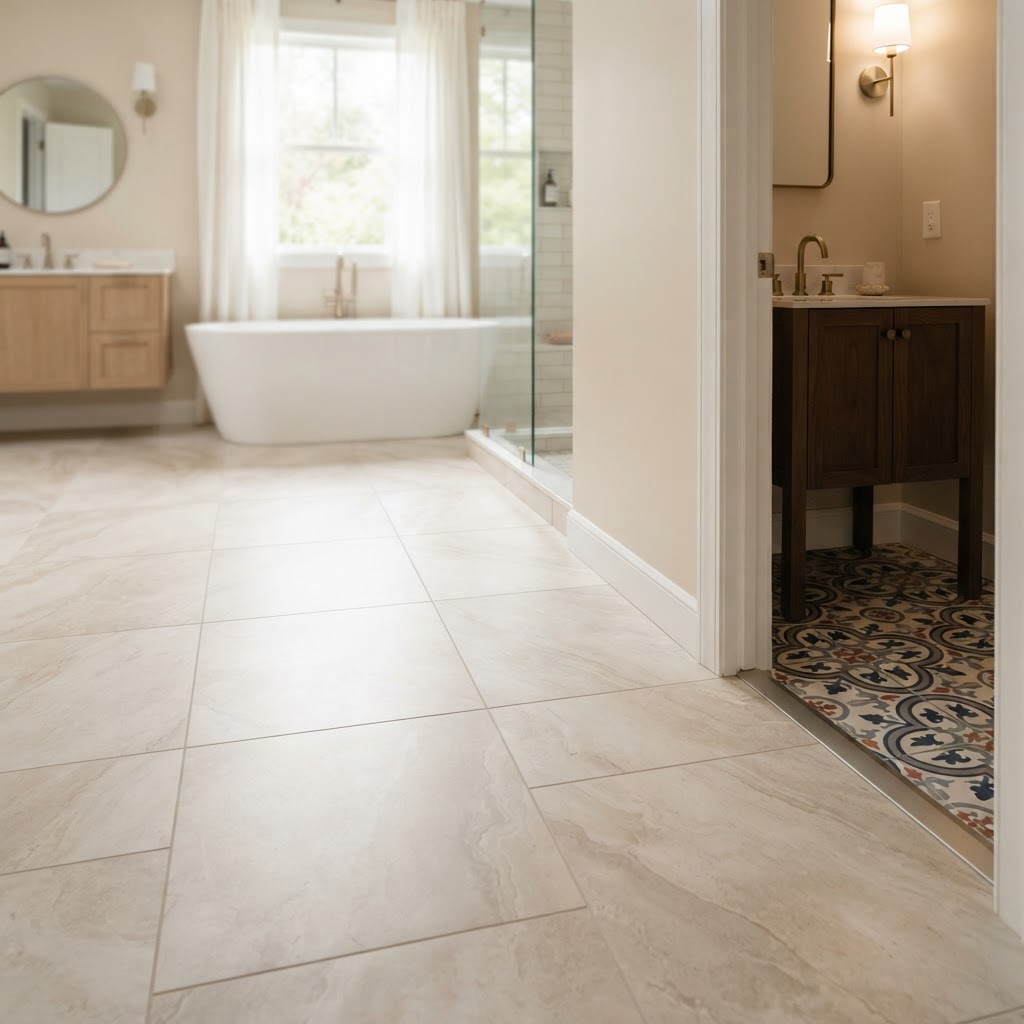
Natural Stone Looks vs. Bold Statement Tile: Which Flooring Trends Will Age Better in Aldie and Northern Virginia Homes?
Which will age better: natural stone looks or bold statement tile?
Natural stone looks, meaning tile and stone with soft veining, honed or matte surfaces, earthy tones and organic variation, will generally age better than bold statement tile, because they rely on materials and colors that have stayed in favor for centuries, they harmonize with changing paint colors and furnishings and they do not tie a room to one moment in design. Bold statement tile, such as saturated colors, high-contrast geometric patterns and heavily repeated motifs, can be exciting and personal, and it can age well when used in small doses, such as a powder room, a single entry or an accent border, but it carries more risk across large areas or in rooms that must appeal to future buyers. For homeowners in Aldie, South Riding, Brambleton, Ashburn, Leesburg, Middleburg and Chantilly planning a longer-term renovation, the best strategy is usually a calm, natural foundation with personality introduced where it is easy to change or contained in a small space. Floors and Beyond VA, a family-owned Northern Virginia flooring and remodeling contractor serving Fairfax, Loudoun, Prince William and Arlington counties since 1987, installs porcelain, ceramic and natural stone with in-house crews and no subcontractors and helps homeowners weigh trend against timelessness.
Fall design coverage highlights two currents moving in parallel: a strong interest in natural materials, with their calm, tactile qualities, and a taste for personality-led interiors where homeowners express themselves through color, pattern and unexpected choices. At the same time, designers have begun questioning some heavily used statement patterns that have saturated social media and showrooms. Tile sits at the center of this conversation, because it is permanent. A paint color can be changed over a weekend, but a tile floor in a bathroom, kitchen or entry is a long-term commitment. This guide explains how to think about timelessness in tile, what makes a natural stone look durable as a design choice, how to use bold tile responsibly, what practical issues apply to both and how to build a plan that looks good now and still looks good years from now. For our services, see our tile and stone page.
What we mean by "natural stone looks"
The category includes real natural stone and tile that imitates it.
Natural stone. Marble, limestone, travertine, slate, granite, quartzite and similar materials quarried from the earth. Each piece is unique, with variation in color, veining and texture. Natural stone is beautiful and long-lived, though it requires appropriate sealing and care, and softer stones can scratch or etch.
Stone-look porcelain and ceramic. Tile that reproduces the colors, veining and surface of stone with the practical benefits of porcelain: hardness, low maintenance and moisture resistance. Quality products offer many unique faces, so patterns do not repeat obviously, and textured or honed surfaces that feel natural.
Honed, matte and textured surfaces. Current preferences lean away from high-gloss polish and toward softer, more natural surfaces that diffuse light, hide wear and provide traction.
Earth-toned palettes. Warm whites, creams, sand, taupe, soft gray-beige, clay and muted greens.
Large formats. Larger tiles reduce grout lines and create a calm, expansive surface.
These choices share a quality: they look like they could have been there for a long time, and they are likely to continue to look that way.
What we mean by "bold statement tile"
Statement tile draws attention by design. It includes:
Saturated colors. Deep greens, cobalt blues, terracotta, bright yellows and other vivid hues.
High-contrast geometric patterns. Checkerboards, bold stripes, large-scale graphic repeats and optical patterns.
Cement-style and encaustic patterns. Decorative patterned tiles with intricate motifs, which can be beautiful and historically rooted but are strongly pattern-driven.
Mosaics and intricate layouts. Hexagons, fish scales, arabesques and elaborate mosaics.
Mixed-pattern installations. Several patterns used together.
Dramatic veining and bold stone slabs. Highly figured marble or granite looks with strong movement.
Bold tile is not inherently bad. Some of the most memorable rooms feature a confident pattern. The question is how it ages and how it fits your life.
How design trends age
Understanding why some looks endure and others fade helps you choose.
Materials and colors that occur in nature age gracefully. Stone, clay, wood and earth tones have been used in homes for centuries, and they pair with almost any style. They tend to look "right" in any decade.
Highly stylized patterns and colors tie themselves to a period. When a pattern or color is everywhere at once, it becomes associated with that moment. Years later, it reads as dated, even if it was beautiful at the time. The speed of social media accelerates this cycle.
Scale and repetition matter. A small area of bold tile feels like a jewel. Covering a large floor in the same pattern magnifies its personality, and the risk.
Permanence raises the stakes. Items that are easy to change, such as paint, textiles, rugs and accessories, are ideal for experimenting with trends. Tile, with its labor, material and installation permanence, is not.
Context matters. A bold pattern in a historic home with period-appropriate architecture can look natural. The same pattern in a minimalist contemporary home can feel out of place.
None of this means you should avoid personality. It means choosing where to place it.
Practical performance of stone looks
Beyond aesthetics, the practical behavior of the materials shapes how they age.
Natural stone
Strengths. Unique, beautiful, long-lasting and valuable. Develops patina. Excellent for entries, bathrooms and formal spaces.
Care. Most natural stones need sealing to resist stains. Softer stones, such as marble and limestone, can etch from acids such as citrus, vinegar and some cleaners, and they can scratch. Grout and sealers need maintenance. Cleaners must be stone-safe.
Installation. Heavy and demanding. Requires a rigid, flat substrate and skilled setting.
Stone-look porcelain
Strengths. Extremely durable, stain-resistant, scratch-resistant and moisture-proof. Low maintenance. Wide design range. Compatible with radiant heat. Excellent in kitchens, bathrooms, entries and basements.
Care. Simple cleaning. Grout needs periodic maintenance, though stain-resistant grouts and tight joints reduce the burden.
Considerations. Printed patterns may repeat if the product has limited variation. Quality varies, so choose products with many unique faces and natural texture.
Porcelain and ceramic statement tile
Strengths. Durable, colorful and available in countless patterns.
Considerations. Glazed decorative tiles can chip or wear in high-traffic floors. Some decorative tiles are rated for walls only, not floors, and the rating matters. Cement tile is porous and requires sealing and care. Patterns with many grout lines or intricate layouts demand skilled installation. Dark or saturated colors may show dust, minerals and water spots.
For both families, slip resistance is a safety issue in wet areas. Highly polished surfaces are slippery when wet, while matte and textured surfaces provide traction. Choose products appropriate for wet locations, and discuss slip-resistance ratings with your installer.
Where bold tile works well
If you love bold tile, there are ways to enjoy it responsibly.
Small rooms. Powder rooms, laundry rooms and mudrooms are ideal for adventurous tile. The space is small, the cost of change is limited and guests experience it as a delightful surprise.
Accent areas. A patterned inlay at an entry, a border around a room, a niche or a backsplash lets you enjoy bold pattern without covering a large floor.
Fireplace surrounds and hearths. Contained areas that serve as focal points.
Bathroom floors in secondary baths. A secondary bathroom can express personality while the primary suite stays timeless.
Historic and period homes. Where a bold pattern fits the architecture, it can feel authentic. Our historic home restoration services consider period character.
Outdoor and transitional spaces. Porches, screened rooms and patios can handle playful tile. See our screened-in porches, patios and decks and outdoor flooring pages.
Bars and wine rooms. Destination spaces for entertaining suit personality. See our bars and wine rooms page.
The principle: put boldness where the stakes are low and the delight is high.
Where calm, natural looks serve you better
Prefer natural stone looks in large, high-visibility, long-term spaces.
Kitchens. A natural, calm floor lets cabinetry, counters and lighting shine and will not compete with future updates. Our kitchen remodeling services coordinate floors with the whole room.
Primary bathrooms. A spa-like stone look suits primary suites and has broad appeal. Our bathroom remodeling and primary suite remodeling services plan waterproofing, slope and detail.
Entries and main-level floors. Large, visible areas where a timeless foundation matters.
Open-plan living areas. Calm, continuous flooring unifies spaces.
Homes you may sell. Buyers tend to respond to neutral, quality materials. Our article on the best flooring before selling a home discusses resale considerations.
Basements and family spaces. Durable, calm floors provide flexibility as uses change.
A layered strategy for longer-term renovation
For a renovation you want to enjoy for many years, consider a layered approach.
Choose a timeless foundation. Select a natural stone look or neutral porcelain for the main surfaces. Use honed or matte finishes and earthy tones.
Add personality in changeable elements. Rugs, paint, lighting, fixtures, textiles, art and furniture can carry bold colors and patterns that you can refresh.
Contain permanent boldness. If you want statement tile, use it in a small space or a defined accent area.
Mix with natural materials. Pair tile with wood, plaster and other natural textures. Real hardwood in adjoining living areas adds warmth. Our wood flooring page describes the hardwood we install.
Think about sightlines. Where tile is visible from adjoining rooms, consider how it relates to what you see next to it.
Test with large samples in your home. Look at samples in your lighting with your cabinets and fixtures.
Plan the whole room. Floor, walls, fixtures and lighting should relate. Our whole house remodels service helps coordinate large projects.
Layout, grout and installation: the details that age
Details can determine whether tile ages gracefully or looks tired.
Grout color. Match grout close to the tile for a seamless look, or contrast deliberately for a graphic effect. Light grout shows dirt, and very dark grout can show dust and residue. Stain-resistant grouts maintain their appearance.
Joint width. Tight joints with rectified tile look refined. Wide joints suit rustic, handmade tile.
Layout. Pattern orientation, starting points and cuts at edges shape the result. A layout planned from the main sightline looks intentional.
Flatness and lippage. A flat, stiff substrate and proper setting prevent uneven edges, which are more noticeable in large formats and under raking light.
Waterproofing. In wet areas, a proper membrane under the tile prevents moisture damage.
Movement joints. Large floors need expansion joints.
Transitions. Where tile meets another floor, heights and edges should be neat.
Radiant heat. Tile pairs beautifully with radiant systems, which improve comfort in Northern Virginia winters.
Craft makes the difference. Our in-house crews, with no subcontractors, handle tile and stone installation. Our flooring installation guide explains our process, and our guide to preparing your home for new floors describes how to prepare.
Aldie and Loudoun County considerations
Homes around Aldie span newer subdivisions, historic village properties and rural estates, and each informs the tile decision.
Newer homes often have tile in entries, bathrooms and kitchens installed by builders. Updating to a calmer, more natural look can refresh the home. Many have concrete slabs and finished basements where moisture testing and preparation matter. Our guides to flooring for the basement and the best flooring on concrete basements explain this.
Historic and farmhouse properties may suit slate, limestone, brick-look and handmade-style tiles that echo traditional materials.
Mudrooms and entries in homes near fields, barns and gravel drives need durable, textured tile that handles mud, water and boots.
Equestrian and rural properties often benefit from tough surfaces in utility areas. See our garage flooring and garages and car barns pages.
What drives the scope of a tile project
We do not publish costs in articles, but the factors that shape any estimate are clear. The tile or stone and its quality tier, including format and finish. Square footage and layout. Pattern complexity, including mosaics and borders. Substrate preparation, including flattening, waterproofing and crack isolation. Radiant heat, if desired. Removal of existing flooring. Grout and sealing. Transitions, trim and thresholds. Furniture and fixture handling. And the company, including its crews, licensing, bonding and insurance.
At Floors and Beyond VA, we provide an honest, all-inclusive estimate, and what we quote is what you pay. Our estimates include old flooring removal, new materials, professional installation, furniture moving, transitions, molding and full cleanup. Our article on flooring cost factors in Northern Virginia explains why estimates differ.
Common mistakes when choosing between natural and bold tile
The first mistake is covering a large area in a bold pattern that you may tire of.
The second is following a social-media trend without considering permanence.
The third is choosing tile rated for walls for a floor.
The fourth is choosing polished tile for wet areas.
The fifth is ignoring slip resistance.
The sixth is skipping waterproofing in bathrooms.
The seventh is forgetting to maintain natural stone, such as sealing it.
The eighth is mixing too many patterns in one room.
The ninth is choosing grout that fights the tile.
The tenth is hiring an installer without experience in the layout you want.
Frequently asked questions
Will natural stone looks go out of style? They are among the most enduring choices because they are rooted in natural materials and colors.
Is bold tile a bad idea? No. It works well in small rooms and accents, but it carries more risk across large areas.
Is real stone better than stone-look porcelain? Real stone is unique and valuable but needs more care. Stone-look porcelain is durable and low maintenance.
What tile finish ages best? Honed, matte and textured finishes hide wear, provide traction and feel natural.
Can I mix bold tile with a neutral floor? Yes. Using bold tile in a defined area, with calm surroundings, is a popular strategy.
Does tile add value to a home? Quality tile in bathrooms and kitchens is widely valued, particularly in neutral, well-installed forms.
Is Floors and Beyond VA licensed and insured? Yes. We are fully licensed, bonded and insured for every project, and our in-house crews work with no subcontractors.
Do you serve my area? Yes. We serve Aldie, South Riding, Brambleton, Ashburn, Leesburg, Middleburg, Chantilly, Gainesville, Haymarket, Fairfax, McLean, Vienna, Reston, Herndon and Arlington, along with Fairfax, Loudoun, Prince William and Arlington counties.
Ready to choose tile that will still look right years from now?
The best tile choices balance personality with permanence. Floors and Beyond VA brings nearly forty years of Northern Virginia experience, in-house crews with no subcontractors and a free in-home consultation with samples and precise laser measurements at no charge.
Request your free Aldie flooring estimate: https://floorsandbeyondva.com/Contact
You can also call (703) 906-5698.




