
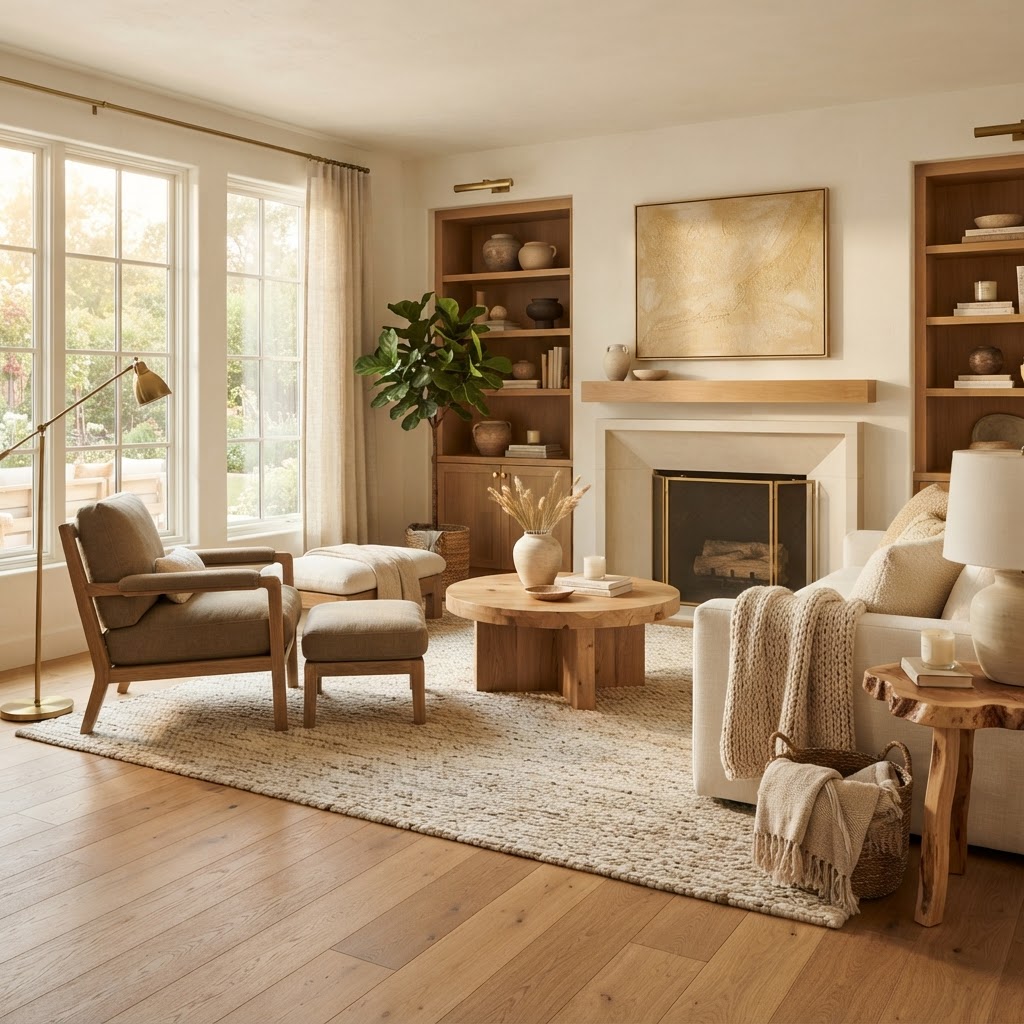
Warm Oak vs. Gray Flooring in 2026: Which Look Is Replacing Cool Gray in Aldie and Northern Virginia?
Is warm oak replacing cool gray flooring in Aldie and Northern Virginia homes?
Yes, in many Northern Virginia homes, including those in Aldie, South Riding, Brambleton, Ashburn, Leesburg, Middleburg, Gainesville, Haymarket and Chantilly, warm natural oak tones are steadily replacing the cool gray floors that dominated the last decade of renovations. Designers and homeowners are choosing honey, wheat, natural and soft tan oak with muted, low-orange undertones, because warm wood pairs with the earthy paint colors, textured fabrics and natural materials now in favor, while cool gray can make a room feel flat or dated, especially under the strong Loudoun County daylight that comes through large new-construction windows. That said, gray is not disappearing everywhere, and the right choice still depends on your light, your cabinetry, your fixed finishes and how long you plan to stay. Floors and Beyond VA, a family-owned Northern Virginia flooring and remodeling contractor serving Fairfax, Loudoun, Prince William and Arlington counties since 1987, brings samples to your Aldie home so you can judge warm and cool tones in your own light, and our refinish-first philosophy means we will often show you how existing oak can be shifted warmer without replacing it.
Floor color is a decision that you live with every day, and it tends to follow broader cycles in interior design. For roughly a decade, gray flooring in the form of gray-washed oak, gray luxury vinyl plank and gray-toned engineered hardwood spread through new construction and renovations from Arlington to Aldie. It looked fresh against white cabinets and crisp white trim, and it suited the modern farmhouse and transitional styles that builders favored. Recent design coverage, however, describes a clear swing toward warmer, more organic palettes: natural oak, softer tans, creamy whites and earthy neutrals. This guide explains why that shift is happening, how undertones actually work, how to test warm and cool floors in an Aldie home, which rooms and styles suit each and how to move from gray toward warmth without wasting good flooring. For our flooring services, see our wood flooring and vinyl flooring pages.
Why cool gray lost momentum
Gray floors became popular for good reasons. They hid dirt, felt modern and offered a neutral backdrop for bright white kitchens. But several characteristics have worn thin as tastes have moved on.
Undertone conflict. Gray is not one color. Some grays lean blue, some green, some purple and some brown, and these undertones clash with the many warm elements in a typical home: brass or bronze fixtures, wood furniture, beige or cream paint, stone countertops with warm veining and warm LED lighting. Floors that fought with everything else made rooms feel unsettled.
Flatness in strong light. Large windows and glass doors, common in newer Loudoun County homes in Aldie, South Riding and Brambleton, flood floors with daylight. Cool gray in bright light can read cold or washed out, and in low light it can look heavy and dull.
Loss of natural character. Gray finishes often mute the wood's grain and natural variation, which is exactly what many homeowners now want to see. Today's design leans toward authenticity: visible grain, natural color variation and a sense of material honesty.
Trend fatigue. When a look appears in nearly every new listing, its novelty fades. Homeowners and designers are reaching for something with more warmth and individuality.
None of this means gray flooring is bad. A gray floor in a room designed around cool tones, with consistent undertones across finishes, can look excellent. The shift is about what feels current, and about choosing a floor that harmonizes with the rest of the house.
What "warm oak" actually means
Warm oak is a family of colors, not a single stain. Understanding the range helps you avoid choosing something that is too orange, too yellow or too heavy.
Natural oak. The wood's own color, lightly finished so that its soft, pale golden tone and grain show through. White oak in a natural finish is pale and slightly cool-leaning in its raw state, while red oak has a pinkish warmth. Oil-based finishes tend to add amber, and water-based finishes tend to preserve a cleaner, lighter look.
Honey and wheat tones. Mid-light oak tones with a gentle golden cast, evoking warmth without strong orange.
Soft tan and driftwood-adjacent neutrals. Balanced, slightly muted tones that sit between warm and neutral, easy to pair with many palettes.
Warm greige. A bridge tone for homeowners who want to leave gray behind without going fully golden, mixing gray and beige in balance.
Deeper warm browns. Richer walnut-leaning or chestnut tones for formal rooms and dramatic spaces.
The warm tones now in favor tend to be muted and natural, not the strong orange or cherry-red finishes that defined earlier decades. In other words, today's warm oak is not a return to yesterday's orange.
Understanding undertones and light
The reason color decisions go wrong is almost always undertone and light, not a lack of taste. Every floor color has a base color and an undertone: red, orange, yellow, green, blue or violet cast beneath the surface. Two floors that look similar in a sample may behave very differently once installed.
North-facing rooms receive cooler, bluer light, which can make warm floors look slightly muted and make cool gray look colder. South-facing rooms receive warmer, brighter light that can intensify golden tones and wash out pale ones. East- and west-facing rooms change dramatically through the day, with warm morning or evening light and cooler midday light. Artificial lighting adds another layer, since warm LED bulbs enhance golden tones and cool bulbs emphasize grays and blues.
Surrounding materials also influence perception. White paint reflects the floor's color back into the room. Colored walls, cabinetry and countertops interact with the floor's undertone. A floor that looked perfect next to a sample board in a showroom can look different next to your own kitchen cabinets in your Aldie home.
For this reason, we do not have a showroom. We bring samples to your home, place them on your actual subfloor or next to your actual finishes and let you look at them in the morning, afternoon and evening. This is the only reliable way to choose a color. Our article on how to get flooring samples delivered explains related options, and our free in-home consultation includes samples.
Aldie homes and why the choice matters here
Aldie sits in the heart of Loudoun County along the Route 50 corridor, between Chantilly and Middleburg, with a distinctive mix of housing. There are newer neighborhoods and communities near Stone Ridge, South Riding, Brambleton and the Dulles area, where open floor plans, tall ceilings and large windows are common. There are older farmhouses, historic village properties and rural homes on larger lots with original wood floors, and there are townhomes and single-family homes built over the past two decades with builder-grade flooring that owners are now updating.
Each of these has different considerations for warm or cool flooring.
Newer open-plan homes often have continuous flooring across a large main level, so the color you choose dominates the whole home. Builder-selected gray or cool-toned flooring is frequently present, and owners tend to want something warmer and more authentic when they update.
Historic and farmhouse properties around Aldie often have original wide-plank or strip oak, heart pine or other species that already have natural warmth. Refinishing can restore and enhance that character. Our historic home restoration services are designed for these properties.
Homes with abundant natural light benefit from careful testing, since daylight can push both warm and cool floors in surprising directions.
Homes with rural views and natural landscaping often feel more harmonious with warm, natural floor tones that echo woodland and field colors.
Moving away from gray: the options
Refinish existing oak in a warmer tone
If your home has solid oak floors, even those stained gray or dark, you may be able to sand them down and refinish them in a warmer natural tone. This is the heart of our refinish-first philosophy. Sanding removes the existing stain and finish, and a new color can be applied. Gray-stained floors can usually be sanded back, though the result depends on how deep the stain penetrated and how much wood remains. Our articles on whether your hardwood floors can be saved, whether refinishing is worth it and our hardwood floor refinishing field guide for Northern Virginia explain how to evaluate your floors.
Replace with natural oak hardwood or engineered oak
When floors cannot be saved, or when you want a different width or format, natural oak in solid or engineered construction offers a warm, authentic look. Engineered wide-plank oak, in particular, has become popular in larger Loudoun homes because it is stable and installs over slabs and many subfloors. Our article on engineered wide-plank flooring in Northern Virginia explains why.
Choose warm-toned luxury vinyl plank
For basements, kitchens, mudrooms and busy family spaces, quality LVP now comes in realistic oak and warm natural tones. A good product with a convincing embossed texture and a durable wear layer delivers the warm look with greater water resistance. Our vinyl flooring page and our articles on how to choose luxury vinyl plank and hardwood versus LVP can help.
Use tile in warm earth tones
In entries, bathrooms and kitchens, porcelain tile in warm stone or wood-look tones can replace cool gray tile and bring the whole space into harmony. See our tile and stone page.
Introduce warmth with rugs and carpet
Warm-toned area rugs, and in bedrooms, warm neutral carpet, can soften and warm a space without changing the main flooring. Our carpet and luxury carpet pages describe those options.
When gray still makes sense
Gray is not obsolete. It can work well when your fixed finishes are cool, such as cool-toned stone countertops, blue-gray cabinetry or black and chrome fixtures, when the room is flooded with warm light that balances the floor, when the gray you choose has a neutral or slightly warm undertone, and when you value a modern, restrained look. A warm greige often offers the best compromise, bridging gray's neutrality with warmth.
The key is consistency. Mixed undertones, such as a cool gray floor with warm beige walls and brass fixtures, are the most common source of dissatisfaction. If you choose gray, choose it deliberately and coordinate everything around it.
Coordinating floors with cabinetry, walls and fixtures
A flooring color is part of a system. When planning a change, consider the following relationships.
Cabinetry. White and cream cabinets work well with warm oak floors, which add contrast and warmth. Dark cabinetry pairs with lighter or mid-tone warm floors for balance. Natural wood cabinets can clash with floors in a similar but slightly different tone, so aim for clear contrast or very close harmony.
Walls. Warm white, cream, soft greige, earthy greens and muted terracotta complement warm oak. Cool whites and blue-grays suit cooler floors.
Countertops and backsplashes. Check veining and undertone. Warm quartz and stone harmonize with warm floors.
Fixtures and hardware. Brass, bronze and warm black suit warm floors. Chrome and nickel suit cool floors, though they can also work with neutral warm oak.
Trim and doors. White trim brightens any floor, while stained trim needs careful coordination.
Our kitchen remodeling, bathroom remodeling, primary suite remodeling and whole house remodels services let us coordinate color across the entire project.
A practical way to test colors in your Aldie home
Choosing a floor from a small sample is risky. Follow a deliberate process. Ask for large samples, and place them on the floor in the room, not on a table. Look at them in morning, midday and evening light. View them next to cabinets, paint and countertops. Look at them with your lights on at night. Walk away and come back. Take photographs, but remember that cameras distort color, so trust your eyes. Ask what the sample will look like once finished, since stain and finish change the tone. For site-finished hardwood, ask for a sample made on the same species and cut as your floor.
During our free in-home consultation, we bring samples, take precise laser measurements at no charge and talk through the options. Our flooring installation guide describes how projects proceed afterward.
What drives the scope of a floor color change
We do not publish costs in articles, but the factors that shape any estimate are clear. The condition of existing floors and whether they can be refinished or must be replaced. The material you choose and its quality tier. Square footage and the number of connected rooms. Subfloor condition. Stairs, which add detail. Trim, molding and transitions. Furniture moving. Stain and finish complexity, including sample testing. And the company, including its crews, licensing, bonding and insurance.
At Floors and Beyond VA, we provide an honest, all-inclusive estimate, and what we quote is what you pay. Our estimates include old flooring removal, new materials, professional installation, furniture moving, transitions, molding and full cleanup. Our article on flooring cost factors in Northern Virginia explains why estimates vary.
Common mistakes when choosing between warm and cool floors
The first mistake is choosing from a small sample instead of testing large samples in your own light.
The second is ignoring undertones in cabinets, counters and paint.
The third is choosing too orange or too yellow a stain in pursuit of warmth.
The fourth is replacing floors that could be refinished into a warmer color.
The fifth is following a trend that clashes with fixed finishes you are not changing.
The sixth is forgetting that finish changes color, since oil-based finishes amber and water-based finishes stay clearer.
The seventh is overlooking light: north-facing rooms and sun-filled rooms behave differently.
The eighth is mixing too many wood tones in one space.
The ninth is choosing a floor that is hard to live with, such as a very dark or very light surface that shows every speck.
The tenth is hiring a contractor who pushes a single look for every house.
Frequently asked questions
Is gray flooring out of style? It is losing ground to warmer, more natural tones, but it can still work when it is chosen deliberately and coordinated with other finishes.
What is replacing gray flooring? Natural oak, honey and wheat tones, soft tan and warm greige.
Can I change my gray hardwood floors to a warmer color? Often, yes. Solid hardwood can usually be sanded and refinished, depending on stain depth and remaining wood.
Is warm oak too orange? Not if it is chosen well. Today's warm oak is muted and natural, not the strong orange of earlier decades.
Will warm floors make a room feel smaller? Not typically. Light and mid-tone warm oak often makes a space feel open and inviting.
What is the best floor color for a home in Aldie? It depends on your light, finishes and style. Samples in your own home are the surest guide.
Is Floors and Beyond VA licensed and insured? Yes. We are fully licensed, bonded and insured for every project, and our in-house crews work with no subcontractors.
Do you serve my area? Yes. We serve Aldie, South Riding, Brambleton, Ashburn, Leesburg, Middleburg, Chantilly, Gainesville, Haymarket, Fairfax, McLean, Vienna, Reston, Herndon and Arlington, along with Fairfax, Loudoun, Prince William and Arlington counties.
Ready to see warm oak in your own home?
The best floor color is the one you have tested in your own light. Floors and Beyond VA brings nearly forty years of Northern Virginia experience, in-house crews with no subcontractors, a refinish-first philosophy and a free in-home consultation with samples and precise laser measurements at no charge.
Request your free Aldie flooring estimate: https://floorsandbeyondva.com/Contact
You can also call (703) 906-5698.




