
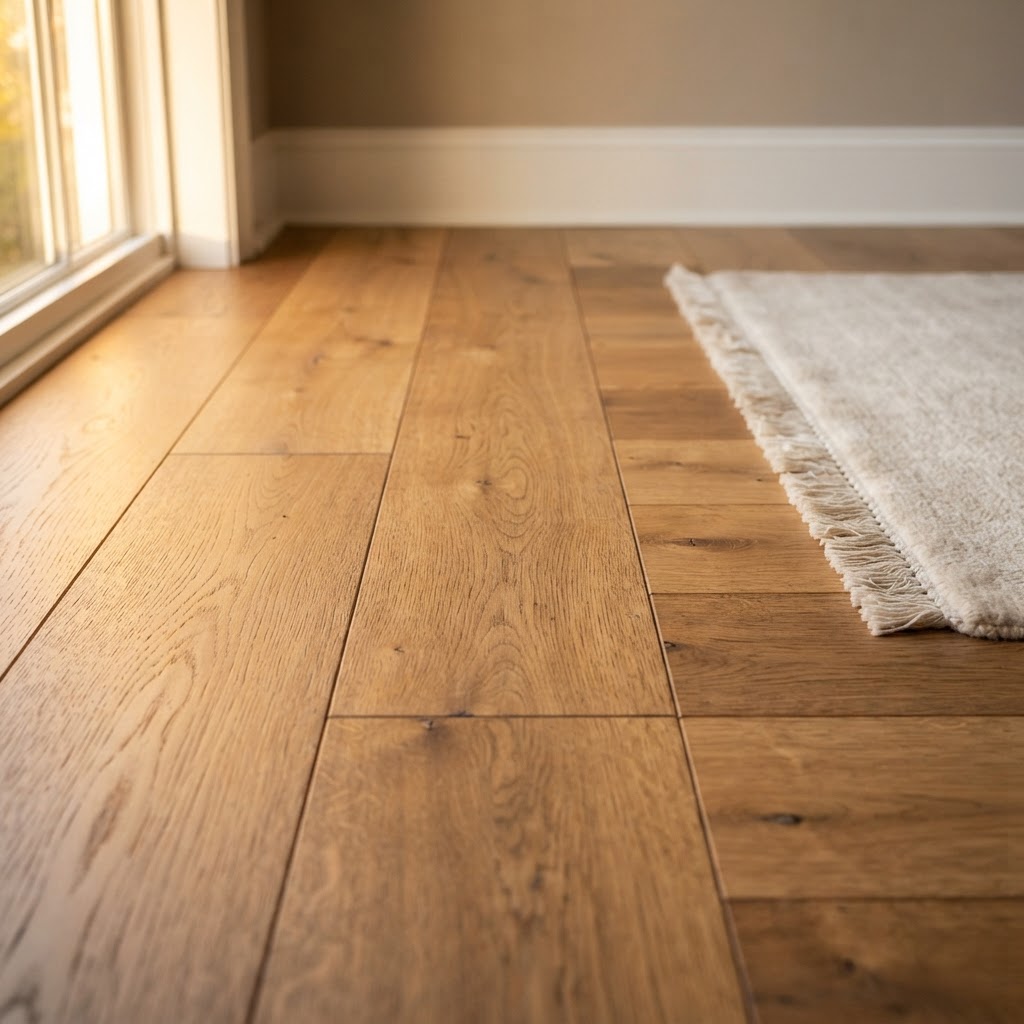
Why are hardwood floors gapping in the fall in McLean and Vienna?
Hardwood floors gap in the fall in McLean and Vienna because wood is hygroscopic, meaning it constantly trades moisture with the air, and when heating season begins and indoor air turns dry, the boards release moisture and shrink across their width, which opens small spaces at the seams. The gaps are usually seasonal and cosmetic, widest in the driest part of winter and often closing partially when humidity returns in spring and summer, although large, uneven or permanent gaps can point to other causes such as an installation problem, subfloor movement, moisture imbalance or very wide boards that move more than narrow ones. Knowing the difference between normal seasonal movement and a real problem lets you act sensibly before January. Floors and Beyond VA, a family-owned Northern Virginia flooring and remodeling contractor serving Fairfax, Loudoun, Prince William and Arlington counties since 1987, evaluates gapping honestly during a free in-home consultation, and with our refinish-first philosophy and in-house crews, with no subcontractors, we restore floors before we ever suggest replacing them.
If you have noticed thin dark lines opening between your boards over the past few weeks, you are not alone. Across McLean, Vienna, Tysons, Falls Church, Oakton and Great Falls, homeowners see the same thing every autumn. The cooler weather arrives, the heating comes on, the air inside loses moisture, and the floors respond. The reaction can be alarming, particularly in a home with beautiful hardwood you care about, but in most cases it is the wood behaving the way wood always has. This guide explains why it happens, how to tell normal from concerning, what you can do now to limit it and what to do before January if the floors need attention. It leads naturally to the idea that sound hardwood is worth keeping and restoring, which is the foundation of how we work.
Why wood moves
To understand gaps, start with how wood works.
Wood is a bundle of tiny tubes. Trees move water through cells, and when lumber is dried and made into flooring, those cells still absorb and release moisture depending on the surrounding air.
Moisture changes size. When wood takes on moisture, it swells. When it loses moisture, it shrinks. Most of this movement happens across the width of the board, not along its length. A floor made of many boards adds up the movement of each, so the total change across a room can be noticeable.
The air sets the target. Over time, wood settles toward a moisture level that matches the humidity of its environment. When indoor humidity changes with the seasons, the wood follows.
It is gradual. Wood does not respond instantly. It takes days and weeks to adjust, which is why gaps appear progressively as the heating season deepens.
This is not a defect. It is the normal behavior of a natural material, and it is part of why proper installation and acclimation matter so much.
Why fall and winter bring gaps
In the Mid-Atlantic, the seasonal humidity swing is significant.
Summer is humid. Warm, moist air brings wood to a higher moisture level, and boards expand and sit tightly together, sometimes even pressing hard against each other.
Heating dries the air. When the weather cools, homes are heated. Warm air can hold more moisture, so when outdoor air that is cold and relatively dry is warmed inside, the indoor relative humidity drops sharply. The result is very dry indoor air in the middle of winter.
Wood loses moisture. In dry air, boards release moisture and shrink. Seams open.
Forced-air systems, radiators and fireplaces intensify the effect. Strong, direct heat near floors dries them faster and may create uneven gapping, with more near vents and registers.
Sun exposure adds to it. Floors in direct sun dry and shrink more than shaded ones.
Houses differ. Tightly sealed modern homes and drafty older houses have different indoor humidity patterns. Large homes in McLean with multiple heating zones may show variation by room.
The pattern is therefore predictable. Gaps appear in fall, reach their widest in the dry heart of winter and ease as moisture returns in spring. If your floors follow this pattern, they are behaving normally.
Normal seasonal gapping versus a real problem
How do you tell the difference? Look at the pattern, the size and the character of the gaps.
Signs of normal seasonal movement
Thin, even gaps between many boards throughout a room, roughly consistent in width.
Seasonal timing. They appear in fall or winter and shrink in warmer months.
No other symptoms. Boards are flat, firm and quiet.
Greater visibility at certain places, such as near heating vents or sunny windows, but still within reason.
Higher likelihood in wider planks, which show more movement per seam.
Signs that something else may be going on
Wide, uneven or irregular gaps, especially in some areas but not others.
Gaps that do not close in humid months.
Cupping or crowning, where board edges or centers rise.
Buckling, where boards lift off the subfloor.
Squeaking and movement that suggest loose boards or a shifting subfloor.
Gaps in only one area, possibly related to water, an appliance, a vent or a structural issue.
Gaps that appear soon after installation, which can reflect inadequate acclimation, improper installation or moisture conditions at the time.
Damaged finish along the seam, with finish cracking or peeling.
Signs of moisture problems, such as musty odors, stains or damp crawl spaces.
If you see only the normal signs, the floor is probably fine. If you see the second list, it is worth having a professional look. Our article on flooring damage repair for water, scratches and buckling describes common problems and fixes.
Factors that make gapping worse
Some floors are more prone to noticeable gaps.
Wide planks. Wider boards move more across their width, so each gap is bigger. Our article on engineered wide plank flooring in Northern Virginia explains how construction affects stability.
Solid wood versus engineered. Engineered boards are generally more dimensionally stable than solid wood of similar width because of their layered construction, though they are not immune.
Species and cut. Some species and cuts move more than others. Plain-sawn boards tend to show more movement than quarter-sawn.
Insufficient acclimation at installation. Wood installed before it adjusted to the home may gap later.
Very dry homes. Houses that run extremely dry in winter see more movement.
Radiant heat and direct heat sources. These intensify drying.
Sunlight and southern exposures. Floors near big windows dry and shrink more.
Older floors. Decades of seasonal movement can open permanent gaps, especially in homes with narrow strip oak that has been refinished many times.
Moisture problems below. Damp crawl spaces and basements affect boards from underneath, with pronounced movement on a floor above.
What to do now, before January
Seasonal gaps do not require emergency action, but there are sensible steps that reduce the effect and protect your floor.
Manage indoor humidity
A moderate, stable indoor humidity is the best protection. Many people aim for a middle range that is comfortable for living and gentle on wood. A humidifier, either portable or whole-house, can raise winter humidity. A simple hygrometer, which is inexpensive, tells you what your home actually experiences. Avoid extreme swings. Do not over-humidify, because excess moisture causes its own problems, including condensation on windows and mold risk. Moderation is the goal.
Avoid direct heat on floors
Keep rugs from covering heating vents, and avoid placing furniture that traps heat against boards. Direct radiant sources can dry areas unevenly.
Keep up with cleaning, but use caution
Dry or lightly damp cleaning is appropriate. Avoid steam cleaners and excessive water. Our floor care page offers guidance.
Do not fill seasonal gaps with rigid filler
This is a common mistake. Filling gaps with hard putty or caulk when wood is at its driest can cause problems when boards swell again in summer, because there is no room for them to expand. The filler can squeeze out, crush edges or even cause buckling. Gaps that are wide enough to be a nuisance deserve professional advice about whether and how to fill them.
Watch for changes
Take photographs now and again in spring, so you can compare. Note whether gaps close with the seasons.
Check your sources of moisture
Make sure crawl spaces and basements are dry and ventilated, and that gutters and downspouts direct water away from the house. Our articles on the best flooring options for basements with moisture issues and concrete basement flooring explain how below-grade moisture affects floors.
Plan the right repair for spring or later
Because wood is at its smallest in winter, some repairs are best timed when the floor is closer to its average condition. Filling and refinishing decisions made in the driest weeks can lead to regret. We discuss timing during the consultation.
What to do before January if the floors need attention
If your floors have problems beyond seasonal gapping, or if the finish is tired and the gaps highlight it, now is a good time to plan.
Get an honest assessment. A professional can tell you whether gaps are seasonal, whether the floor is stable and what, if anything, should be done. The assessment is free with our in-home consultation.
Consider refinishing. If the floor is solid but the finish is worn, dull or scratched, refinishing renews the surface and can improve the look of seams. Sanding and refinishing do not eliminate seasonal movement, but they restore the floor and allow addressing certain issues. Our hardwood floor refinishing field guide for Northern Virginia describes the process, and our article on whether it is worth refinishing hardwood floors helps with the decision.
Consider repairs. Loose boards can be re-fastened. Damaged or badly gapped boards may be replaced and blended. Localized problems do not call for replacing the whole floor. Our article on whether your hardwood floors can be saved explains the thinking.
Address the cause. If humidity or moisture is the underlying issue, solve that first, or the floor will keep reacting.
Think about timing. Refinishing in the dry middle of winter is possible, but some professionals prefer working when conditions are more moderate. We discuss the best timing for your home. Since refinishing existing hardwood needs no ordering or acclimation, it is often the most practical project to schedule in the colder months. Our article on the Tysons-area timeline for installing flooring before the holidays explains scheduling in more detail.
Don't replace sound hardwood out of frustration. Seasonal gapping, by itself, is rarely a reason to tear out a good floor.
When gaps lead to a refinish-first conversation
This is where seasonal gapping connects to how we approach floors. Many homeowners, seeing gaps and wear, assume their floors are failing and wonder about replacement. In most cases, the floors are sound. Solid hardwood in McLean and Vienna homes, particularly in older houses, is often thick enough to be sanded and refinished multiple times. The wood is a valuable asset: dense, stable in its own way and capable of decades more service.
Our refinish-first philosophy begins with the question of whether what you have can be restored. We look at wear-layer thickness, structural soundness, the nature of the gaps and the condition of the finish. When the answer is yes, restoring the floor is usually the most economical and the most authentic path, and it keeps the character that new products cannot replicate. When the answer is no, because of damage, thin wood or a failing subfloor, we say so plainly and discuss replacement options, including engineered wood and other flooring. Either way, you get an honest opinion.
Older homes in Vienna, Falls Church and McLean
Houses in these communities range from older ranch, split-level and colonial homes to large, newer houses. Each has its own seasonal behavior.
Older homes often have narrow strip oak laid over wood subfloors, with crawl spaces or basements below. Seasonal gaps are common, and decades of movement may have created permanent small gaps. These floors can be refinished repeatedly if wood remains.
Newer large homes may have wider planks, engineered products, radiant heat or multiple zones with different conditions. Gaps may show variation between rooms.
Homes with finished basements or additions may have moisture or construction differences between sections.
Condominiums and townhouses may have floating or engineered floors over concrete, with their own seasonal behavior. See our condominium remodeling page.
Our historic home restoration page describes our approach to older houses.
What drives the scope of a gapping repair or refinishing project
We do not publish prices in articles, but the factors that shape any estimate are clear. The area involved. The condition of the finish and wood. Whether the project is repair, refinishing or replacement. Gap filling decisions and technique. Board replacement and blending. Stain and finish systems. Stairs. Subfloor and moisture conditions. Furniture moving and access. And the company, including its crews, licensing, bonding and insurance.
At Floors and Beyond VA, we provide an honest, all-inclusive estimate, and what we quote is what you pay. Our estimates include old flooring removal where needed, new materials, professional installation, furniture moving, transitions, molding and full cleanup. Our article on flooring cost factors in Northern Virginia explains why estimates differ.
Why homeowners trust Floors and Beyond VA with their hardwood
Hardwood is an investment, and homeowners want advice that protects it. Floors and Beyond VA has served Northern Virginia since 1987 as a family-owned company, and our refinish-first philosophy means we would rather restore your floor than sell you a new one. Our in-house crews, with no subcontractors, handle sanding, repairs and finishing with care, and we are fully licensed, bonded and insured. Your free in-home consultation brings samples to your door, includes precise laser measurements at no charge and gives you a candid view of whether your gaps are normal and what, if anything, to do. We back it with an honest, all-inclusive estimate, and what we quote is what you pay. Learn more at floorsandbeyondva.com.
Common mistakes with gapping floors
The first mistake is assuming seasonal gaps mean the floor is ruined.
The second is filling gaps with hard filler during the driest weeks.
The third is running the house extremely dry all winter.
The fourth is over-humidifying and creating new problems.
The fifth is ignoring signs of moisture below the floor.
The sixth is using steam cleaners or excess water.
The seventh is replacing sound hardwood without first considering refinishing.
The eighth is delaying a professional look when gaps are uneven or accompanied by cupping.
The ninth is blaming the installer for normal seasonal movement.
The tenth is repairing at the wrong time of year without advice.
Frequently asked questions
Are gaps in my hardwood floors normal? Thin, even, seasonal gaps are normal. Wide, uneven or persistent gaps deserve a professional look.
Will the gaps close? Often, partly, as humidity returns in spring and summer.
Should I fill the gaps? Be careful. Rigid filler can cause problems. Ask for advice.
What humidity should I aim for? A moderate, stable level comfortable for living and gentle on wood. A hygrometer helps you monitor it.
Do wide planks gap more? Generally, yes, because each board moves more across its width.
Can refinishing fix gaps? Refinishing renews the surface and can address some issues, but it does not stop seasonal movement.
Is Floors and Beyond VA licensed and insured? Yes. We are fully licensed, bonded and insured for every project, and our in-house crews work with no subcontractors.
Do you serve my neighborhood? Yes, including McLean, Vienna, Tysons, Falls Church, Merrifield, Dunn Loring, Great Falls and Oakton, along with the rest of Fairfax, Loudoun, Prince William and Arlington counties.
Keep reading
For related planning, see Hardwood Floor Refinishing in Vienna and Falls Church: When to Refinish Instead of Replace, Should You Install New Flooring Before the Holidays? The Tysons-Area Timeline for November and Selling Near Tysons? Which Floor Upgrades Help Before You List This Winter.
Ready to protect and restore your hardwood floors?
Gaps do not have to mean replacement. Floors and Beyond VA brings nearly forty years of Northern Virginia experience, in-house crews with no subcontractors, a refinish-first philosophy and a free in-home consultation with samples and precise laser measurements at no charge.
Request your free flooring estimate today: https://floorsandbeyondva.com/Contact
You can also call (703) 906-5698 or email hello@floorsandbeyondva.com.




