
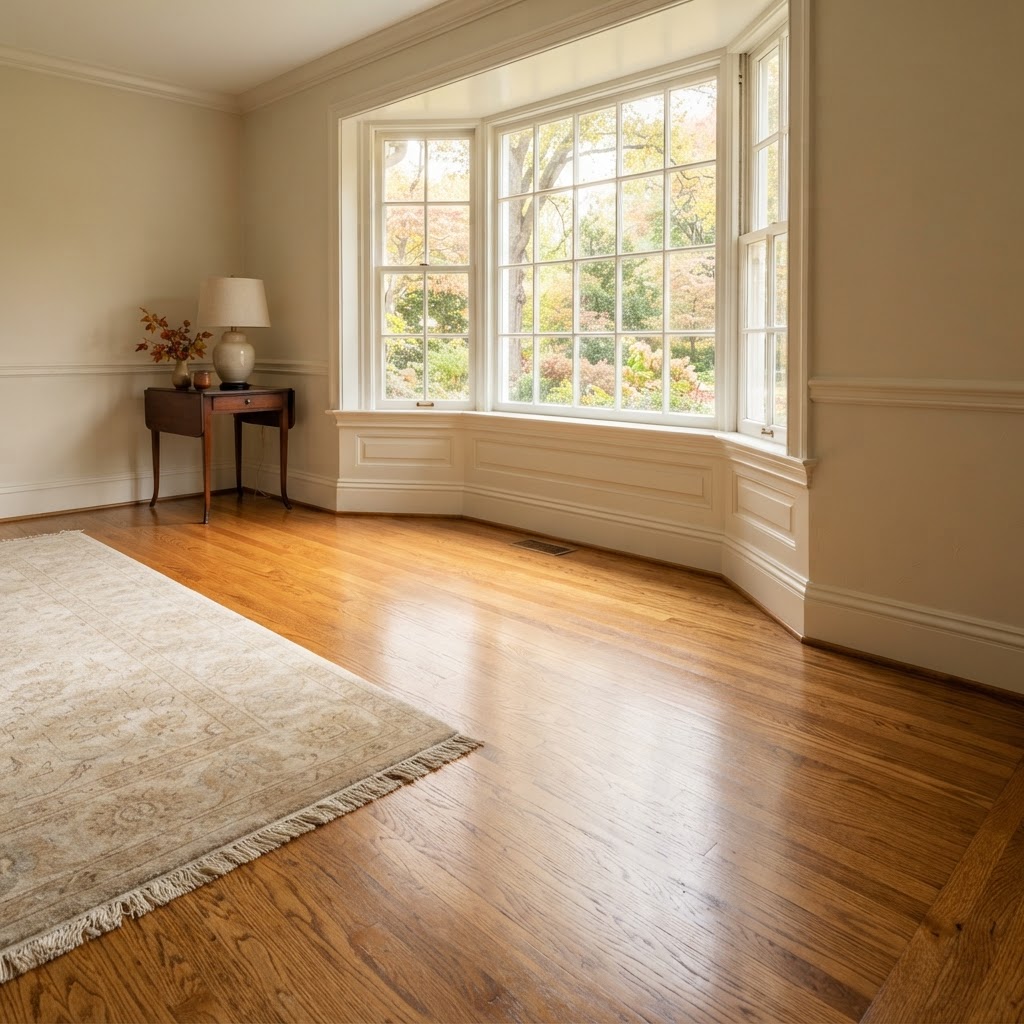
When should you refinish hardwood floors in Vienna or Falls Church instead of replacing them?
You should refinish hardwood floors in Vienna or Falls Church instead of replacing them whenever the boards are structurally sound, flat enough to sand evenly, thick enough to lose a thin layer of wood, and damaged only at the surface by scratches, dullness, worn finish, light stains or fading. Refinishing renews the original wood, keeps the character of an older home, avoids the waste and expense of tearing out good material and usually delivers a floor that looks new. Replacement makes sense when the damage is deep or widespread, such as severe water damage, rot, buckling that does not resolve, wood too thin to sand, deep pet contamination or a failing subfloor. Floors and Beyond VA, a family-owned Northern Virginia flooring and remodeling contractor serving Fairfax, Loudoun, Prince William and Arlington counties since 1987, was built on a refinish-first philosophy: we start by asking whether the floor you have can be saved, and our in-house crews, with no subcontractors, do the sanding, repairs and finishing themselves. This guide is written for the older homes around Vienna and Falls Church, where original oak and other hardwoods are often waiting to be restored.
The housing around Vienna, Falls Church, Oakton, Dunn Loring and the surrounding Fairfax County neighborhoods includes a wide range of homes: older ranches and split-levels, traditional colonials, Cape Cods and bungalows near the City of Falls Church and Vienna's historic center, and larger newer houses. Many of the older ones were built with solid hardwood floors, usually oak, laid in narrow strips and finished on site. Decades later, those floors may be dull, scratched, stained or hidden under carpet. Owners ask whether to replace them. Often the best answer is no. This guide explains how to decide, what refinishing involves, what makes a floor a candidate and what makes it a poor one.
Why refinishing is usually the first thing to consider
Refinishing has advantages that go well beyond cost.
It keeps what is already good. Solid hardwood from older homes is often dense, stable, old-growth or well-seasoned wood that is difficult to match in modern products. Sanding reveals it, and finishing protects it.
It preserves character. The scale, grain and subtle variation of original floors are part of an older home's identity. Replacement with a different product changes the feel.
It is less disruptive. Refinishing happens in place, without removing and disposing of the old floor, and without waiting for materials to be manufactured, shipped and acclimated.
It avoids waste. Tearing out sound wood creates debris and consumes new resources.
It can be repeated. A solid floor can often be refinished several times over its life.
It gives you control over color. A refinish allows you to choose a new stain or natural tone, and update the look completely.
It supports resale. Buyers in older neighborhoods often respond warmly to restored original floors.
For these reasons, our approach is refinish-first. Our wood flooring page describes our services, and our hardwood floor refinishing field guide for Northern Virginia explains the process in detail.
What a good refinishing candidate looks like
Not every floor can be refinished, but most can. Look for the following.
Solid hardwood. Solid boards can be sanded several times. Engineered flooring depends on its wear layer, and some cannot be sanded at all.
Adequate thickness above the tongue. Sanding removes a thin layer of wood. If previous sanding has already brought the surface near the tongue-and-groove joint, little remains to remove.
Surface-level damage. Scratches, scuffs, dullness, worn finish, light water spotting and fading respond well.
Sound and flat boards. Boards that are firmly attached and reasonably level sand evenly.
Manageable stains. Light stains often sand out. Deeper stains may remain or need board replacement.
Gaps within reason. Normal seasonal and age-related gaps can be managed. Our article on why hardwood floors gap in the fall in McLean and Vienna explains seasonal movement.
Squeaks that can be fixed. Loose boards can often be re-fastened. Not every squeak can be eliminated.
Sufficient length of life ahead. If you plan to stay in the home, restoration pays off for years.
Our article on whether your hardwood floors can be saved walks through the evaluation, and our article on whether it is worth refinishing hardwood floors explains the reasoning.
When replacement is the better answer
Honesty requires saying when refinishing is not right.
Severe water damage. Widespread cupping, buckling, warping, rot or blackened wood often cannot be sanded out.
Insufficient wood. Floors that have been sanded many times, or thin engineered products, may not tolerate more.
Deep pet urine damage. Urine penetrates deeply and can ruin wood and the subfloor beneath. Surface sanding may not remove odor or stain.
Failing subfloor or structure. If the subfloor is rotted, delaminated or unsound, the floor above must be removed to repair it.
Widespread loose or damaged boards. If much of the floor is compromised, replacement can be more efficient than patching.
Incompatible floor type. Some floors, such as certain laminates, vinyl and glued products, cannot be refinished.
Unsafe or hazardous materials. In very old houses, old finishes or underlayments may require specific handling.
Changed needs. A different layout, a switch to a more water-resistant product or a design that demands new flooring may call for replacement.
Cost-benefit reversal. When repairs to a heavily damaged floor approach the effort of replacement, new flooring can make more sense.
Our article on flooring replacement and when to choose what helps when replacement is the right path, and our article on flooring damage repair for water, scratches and buckling describes what can be repaired.
Repair first, then refinish
Many floors fall between ideal and ruined. The solution is often repair followed by refinishing.
Replacing damaged boards. Individual boards or small sections can be cut out and replaced with matching wood, using salvaged boards from closets where possible. Blending is achieved by sanding and finishing old and new together.
Re-fastening loose boards. Securing boards to the subfloor reduces squeaks and movement.
Filling gaps and holes. Appropriate fillers address nail holes, small gaps and tack-strip holes.
Treating stains. Some stains can be lightened with treatment before staining.
Fixing transitions. Doorways and thresholds may need adjustment.
Addressing subfloor issues. Where access exists, subfloor repairs improve long-term performance.
The refinished result unifies these repairs into one continuous floor. This approach preserves most of the original and addresses real problems at their source.
The refinishing process, step by step
Understanding the process helps you evaluate proposals and prepare.
Assessment. We inspect the floor, check thickness where possible, identify species, test finishes, and look for problems.
Preparation. Furniture is moved, baseboards and trim are protected, and the area is prepared.
Repairs. Loose boards, gaps and damaged areas are addressed before sanding.
Sanding. Using professional equipment, we remove the old finish and level the surface through a sequence of progressively finer grits. Edges and corners are sanded with care. Dust control reduces mess.
Cleaning. The floor is thoroughly cleaned so that no dust remains under the finish.
Staining or natural finish. If you want a color change, stain is applied after testing on your wood. Natural or clear finishes keep the wood's own color.
Finish coats. Multiple coats of protective finish are applied, with drying time between them. We discuss oil-based, water-based and other systems, and sheen options.
Curing. After the final coat, the finish cures. Walking, furniture and rugs are introduced in stages according to our instructions.
Final inspection and cleanup. We walk the floor with you, address details and leave the home clean.
Our estimates include furniture moving, transitions, molding and full cleanup.
Screen-and-recoat: a lighter option
Not every refresh requires full sanding. If the finish is worn but the wood is not damaged, a screen-and-recoat can abrade the surface and apply a fresh coat of finish. It is quicker, less dusty and less expensive in effort than a full refinish, and it can renew shine and protection. It does not remove scratches that have gone through the finish into the wood, change color or fix damage. We assess whether it suits your floor. Done at the right time, before wear reaches the wood, it extends the life of a finish and delays the need for a full sanding.
Choosing color and finish in older Vienna and Falls Church homes
Refinishing is also a chance to update the look without losing character.
Natural and warm tones. Clear or lightly toned finishes show off oak's natural beauty and suit most older homes.
Medium and deeper tones. Honey, golden brown and walnut tones are classic and hide wear well.
Sheen. Matte and satin finishes feel current and hide minor wear. High gloss can feel dated and shows every flaw.
Water-based versus oil-based. Water-based finishes stay clear and lighter. Oil-based finishes add warmth and deepen over time.
Test on your floor. We bring samples and test on your sanded wood in your light, because catalog colors mislead. We have no showroom, because your home is where the decision belongs.
Consistency. Refinishing connected rooms together unifies tone and sheen.
Our article on how to get flooring samples delivered explains how samples reach you.
Hardwood under carpet in older homes
Many Vienna and Falls Church houses have original hardwood hiding under wall-to-wall carpet. Check a closet, a floor register or a threshold. Lift a corner gently in a hidden spot, and look at the wood. If it is solid and in decent shape, uncovering and refinishing it can be a transformative improvement. Expect tack-strip holes along the walls and possible staining. Careful carpet removal matters, because rough removal damages the wood you hope to save. Old adhesives and flooring materials in older homes may contain hazardous substances, so testing and safe handling are advisable when there is reason for concern. Our article on carpet to hard flooring conversion in Northern Virginia explains what changes in such projects.
Stairs, trim and the rest of the wood
Refinishing is most effective when it takes the whole picture into account.
Stair treads. Treads can be refinished to match floors. Worn treads can be repaired or replaced.
Railings and balusters. Stripping, refinishing or painting them coordinates the stair.
Baseboards and trim. Protecting or refinishing trim keeps everything harmonious.
Thresholds and transitions. Updating them completes the job.
Adjoining rooms. Consider extending refinishing to connected spaces for continuity.
Our historic home restoration page describes our approach to older homes, and our whole house remodels service can coordinate flooring with larger projects.
Timing a refinish
Seasons. Refinishing can be done year-round. Humidity affects drying and wood movement, so we plan around conditions. In heating season, indoor air is dry, and we discuss how that affects timing. Since refinishing existing hardwood needs no ordering and no acclimation, it is often a practical project in the colder months. Our article on the Tysons-area timeline for installing flooring before the holidays discusses scheduling.
Living in the home. Sanding creates dust, and finishes create odors and need cure time. We plan access and tell you what to expect.
Pets and children. Keep them away from work areas.
Selling. If you plan to sell, refinishing before listing is often among the most effective improvements. Our article on floor upgrades before selling near Tysons explains.
What drives the scope of a refinishing project
We do not publish prices in articles, but the factors that shape any estimate are clear. The area and number of rooms. The condition of the floor and the repairs needed. Board replacement and blending. Stain and finish system, including the number of coats. Stairs. Gap filling and special treatments. Transitions and trim. Furniture moving and access. And the company, including its crews, licensing, bonding and insurance.
At Floors and Beyond VA, we provide an honest, all-inclusive estimate, and what we quote is what you pay. Our estimates include old flooring removal where needed, new materials, professional installation, furniture moving, transitions, molding and full cleanup. Our article on flooring cost factors in Northern Virginia explains why estimates differ.
Why Vienna and Falls Church homeowners choose Floors and Beyond VA
Refinishing is craft work, and the quality of the sanding and finishing determines the result. Floors and Beyond VA has served Northern Virginia since 1987 as a family-owned company, and our refinish-first philosophy is not a slogan but the way we approach every floor. Our in-house crews, with no subcontractors, do the sanding, repairs and finishing, so the people who assess your floor are the people who restore it. We are fully licensed, bonded and insured. Your free in-home consultation brings samples to your door, includes precise laser measurements at no charge and gives you an honest opinion on whether to refinish, repair or replace, even when the honest opinion is to keep what you have. Our all-inclusive estimate covers everything, and what we quote is what you pay. See our services at floorsandbeyondva.com.
Common mistakes with refinishing decisions
The first mistake is replacing sound hardwood out of frustration with a tired finish.
The second is refinishing a floor that is too thin or damaged.
The third is skipping repairs before sanding.
The fourth is choosing a stain from a photograph.
The fifth is using a high-gloss finish that fights an older home's character.
The sixth is refinishing only part of a connected space, leaving mismatched tones.
The seventh is ignoring the stairs.
The eighth is walking on or furnishing a floor too soon.
The ninth is hiring on price alone for craft work.
The tenth is not asking for an honest assessment before deciding.
Frequently asked questions
Can my hardwood floors be refinished? Most solid hardwood can. We check thickness and condition during the consultation.
How do I know if my floors can be saved? We assess thickness, soundness, damage and subfloor. Our free consultation includes this.
Is refinishing better than replacing? Often, when the floor is sound. It preserves character and avoids waste.
What if I have pet stains? Light stains may sand out. Deep stains may need board replacement. We assess honestly.
How long does refinishing take? It depends on size and finish cure times. We give a realistic schedule.
Can you change the color? Yes. We test stains on your wood.
Is Floors and Beyond VA licensed and insured? Yes. We are fully licensed, bonded and insured for every project, and our in-house crews work with no subcontractors.
Do you serve my neighborhood? Yes, including Vienna, Falls Church, Oakton, Dunn Loring, McLean, Tysons and Merrifield, along with the rest of Fairfax, Loudoun, Prince William and Arlington counties.
Keep reading
For related planning, see Why Your Hardwood Floors Are Gapping This Fall in McLean and Vienna (and What to Do Before January), Selling Near Tysons? Which Floor Upgrades Help Before You List This Winter and 2026 Flooring Trends Showing Up in Tysons and McLean Homes: What's In and What's Fading.
Ready to restore your hardwood floors?
Your floors may have more life in them than you think. Floors and Beyond VA brings nearly forty years of Northern Virginia experience, in-house crews with no subcontractors, a refinish-first philosophy and a free in-home consultation with samples and precise laser measurements at no charge.
Request your free flooring estimate today: https://floorsandbeyondva.com/Contact
You can also call (703) 906-5698 or email hello@floorsandbeyondva.com.




