
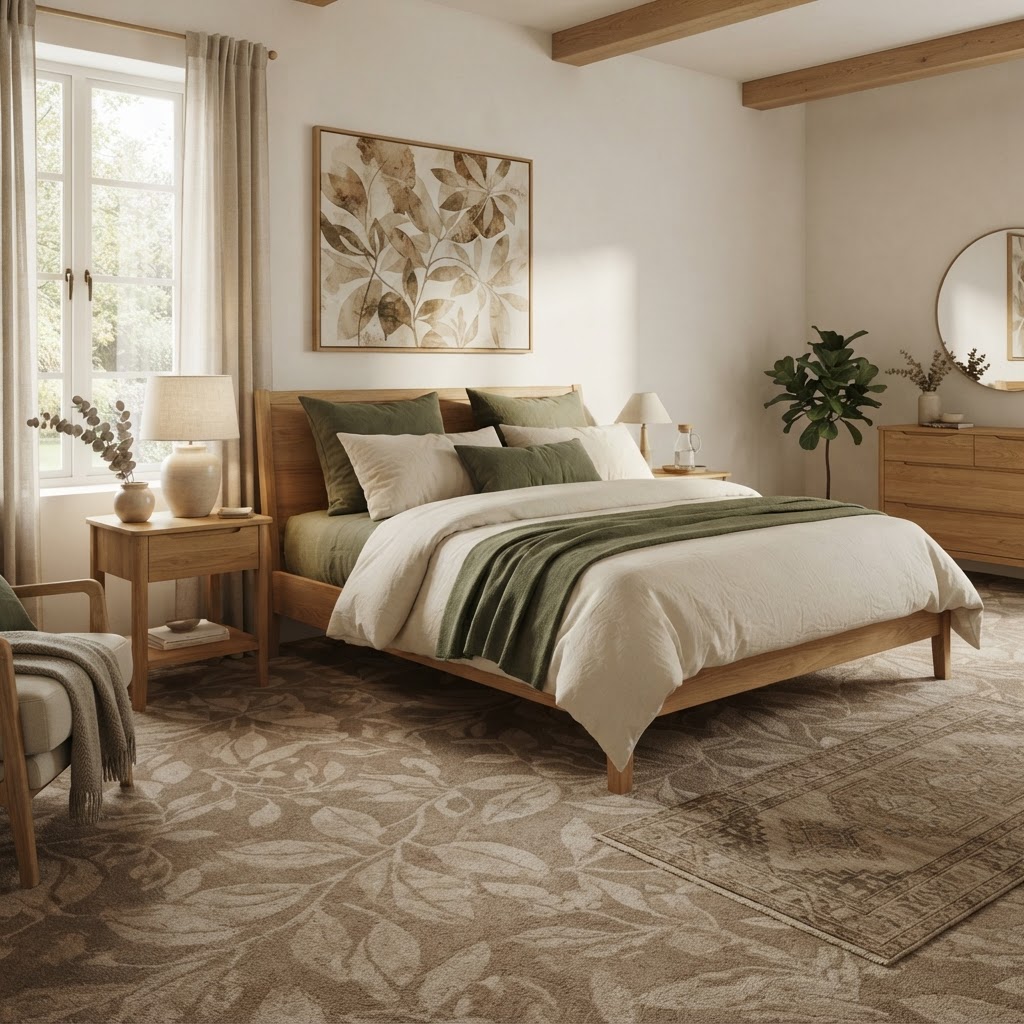
Earth-Toned Patterned Carpet Is Back: How to Use It Without Overwhelming a Room in Aldie and Northern Virginia Homes
How do you use earth-toned patterned carpet without overwhelming a room?
You use earth-toned patterned carpet without overwhelming a room by choosing a pattern scale that suits the room, keeping the palette tonal and low in contrast, letting the carpet be the main pattern while everything else stays quieter, using it where it will be seen and enjoyed, such as bedrooms, stairs, hallways, studies and media rooms, and testing a large sample in your own light before committing. Earthy neutrals such as warm taupe, clay, oatmeal, sand, moss and soft terracotta, combined with organic, large-scale patterns, are returning in carpet after years of flat gray and beige. In Aldie, South Riding, Brambleton, Ashburn, Leesburg, Middleburg and Chantilly homes, the look suits both newer open-plan interiors seeking warmth and older homes and farmhouses that welcome texture and character. Floors and Beyond VA, a family-owned Northern Virginia flooring and remodeling contractor serving Fairfax, Loudoun, Prince William and Arlington counties since 1987, installs carpet and luxury carpet with in-house crews and no subcontractors and brings samples to your home so you can see how a pattern behaves in your actual room.
For several years, carpet in many homes meant a plain, neutral cut pile in some shade of gray or greige, chosen to disappear. Today the pendulum is swinging toward carpet with personality: earthy colors drawn from soil, clay, grasses and stone, and patterns inspired by nature, such as organic shapes, soft botanicals, abstract landscapes and large-scale designs that read as texture or artwork underfoot. This shift reflects broader interior trends toward natural materials, warmth and individuality. But patterned carpet is also a design commitment, and a poor choice can overwhelm a room or look dated quickly. This guide explains what is driving the trend, how pattern, scale and color work together, which rooms suit patterned carpet, how construction and fiber affect results and how to avoid the mistakes that make a pattern feel loud. For our services, see our carpet and luxury carpet pages.
Why earthy patterned carpet is returning
Several forces are converging.
A move toward warmth. After a long period of cool grays, homeowners are choosing warmer colors in paint, wood and textiles. Carpet follows. Earth tones sit comfortably with natural oak floors, warm whites, plaster-textured walls and organic materials like linen, wool and stone.
A desire for texture and individuality. Homes filled with identical plain neutrals can feel anonymous. A subtle or bold pattern gives a room identity, and a large-scale organic design reads like a piece of art.
Comfort and acoustics. As more people work and live at home, soft, sound-absorbing surfaces have regained appeal. Carpet makes bedrooms, studies and media spaces quieter and cozier.
Better performance fibers. Modern carpets resist stains and wear far better than those of earlier decades, so pattern and color can be enjoyed without constant worry.
Pattern as camouflage. Patterns and multi-tonal colorations hide dirt, footprints, vacuum marks and wear better than flat solids, making them practical for family homes.
Layered, personality-led interiors. Current design favors layered rooms with a mix of textures, rather than perfectly matched sets.
None of this means patterned carpet is right for everyone. It is a choice that benefits from restraint and planning.
Understanding the earthy palette
Earth tones are not a single color. They are a family, and subtle differences matter.
Warm neutrals. Oatmeal, sand, wheat, warm taupe, mushroom and cream. These are the safest and most versatile, harmonizing with most wood tones and paint colors.
Clay and terracotta. Soft, muted reds and oranges evoke fired earth. In small doses or in low-contrast patterns, they add warmth and character.
Olive, moss and sage. Muted greens connect with landscapes. Excellent with natural oak, linen and cream.
Umber, chocolate and deep brown. Rich, grounding tones for dramatic rooms, studies and media spaces.
Ochre and mustard. Warm yellows that bring energy in accents.
Stone and putty. Gray-leaning earth tones that bridge warm and cool.
The most successful earthy patterns are tonal, using several shades close in value so the pattern reads as depth and texture, not as sharp contrast. High-contrast patterns, such as bold dark shapes on a light ground, are far more assertive and require more design confidence.
Pattern, scale and rhythm
Pattern is the factor that most determines whether a carpet feels calm or overwhelming.
Scale. Large-scale patterns can look dramatic in big rooms and become unreadable in small ones, where only part of a motif is visible. Small-scale patterns read as texture from a distance and suit smaller spaces and stairs. Match scale to the room. A large, organic pattern suits a spacious primary suite or living room, and a finer pattern suits a bedroom, hallway or staircase.
Contrast. Low-contrast patterns blend into a soft surface that is easy to live with. High-contrast patterns command attention and can feel busy, particularly in rooms with other patterns.
Repeat and rhythm. Some patterns repeat visibly in regular rows, while others are random or broken, flowing across the floor. Organic, irregular patterns feel more natural and are more forgiving of seams and room irregularities. Strict geometric patterns require more careful alignment.
Direction. Patterns with a clear direction need planning so that they run correctly relative to the room's entrances and sightlines.
Density. Dense patterns hide wear and stains well. Sparse patterns can show spots more.
A helpful principle is that pattern and plain should balance. If the carpet is the pattern, keep walls, window treatments and large furniture more restrained. If the room already has bold wallpaper or art, choose a quieter carpet.
Where patterned earth-toned carpet works best
Bedrooms
Bedrooms are ideal. They are intimate, low-traffic and soft underfoot is welcome. A tonal patterned carpet makes a primary suite feel layered and luxurious. See our primary suite remodeling services for planning the entire space.
Stairs and hallways
Patterned carpet and runners are classic for staircases. Pattern hides wear on treads, adds traction and quiets footsteps. A runner with a border on hardwood stairs is a traditional, elegant look that suits historic homes and farmhouses around Aldie, and a full carpeted staircase with a subtle pattern fits newer homes.
Home offices and studies
Warm, patterned carpet brings a cozy, library-like quality to a study and dampens sound. See our home office design page.
Media rooms and basements
Carpet improves acoustics in a home theater and adds warmth to a basement. A patterned, dark earth-toned carpet hides spills and footprints, which is a bonus in rooms used for movie nights. Moisture control is essential below grade. See our home theater carpet and basement finishing pages, and our article on basement carpet mold prevention and building science.
Living rooms and sitting rooms
Wall-to-wall patterned carpet in living areas is less common now than area rugs, but it can work in formal sitting rooms and in homes where carpet is part of the character. Many homeowners prefer hard flooring with large area rugs in main living spaces, which provides a similar effect with more flexibility.
Where to be cautious
Avoid heavy patterned carpet in kitchens, bathrooms, entries and any space with frequent moisture or soil. Be careful in very small rooms with large-scale patterns, and in open-plan areas where the pattern could clash with adjoining floors. Our article on kitchen versus living room flooring in Northern Virginia explains material pairings.
Wall-to-wall carpet or area rugs?
The same earthy, patterned look can be achieved in two ways, each with its own trade-offs.
Wall-to-wall carpet covers the entire floor, creating a seamless, quiet, warm surface. It suits bedrooms, stairs and media rooms. It is installed with padding, tack strips or adhesives and requires professional stretching and seaming. Pattern placement and seam planning matter.
Area rugs can be changed, moved and cleaned separately, and they protect hardwood while adding pattern. They allow experimentation with less commitment. Rugs on hardwood combine the warmth and renewability of wood with the personality of pattern.
For homeowners unsure about a pattern, starting with a rug is a low-risk way to test the look. Many Aldie area homes with beautiful hardwood floors benefit from this approach. If your hardwood looks tired, refinishing may restore it first. Our articles on whether your hardwood floors can be saved and whether refinishing is worth it explain how to evaluate your floors, and our wood flooring page describes our hardwood services.
Construction and fiber: how to choose carpet that lasts
A beautiful pattern is wasted on a carpet that wears out quickly. Understanding construction helps.
Fiber. Nylon is renowned for resilience and recovery from traffic. Triexta offers excellent stain resistance and softness. Polyester is soft and colorful with good stain resistance but can mat in heavy traffic. Wool is naturally resilient, stain-resistant and beautiful, with a rich, natural character that suits earth tones, though it needs more careful maintenance. Our articles on the most durable carpet types and cleaning and maintaining wool carpet at home explain more.
Pile style. Cut pile gives a soft, plush look. Loop pile is durable and textured and can show pattern through varying loop heights. Cut-and-loop combines both to create sculpted patterns, a popular way to achieve organic texture. Patterned carpet can be woven, tufted with varied pile heights, printed or created with multi-colored yarns.
Density and twist. Denser carpets with tight twist hold up better and feel more luxurious.
Backing and padding. Quality padding extends life, improves comfort and reduces noise. Moisture-sensitive pads are a poor choice below grade.
Stain and soil treatments. Modern treatments help carpets resist stains. Our article on stain-resistant carpet for families explains what to look for.
For a broad overview, see our article on choosing carpet in Northern Virginia.
How to test pattern and color in your home
Pattern and color are notoriously deceptive in small samples. A swatch cannot show how a large-scale motif repeats or how its colors shift across a room. Take the following steps.
Ask for the largest sample available. Ideally see a section that shows a full repeat.
View it in the room, in all light. Morning, afternoon and evening light change earthy colors dramatically. North light cools warm tones, and warm evening light intensifies them.
View it from standing height and from a distance. Carpet patterns look different when you look down from above than when you view the room from a doorway.
Hold it next to your paint, wood trim, furniture and curtains. Check undertones carefully.
Consider the seams and the layout. Ask how the pattern will run, where seams will fall and how much extra material is needed to match patterns, since patterned carpet often requires more material to align repeats.
Live with it for a few days. Leave the sample in the room and see whether you still like it.
We bring samples to your home, and we do not have a showroom, because color and pattern decisions belong where the carpet will live. Our article on how to get flooring samples delivered explains related options.
Installation: why craftsmanship matters with pattern
Patterned carpet is less forgiving than plain carpet. Pattern matching at seams requires planning and skill. The installer must align repeats, cut accurately and stretch the carpet correctly so that the pattern stays straight. Poor stretching leads to wrinkles, distortion and seam problems. Room shape matters: irregular rooms can complicate pattern layout.
Preparation includes removing old carpet and padding, inspecting and repairing the subfloor, installing proper tack strips and padding and planning seams away from high-traffic sightlines. Stairs require careful fitting, since the pattern should follow the stair geometry cleanly. Our flooring installation guide explains our process, and our guide to preparing your home for new floors describes how to get ready.
If you are converting between carpet and hard flooring, our article on carpet to hard flooring conversion in Northern Virginia explains what changes besides appearance.
Caring for patterned carpet
Good care protects both appearance and warranty. Vacuum regularly with appropriate settings. Treat spills promptly by blotting, not rubbing. Use entry mats to reduce soil. Rotate furniture occasionally to avoid permanent dents, and use furniture pads. Schedule periodic professional cleaning according to manufacturer guidance. Avoid harsh chemicals that can damage dyes and fibers. Wool needs gentler cleaning methods. If pets are part of your household, our article on removing pet odors from carpet in Northern Virginia offers guidance, and our floor care page provides more tips.
What drives the scope of a patterned carpet project
We do not publish costs in articles, but the factors that shape any estimate are clear. The carpet and its quality tier, including fiber, density and construction. Pattern matching requirements, which affect how much material is needed. Padding. Square footage and layout. Stairs, which add detailed work. Removal and disposal of existing carpet and padding. Subfloor condition. Transitions, trim and molding. Furniture moving. And the company, including its crews, licensing, bonding and insurance.
At Floors and Beyond VA, we provide an honest, all-inclusive estimate, and what we quote is what you pay. Our estimates include old flooring removal, new materials, professional installation, furniture moving, transitions, molding and full cleanup. Our article on how much professional carpet installation costs explains the factors involved, and our article on flooring cost factors in Northern Virginia explains why estimates differ.
Common mistakes with patterned carpet
The first mistake is choosing a pattern scale that does not suit the room.
The second is choosing high contrast when you want calm.
The third is competing patterns, such as bold carpet, bold wallpaper and bold curtains in one room.
The fourth is judging from a small swatch.
The fifth is ignoring light, which changes earthy colors.
The sixth is choosing a trendy color that dates quickly when a timeless tone would last.
The seventh is underordering material and being unable to match patterns.
The eighth is skimping on padding.
The ninth is using carpet in moisture-prone areas without precautions.
The tenth is hiring an installer with no pattern experience.
Frequently asked questions
Is patterned carpet back in style? Yes. Earthy colors and organic patterns are returning as homeowners seek warmth and texture.
Will patterned carpet make a room feel smaller? Not necessarily. A low-contrast pattern in a suitable scale can feel cozy. High-contrast patterns can feel busy.
What colors work with earth-toned carpet? Warm whites, cream, soft greens, natural wood and linen neutrals pair well.
Does patterned carpet hide stains? Patterns and multi-tonal colors conceal dirt and wear better than flat solids, but no carpet is stain-proof.
Is patterned carpet harder to install? Yes. Pattern matching and stretching require skill.
Can I use a runner instead? Yes. Runners on hardwood stairs and hallways are a classic way to bring pattern and warmth.
Is Floors and Beyond VA licensed and insured? Yes. We are fully licensed, bonded and insured for every project, and our in-house crews work with no subcontractors.
Do you serve my area? Yes. We serve Aldie, South Riding, Brambleton, Ashburn, Leesburg, Middleburg, Chantilly, Gainesville, Haymarket, Fairfax, McLean, Vienna, Reston, Herndon and Arlington, along with Fairfax, Loudoun, Prince William and Arlington counties.
Ready to see earthy patterned carpet in your own home?
A pattern should be chosen where it will live. Floors and Beyond VA brings nearly forty years of Northern Virginia experience, in-house crews with no subcontractors and a free in-home consultation with samples and precise laser measurements at no charge.
Request your free Aldie flooring estimate: https://floorsandbeyondva.com/Contact
You can also call (703) 906-5698.




