
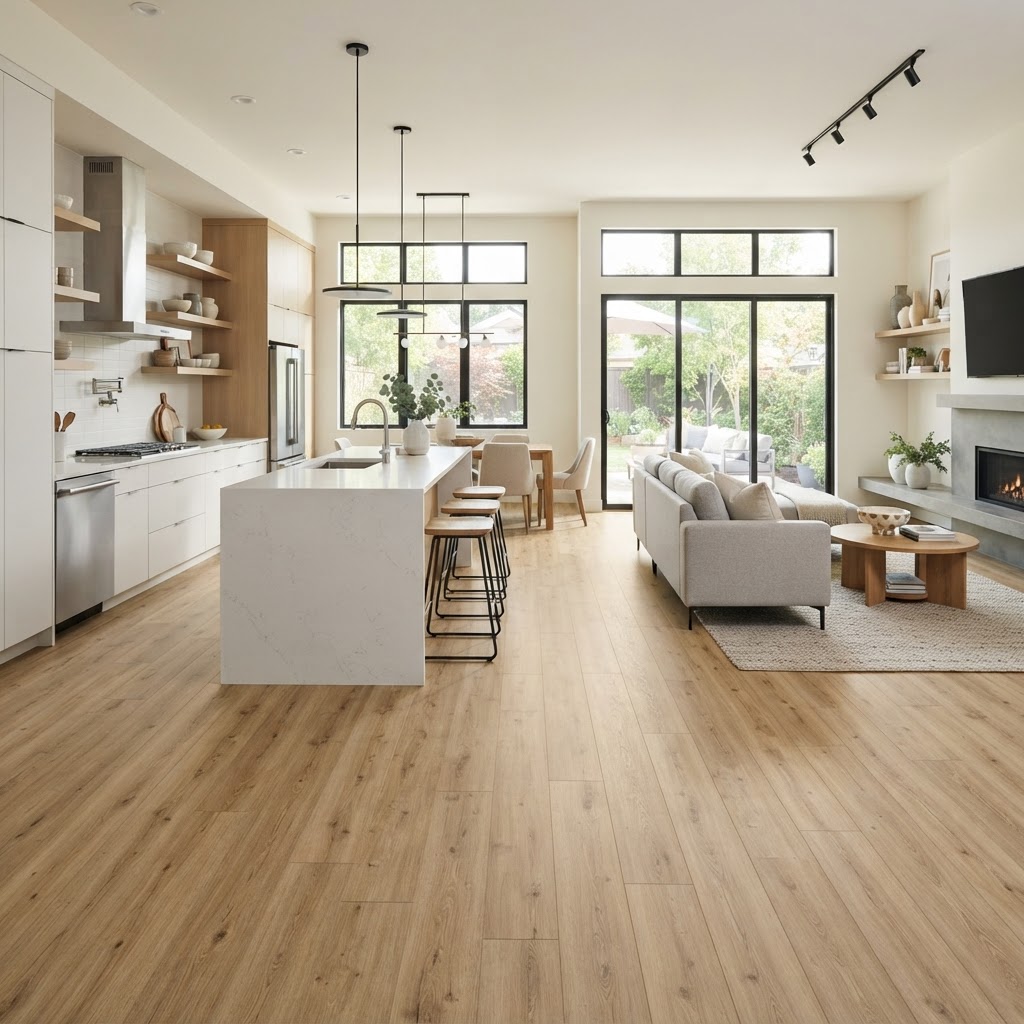
Yes, luxury vinyl plank (LVP) is a very good choice for many McLean homes, particularly in kitchens, basements, bathrooms, mudrooms, laundry rooms, playrooms and any space where moisture, spills, pets or heavy traffic are a concern. Modern LVP is a multi-layer product with a printed design layer, a clear protective wear layer and a rigid or semi-rigid core, and the best versions resist water, stand up to scratches and replicate the look of hardwood convincingly. It is not a perfect substitute for real wood in every situation. It cannot be refinished, it does not add the same kind of resale prestige to a high-end main level, and quality varies enormously between products. Floors and Beyond VA, a family-owned Northern Virginia flooring and remodeling contractor serving Fairfax, Loudoun, Prince William and Arlington counties since 1987, installs luxury vinyl plank with in-house crews, no subcontractors, and helps McLean homeowners decide where LVP is the right answer and where real hardwood is the better investment.
McLean is a community of contrasts. Within a few miles you can find mid-century ranchers near Old Dominion Drive, 1980s colonials in Franklin Park and Chesterbrook, townhomes and condominiums near Tysons and substantial new construction in Langley and Salona Village. Each type of home has different flooring needs, and LVP fits some of them beautifully. This guide explains how luxury vinyl plank is built, how it performs, where it makes sense in a McLean home, how it compares with hardwood, and how to avoid the mistakes that give the product a bad reputation when it is chosen or installed poorly. For a broader look at how the material is evaluated, see our article on how to choose luxury vinyl plank flooring in Northern Virginia, and our vinyl flooring page for the products and services we offer.
What luxury vinyl plank actually is
The term "vinyl flooring" covers a wide range of products, from thin, flexible sheet goods to thick, rigid planks. Luxury vinyl plank belongs at the premium end of that range and is engineered very differently from the vinyl of a generation ago.
A typical LVP plank has several layers working together. At the top is a transparent wear layer, which protects the design beneath it from scratches, scuffs and stains. Wear layers are measured by thickness, and thicker layers generally resist damage better and last longer. Beneath the wear layer is the design layer, a high-resolution printed image of wood, stone or another material. Modern printing and embossing technologies produce convincing grain patterns, knots, color variation and surface texture, and the best planks have embossing that is registered to the printed image, meaning the texture lines up with the grain you see. Below the design layer is the core, which gives the plank its structure, and beneath that there may be an attached underlayment pad that adds sound absorption and a little cushion.
The core is where products differ most. Some LVP has a flexible vinyl core, which is thinner and softer and is often glued down. Rigid-core products, including those labeled SPC (stone plastic composite) and WPC (wood plastic composite), are thicker, dimensionally stable and typically installed as floating floors with a click-lock system. Our article on what SPC core flooring is explains the differences in detail, but in practical terms a dense rigid core resists denting, handles temperature swings better and bridges minor subfloor imperfections more gracefully than a soft one.
Understanding this construction helps explain why two products that look nearly identical on a sample board can behave so differently in a home. A thin wear layer on a flexible core is a lower-performance product than a thick wear layer on a dense rigid core, even if the surface pattern is the same. When you compare LVP options, ask about wear layer thickness, core type, overall thickness, warranty terms and the manufacturer's installation requirements, not just the color and the plank width.
Durability: how LVP holds up in a busy McLean household
Durability is the main reason homeowners choose LVP, so it deserves a realistic look.
Scratch and scuff resistance. A quality wear layer resists the everyday abrasion of shoes, furniture movement and pet claws far better than most site-finished hardwood surfaces. It is not scratch-proof. Dragging a heavy appliance across the floor, trapping grit under a chair leg or letting sharp objects fall can still leave marks. But for typical family life, a good LVP resists visible wear very well, and that is a meaningful advantage in homes with large dogs, active children or frequent entertaining.
Dent resistance. Hardwood can dent from dropped objects or high heels, and so can LVP, depending on the core. Dense rigid cores are better at resisting indentation than soft ones, though very heavy point loads, such as furniture with narrow legs, can still leave impressions over time. Furniture pads and wide-bearing feet help.
Stain resistance. The sealed wear layer resists most household stains, including coffee, wine, juice and pet accidents, when they are cleaned promptly. This is a clear advantage over carpet and, in some cases, over hardwood.
Fading. Some LVP products can fade or discolor with prolonged direct sunlight, especially through large windows or sliders, and some can expand slightly in direct heat. In McLean homes with expansive glass and strong southern or western exposure, it is worth asking about the manufacturer's guidance and considering window treatments.
Lifespan. Many quality LVP products carry long manufacturer warranties, and well-installed floors can last many years. The practical limitation is that, unlike hardwood, LVP cannot be sanded and refinished. When the wear layer is eventually worn through, the floor is replaced rather than renewed. That does not make LVP a poor choice, but it changes the way you think about long-term value.
Water resistance: what "waterproof" does and does not mean
One of the most commonly misunderstood claims about LVP is that it is "waterproof." The planks themselves, especially those with rigid cores, do not swell or warp when wet, and that is a real and important advantage. A spill, a leaking dishwasher or a wet pet will not ruin the plank the way it might ruin solid hardwood or laminate. For basements, kitchens, bathrooms and laundry rooms, this is a major benefit.
However, "waterproof" describes the plank, not the entire floor system. Water can still seep through seams, travel beneath the floor, and become trapped between the planks and the subfloor if a leak is large or persistent. Moisture under the floor can lead to mold or mildew if it cannot dry, and it can cause problems with the subfloor itself. A floor that resists water damage on the surface is not a substitute for fixing the source of a leak, controlling basement moisture or preparing the subfloor properly. Our article on whether vinyl flooring is waterproof takes a closer look at this distinction.
In practice, this means LVP is excellent for wet-prone rooms when it is installed correctly over a properly prepared and tested subfloor, and when moisture sources are addressed. In a McLean basement where concrete moisture is a concern, that preparation, including moisture testing and, where needed, a vapor barrier, is as important as the plank itself.
Design options: LVP no longer looks like vinyl
The design range of LVP has expanded dramatically. Today's planks come in a wide palette of wood looks, from pale Scandinavian oak and soft gray weathered finishes to rich walnut, warm hickory and dark espresso tones. Many are offered in wide, long planks that suit the open, contemporary spaces common in newer McLean homes. Stone-look and tile-look vinyl are available in large formats, and some manufacturers offer herringbone and chevron configurations.
The best products incorporate realistic detail: varied plank patterns that avoid obvious repetition, subtle gloss levels that look like a natural finish, hand-scraped or wire-brushed textures and even simulated edge treatments that mimic beveled hardwood. When you view samples in your own home under your own lighting, the difference between a refined product and a flat, repetitive one becomes clear.
A note on style: in a McLean home with a formal main level, intricate millwork and a traditional or transitional design, hardwood often feels more at home. In family rooms, basements, kitchens, secondary bedrooms and bonus spaces, a well-chosen LVP can look elegant and practical at the same time. Many homeowners use both, selecting real hardwood for the front-of-house spaces and LVP in the areas that face the toughest demands.
Maintenance: easy care, with a few rules
LVP is one of the easier flooring types to maintain. Regular sweeping or vacuuming with a soft brush attachment removes grit that could scratch the surface. Damp mopping with a cleaner approved for vinyl keeps the floor looking fresh. Spills should be wiped up promptly, as with any floor, even though the surface resists water.
A few rules protect the finish. Avoid harsh abrasives, steam mops that exceed manufacturer recommendations, wax or oil-based polishes that leave a film, and rubber-backed mats that can stain vinyl through chemical reaction. Use felt pads under furniture. Place walk-off mats at entries to catch grit. Follow the manufacturer's care guide, because following it is often a condition of the warranty. Our floor care page offers further guidance on keeping floors in good condition.
Because LVP does not require refinishing, long-term upkeep is mostly about daily cleaning and sensible protection. That low-maintenance profile is a significant reason busy McLean households choose it.
LVP versus hardwood: an honest comparison
The question homeowners most often ask is whether LVP or hardwood is the better choice. The honest answer is that each wins in different categories, and the right choice depends on the room and the household. Our detailed hardwood versus LVP comparison for Northern Virginia goes deeper, but the key points are as follows.
Appearance and authenticity. Real hardwood has natural variation, depth and warmth that no printed surface perfectly duplicates. For formal rooms and for homeowners who value authentic materials, hardwood remains the benchmark. High-quality LVP comes impressively close, and for most casual viewers in a casual setting, the difference is subtle.
Water and pet tolerance. LVP wins in wet-prone rooms and in homes where pets and spills are a daily reality. Hardwood can be sealed and protected, but standing water remains a threat.
Scratch behavior. LVP's wear layer generally resists scratching better than a typical wood finish, but hardwood can be sanded and refinished to erase wear entirely. Over decades, hardwood's ability to be renewed is a distinct advantage.
Longevity and renewability. A solid hardwood floor can last generations and be refinished many times. Engineered hardwood with a thick wear layer can be refinished several times as well. LVP, once worn, is replaced. This is why Floors and Beyond VA follows a refinish-first philosophy: when your existing hardwood can be restored, restoration is usually the better path.
Resale perception. Buyers in higher-end McLean neighborhoods often expect real hardwood on the main level. LVP in a basement or secondary spaces is generally well accepted. Our article on whether houses sell better with carpet or hardwood floors touches on how buyers perceive flooring choices.
Feel and sound. Hardwood feels solid underfoot. LVP can feel slightly softer, particularly with an attached pad, and it tends to be quieter than hardwood in some applications. In multi-level homes and townhomes, sound transmission can be an important consideration.
Installation flexibility. LVP can be installed over a variety of subfloors, including concrete, as long as they are flat, clean and dry. Hardwood is more demanding about subfloor conditions and moisture.
Where LVP makes the most sense in a McLean home
Thinking room by room helps clarify where LVP shines.
Basements. Many McLean homes have finished or partly finished basements, and moisture is a common concern. LVP's water-resistant plank and its ability to be installed as a floating floor over properly prepared concrete make it a leading option. Our guide to the best flooring options for basements with moisture issues explains the preparation involved, and our basement finishing services cover the larger project when you are remodeling the entire space.
Kitchens. LVP resists spills, tolerates dropped items and is comfortable to stand on, which suits busy cooking areas. In kitchens that open to hardwood living areas, some homeowners choose an LVP in a matching tone so the transition is seamless.
Bathrooms and powder rooms. Water resistance and a wide range of designs make LVP popular in baths, though proper installation and sealing at edges around tubs and showers are important.
Mudrooms, laundry rooms and entries. These spaces see water, dirt and heavy traffic, and LVP handles them well.
Playrooms, bonus rooms and home gyms. Durability and easy cleanup are priorities here, and LVP delivers both.
Secondary bedrooms and home offices. LVP can provide a warm, clean look with simple upkeep. Rugs add comfort where desired.
Rental or in-law suites. Low maintenance and durability make LVP suitable for spaces that see turnover.
Where LVP may be less ideal is in a grand front foyer or formal living room of a high-end home, where real hardwood often matches the architecture and buyer expectations better.
Installation: why the details decide the result
A well-chosen LVP can still disappoint if it is poorly installed. Quality installation is where much of the product's performance is won or lost.
Subfloor preparation. The subfloor must be flat, clean, dry and structurally sound. Rigid-core planks bridge small imperfections, but significant dips or humps can stress the locking joints and cause gaps, peaking or separation over time. Concrete should be tested for moisture and, where needed, treated. Old adhesive residue and uneven patches should be corrected. Skipping preparation is the most common cause of premature LVP failures.
Acclimation. Many LVP products should be stored in the room where they will be installed for a period before installation so they adjust to the room's temperature. Manufacturers specify requirements, and following them prevents expansion or contraction problems later.
Expansion gaps. Floating LVP expands and contracts with temperature. A perimeter gap, hidden beneath baseboards or trim, allows that movement. Installing the floor tight against walls or fixed objects without room to move can lead to buckling.
Layout planning. Good installers plan the layout to avoid thin slivers at walls, stagger end joints for stability and visual randomness, and blend planks from several boxes to avoid color patches.
Transitions and thresholds. Where LVP meets other flooring, thresholds and transitions must be designed to accommodate height differences and movement. Large open floor plans may require expansion breaks at doorways or long runs.
Stairs. Installing LVP on stairs is detailed work involving stair nosing, risers and precise cuts. Not all products are rated for stairs, and not all installers do this work well.
Trim and molding. Baseboards, quarter-round and shoe molding finish the edge and cover the expansion gap. Whether they are removed and reinstalled or replaced affects the final look.
At Floors and Beyond VA, our in-house crews handle these details. We offer a free in-home consultation with samples and take precise laser measurements at no charge, so the plan fits your rooms before materials are ordered. For a broader description of the process, our flooring installation guide explains what to expect.
What affects the scope of an LVP project
We do not publish prices in articles, but several factors determine the scope of an LVP project in a McLean home. The product matters, including wear layer thickness, core type, plank size and brand. The square footage and room layout affect quantities and waste. The subfloor condition drives how much preparation, leveling or moisture mitigation is needed. Removal of existing flooring, whether carpet, tile, hardwood or old vinyl, adds work, as does disposal. Stairs require extra labor and materials. Trim and molding can be reused or replaced. Transitions between rooms and materials add detail. Furniture moving affects the schedule and logistics. And the complexity of the layout, such as diagonal installation, patterns or many angled walls, increases time.
Floors and Beyond VA provides an honest, all-inclusive estimate, and what we quote is what you pay. Our estimates include old flooring removal, new materials, professional installation, furniture moving, transitions, molding and full cleanup, so you can compare apples to apples.
Common mistakes to avoid with LVP
The first mistake is choosing on appearance alone. A gorgeous sample can hide a thin wear layer or a soft core. Ask about construction.
The second is assuming waterproof means no preparation is needed. Moisture testing and subfloor correction remain essential, especially over concrete.
The third is installing over an uneven subfloor. LVP is not a leveling agent. Dips and humps telegraph through and stress the joints.
The fourth is ignoring expansion requirements. Tight installation against walls and cabinets can cause buckling.
The fifth is using the wrong cleaning products. Harsh chemicals, wax and excessive steam can damage the finish and void warranties.
The sixth is mixing incompatible products. Not all underlayments, adhesives and floors are compatible, and some manufacturers require specific components.
The seventh is choosing LVP where hardwood would add more value. A thoughtful mix of materials often produces the best result.
The eighth is replacing hardwood that could have been refinished. If your existing hardwood is salvageable, restoration may preserve more value than a swap. Our guides on whether your hardwood floors can be saved and whether refinishing is worth it can help you decide.
The ninth is hiring an installer without checking experience, insurance and warranty. LVP seems simple, but poor installation is the leading cause of dissatisfaction.
Frequently asked questions
Is luxury vinyl plank a good choice for McLean homes?
Yes, particularly for basements, kitchens, baths, entryways and family spaces. It is durable, water resistant and available in many designs.
Is LVP really waterproof?
The plank itself resists water, but the floor system still needs proper installation, a dry subfloor and attention to leaks. Water that gets underneath can still cause problems.
Can LVP be installed in a basement?
Yes, when moisture is tested and addressed. It is one of the leading choices for basements.
Does LVP look cheap?
Low-quality products can. High-quality LVP with realistic embossing, varied patterns and a good wear layer looks refined.
Can LVP be refinished?
No. When the wear layer wears out, the floor is replaced.
Is LVP better than hardwood?
Neither is better in every situation. LVP excels in wet, high-traffic areas; hardwood excels in formal spaces and in long-term renewability.
Can LVP be installed over existing flooring?
Sometimes, depending on the existing surface and its condition. An in-home evaluation determines what is appropriate.
Is LVP good for pets?
Generally yes. It resists scratches and stains, though accidents should be cleaned promptly.
Does LVP work on stairs?
Many products can be installed on stairs, but it is detailed work and not all products are rated for it.
Does Floors and Beyond VA use subcontractors?
No. Our in-house crews handle every project, and we are fully licensed, bonded and insured.
Do you serve McLean?
Yes, including Langley, Chesterbrook, Franklin Park, Salona Village, Hamilton, Dunn Loring, Vienna, Great Falls and Tysons, along with Fairfax, Loudoun, Prince William and Arlington counties.
Ready to see whether luxury vinyl plank fits your McLean home?
Luxury vinyl plank can be an excellent flooring choice when the product, the room and the installation are all right. Floors and Beyond VA brings nearly forty years of Northern Virginia experience, in-house crews with no subcontractors, an honest all-inclusive estimate and a refinish-first philosophy to every project, so you get the right recommendation, not just the easiest sale.
Request your free McLean flooring consultation: https://floorsandbeyondva.com/Contact
You can also call (703) 906-5698, or send us a message through our contact page.




