
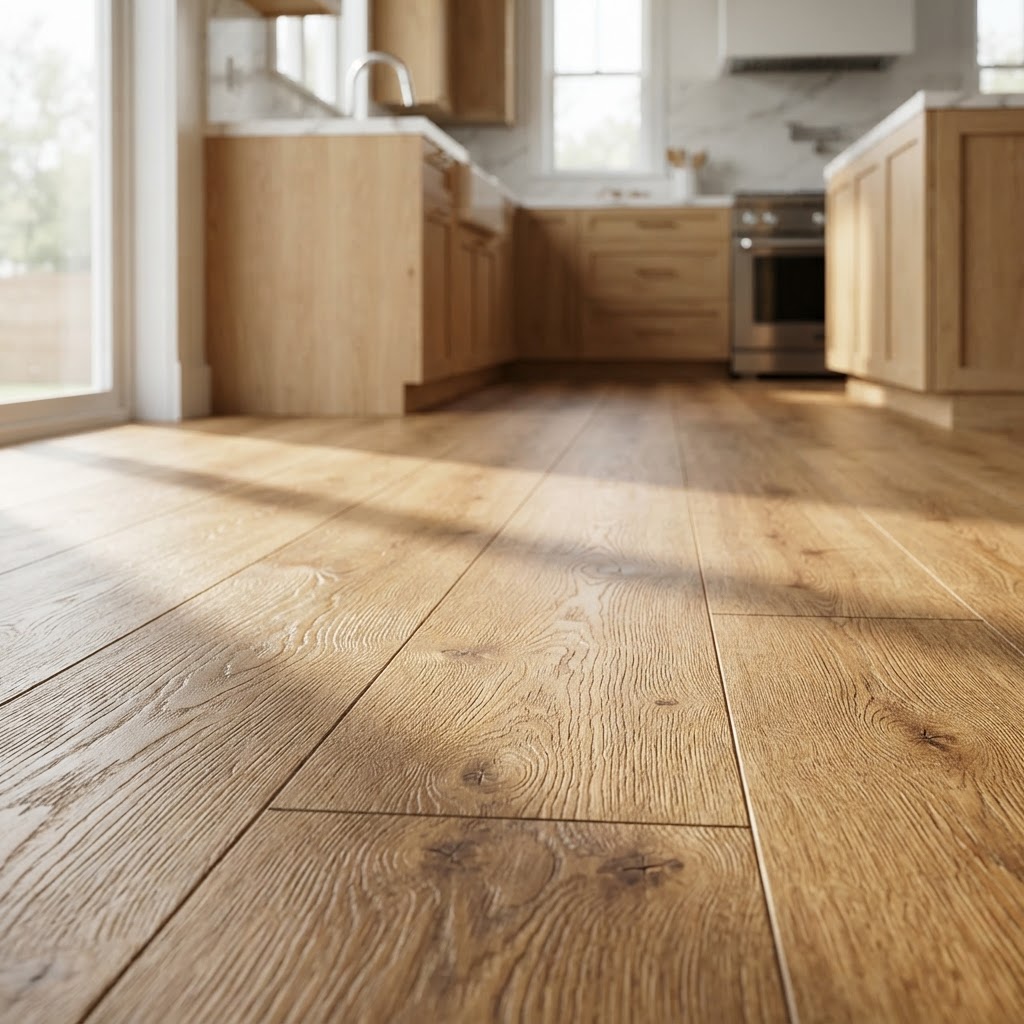
Textured vs. Smooth LVP: Does Embossed-in-Register Flooring Look More Like Real Wood in Aldie and Northern Virginia Homes?
Does embossed-in-register LVP look more like real wood than smooth LVP?
Yes, in most cases embossed-in-register (EIR) luxury vinyl plank looks more like real wood than smooth LVP, because the surface texture lines up exactly with the printed grain image, so every knot, grain line and pore you see is also something you can feel and something that catches light the way real wood does. Smooth LVP can still look good, particularly in contemporary and cleaner designs, and it is easier to sweep and wipe, but it tends to look flatter and more printed up close. For homeowners in Aldie, South Riding, Brambleton, Ashburn, Leesburg, Middleburg and Chantilly choosing floors for kitchens, basements and busy family spaces, texture quality is one of the most important and least understood features to compare in samples. Floors and Beyond VA, a family-owned Northern Virginia flooring and remodeling contractor serving Fairfax, Loudoun, Prince William and Arlington counties since 1987, installs luxury vinyl plank with in-house crews and no subcontractors, and we bring samples to your Aldie home so you can see and feel the difference under your own lighting.
Luxury vinyl plank has changed dramatically over the past decade. Early products had a visible repeating pattern and a plasticky sheen. Today's best planks capture realistic wood grain, include multiple plank variations to avoid repetition, offer detailed beveled edges and use synchronized texture that echoes natural wood. Recent product introductions across the industry have emphasized realistic grain, embossed texture and more detailed bevels, all in the service of making vinyl look and feel more like the real thing. Yet few homeowners understand what these features are, how they work or whether they matter. This guide explains the technology in plain language, compares textured and smooth surfaces, discusses how texture affects performance and maintenance and shows how to evaluate samples. For related reading, see our vinyl flooring page and our articles on how to choose luxury vinyl plank, LVP pros and cons and what SPC core flooring is.
How a luxury vinyl plank is built
To understand texture, it helps to know how a plank is constructed from top to bottom.
The wear layer. A clear protective coating on top that resists scratches, scuffs and stains. Its thickness is a major factor in durability. Many products add a ceramic or other protective topcoat over the wear layer to improve scratch and scuff resistance.
The decorative layer. A printed film that carries the image of wood grain, stone or other patterns. The quality of this image, including its resolution, the number of unique plank designs and the realism of color variation, shapes how convincing the floor looks.
The core. The structural body of the plank, which may be flexible vinyl, rigid stone-plastic composite (SPC), wood-plastic composite (WPC) or another construction. The core determines dimensional stability, dent resistance and how forgiving the plank is over minor subfloor imperfections.
The backing or attached pad. Many planks include an underlayment layer for sound and comfort.
Texture is created in the wear layer, usually by pressing or embossing a pattern into its surface. How that pattern relates to the printed image is the difference between ordinary texture and embossed-in-register texture.
Smooth, textured and embossed-in-register: what is the difference?
Smooth LVP. The wear layer surface is flat or has only a very light, uniform texture. It looks like a printed image under glass. It reflects light uniformly and can show a plastic-like sheen, especially at higher gloss levels. It is simple to clean, because there are no grooves to catch dirt. Some modern, clean designs, including stone-look and minimalist wood-look floors, suit smooth finishes.
Generic textured LVP. The surface has an embossed texture, but it is not aligned to the printed grain. Texture might be a repeating pattern of fine lines or a generic wood-like roughness. It adds some feel and breaks up light, but because the physical grooves do not match the printed grain, the eye can detect the mismatch, particularly at certain angles.
Embossed-in-register (EIR) LVP. The embossing is synchronized to the printed image. Where the printed image shows a knot, the surface has a depression or raised area. Where it shows a grain line, the surface has a subtle ridge or groove. When light hits the surface, shadows and highlights fall exactly where a viewer expects them for real wood. The effect is dramatically more convincing, because sight and touch agree.
Real wood has unavoidable relationships between color and surface texture. Harder and softer grain respond differently to sanding and finishing, pores are physical openings and knots are physical features. EIR recreates these relationships. That is why the best-looking luxury vinyl plank on the market uses it.
Why texture matters to the eye
Human vision relies on light and shadow to understand surfaces. On a flat surface, the eye sees only the printed image. On a textured surface, light interacts with tiny peaks and valleys, creating micro-shadows and highlights that change as you walk across the room or as the sun moves. This dynamic response gives the floor depth and a sense of authenticity.
When texture and image are in register, the interplay is correct. When they are not, the brain notices subtle inconsistencies, such as a grain line in the image that has no corresponding groove, and the floor reads as artificial. This is especially noticeable in raking light, such as low sun coming through windows in the morning or evening, which is common in the open, window-filled homes of Aldie, South Riding and Brambleton.
Other features contribute to realism:
Multiple plank patterns. A product with only a few designs will repeat noticeably across a large floor. Products with many unique designs avoid obvious repetition.
Color variation. Real wood varies from board to board. Quality LVP includes planks with distinct tonal variation.
Beveled edges. Micro-bevels or painted bevels at plank edges mimic the seams of real hardwood. Detailed bevels with color matching the plank's surface look more natural than uniform lines.
Low, natural gloss. Reduced sheen resembles a natural finish rather than shiny plastic. Matte and satin appearances look most like real wood.
Length and width. Longer, wider planks look more like premium hardwood.
Performance: does texture affect durability and maintenance?
Beyond looks, texture influences how a floor lives.
Scratch concealment. Textured surfaces and lower sheens disguise light scratches and scuffs better than smooth, glossy ones. For homes with pets, children and active households, this is a real advantage.
Traction. A textured surface provides more grip than a perfectly smooth one, which can help in kitchens and entries where spills happen. Texture is not a substitute for slip-resistant ratings in wet areas, but it improves everyday traction for people and pets.
Cleaning. Deeper textures can hold some dirt in the grooves, so they may need slightly more thorough cleaning, such as a soft-bristle brush or a mop used with proper technique. Fine, well-designed EIR textures clean easily with ordinary methods. Smooth surfaces wipe cleanest but show dust and footprints more.
Glare. Texture reduces glare by scattering light. Smooth, glossy planks can create strong reflections in rooms with large windows.
Wear over time. Texture sits in the wear layer, so a thicker wear layer maintains the embossed character longer. In very high-traffic areas, texture can wear down and flatten, which is another reason to choose a thick wear layer.
Water performance. Texture does not change the water resistance of the plank itself, which depends on the core and edges. Installation and subfloor moisture control still decide whether a floor is truly resilient. Our article on whether vinyl flooring is waterproof explains the distinction.
When smooth LVP is the better choice
Textured is not always better. Smooth or very lightly textured LVP makes sense in several situations.
Modern, minimalist interiors. Sleek, contemporary rooms with clean lines may suit a smooth, uniform surface, particularly in stone-look or concrete-look planks and tiles.
Commercial-style or utility spaces. Where ease of cleaning is the main goal, such as laundry rooms or garage-adjacent spaces, a smoother surface is simpler.
Allergy-conscious households. Some owners prefer surfaces with minimal places for dust to settle.
Stone, tile and abstract looks. Not every LVP imitates wood. Tile-look and stone-look vinyl often use different textures, and a smooth or lightly textured surface may be appropriate.
Budget and product line constraints. Some products simply do not offer EIR. A well-made smooth product with a thick wear layer is better than a poor textured one.
The best approach is to choose the surface that suits the look you want and the way you live, and then evaluate quality within that category.
How to evaluate LVP samples like an expert
Photographs and small swatches can be deceptive. When comparing samples, use a deliberate process.
Look at several planks, not one. Ask for multiple planks or a mock-up to evaluate pattern variation and repetition.
View at an angle. Hold the sample so light rakes across the surface, the way low sun does in your home. Texture and register show best this way.
Run your fingers over the surface. Feel whether texture follows the visible grain. Do you feel the knots and grain lines you see?
Check the bevels. Do they look natural, or like a uniform painted line?
Check the sheen. Compare the gloss level in your lighting. Lower sheen generally looks more realistic.
Ask about the wear layer and core. Thickness, construction and warranty information tell you about durability. Quality varies widely among products.
Check the edges and locking system. A well-engineered system stays tight and flat.
Compare against real wood. If you can, put a real hardwood sample next to the vinyl sample and see how they differ in light and feel.
We bring samples to your home so you can do all of this in your own space, with your own lighting and furniture. We do not have a showroom, because the home is the right place to decide. Our article on how to get flooring samples delivered explains related options.
Installation matters as much as the product
Even the most realistic plank can look poor if installed badly. Because LVP is thin, it reveals what lies beneath. A subfloor that is not flat can telegraph dips and humps through the surface, stressing locking joints and causing gaps. Debris under the planks creates bumps. Poor layout leads to repetitive patterns, awkward narrow cuts at walls and mismatched colors. Inadequate expansion space can cause buckling, and incorrect underlayment can void warranties.
Good installers inspect and prepare the subfloor, test moisture where needed, shuffle planks from multiple boxes to blend color and pattern, stagger joints properly, maintain expansion gaps and finish transitions neatly. Our flooring installation guide explains our process, and our guide to preparing your home for new floors explains what to do before the crew arrives.
In newer Aldie homes built on slabs and with finished basements, moisture testing and slab preparation are particularly important. Our guides to flooring for the basement, the best flooring on concrete basements and the best flooring options for basements with moisture issues explain this, and our basement finishing services cover complete projects.
LVP versus real hardwood: honest comparison
Luxury vinyl plank is not hardwood, and a reputable contractor will not pretend it is. Hardwood is natural, renewable and can be refinished. LVP is synthetic, cannot be refinished and offers superior water resistance and scratch concealment. Many homeowners use both: hardwood in main living areas and LVP in basements, kitchens and mudrooms. If you are deciding between them, our hardwood versus LVP comparison for Northern Virginia is a useful starting point, and our wood flooring page describes hardwood services.
If you already have hardwood that looks tired, remember that refinishing may restore it at less disruption than replacement. Our articles on whether your hardwood floors can be saved and whether refinishing is worth it explain how to decide.
Where textured LVP works best in Aldie area homes
Kitchens. Textured, matte LVP hides spills, crumbs and wear while looking like real wood. Our kitchen remodeling services coordinate flooring with cabinetry.
Basements and playrooms. Durable, water-resistant and forgiving of activity.
Mudrooms and laundry rooms. Traction and moisture tolerance. See our laundry room remodeling page.
Family rooms and hallways. Realistic wood looks with scratch concealment.
Home offices and bedrooms. Quiet, comfortable wood-look floors with an attached pad. See our home office design page.
Rental or investment spaces. Durable, easy-to-maintain surfaces.
For larger projects, our whole house remodels and home additions services coordinate flooring with the rest of the work.
What drives the scope of an LVP project
We do not publish costs in articles, but the factors that shape any estimate are clear. The product and its quality tier, including wear layer, core and texture. Square footage and layout. Subfloor flatness and preparation. Moisture testing and mitigation, particularly over slabs. Removal of existing flooring. Underlayment. Stairs. Trim, molding and transitions. Furniture moving. And the company, including its crews, licensing, bonding and insurance.
At Floors and Beyond VA, we provide an honest, all-inclusive estimate, and what we quote is what you pay. Our estimates include old flooring removal, new materials, professional installation, furniture moving, transitions, molding and full cleanup. Our article on flooring cost factors in Northern Virginia explains why estimates differ.
Common mistakes when choosing LVP texture
The first mistake is judging from a photograph instead of feeling and viewing samples.
The second is assuming all texture is equal; synchronized texture is far more realistic.
The third is ignoring wear layer thickness.
The fourth is choosing high gloss that looks plastic.
The fifth is choosing a product with too few plank designs, resulting in obvious repetition.
The sixth is ignoring the subfloor, which can ruin a good product.
The seventh is forgetting expansion gaps and manufacturer instructions.
The eighth is skipping moisture testing over slabs.
The ninth is choosing deeply textured planks for spaces that demand easy cleaning without considering maintenance.
The tenth is hiring an installer without experience with LVP.
Frequently asked questions
What does embossed-in-register mean? The surface texture is synchronized with the printed wood grain, so the grain you see matches the texture you feel.
Does textured LVP look more like real wood? Generally yes, especially embossed-in-register products with varied plank designs and low sheen.
Is textured LVP harder to clean? Fine textures clean easily with ordinary methods. Deep textures may need a soft brush.
Does texture hide scratches? Yes, textured, low-sheen surfaces conceal scratches better than smooth, glossy ones.
Is smooth LVP bad? No. It suits modern designs and ease of cleaning, but it tends to look flatter.
Is LVP waterproof? The plank resists water, but the floor system depends on subfloor preparation and moisture control.
Is Floors and Beyond VA licensed and insured? Yes. We are fully licensed, bonded and insured for every project, and our in-house crews work with no subcontractors.
Do you serve my area? Yes. We serve Aldie, South Riding, Brambleton, Ashburn, Leesburg, Middleburg, Chantilly, Gainesville, Haymarket, Fairfax, McLean, Vienna, Reston, Herndon and Arlington, along with Fairfax, Loudoun, Prince William and Arlington counties.
Ready to compare LVP samples in your own home?
You cannot judge texture from a photograph. Floors and Beyond VA brings nearly forty years of Northern Virginia experience, in-house crews with no subcontractors and a free in-home consultation with samples and precise laser measurements at no charge.
Request your free Aldie flooring estimate: https://floorsandbeyondva.com/Contact
You can also call (703) 906-5698.




