
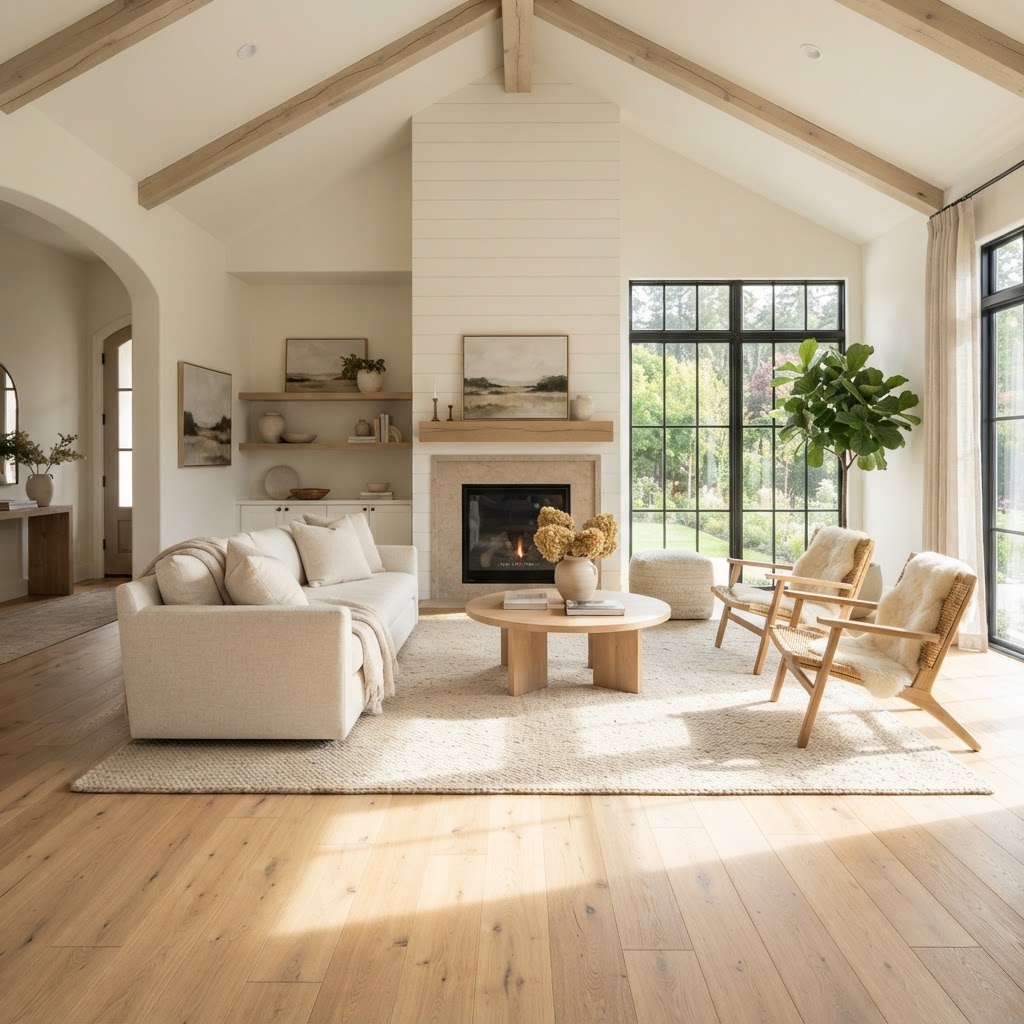
Matte vs. Satin Hardwood Floors: Which Finish Looks Better in Real Aldie and Northern Virginia Homes?
Which looks better in real homes: matte or satin hardwood floors?
In most real Northern Virginia homes, including those in Aldie, South Riding, Brambleton, Ashburn, Leesburg, Middleburg and Chantilly, matte finishes look more natural and hide scratches, dust and footprints better, while satin finishes add a soft glow that brightens darker rooms and is slightly easier to keep looking clean. Neither is universally better. Matte suits wide-plank, natural and contemporary looks and rooms with lots of daylight, and satin suits traditional interiors, darker floors and spaces that need a little help reflecting light. Gloss and semi-gloss finishes, once common, now look dated in most homes and show every flaw. Floors and Beyond VA, a family-owned Northern Virginia flooring and remodeling contractor serving Fairfax, Loudoun, Prince William and Arlington counties since 1987, finishes and refinishes hardwood floors with in-house crews and no subcontractors, and we bring finish samples to your Aldie home so you can compare sheens on your own floors in your own light.
Sheen is the quiet variable in floor design. Homeowners spend weeks choosing species, width and color and then give little thought to how shiny the surface will be, until the floor is installed and the glare off a sunny window reveals every scratch. Current design coverage emphasizes matte and textured finishes, reflecting a broader appreciation of natural, tactile materials. Yet satin remains the most popular and practical sheen in many homes. This guide explains what sheen is, how matte and satin actually differ, how they behave in daily life, which rooms and styles suit each, how finish chemistry changes the picture and how to test sheen before committing. For our hardwood services, see our wood flooring page.
What is sheen?
Sheen describes how much light a surface reflects. A high-gloss floor reflects light in a sharp, mirror-like way, creating bright highlights and visible reflections. A matte floor scatters light in many directions, producing a soft, flat appearance with little glare. Satin falls between them.
Sheen is determined by the finish formulation, especially the presence of flattening agents, and by how the finish is applied. It is typically described on a scale: matte or flat, low-sheen, satin, semi-gloss and gloss. Different manufacturers label sheen levels differently, so the same word does not always mean the same look. That is why testing samples matters.
Sheen does not change the wood's color on its own, but it dramatically changes how color and grain are perceived. A glossy surface deepens and intensifies color and creates bright reflections that flatten the grain. A matte surface mutes color slightly and lets the grain and texture show.
Matte hardwood finishes
What they look like. A natural, soft, almost unfinished appearance. Light is diffused, grain is visible and the floor feels organic.
Strengths. Matte finishes hide scratches, scuffs, dust, pet hair and footprints better than higher sheens because there are fewer reflective highlights to catch on imperfections. They suit wide-plank and natural looks, and they harmonize with the earthy, organic interiors currently in favor. They also tend to reduce glare in rooms with big windows, a real benefit in newer Loudoun County homes with large expanses of glass.
Limits. Some matte finishes can look flat or slightly dull in dim rooms, and they may show oily marks or smudges differently. Very low-sheen finishes can feel less polished in formal settings. Some ultra-matte products can be more sensitive to maintenance products that leave residue. Depending on the system, repairs and recoating may need careful matching to avoid sheen variation.
Best for. Wide-plank white oak and natural-toned floors, contemporary and transitional interiors, homes with lots of light, households with pets and children and anyone who wants a natural look.
Satin hardwood finishes
What they look like. A soft, gentle glow with a hint of reflection. The floor looks finished and clean without feeling shiny.
Strengths. Satin balances beauty and practicality. It hides wear reasonably well, reflects enough light to brighten a room and is forgiving in many environments. It looks refined in traditional and transitional homes and flatters darker and richer stains by adding depth. It is widely available and easy to maintain.
Limits. Satin shows scratches and dust somewhat more readily than matte. In sun-flooded rooms, some satin finishes can produce noticeable reflections. Dark satin floors show dust and footprints. And satin can feel less modern than ultra-matte in some contemporary designs.
Best for. Traditional and transitional interiors, darker or medium stains, rooms with less natural light and homeowners who want a classic look that is easy to live with.
Beyond matte and satin: semi-gloss and gloss
Semi-gloss and high-gloss finishes create vivid shine. They emphasize the floor's color and make a bold, polished statement, and they are sometimes used in formal spaces or historic restorations with period-appropriate styles. But they reveal every scratch, dent, dust particle and footprint, and in large modern homes the glare can be tiring. Most homeowners today choose matte or satin, and many designers steer clients away from gloss for everyday living. If you love a glossy look, discuss how it will behave in your home with your flooring professional.
How the finish chemistry changes the experience
Sheen is only part of what a finish does. The type of finish also influences color, durability, odor and maintenance, and you should consider them together.
Water-based polyurethane. Clear, low-odor and fast-drying, it keeps wood looking pale and natural and does not amber much with age. It comes in a range of sheens. It is durable and widely used, especially with white oak and light floors.
Oil-based polyurethane. Rich and warm, it adds an amber tone that deepens over time. It is very durable but has stronger odor and longer cure times.
Hardwax oils and penetrating oils. These soak into the wood and leave a natural, low-sheen surface that feels like raw wood. They are repairable in spots and highlight grain, but they typically need periodic maintenance and are less resistant to some spills than film-forming finishes.
Factory-applied finishes on prefinished floors. These use durable coatings cured in controlled conditions, often with excellent abrasion resistance. Sheen options are set by the manufacturer.
Conversion varnishes and other high-performance coatings. These are sometimes used for added durability, and their odor and handling require professional application.
Each system pairs with sheens differently, and some of the most natural-looking matte finishes come from oil-based or hardwax systems, while some of the best everyday durability comes from film-forming polyurethanes. A good contractor explains tradeoffs and recommends a system that suits your household. Our hardwood floor refinishing field guide for Northern Virginia covers finish systems in more depth.
Light, color and room: how to match sheen to your home
Sheen interacts with light, so the same finish can look different in different rooms.
Rooms with large windows and strong daylight. Common in Aldie, South Riding and Brambleton homes with tall glazing, these rooms produce glare on higher sheens, so matte or low-sheen finishes usually look best.
Dim or north-facing rooms. Satin adds a touch of reflection that brightens the space.
Dark floors. Dark stains show dust and scratches readily. Satin tends to look richer, and matte can look chalky if not well formulated. Test both.
Light and natural floors. Matte maintains a pale, airy feel and conceals wear well.
Wide-plank floors. The expanse of surface amplifies sheen, so matte or satin finishes generally look calmer than gloss.
Historic and traditional rooms. Satin or soft semi-gloss may suit period character. Our historic home restoration services consider historical appropriateness.
Open layouts. Consistency matters. A change of sheen from room to room can look odd, so finish continuous floors with the same sheen.
Real-life performance: scratches, dust, pets and cleaning
The best way to compare matte and satin is to think about daily life.
Scratches. Fine scratches reflect light and become visible. Matte scatters light, so scratches blend in. Satin shows them slightly more. Deep gouges show on either.
Dust. Light dust is more visible on dark, glossy floors. Matte hides it better, though no finish is dust-proof.
Pets. Claw scratches and dull paths appear on all hardwood, and matte conceals them more effectively. Trimming nails and using rugs in busy paths help.
Spills and stains. The finish chemistry matters more than the sheen. Wipe spills promptly regardless.
Footprints and smudges. Matte can show oily or wet footprints differently than satin; satin may show smudges more on dark colors.
Cleaning. Use products recommended for your finish. Some oil-based and wax systems require specific cleaners. Avoid steam and excess water. Our floor care page offers guidance.
Aging. Over time, finishes wear in traffic areas, and the wear is more obvious on higher sheens. Planned maintenance, such as screening and recoating, keeps the surface looking consistent.
Textured finishes: another design direction
Alongside matte sheens, textured finishes are in favor. Wire-brushing removes softer grain to leave the harder grain proud, giving the floor a tactile, three-dimensional character. Light scraping and handscraped textures create an aged, artisan look. Textures work well with matte finishes and conceal wear exceptionally well. They can, however, collect more dust in the grooves, and they feel different underfoot. They suit rustic, farmhouse and organic modern styles, which are popular in rural and semi-rural Loudoun settings around Aldie and Middleburg. Smooth finishes suit refined and formal interiors.
Refinishing to change sheen
If you already own hardwood and dislike its glossy look, refinishing can change the sheen. Sanding removes the old finish, and a new matte or satin finish can be applied, often along with a color change. In many cases, a screen-and-recoat can update the finish without full sanding, but a change from gloss to matte may require more preparation to ensure adhesion. Our articles on whether your hardwood floors can be saved and whether refinishing is worth it explain how we evaluate floors. Our refinish-first philosophy means we start by asking whether your existing floors can deliver the look you want.
How to test sheen before you commit
Do not choose sheen from a catalog. Ask for finish samples on the same species and color as your floor. View them in the room, in morning, midday and evening light, and with the lights on at night. Look at them from standing height and from a distance, since the way you see a floor is rarely directly from above. Scratch-test a spare piece lightly, if you can, to see how marks appear. Compare them next to your baseboards, cabinets and furniture. Ask how each finish ages and what maintenance it needs.
During our free in-home consultation, we bring samples and talk through sheen, color and durability. We do not have a showroom, because these decisions are best made in your home.
What drives the scope of a finish project
We do not publish costs in articles, but the factors that shape any estimate are clear. The condition of the existing floor and whether it needs sanding or a lighter recoat. Square footage and number of rooms. The finish system and number of coats. Stain or color changes. Repairs. Stairs. Furniture moving. Dust control. And the company, including its crews, licensing, bonding and insurance.
At Floors and Beyond VA, we provide an honest, all-inclusive estimate, and what we quote is what you pay. Our estimates include old flooring removal, new materials, professional installation, furniture moving, transitions, molding and full cleanup. Our article on flooring cost factors in Northern Virginia explains why estimates differ.
Finish decisions for Aldie and Northern Virginia homes
Local conditions shape finish choices more than most homeowners expect. Newer homes in Aldie, South Riding and Brambleton often have tall windows that flood floors with low-angle light in the morning and evening, which exaggerates glossy finishes and flatters matte ones. Older farmhouses and village homes around Aldie and Middleburg may have darker rooms and traditional trim, where a soft satin glow can feel more at home. Homes with active households, dogs and frequent entry traffic from yards, fields and gravel drives benefit from finishes that conceal everyday wear.
Seasonal humidity swings across Northern Virginia also matter. Finishes that flex slightly with the wood hold up better than brittle ones, and a floor that is kept at stable humidity looks better regardless of sheen. When we evaluate your floors, we consider the species, the light, the traffic and your lifestyle together, then recommend a finish system and sheen to match, and we show you samples before any work begins.
Common mistakes when choosing a finish
The first mistake is choosing sheen from a small catalog sample.
The second is ignoring daylight, then dealing with glare.
The third is choosing gloss because it looks impressive in a showroom.
The fourth is mixing sheens across connected rooms.
The fifth is forgetting finish chemistry, such as ambering oil-based finishes on pale floors.
The sixth is expecting any finish to be scratch-proof.
The seventh is using the wrong cleaners and damaging the finish.
The eighth is skipping maintenance until wear reaches the wood.
The ninth is assuming matte means low maintenance; every finish needs care.
The tenth is hiring a contractor who offers only one finish system.
Frequently asked questions
Is matte or satin better for hardwood floors? Matte hides wear best and looks most natural, and satin offers a gentle glow and classic look. The best choice depends on your light, style and lifestyle.
Does matte finish scratch more easily? No. The scratch resistance depends on the finish chemistry, but matte hides scratches better.
Do matte floors get dirty faster? They actually hide dust and footprints well, though they still need regular cleaning.
Can I change my floor from glossy to matte? Yes, through refinishing. Sheen can be changed during sanding and refinishing.
Which sheen is best with pets? Matte usually conceals scratches and wear best.
Will matte look flat in a dark room? It can. Test samples in the room, and consider satin for dim spaces.
Is Floors and Beyond VA licensed and insured? Yes. We are fully licensed, bonded and insured for every project, and our in-house crews work with no subcontractors.
Do you serve my area? Yes. We serve Aldie, South Riding, Brambleton, Ashburn, Leesburg, Middleburg, Chantilly, Gainesville, Haymarket, Fairfax, McLean, Vienna, Reston, Herndon and Arlington, along with Fairfax, Loudoun, Prince William and Arlington counties.
Ready to compare finishes on your own floors?
The right sheen is the one you have seen in your own home. Floors and Beyond VA brings nearly forty years of Northern Virginia experience, in-house crews with no subcontractors, a refinish-first philosophy and a free in-home consultation with samples and precise laser measurements at no charge.
Request your free Aldie flooring estimate: https://floorsandbeyondva.com/Contact
You can also call (703) 906-5698.




