
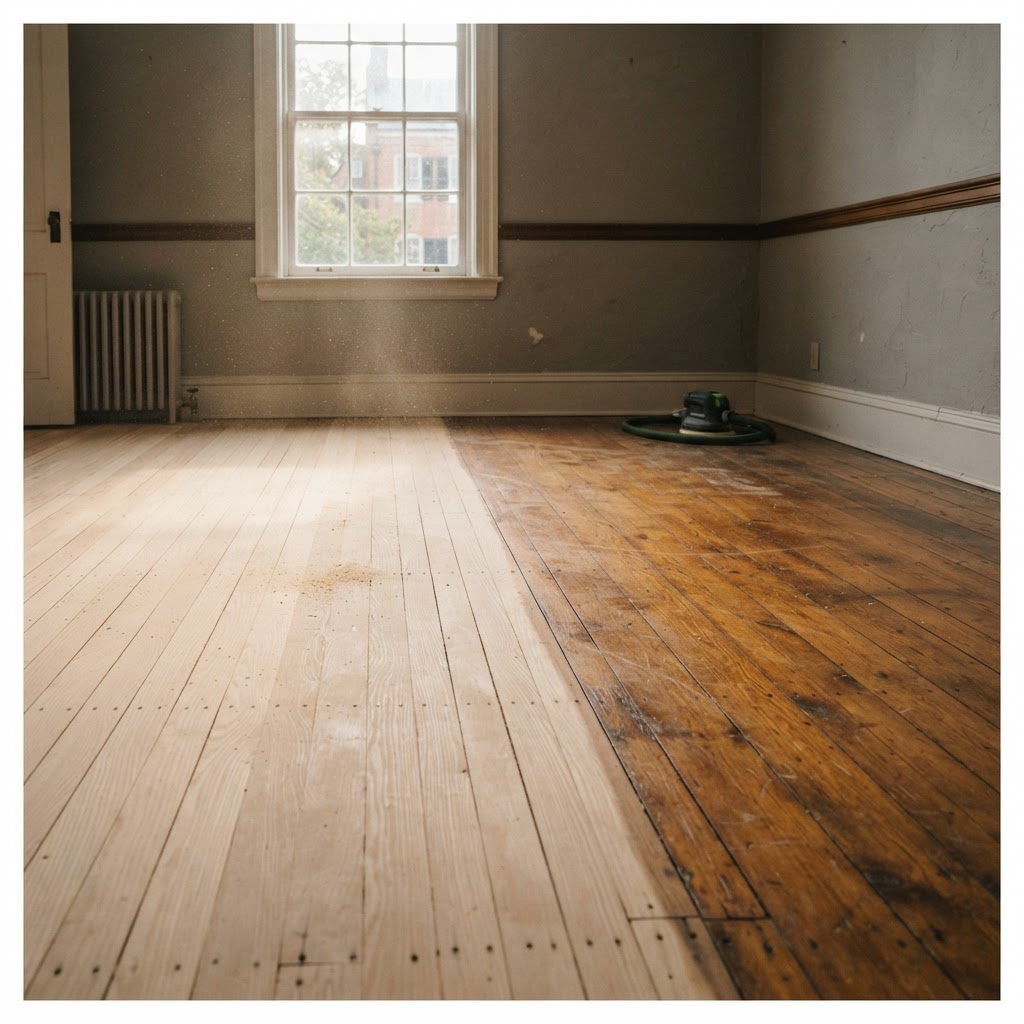
Refinishing pre-war hardwood floors in Alexandria is different from refinishing a floor built in the last thirty years. The wood is often older, denser and thicker. The boards may be narrower, the nails may be cut nails, the finish may be layers of shellac, varnish and paint built up over decades, and the house itself may have lead paint, plaster dust and subfloors that have moved. Done well, the result can be remarkable, because pre-war floors often have a character that new floors cannot match. Done carelessly, it can remove irreplaceable wood or create hazards. This guide explains what makes pre-war floors special, how to assess them, what the process involves, how to handle lead paint and old finishes and how to choose a crew that understands old houses. At Floors and Beyond VA, we take a refinish-first approach, and old Northern Virginia houses are where that approach matters most.
WHAT COUNTS AS A PRE-WAR FLOOR
In the Alexandria area, pre-war generally means houses built before the mid-1940s. Old Town, Del Ray, Rosemont, Parkfairfax and the older parts of Arlington and Falls Church are full of them. Their floors were typically installed as solid hardwood nailed directly to wood subfloors or joists. Oak is the most common species, with pine in some houses and other species in a few. Many were laid in narrow strips that are tight-grained and dense, because the wood came from older, slower-growing trees. Compared with much modern flooring, this wood is hard and stable, which is part of why these floors have lasted.
WHY THESE FLOORS ARE WORTH SAVING
Pre-war floors have qualities that are difficult to buy. The wood is often old-growth or close to it, with a tight grain that takes stain beautifully and wears slowly. The boards are thick, so they can often be sanded several times. The installation is solid and the floors have usually stopped moving after decades. And the look, with narrow strips, subtle variations and the warm patina of age, is a significant part of why people buy in these neighborhoods. Our guide to whether refinishing hardwood floors is worth it explains the general reasoning, and our guide to wood floor restoration covers the repairs that older floors often need.
HOW MUCH WOOD IS LEFT?
The most important question for an old floor is how much wood remains above the tongue and groove. Every sanding removes a thin layer, and a floor that has been sanded aggressively several times may be close to the nails. A contractor can check thickness at a heat register, at a threshold or by examining the edge of a board. If the nails are close to the surface, a light screen and recoat or a very gentle sanding may be the only option. If the wood is thick, a full refinish is possible. This is also where honest advice matters, because an inexperienced crew can sand through an old floor.
WHAT YOU MAY FIND UNDER OLD FINISHES
Pre-war floors often carry layers of history. The original finish may have been shellac, varnish or wax, and later owners may have added polyurethane over it. Some floors were painted, either as borders around area rugs or across entire rooms during lean years. Wax buildup can interfere with new finish adhesion if it is not removed properly, and floors that have been waxed need special attention. A careful contractor tests the existing finish, asks about its history and adjusts the process accordingly. Our guide on floors with a buildup of old coatings is part of the discussion in our article on wood floor restoration.
LEAD PAINT AND OLD HOUSES
Houses built before 1978 may contain lead-based paint, and pre-war houses almost certainly have it somewhere. Lead is a concern around trim, window sills, doors and stairs, and it can be disturbed by sanding, scraping and demolition near those surfaces. Floor refinishing itself does not typically disturb lead paint, but the work near baseboards and door frames can. A responsible contractor asks about the age of the house, protects trim and uses lead-safe work practices when needed. If you have young children or are pregnant, discuss this directly with your contractor and consider whether to stay elsewhere during the work. Federal rules require lead-safe practices for certain renovation work in older homes, and contractors who work in old houses should be familiar with them.
DUST AND OLD PLASTER
Old houses can also contain dust in places you do not see, including dust in floor gaps, under baseboards and in the spaces between boards. Sanding can stir it up. Dust containment, covered vents and a careful cleanup matter even more in an old house. Our article on dustless hardwood floor refinishing explains what containment can and cannot do.
REPAIRS BEFORE SANDING
Old floors often need repairs. Loose boards must be secured, and squeaks addressed where possible. Gaps between boards, common in old floors, can be left as part of the character or filled depending on your preference. Damaged or missing boards can be replaced with reclaimed wood that matches the species and width. Holes from old radiators, pipes or removed walls can be patched. Tack strip marks and staples from decades under carpet need to be removed. Repairs are done before sanding so the sanding blends them into the floor. Our article on what floor restoration includes lists the typical steps.
TALK TO A SPECIALIST WHO KNOWS OLD FLOORS
Pre-war floors deserve a close look from someone who understands them. Floors and Beyond VA has restored floors in Alexandria, Arlington and Falls Church for decades, and our estimators come to your home to inspect the wood, check the thickness and talk through your goals. Schedule an in-home estimate at floorsandbeyondva.com/Contact or call (703) 906-5698, and we will tell you plainly what your floor can handle.
STAIN, COLOR AND THE LOOK OF AN OLD HOUSE
Many owners of old homes want to keep the look of the original floor. Natural or lightly tinted finishes that show the aged character of the oak are popular. Others prefer darker, traditional tones that suit period details. Remember that old oak can contain tannins and iron stains that react with some finishes or leave marks, and that old floors may have inconsistent coloration where rugs, furniture and sunlight have changed the wood over time. Sanding evens most of this out, but a conversation about expectations and samples on your own wood prevents surprises.
THE QUESTION OF GAPS
Gaps between boards are common in old floors because the wood has dried and shrunk over the decades. Some owners love the look, and others want them reduced. Filling gaps with a flexible filler or slivers of wood is possible but can create visible lines and may crack with seasonal movement. A frank discussion about what is realistic helps. Our article on why hardwood floors gap in winter explains the underlying movement.
FINISH CHOICES FOR OLD FLOORS
Water-based finishes keep the wood lighter and clearer and have a milder odor, while oil-based finishes bring out the warm amber tone that many people associate with old floors. Both can perform well. Satin and matte sheens suit older homes because they hide wear and look natural. The right choice depends on the species, the color you want and your household. A good contractor explains the trade-offs and shows samples.
STAIRS, LANDINGS AND DETAILS
Old houses have stairs, landings, thresholds and built-in details that make refinishing more intricate. Stair treads often show decades of wear, and risers may have been painted. Balusters and newel posts need protecting. Thresholds between rooms may differ in height because the floors were installed at different times. A contractor who has worked in old homes plans for these details and tells you what to expect.
TIMING, DRYING AND LIVING IN THE HOUSE
Old houses often lack the ventilation of newer ones, so drying and odor management matter. Plan for good airflow, and ask about drying times for the finish and when you can walk on the floor and return furniture. Our article on how long refinishing takes explains the usual schedule. In many Alexandria homes, the work is staged room by room so the family can continue to use parts of the house.
HOW TO CHOOSE A CREW FOR AN OLD HOUSE
Ask whether the company has experience with pre-war floors and ask to see examples. Ask how they check board thickness and what they do if the wood is thin. Ask about lead-safe practices, dust control and how they treat painted trim. Ask who will do the work and whether they are employees or subcontractors. Ask for a written scope. And pay attention to whether the estimator seems more interested in selling a full sanding or in telling you what the floor actually needs. Our guide on choosing a hardwood floor refinishing company covers these questions.
HOW FLOORS AND BEYOND VA APPROACHES PRE-WAR FLOORS
Floors and Beyond VA begins by respecting what is there. We inspect the wood, check thickness, test the finish, ask about the history of the house and discuss how you want the floor to look. We recommend the lightest process that will work, explain the risks honestly, use lead-safe practices when the house calls for them and control dust with vacuum-connected equipment. Our crews are our own employees, and we put the plan in writing. When a floor is too thin or too damaged to sand safely, we tell you and discuss alternatives.
A WALK THROUGH A TYPICAL OLD TOWN OR DEL RAY PROJECT
Imagine a 1930s brick colonial in Del Ray. The owners have lived with carpet in the bedrooms and a dark, cloudy finish in the living room. An inspection shows solid white oak strips about two inches wide, with nails visible in a few spots and a threshold at the kitchen that sits half an inch higher than the dining room. The finish test shows an old varnish with wax on top. The crew decides to remove the wax with the proper process before sanding, replaces two boards under a former radiator location with reclaimed oak and fastens several loose boards. They sand lightly to protect the wood, test stain on a hidden section and settle on a clear finish that lets the aged oak show through. The stairs are done with the same finish. The result keeps the history of the house in the floor while giving it a clean, protected surface. Each house is different, but this pattern of careful inspection, gentle sanding and respect for the original wood is what good restoration looks like.
WHAT AFTER-CARE LOOKS LIKE
Old floors respond well to routine care. Mats at entrances catch grit, felt pads protect against furniture, and a cleaner designed for hardwood keeps the finish intact. Avoid waxes and oil soaps, which can build up and interfere with later refinishing. Keep humidity in a moderate range, because old wood can be sensitive to swings. A screen and recoat every several years can renew the finish before it wears through. Our guide on how often hardwood floors need refinishing explains the timing.
COMMON MISTAKES WITH OLD FLOORS
Sanding too aggressively and removing wood that cannot be replaced. Ignoring the history of the finish and starting without testing. Skipping lead-safe practices around trim. Filling gaps with materials that crack. Using a stain that fights the aged color of the wood. Covering the floor with new material before checking whether the original can be saved. Choosing a crew that has never worked in an old house. Each of these mistakes is avoidable with an inspection and an honest conversation.
WHEN TO REPAIR SECTIONS AND WHEN TO REPLACE
Sometimes only part of a floor is in poor condition. A section damaged by water, a patch where a wall once stood or an area worn through by decades of traffic can be repaired with reclaimed or matching boards and blended into the rest. If damage is widespread, or if the subfloor has failed, replacement may be the better answer. The decision depends on the extent of the problem, the thickness of the wood and your goals. An inspection will show which path makes sense.
WHY NOT SIMPLY COVER IT?
Some owners consider covering old floors with new material because it seems simpler. Sometimes that is the right call, particularly when the floor is beyond saving. But covering also hides and often removes the character that makes the house distinctive, and it can create problems with door heights, transitions and moisture. If the original floor is sound, restoring it is usually the better route. An in-person evaluation will tell you whether yours is.
QUESTIONS TO ASK BEFORE ANYONE TOUCHES AN OLD FLOOR
Ask how the contractor will determine the thickness of the wood and what they will do if it is thin. Ask whether they have worked on floors of the same age and ask to see examples. Ask how they test the existing finish and what they do about wax. Ask about lead-safe practices, even if you do not think your house has lead paint. Ask how they will repair and match damaged boards. Ask how they will protect woodwork, balusters and plaster walls during sanding. A contractor who answers confidently and in detail has probably done the work before, and one who offers a quick quote without asking about the house may not have.
THE PLACE OF OLD FLOORS IN ALEXANDRIA HOMES
In a city with so much history, floors are part of the architecture. They have been walked on by generations, and their wear tells a story. A good restoration does not erase that story. It protects the wood, brings out the grain and keeps the quiet imperfections that make old floors feel lived in. That is a different goal from making a floor look brand new, and talking about which one you want helps your contractor choose the right approach.
FREQUENTLY ASKED QUESTIONS
Can pre-war floors be sanded safely? Often yes, if enough wood remains. A thickness check comes first.
Do I need to worry about lead? Houses built before 1978 may contain lead paint, mostly on trim and windows. Ask your contractor about lead-safe practices.
Can reclaimed wood match my floor? Often, in species and width, though aging and color vary and need blending.
Should I fill the gaps? It is a matter of taste. Fillers can crack with seasonal movement, so discuss the options.
Will a refinish remove old stains? Many sand out. Deep black stains may need board replacement.
Is a screen and recoat enough for an old floor? If the finish is worn but the wood is sealed and intact, yes, and it protects the thickness.
How long does it take? It depends on the size and the repairs required.
READY TO RESTORE AN OLD FLOOR?
If you own a pre-war home in Alexandria and are wondering what your floors can do, the best first step is a careful inspection. Floors and Beyond VA is a family-owned flooring company serving Northern Virginia since 1987. Schedule an in-home estimate at floorsandbeyondva.com/Contact or call (703) 906-5698.




