
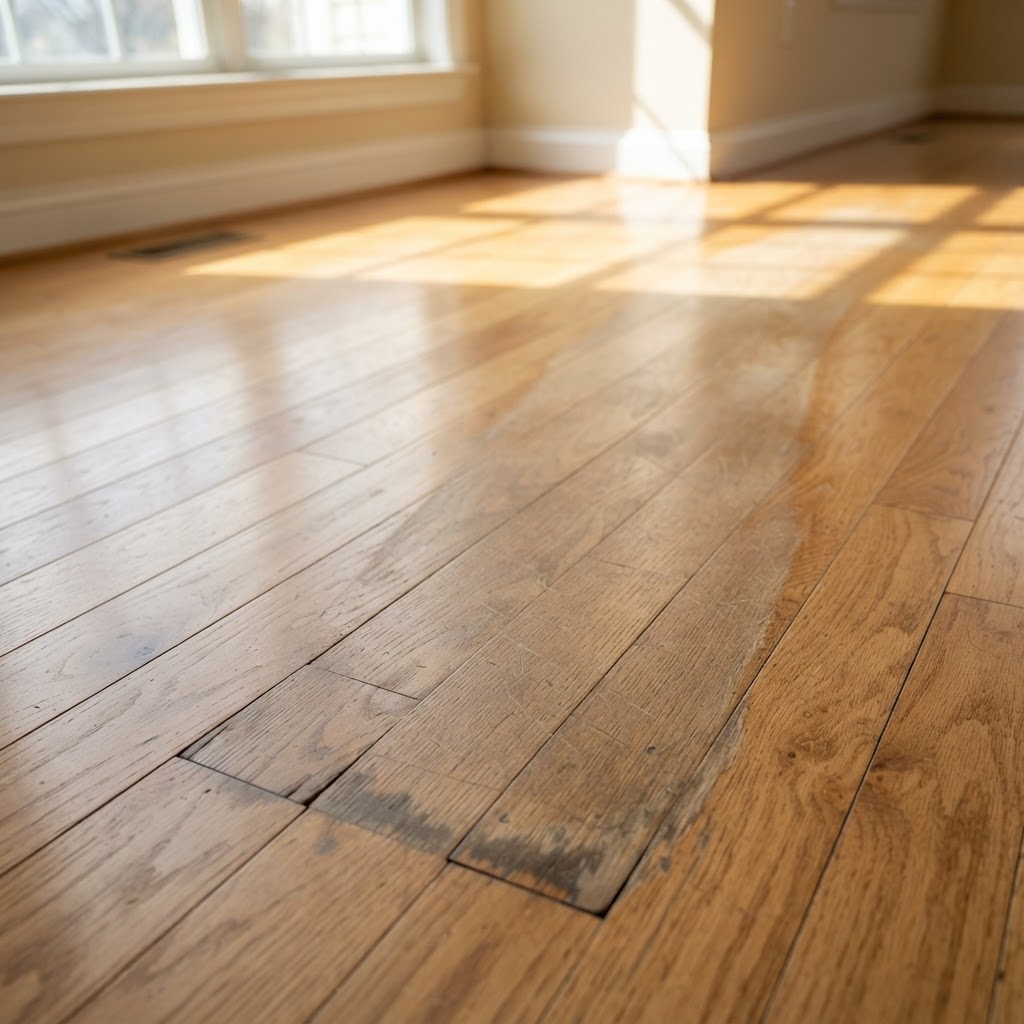
Ask five people how often hardwood floors need refinishing and you may get five different numbers. Some say every few years, some say once a decade, some say only when it looks bad. The honest answer is that there is no fixed schedule.
How often a floor needs attention depends on how much traffic it gets, how it is cared for, the type of finish, the species and thickness of the wood, and the way the household lives. What does exist is a set of clear signs that tell you when a floor needs something, and a distinction between the light maintenance that keeps a finish alive and the heavier work that restores it. Understanding the difference can save you from refinishing too early, too late or too aggressively. This guide from Floors and Beyond VA explains how to judge when your floors need attention, what kind of attention they need, how many times a floor can be refinished in its life and what homeowners in Ashburn, Loudoun County and across Northern Virginia should know. If you already know the floor needs work, our floor restoration page covers the service itself.
Why a calendar rule does not work
A rule such as every ten years sounds helpful, but it ignores the factors that matter most.
- Traffic. A guest room that is rarely used and a kitchen that sees a family every day age very differently.
- Household. Dogs, children, rolling chairs and shoes with grit wear a finish much faster than quiet adult use.
- Finish type and quality. Some finishes are more durable than others, and a factory-applied finish differs from a site-applied one.
- Care. A floor that is swept, protected with mats and cleaned with the right products wears more slowly.
- Sunlight and humidity. Strong sun fades and ages wood and finish, and humidity swings affect how floors move.
- Wood species and thickness. Harder woods resist dents better, and thicker wood gives more sanding capacity.
Because of this, one floor may look good for many years while another in the same neighborhood needs attention much sooner. Signs are better than a calendar.
Two kinds of work: maintenance and restoration
It helps to separate the two kinds of work that keep a floor healthy.
Maintenance coat (screen and recoat)
A light process in which the finish is cleaned, lightly abraded and given a fresh coat. It renews the protective layer without removing much wood. It is the right step when the finish is wearing but the wood underneath is still protected.
We explain who qualifies in our post on sandless hardwood floor refinishing.
Full refinishing
Sands the floor down to bare wood to remove the old finish and surface damage, then stains and finishes. It is needed when the finish has worn through, when scratches are in the wood, when the color needs to change or when the floor has other damage.
A well-maintained floor may go through several maintenance coats before it ever needs a full sanding. A neglected floor may need a full sanding sooner. The most useful habit is to recoat before the finish wears through, because that protects the wood and avoids the heavier work.
Signs your floor needs a maintenance coat
- Dull or hazy paths where people walk most often, while the rest of the floor still has sheen.
- A finish that looks worn but the wood is still sealed, not gray or bare.
- Fine scratches and scuffs across the surface that live in the finish.
- A floor that no longer cleans up as well, because the protective layer is thin.
The water drop test
Place a few drops of water on the floor in a hidden or low-traffic area. If they bead up, the finish is intact. If they soak in or darken the wood, the finish has failed in that area.
If the floor shows these signs but the wood itself is still sealed, a screen and recoat is usually the right call.
Signs your floor needs a full refinish
When a recoat will not hold
- Bare, gray or darkened wood in traffic areas where the finish is gone.
- Deep scratches and gouges that go into the wood.
- Large areas that soak up water instead of beading.
- Peeling, flaking or failing finish.
- Water or pet stains in the wood.
- An outdated color, such as an orange tone, that you want to change.
- A floor that has been recoated several times and has a build-up of old, yellowed finish.
- Visible wear that no longer cleans up or recoats well.
These signs mean the finish has failed or the wood is exposed, and a recoat will not hold.
Signs you should not refinish yet
It is also possible to refinish too soon. Reasons to wait or choose a lighter option include a floor with a healthy finish that just looks dirty, in which case a thorough cleaning with the right product may be all it needs, a floor with limited wood left, where every sanding counts, or a floor with a thin engineered wear layer, where extra sanding is risky. In these cases, an evaluation is worth more than a schedule. Our post on engineered hardwood floor refinishing explains how thin veneers limit options.
How many times can a floor be refinished?
This question matters because each full sanding removes a thin layer of wood. A traditional solid hardwood floor of about three-quarters of an inch can often be fully sanded and refinished several times over its life, though the exact number depends on the sanding technique, the starting condition and how the previous work was done. Older floors that have been sanded repeatedly, or sanded aggressively, may have much less left. Engineered floors vary from none to several sandings depending on the thickness of the wear layer.
The takeaway is that wood is a limited resource. Lighter maintenance coats preserve it, and full sandings should be saved for when they are truly needed. This is part of why we take a refinish-first, lightest-process-first approach.
How long does a finish last?
Finishes vary, and so does how long they last. A durable, professionally applied finish on a lightly used floor may look good for many years. A high-traffic area in a busy household may show wear much sooner. Commonly cited guidance is that floors benefit from periodic maintenance coats before the finish is worn through, with timing depending on use. Rather than guess a number, watch your floor and use the signs above. A professional can give you an informed estimate after seeing your floors.
Ways to extend the time between refinishing
Prevention is the best way to stretch the interval.
- Use mats at every entrance, and take shoes off at the door if possible. Grit is the biggest cause of finish wear.
- Place felt pads under furniture, and lift rather than drag.
- Use rugs or runners in high-traffic paths, with a backing safe for floor finishes.
- Keep pet nails trimmed.
- Clean with a product made for hardwood floors. Avoid steam cleaners, soaking mops and oil soaps unless the finish manufacturer approves them.
- Wipe up spills promptly.
- Control sunlight with window treatments to reduce fading.
- Keep indoor humidity in a moderate range through the year. Very dry winter air opens gaps, and very humid summers swell boards.
- Schedule a maintenance coat before the finish wears through.
These habits matter even more for engineered floors, where there is less wood to spare.
What to expect in Northern Virginia homes
Our region has humid summers and dry winters, and floors move with the seasons. Many homes have large windows with strong sun, and many have busy households. Ashburn and the rest of Loudoun County include many newer homes with builder-grade hardwood or engineered floors, often with factory or site-applied finishes. In these homes, a maintenance coat can extend the life of a finish that is wearing in the first traffic paths. In older homes in Arlington, Alexandria and Falls Church, floors may have been refinished several times, and the question is how much wood remains.
If your floors show seasonal gaps, we explain the cause and what to do in our post on why hardwood floors gap in winter.
Thinking about your own floors? Floors and Beyond VA offers in-home estimates across Northern Virginia. Schedule yours at [floorsandbeyondva.com/Contact](/contact) or call (703) 906-5698. You can also see what a well-judged refinish actually looks like in our hardwood floor refinishing before and after comparison.
A simple floor check you can do
Once or twice a year, take a few minutes to check your floors. Look at them in raking light from a window, which shows wear and scratches that normal light hides. Look at the traffic paths and the areas near doors and the kitchen. Try the water drop test in an inconspicuous spot. Check for gaps, loose boards and squeaks. Look at baseboards and corners for dust and residue. Note anything that has changed since the last time. If you see dull paths or thin spots, it may be time for a maintenance coat. If you see bare wood or deep damage, it is time to ask for an evaluation.
Floors with a buildup of old coatings
Floors that have been recoated many times can build up layers of finish that cloud and yellow, and some may include waxes or polishes that interfere with adhesion. When that happens, a simple recoat may no longer bond well, and the floor may need to be sanded to bare wood to reset it. This is one reason professionals test the existing finish before recommending a process. If you know that a previous owner used wax, polish or oil soap, tell your contractor, because it affects the plan.
Seasonal timing
Many homeowners ask whether the season matters. Refinishing can be done year-round, but conditions influence drying and curing. High humidity in summer slows drying, and very cold or very dry conditions in winter bring their own concerns. Many people choose spring and fall for comfort and open windows, and a skilled crew adjusts for the weather at any time of year. If you are choosing between months, ask your contractor what to expect and how they manage conditions.
Planning around life events
Refinishing is easiest when it is planned, not forced by an event. If you are selling a home, hosting a gathering or moving in, schedule the work early enough to leave margin for drying, curing and any delays. If you are planning to renovate other parts of the house, do the floors last or protect them well, because construction is hard on a fresh finish. A little planning avoids rushed decisions and gives you better results.
How a professional decides
When we visit a home, we do not start with how old the floor is. We look at the finish, the wood, the thickness and the history. We test the finish in a hidden area. We check whether the wood is sealed or bare. We ask how the household uses the space. Then we recommend the lightest process that will give a good result and explain why. Sometimes that is a cleaning. Often it is a screen and recoat. Sometimes it is a full refinish. The answer depends on the floor.
A short glossary of refinishing terms
- Screen and recoat, or maintenance coat. Lightly abrades the existing finish and adds a new coat.
- Full refinish. Sands the floor to bare wood before staining and finishing.
- Recoat. Simply adding another layer of finish.
- Wear layer. The real-wood top layer of an engineered floor.
- Cupping. When the edges of boards rise higher than the centers, usually because of moisture.
- Crowning. The reverse of cupping.
- Sheen. How glossy the finish looks.
- Cure time. How long the finish takes to harden fully.
Knowing these terms makes conversations with contractors clearer and helps you compare scopes. Our overview of hardwood floor refinishing in Northern Virginia uses them throughout.
When to get a second opinion
If you have been told your floor needs a full replacement or a full sanding and you are not sure, a second opinion is reasonable. Ask the second contractor to look at the same issues and explain what they would do and why. If both recommend the same approach, you can proceed with confidence. If they differ, ask each to explain the difference, and look at the scope and the reasoning, not only the recommendation. A trustworthy contractor welcomes questions and will show you what they see in the floor.
How Floors and Beyond VA can help
Floors and Beyond VA is family-owned and has served Northern Virginia since 1987. Our crews are our own employees, and we take a refinish-first approach, which means we try to preserve the wood you have. We offer an in-person evaluation, tell you what the floor needs and put the plan in writing. If you live in Ashburn or nearby, you can learn more about our floor restoration services in Ashburn, VA. We also work in Leesburg, Reston, Fairfax, Manassas and across Loudoun and Prince William counties.
Floors and Beyond VA also suggests keeping a simple record of your floor's history: the date of any refinishing, the type of finish used and the contractor. This information makes future decisions easier and helps professionals choose compatible products. If you do not have it, an in-person evaluation can often work out what is on the floor.
The most important point is that you do not have to guess. Your floor tells you what it needs through its finish, its color and the way water behaves on it, and a short professional visit turns those signs into a clear plan. Waiting for obvious damage often leads to heavier work, while acting at the first signs of wear keeps the job light and the wood protected for decades.
Frequently asked questions
How often should hardwood floors be refinished?
There is no fixed schedule. It depends on traffic, care, finish and wood. Use signs such as dull paths, bare wood and failing finish.
How often should I recoat?
Before the finish wears through. A maintenance coat when paths look dull but the wood is still sealed is usually the right time.
How many times can a floor be sanded?
A solid floor can often be sanded several times, but it varies. Engineered floors depend on the wear layer.
Is it bad to refinish too often?
Yes, if it involves sanding, because it removes wood. Lighter maintenance coats are gentler.
Can I refinish a floor that has been recoated several times?
Often yes, but buildup of old finish may need to be removed by sanding.
Does a screen and recoat last as long as a full refinish?
It renews the protective layer, and the lifespan depends on use. It is a maintenance step, not a reset to bare wood.
How do I know if my finish has failed?
Water soaks in or darkens the wood, the finish peels or the wood looks gray or bare.
Talk to Floors and Beyond VA
If you are not sure whether your floors need a recoat or a full refinish, we would be glad to look at them. As a flooring company in Ashburn, Floors and Beyond VA will evaluate the finish and the wood and give you a straight answer. Schedule an in-home estimate at [floorsandbeyondva.com/Contact](/contact) or call (703) 906-5698.
Stop guessing and have the finish tested
A short visit tells you whether a maintenance coat will do it or the floor has crossed into needing a full refinish.
See Floor Restoration in Ashburn, VAQuick answer first: how often do hardwood floors need to be refinished?




