
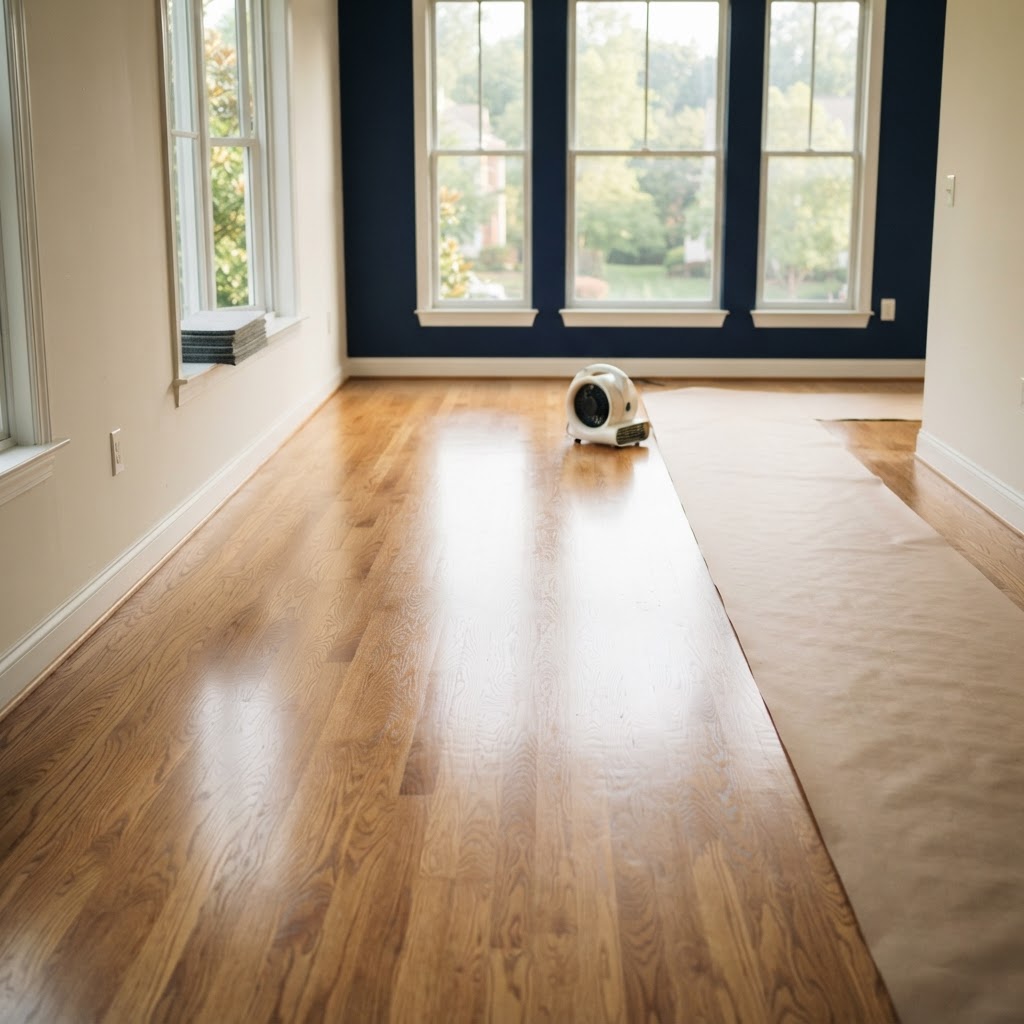
One of the first questions homeowners ask about refinishing is how long it will take and how long they will be without full use of their floors. The honest answer is that it depends on the size of the area, the condition of the wood, the approach and the products. But the process follows a predictable sequence, and once you understand it, you can plan around it. This guide from Floors and Beyond VA walks through a typical timeline for hardwood floor refinishing, explains why drying and curing cannot be rushed, shows how different approaches change the schedule, and gives practical advice for homeowners in Reston, Herndon, Fairfax and the rest of Northern Virginia on when you can walk on the floor, return furniture and put rugs back.
The short answer
For a full floor restoration that includes sanding, staining and several coats of finish, expect a project of several days for a typical set of rooms, followed by a period in which you must treat the floor gently while the finish cures. A lighter screen and recoat is usually shorter, often a day or two for the active work, plus drying time. Larger homes, stairs, repairs and unusual conditions add time.
These are general ranges, not promises. The exact schedule depends on the products used and on conditions in your home, and a reliable contractor will give you a written schedule based on your project.
Why there is no single number
Several factors change the length of a refinishing project.
Size of the area. A single bedroom and a whole first floor are very different jobs. Sanding and finishing time grow with square footage.
Starting condition. A floor with a worn finish but sound wood is quicker than one that needs board repairs, stain treatment or removal of old coatings.
The approach. Full sanding takes longer than a screen and recoat. A project that changes the floor color, with staining, adds a stage.
The finish. Water-based finishes generally dry faster between coats than oil-based products. Oil-based finishes tend to take longer to dry and cure. The choice affects both the schedule and the look.
Number of coats. Most projects use two or three coats of finish, and each needs time to dry before the next.
Stairs and details. Stairs involve handwork on each tread and riser and may add days.
Weather and humidity. High humidity and cool temperatures slow drying. Northern Virginia summers can be very humid, and winter heating can dry the air. A professional adjusts for the conditions.
Access and building rules. In condos and townhomes, permitted work hours, elevator reservations and other rules can limit how much can be done in a day.
A typical timeline for a full refinish
Here is a general outline of how a full refinish with sanding, stain and finish unfolds. Your schedule may differ, and the order of stages may vary.
Before day one: planning and preparation. You and your contractor agree on the scope, color, finish and schedule. You clear the rooms or confirm who will move what. If you live in a community with an association, the paperwork is submitted. This stage happens before the crew arrives.
Day one: setup, repairs and first sanding. The crew protects the surrounding areas, makes necessary repairs such as securing boards and setting nails, and begins sanding. The first passes remove the old finish and level the surface.
Day two: finer sanding and edges. Finer abrasives follow, and the edges, corners and stairs are completed with specialty tools. The floor is thoroughly vacuumed and cleaned so that no dust remains. In some projects this stage overlaps with day one.
Day three: stain, if used. The stain is applied and allowed to dry according to the product instructions. If you are keeping the natural color, this stage is skipped, and the first coat of finish can go on sooner.
Day three or four: first coat of finish. After the floor is clean and any stain has dried, the first coat of finish is applied. It must dry before further work.
Following day or two: additional coats. The second coat, and a third if specified, go on after the prior coat is dry and has been lightly abraded and cleaned. Water-based coats can often be applied within hours of each other under good conditions, while oil-based coats usually need longer.
Final stage: walk-through. The crew inspects the floor, cleans up and reviews care instructions with you.
For many ordinary projects, that totals several working days. A larger project with repairs and stairs can take a week or more.
Timeline for a screen and recoat
A screen and recoat is quicker because it does not remove the finish down to bare wood. The floor is cleaned, lightly abraded with a screen, vacuumed and wiped, and then one coat or sometimes two coats of finish are applied. Many projects can be completed in a day or two of active work, and you return to the room after the drying period. We explain when this approach is appropriate in our post on sandless hardwood floor refinishing.
Drying versus curing
This distinction trips up many homeowners. Dry to the touch is not the same as cured.
Drying is when the finish is no longer wet or tacky on the surface. It happens relatively quickly.
Curing is the chemical hardening of the finish into its full protective strength. It continues for days or weeks after the last coat. During curing, the floor is more vulnerable to scratches, dents and marks from heavy objects, and covering it too early can trap solvents and cause problems.
This is why contractors give different times for different activities.
When can I walk on the floor?
Light foot traffic in socks is commonly possible after the final coat has dried for about a day, although this varies by product. Avoid shoes, high heels and pet nails. Walk gently and avoid dragging or pivoting. Your contractor should tell you the specific time for the product used.
When can furniture go back?
Furniture generally waits longer than foot traffic, commonly a couple of days after the final coat for many water-based products, and longer for oil-based ones. Use felt pads, and lift rather than slide. Heavy items such as pianos, bookcases and appliances should be placed with care, and it may be best to wait longer for them. Ask your contractor for guidance for your product.
When can rugs go back?
Rugs are the most commonly rushed item, and they cause the most problems. A rug placed on a floor that has not cured can trap moisture and solvents, leave marks and prevent the finish from hardening evenly. Rugs usually need to wait longer than furniture, in many cases a couple of weeks or more, depending on the finish. Your contractor will specify. If you must use a rug earlier, ask about breathable options and the risks.
When can I clean the floor?
Avoid wet cleaning until the finish has cured. For the first period, sweep gently with a soft broom or use a dry microfiber mop. After curing, use a cleaning product approved for the finish. Avoid steam cleaners, harsh chemicals and oil soaps unless the finish manufacturer approves them.
What can slow things down
Humidity. Damp air slows drying. In a humid week, extra time may be needed between coats.
Cold. Low temperatures slow curing and can affect how the finish levels. Keep the home at a normal living temperature.
Poor ventilation. Fresh air movement helps finishes dry. Your contractor will plan ventilation, and you may be asked to keep windows open or closed depending on the situation.
Unexpected repairs. Hidden damage, such as soft spots or old stains that need treatment, can add time.
Changing the plan. Switching colors or finishes mid-project adds time.
Early traffic. Walking on the floor too early can force a redo of a coat.
Thinking about your own floors? Floors and Beyond VA offers in-home estimates across Northern Virginia. Schedule yours at floorsandbeyondva.com/Contact or call (703) 906-5698.
Can it be done in a day?
Some very small projects, such as a recoat in a single room, can be completed in a day. A full sanding, staining and finishing job cannot responsibly be completed in one day, because finishes need time to dry between coats. Be cautious of anyone who promises a full refinish with the floor ready to use the same day. Quick-dry products exist for certain stages, but the floor still needs time to harden.
Living in the home during the project
Many homeowners stay in the home, with some adjustments. The work area is off limits, and you will need to plan around access to those rooms. Pets and children should stay away from the work area. If you are sensitive to odors, tell the contractor so that they can select suitable products and ventilate. For larger projects that cover the main living areas, some families arrange to stay elsewhere for a night or two, especially if they are using oil-based products or have members who are sensitive to fumes.
Think about the kitchen, because refinishing a floor that connects to it may restrict access. Plan meals accordingly. Think about the entry and which door you will use. Think about bedrooms and bathrooms, and make sure you can reach them without crossing wet floors.
Water-based and oil-based finishes: how they change the schedule
The finish you choose has the biggest effect on the calendar after the sanding is done. Water-based finishes dry quickly, have lower odor and allow coats to be applied close together, so a project can move briskly and the floor is ready for light use sooner. Oil-based finishes dry more slowly and need longer between coats, but many homeowners like the warm, amber tone they add, especially on oak. Neither is simply better. The right choice depends on the look you want, how sensitive your household is to odor and how much time you have. Ask your contractor to explain how each option affects your timeline and to put the choice in writing.
Planning around holidays, moves and events
Because curing takes time after the active work ends, it helps to build a buffer around important dates. If you are hosting guests, moving in or listing a home, schedule the refinish early enough that the floor is walkable and furniture is back with time to spare. Avoid scheduling the final coat right before a party or the arrival of movers. Moving a heavy sofa across a floor that has not fully hardened is the most common way a new finish gets damaged. A good rule is to plan the project to finish well before the date you need the room, and to ask your contractor how much margin to leave.
What a good written schedule looks like
A useful schedule lists each stage with a start day and a rough duration: preparation, repairs, sanding, staining, each coat of finish and the final walk-through. It states the drying time between coats and the first date for light foot traffic, furniture and rugs. It explains what will happen if humidity or temperature slows drying. It also names who to call if something changes. Floors and Beyond VA gives homeowners a schedule like this before work begins, so there are no surprises and you can plan your household around it.
Planning around Reston, Herndon and Northern Virginia conditions
Reston and Herndon have a mix of townhomes, condominiums and single-family homes, many built in the decades after the community was planned. Townhomes and condos often involve association rules, and the work must fit permitted hours. That may stretch a project over more days than it would take in a detached house. Single-family homes may have fewer restrictions, but they may have more floor area and more rooms.
Northern Virginia's seasons matter. Summer humidity can lengthen the time between coats, and winter heating can make the air very dry. Spring and fall often offer comfortable conditions, though a skilled crew can work year-round with adjustments. If your floors have shown seasonal gaps, we discuss the cause in our post on why hardwood floors gap in winter.
Questions to ask your contractor about timing
How many days of active work do you expect for my floors? How many coats of finish, and what is the drying time between them? When can I walk on the floor, and in what footwear? When can furniture go back, and when can rugs go back? What will you do if humidity or temperature slows drying? What is the plan if you find damage once work starts? Will you give me this in writing?
A contractor who answers these questions directly is one who has done the work many times. For more questions to ask before you hire, see our guide to choosing a hardwood floor refinishing contractor in Northern Virginia.
A note on pets, children and daily life
Plan for the people and animals who share your home. Pets need a place to stay away from the work area, and their nails can mark a floor that has not cured, so many families keep dogs on a different level or with a friend until the finish has hardened. Children should be kept out of the work rooms for safety and to prevent fingerprints and marks. Think about how you will get from room to room without crossing the floor. Setting up a temporary path, using a separate entrance or arranging for a short stay elsewhere can make the days of active work much easier.
How Floors and Beyond VA handles scheduling
Floors and Beyond VA is family-owned and has served Northern Virginia since 1987. Our crews are our own employees, which makes scheduling more predictable. We give homeowners a written schedule with active work days, drying times and care instructions. If conditions change, we tell you and adjust the plan. If you live in Reston, Herndon or nearby, you can learn more about our floor restoration services in Reston, VA, and more about us as a flooring company in Reston.
For the shorter version of this question, read the companion NoVA Guide entry: How long does hardwood floor refinishing take?
For the broader process behind these stages, see our guide to hardwood floor refinishing in Northern Virginia.
Frequently asked questions
How long does it take to refinish a hardwood floor?
A full refinish of a typical set of rooms takes several days of active work, followed by a cure period. A screen and recoat is usually shorter.
How long should I stay off the floor?
Stay off completely while coats are being applied and drying. Light foot traffic in socks is commonly allowed after about a day following the final coat, depending on the product.
When can I put furniture back?
Often after a couple of days or more, depending on the finish. Heavy furniture should wait longer.
When can I put rugs down?
Usually after the finish has had a longer cure period, often a couple of weeks or more. Follow your contractor's instruction.
Does water-based or oil-based finish dry faster?
Water-based finishes generally dry faster between coats. Oil-based finishes usually take longer and have a stronger odor.
Can humidity ruin a refinish?
High humidity can slow drying and affect results if it is not managed. A professional monitors conditions and adjusts.
Do I have to move out?
Usually not, but you may prefer to arrange alternatives for larger projects or if you are sensitive to odors.
Talk to Floors and Beyond VA
If you want to know how long your project would take, the best step is to have someone look at your floors. Floors and Beyond VA will evaluate the space, explain the approach and give you a written timeline. Schedule an in-home estimate at floorsandbeyondva.com/Contact or call (703) 906-5698.




