
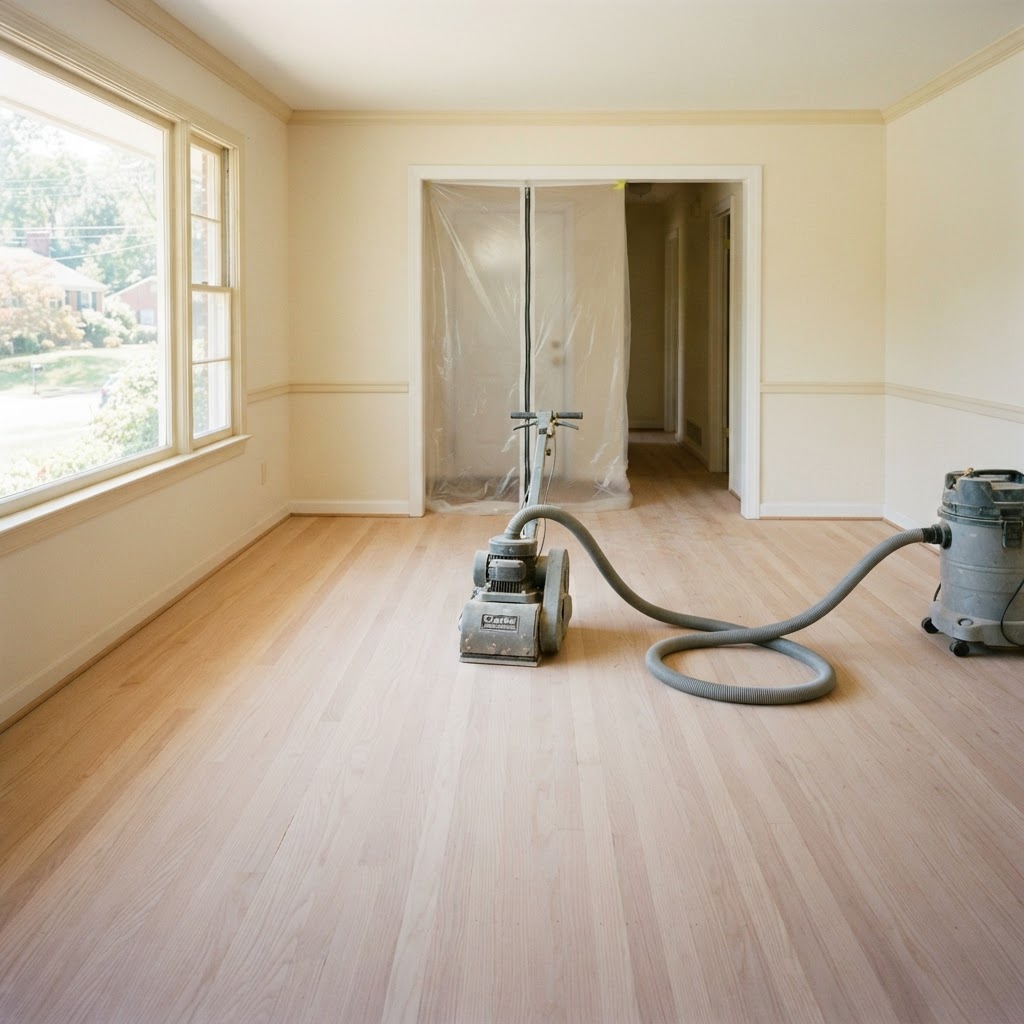
Few phrases in the flooring world generate as much hope and as much confusion as dustless refinishing. Homeowners hear it and imagine a floor sanded without a speck of dust in the house. Contractors use it as a selling point, and some use it loosely.
The reality is more nuanced. Modern dust containment systems capture a large share of the dust that sanding creates, and they make a real difference to cleanliness, but no system is perfect, and the word dustless is better understood as a description of a method than a guarantee. This guide from Floors and Beyond VA explains what dustless refinishing actually is, how the equipment works, what it can and cannot do, what else affects how much dust ends up in your home, how to prepare and how to evaluate a contractor who offers it, for homeowners in Vienna, Fairfax, Tysons and across Northern Virginia. If you are weighing a refinish against replacement, start with our overview of floor restoration.
Where the dust comes from
Sanding works by abrading the surface. As abrasive paper cuts the old finish and a thin layer of wood, it produces fine particles. Those particles are light, and they stay airborne and settle on everything. In the traditional method, the sander throws dust into a bag or into the air, and a significant amount escapes. Dust can end up on shelves, in vents and in rooms far from the work. It is more than a cosmetic problem. Fine dust can irritate eyes and airways, and it makes cleanup long and frustrating.
What dust containment systems do
A dust containment system connects the sanding equipment to a powerful vacuum so that dust is pulled away at the source, before it spreads. The main components typically are a sander with a built-in or attached dust port, a hose, a high-capacity vacuum or extractor that collects dust in a sealed container or filter and, often, filters designed to capture fine particles.
These systems come in different forms. Some connect to drum sanders. Others connect to edgers and detail sanders. Some professional-grade units use multi-stage filtration. Their effectiveness depends on the equipment, the filters, the maintenance and the technique of the operator.
The result is much less dust in the air and on surfaces than with an open, unconnected sander. That is the real benefit, and it is meaningful.
What dustless does not mean
It does not mean zero dust. Even the best systems do not capture every particle. There are several reasons.
- Edges and corners. The large machine cannot reach the edges of a room. Edgers and detail tools capture dust less effectively, and hand sanding in corners and stairs creates dust that is difficult to capture.
- Stairs. Stairs involve small surfaces and handwork, and containment is harder.
- Equipment limits. Hoses, ports and filters have limits. Dust that escapes the port may settle nearby.
- Dust that is already there. Disturbing old dust in vents, on trim and in cracks can add to the cloud.
- Other stages. Dust is created when removing old finish, when cutting boards for repairs and when sanding between coats of finish, not only during the main sanding passes.
Because of this, a responsible contractor will not promise a completely dust-free job. They will tell you that the system greatly reduces dust and describe what they do to contain the rest. If you hear a promise of zero dust, ask questions.
What else affects dust in your home
Several things beyond the sanding machine determine how clean your home stays.
- Preparation. Sealing doorways with plastic sheeting, covering vents and returns, and protecting furniture and fixtures reduces the spread of dust.
- Air system. Turning off the heating and cooling system during sanding, or covering the vents, prevents dust from being pulled through the ducts.
- Cleaning between stages. Vacuuming thoroughly with a hose and a fine filter between sanding passes and before applying finish removes dust that would otherwise stick in the finish.
- Technique. A skilled operator keeps the dust port clear, changes filters and bags as needed and moves methodically.
- Equipment condition. Poorly maintained machines and clogged filters lose effectiveness.
- Finish stage. Dust left on the floor before the first coat of finish can create bumps and specks in the final surface. Good dust control also improves the quality of the finish.
How a project is run matters as much as what machine is used.
Why dust control matters for the finish as well as the home
Homeowners often think of dust control as a comfort issue, but it also affects results. Dust that settles on the floor before the finish is applied becomes part of the finish. It leaves small bumps and a rough feel, and it can cloud the sheen. Thorough cleaning between steps, with effective dust capture, helps produce a smoother, clearer finish. This is one reason professionals take dust control seriously beyond the interest of a clean house.
Sensitive households
If anyone in your household has allergies, asthma or other breathing sensitivities, or if you have infants, tell your contractor before the work begins. Ask how dust will be contained, whether the work area can be sealed off, how air handling will be managed and whether you should plan to stay elsewhere during the sanding. Even with good containment, some fine dust is likely, and people who are sensitive may prefer to be out of the house during the sanding stage. Odor from finishes can also matter, and your contractor can discuss product choices.
Homes built before 1978
Older homes may have lead-based paint on trim, doors and windows. Floor sanding is not the same as paint removal, but refinishing often involves work near painted baseboards and surfaces, and dust can contain lead if paint is disturbed. Ask how the contractor handles lead-safe practices and whether they follow the relevant federal rules for renovation work in homes of that age. This matters especially in the older neighborhoods around Vienna, Falls Church, Arlington and Alexandria.
How to prepare your home
You can help reduce dust and cleanup.
- Remove or cover furniture, and take down wall hangings and breakable items near the work.
- Remove items from open shelves and cover electronics.
- Close and cover vents in the work area, and ask whether the HVAC system should be turned off.
- Seal doors and openings with plastic if the contractor has not.
- Plan for pets and children to stay away from the work area.
- Ask how long the sanding will take and when dust is likely to be heaviest.
- Plan where to stay if you or a family member is sensitive.
What to ask a contractor who offers dustless refinishing
What equipment do you use, and how is it connected to the sander? How do you handle edges, corners and stairs? How do you protect the rest of the house? What do you do about the HVAC system? How do you clean between sanding stages and before finish? What do you tell customers about the dust that remains? Can I see how the system works? What is the plan if someone in my household is sensitive?
A thoughtful, specific answer is a good sign. An answer that is only a promise is not. Our guide to choosing a hardwood floor refinishing contractor covers the rest of the checklist.
Does dustless cost you anything in quality?
A properly run dust containment system does not reduce the quality of the refinish, and it can help. The sanding is the same, and the cleaner environment helps the finish. The caveat is that equipment and operator skill vary, and some systems are better than others. The right question is not whether it is dustless, but how well the contractor controls dust and finish quality overall.
Dustless versus other approaches
There are other ways to reduce dust, and they are worth knowing.
- Screen and recoat. This lighter process does not remove the finish or much wood, so it creates much less dust than a full sanding. If your floor qualifies, it is a good option for homeowners who want to minimize disruption. We explain who qualifies in our post on sandless hardwood floor refinishing.
- Chemical abrasion. Some processes use chemical products to prepare the surface for recoating without sanding. They have limits and are not a substitute for sanding when a floor needs it.
- Traditional sanding with basic containment. Plastic sheeting, sealed vents and careful cleanup reduce dust but not as effectively as a connected system.
The right choice depends on the condition of the floor and your goals.
What to expect after the work
After a refinish with good containment, you may still find a fine layer of dust on surfaces in the work area and near it. Plan to wipe down surfaces, vacuum with a good filter and wash or replace filters in the HVAC system. A professional crew should leave the floor clean and ready for finish, and the house in reasonable condition. Do not be surprised if some dust shows up days later in places like the tops of door frames and shelves.
How long does the dustiest part last?
Most of the dust in a refinish is created during the sanding stages, which usually take place over the first day or two of a project. The heaviest dust is during the coarse and medium passes, when the old finish and a layer of wood are removed, and again during edge and corner work. The final fine sanding creates finer dust that settles slowly. After sanding, careful vacuuming and wiping remove most of what remains before stain or finish goes on. Knowing the timing helps you plan when to be out of the house, when to keep pets and children away and when to expect the air to clear. For the wider schedule, see how long it takes to refinish hardwood floors.
Cleaning up afterward
After the work is complete, give the house a gentle cleaning. Wipe horizontal surfaces such as shelves, window sills and the tops of door frames with a damp microfiber cloth. Vacuum with a good filter, including soft furnishings that were in the work area. Replace or clean the filters in your heating and cooling system, since they may have collected fine particles. Wash curtains or covers that were in the area if needed. Expect to find a little dust over the following days, and wipe it as it appears. None of this means the job was done badly. It is the nature of sanding.
What we see in Northern Virginia homes
Many homes in our area are compact, with open staircases and shared air systems, and dust can travel easily. Condominiums and townhomes add shared walls and concerns about neighbors. Older houses in Vienna and nearby neighborhoods may have lead considerations and forced-air systems that spread dust quickly. Dust control matters in all of these settings, and it benefits from planning before the first day.
Thinking about your own floors? Floors and Beyond VA offers in-home estimates across Northern Virginia. Schedule yours at [floorsandbeyondva.com/Contact](/contact) or call (703) 906-5698.
Evaluating claims about dustless systems
Because dustless has become a marketing phrase, it helps to evaluate claims with a few checks. Ask to see the equipment and how it connects to the sander. Ask what percentage of dust the contractor says it captures and how they know. Be wary of absolute language such as no dust at all. Ask what happens at the edges and stairs, where capture is weakest. Ask how they handle the rest of the process, including cleaning between steps and protecting the house. Read reviews and ask for references from homeowners who had work done recently and can tell you how clean the job really was. A contractor who speaks honestly about both the strengths and the limits of the equipment is more reliable than one who simply says it is dustless.
The difference between a clean job and a dustless job
A clean job is built from
- Work area sealed with sheeting and a zipper door.
- Vents and returns covered; HVAC managed.
- Dust extraction connected to every sander, edger and detail tool.
- Filters and bags changed on schedule.
- Vacuuming and wiping between sanding stages and before finish.
- Furniture covered and protected.
- A tidy, swept home at the end of each day.
The label alone proves nothing
- "100% dust-free" with no explanation of the equipment.
- No plan for edges, corners or stairs.
- No mention of the HVAC system.
- No cleanup between grits or before the first coat.
- Equipment that looks worn, with clogged filters.
- No references from recent local jobs.
A clean job is the result of preparation, equipment, technique and cleanup. A dustless label tells you only about one piece of that. A crew that seals the work area, covers vents, uses connected equipment, vacuums between stages and leaves the home tidy will give you a clean experience, whatever name they use. A crew that relies on the label alone and cuts corners elsewhere may leave more dust than you expect. Focus on the whole process, and you will get a better outcome.
How Floors and Beyond VA approaches dust
Floors and Beyond VA is family-owned and has served Northern Virginia since 1987. Our crews are our own employees. We use vacuum-connected sanding equipment, seal off work areas, protect vents and clean carefully between stages. We are honest with homeowners about what containment can and cannot do, and we plan for the dust that remains. When a lighter process such as a screen and recoat is appropriate, we recommend it, because it is better for the floor and creates less dust.
If you live in Vienna or nearby, you can learn more about our floor restoration services in Vienna, VA. We also work in Fairfax, Tysons, McLean, Reston and across Northern Virginia. For a closer look at a high-rise refinish, see hardwood floor refinishing in Tysons Corner.
Floors and Beyond VA also reminds homeowners to ask about the finish stage. Water-based finishes tend to have lower odor and dry faster, while oil-based finishes have a stronger smell and take longer to cure. Dust control and odor control together determine how comfortable the project is, and we plan both so that your household can make informed choices.
In the end, the goal is not a perfect absence of dust but a refinishing experience that is clean, predictable and respectful of your home. Good equipment, careful preparation and honest communication get you there, and they matter far more than any single word on a flyer or a website. Read more about hardwood floor refinishing in Northern Virginia, and if you are choosing a flooring company in Vienna, ask us how we contain dust before you book the work.
Frequently asked questions
Is dustless hardwood floor refinishing really dust-free?
No. Dust containment systems capture much of the dust, but some escapes, especially at edges, corners and stairs.
Is dustless refinishing worth it?
A good system significantly reduces dust and helps finish quality. It is a meaningful improvement over open sanding.
Do I need to leave my home?
Usually not, but people who are sensitive to dust or odors may prefer to stay elsewhere during sanding.
Does it take longer?
Not significantly. The setup and cleanup are part of a careful process.
Can dustless methods be used on stairs?
Containment is harder on stairs, so some dust is likely, though tools and technique still help.
Is there lead dust in older homes?
Possibly, if paint is disturbed. Ask about lead-safe practices if your home was built before 1978.
How can I reduce dust myself?
Remove or cover items, seal vents, plan for the HVAC system and keep people and pets away from the work area.
Is a screen and recoat dustless?
It creates much less dust than a full sanding, though it is not completely dust-free.
Talk to Floors and Beyond VA
If you want a refinish that keeps dust under control, we would be glad to explain our process and look at your floors. Floors and Beyond VA will evaluate the floor, describe how we contain dust and give you a written plan. Schedule an in-home estimate at [floorsandbeyondva.com/Contact](/contact) or call (703) 906-5698.
Ask us how we contain dust
Sealed work areas, vacuum-connected sanders and an honest answer about what remains, from a family-owned crew serving Northern Virginia since 1987.
Floor Restoration in Vienna, VAQuick answer first: is dustless hardwood floor refinishing really dust-free?




