
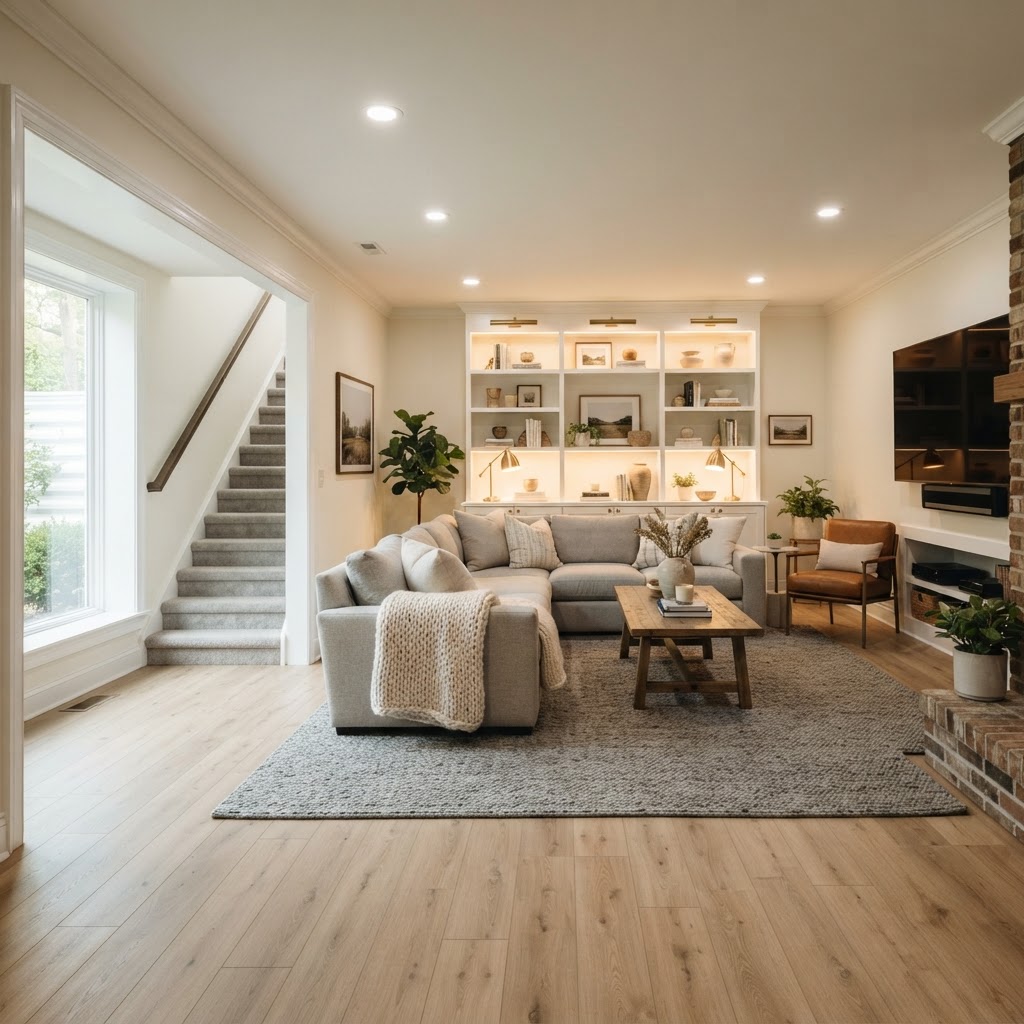
Northern Virginia homeowners rarely improve one thing at a time. A new kitchen leads to a conversation about the floor. A finished basement leads to questions about moisture, stairs and bathrooms. A new coat of paint makes worn carpet look worse. Because every part of a house touches the next, the most useful way to think about home improvement companies in Northern Virginia is room by room, and then as a sequence. This guide walks through the main areas of a home, explains what each kind of project involves, shows how the pieces fit together and describes what a good company does at each step. It covers floors, kitchens, bathrooms, basements, stairs and whole-home updates, along with the decor choices that tie them together. Floors and Beyond VA is a family-owned company that has served Northern Virginia since 1987 with flooring and remodeling, and the notes below come from the work our own crews do in homes across the region.
Why Northern Virginia Homes Need Different Kinds of Help
The region's housing is varied, and each type asks for something different. Colonials, split-levels and ramblers in Fairfax, Prince William and parts of Loudoun date from the 1960s through the 1980s and often have oak under carpet, finished basements and dated kitchens. Townhomes and single-family homes built since the 1990s in Ashburn, Brambleton, South Riding and Gainesville have open plans with builder-grade finishes. Condominiums in Arlington, Tysons and Reston sit on concrete with association rules. Older rowhouses and bungalows in Alexandria and Arlington carry original pine or oak, plaster walls and uneven surfaces that reward careful work.
A home improvement company that does well in one of these may struggle in another. When you look for help, ask what share of its work is in homes like yours.
Floors: Where Most Projects Begin
Floors are often the first project because they affect how the whole house looks and feels, and because worn floors are hard to ignore. The main options are refinishing existing hardwood, installing new hardwood or engineered hardwood flooring, installing luxury vinyl plank flooring and replacing carpet.
Refinishing is the right start for many Northern Virginia homes. Original oak, pine and other hardwoods can often be sanded and finished again, which saves the material and preserves character; that is at the heart of floor restoration. Installing new hardwood suits homes where the old floor is too thin, damaged or missing. Engineered hardwood suits slabs and condos. Luxury vinyl plank suits kitchens, basements and busy households thanks to its waterproof core and tough wear layer. Each has a place, and a flooring-focused company can advise without pushing a single product.
Preparation is the unseen part. Subfloors need to be flat and dry, concrete needs moisture testing and transitions need planning. Many floor problems that show up a year after installation trace back to skipped preparation.
Kitchens: The Most Demanding Room
Kitchens combine plumbing, electrical work, cabinetry, counters, appliances and floors, and they are the room where sequencing matters most. A kitchen project begins with a design that settles the layout, the cabinet plan and the appliances. Demolition follows, then rough plumbing and electrical, drywall, cabinets, counters, backsplash, floors and final fixtures.
Where the floor goes in that order depends on the project. Floating floors are sometimes installed before cabinets and sometimes around them, and hardwood is often installed before cabinets so it runs continuously through the room, though some designers prefer to finish it after the cabinets are set. Water exposure is the other consideration: kitchen floors should handle spills, dishwasher leaks and heavy traffic. Luxury vinyl plank and well-sealed hardwood both work, and tile has its place.
Floor and decor decisions meet in the kitchen. Cabinet color, counter material, backsplash and floor tone all need to agree. A cool gray cabinet with a warm orange floor can look off, while the same cabinet with a neutral mid-tone looks calm. Bring cabinet samples to the floor samples and look at both together.
Bathrooms: Small Rooms, Big Details
Bathrooms are small, and every detail is visible. Floors need to resist water and be safe underfoot, so tile and waterproof vinyl are common. Transitions to hallways and bedrooms matter because the bathroom floor is often a different material. A threshold that is too high or too sharp is a tripping hazard, and one that is poorly finished looks unfinished.
Bathroom remodels also involve waterproofing, ventilation, plumbing fixtures, vanities and lighting. Good companies pay close attention to waterproofing in showers and tubs, since mistakes hide behind tile and show up later as damage.
Basements: Moisture, Floors and Useful Space
Finished and unfinished basements are a major opportunity in Northern Virginia, where many homes have large lower levels on concrete slabs. The first question is always moisture. A basement with active leaks or high humidity needs the source addressed before anything is finished. A concrete slab should be tested before flooring goes on; our guide to the best flooring options for basement moisture issues walks through that decision. Luxury vinyl plank is the common choice, and engineered hardwood works only where the product is approved for below-grade use and the slab tests within limits.
Beyond floors, basements involve framing, insulation, drywall, lighting, egress and often a bathroom or wet bar. These add permits and inspections. A company with experience in basements will know which items need approval and will handle the paperwork.
Stairs: The Forgotten Connector
Stairs connect levels and take more wear than any other part of a house, yet they are often left out of the plan until the new floors make them look worn. Stairs can be refinished if they are hardwood, covered with new treads and risers, or converted from carpet to wood. They should coordinate with the floors at the top and the bottom. In older Northern Virginia homes, a refinished stair with painted risers is a classic. In newer homes, new oak treads over builder-grade stairs give a more substantial feel.
Whole-Home Updates
Some homeowners update an entire level or a whole house at once. This approach gives the most consistent result and a single disruption, but it needs careful sequencing and a company that can handle more than one trade. Painting, flooring, trim and sometimes lighting all come together. A good company will map the order of work, identify which rooms are unavailable on which days and plan for pets, children and daily routines.
Whole-home updates are also where decor choices matter most, because color, tone and finish repeat from room to room. Repeating a floor through an entire level, choosing a consistent trim color and using a limited palette of wall colors creates a calm, unified look. Bold choices work best in small doses, such as a patterned tile in a powder room or a colorful rug in a living room.
Permits, Inspections and Associations
Different projects trigger different approvals. Flooring alone rarely needs a permit, but removing walls, moving plumbing, changing electrical circuits or finishing a basement usually does. Counties and cities in the region, including Fairfax, Loudoun, Prince William, Arlington and Alexandria, each run their own permit offices with their own processes. A company that works in your jurisdiction regularly knows what to file and how long it takes. Inspections happen at set stages, and work generally cannot be covered until it has passed.
Associations add another layer. Condominiums and many townhome communities require written approval before work begins, certificates of insurance, sound-rated underlayments for hard flooring and set work hours. Ask your management office for the rules before you pick materials. A good company will request the same documents and prepare what the association needs.
Matching New Work to an Old House
Many Northern Virginia projects are not built on a blank slate. They connect new work to something that already exists, such as a new kitchen floor meeting an old hallway, a bathroom addition beside original plaster or a refinished stair rising from a carpeted landing. The skill is in the joints. Heights must line up, finishes must blend and trim must look like it belongs. Companies with experience in older homes know how to weave in new boards, match stain and fit new materials to uneven surfaces. This is where the difference between a rushed job and a careful one is easiest to see.
Light, Color and the Feel of the Finished Home
When projects finish, the thing people notice first is not the technical work. It is how the house feels. Lighter floors and walls make rooms brighter. Warmer tones make them cozier. Consistent materials make the home feel larger and calmer. Lighting choices bring out textures and colors, and the same room can look entirely different under warm and cool bulbs. Before choosing finishes, look at samples in your own rooms at different times of day. A choice that looks right in a showroom can change completely in your own light.
Small Updates That Make a Big Difference
Not every project has to be large. Refinishing a single main-level floor, replacing carpet in bedrooms, updating stair treads, replacing a worn kitchen floor or installing a new bathroom floor each changes how a home feels. Many homeowners do these in stages over a year or two, starting with the area that bothers them most. Planning the whole house up front, even if the work is staged, keeps the finishes consistent so the later projects match the earlier ones.
How to Sequence a Multi-Room Project
The general rule is to move from the dirtiest and heaviest work to the cleanest and most delicate. Structural changes and demolition come first, followed by mechanical systems, then drywall and priming. Cabinets, built-ins and trim come next. Floors usually follow, though in some projects they come before cabinets. Final paint, fixtures, appliances and touch-ups finish the job. Floors are installed late because they are easily damaged by other trades, and they are protected afterward with coverings until the last of the work is complete.
Painting before or after floors is a common question. Often the first coat of paint goes on before floors, and the final coat or touch-ups follow. If floors are being refinished, the work is usually done before the final paint so dust does not settle on fresh walls.
Decor Decisions That Tie the Home Together
Decor is not a separate project; it is the thread that runs through all of them. Pick a small palette and repeat it. Choose a floor tone that works with your cabinets, trim and walls. Use rugs and lighting to add color and warmth. In a house with several rooms, keep the main floor consistent and use paint, art and accessories to create differences. The result looks designed even when the scope of the work is modest.
Choosing Materials That Fit How You Live
Material choices should come from daily life rather than catalogs. A household with large dogs and young children needs floors and finishes that forgive scratches and spills. A couple who entertain often may want a durable, easy-to-clean kitchen and a main level with a continuous floor. A home office needs quiet and good light. Someone planning to sell within a few years may favor neutral, widely appealing choices, while a long-term owner can lean toward personal taste. Tell your company how you live, and ask it to recommend materials that suit those habits instead of selecting from what it happens to stock.
What Separates a Good Company From a Merely Busy One
Look for signs of care. A good company visits before it quotes, explains what it sees, puts the scope in writing and tells you who will do the work. It is licensed and insured as Virginia requires, protects your home during the project and cleans up daily. It communicates clearly, tells you promptly about surprises and returns to fix problems. It has a track record you can check through references and reviews.
At Floors and Beyond VA, our own crews do the measuring, preparation and installation, and we begin with an in-home estimate and a written plan. Schedule an in-home estimate and we will look at the rooms you are considering and explain how the work would fit together.
Common Mistakes to Avoid
A few errors repeat across projects. Choosing finishes before settling the layout leads to rework. Skipping subfloor preparation leads to squeaks and gaps. Ordering materials before confirming association rules leads to rejected products. Starting work without a clear schedule leads to months of disruption. Hiring based on a single phone call leads to surprises. Planning each room as a separate project leads to mismatched results. Avoiding these mistakes is as much about planning as about the work itself.
How Long Does a Typical Project Take
Floors in a room or two take days. Refinishing a main level takes about a week once drying time is counted. A bathroom remodel takes a few weeks, and a kitchen can take a month or more, depending on lead times for cabinets and counters. Basement finishing can take longer, especially when permits and inspections are involved. Ask any company for a written schedule, and plan for a little extra time on larger projects.
Working in Occupied Homes
Most home improvement in Northern Virginia happens while people live in the house. Good companies plan for this. They protect floors and furniture, set up dust barriers, establish a path for materials and keep the site tidy. You can help by clearing the work area, arranging care for pets and deciding in advance where you will cook, work and sleep. Short, clear communication on the first day sets the tone for everything that follows.
Keeping the Result Looking New
After the work is done, maintenance preserves the result. Use felt pads, mats and rugs on floors. Clean with products recommended by the manufacturer. Keep humidity steady. Touch up paint promptly and fix small problems before they grow. Ask your company for care instructions for each material, and keep the product information in one place.
Frequently Asked Questions
What do home improvement companies in Northern Virginia do?
They handle projects such as flooring, kitchens, bathrooms, basements, painting, additions and repairs. Some specialize in one trade, and others manage whole projects.
Should floors be done before or after painting?
Often the first coat of paint goes on before floors, with final coats after. Refinishing is typically done before the final paint.
Can one company handle flooring and a kitchen remodel?
Yes. Floors and Beyond VA offers flooring and remodeling, which allows the order of work to be planned together.
What should I do first in a multi-room update?
Settle the layout and plan, then start with the heaviest and dirtiest work and move to floors and finishes.
Do basements need special preparation for floors?
Yes. Moisture should be tested and addressed before any floor is installed.
How do I match decor across rooms?
Use a limited palette, keep the main floor consistent and add variety with paint, rugs and accessories.
Ready to Talk About Your Home?
If you are weighing home improvement companies in Northern Virginia, the best next step is a visit from someone who will look at the rooms you have in mind and explain how the work fits together. Floors and Beyond VA is a family-owned flooring and remodeling company serving Fairfax, Loudoun, Prince William and Arlington counties, Alexandria and the Washington, DC area since 1987. Schedule an in-home estimate at floorsandbeyondva.com/Contact or call (703) 906-5698.




