
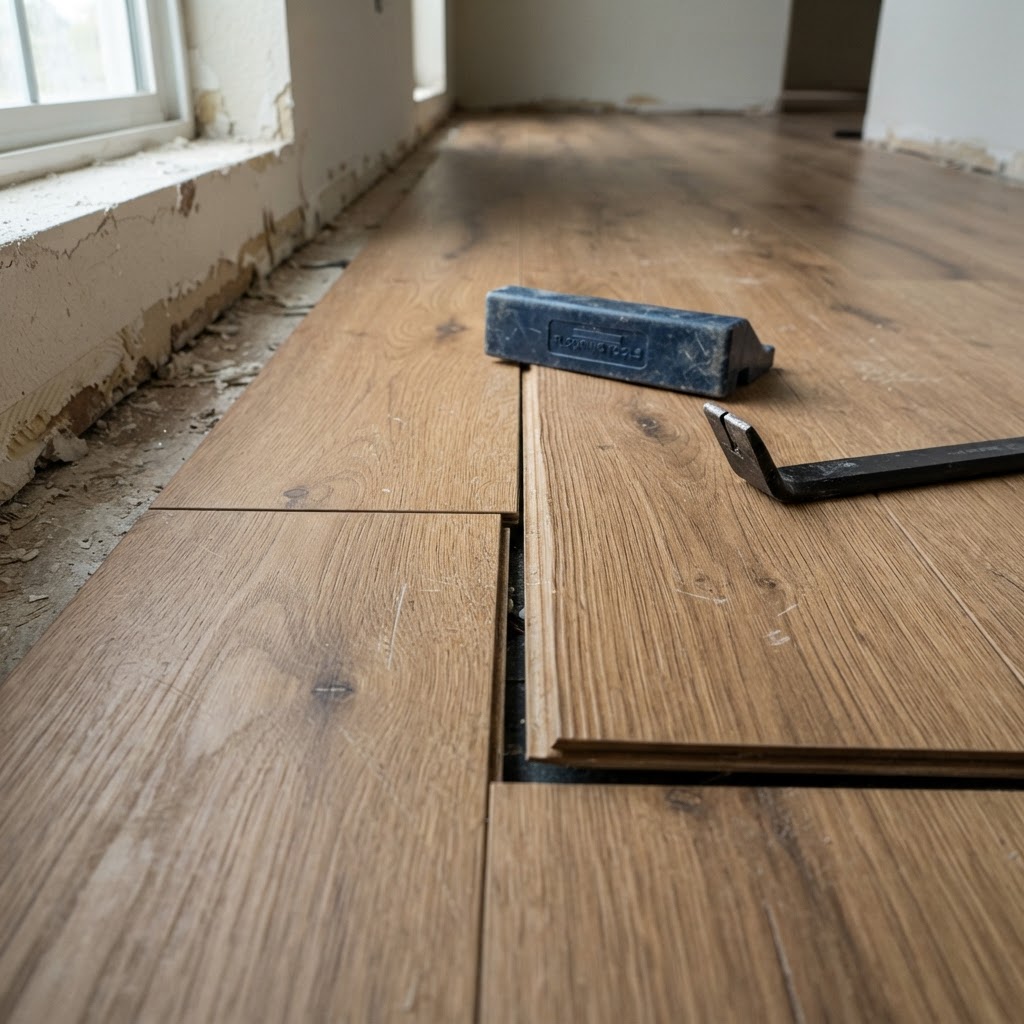
Luxury vinyl plank is forgiving, but it is not trouble-proof. Floors can open gaps, planks can lift, scratches can show and sooner or later someone asks how to take it all up or lay it over old tile. Most of these problems have the same few causes: an uneven subfloor, no room for the floor to move, moisture or heat. This guide explains how to fix gaps in LVP flooring, how to fix LVP flooring that is lifting, how to get scratches out of LVP flooring, how to remove LVP flooring, how to stagger LVP planks and whether you can put LVP flooring over tile.
Floors and Beyond VA is a family-owned flooring company that has served Northern Virginia since 1987, and our own crews handle the work from the first visit to the final cleanup. Our luxury vinyl plank flooring page covers the products we install.
How to Fix Gaps in LVP Flooring
Gaps between planks usually appear in floating floors. Common causes are temperature swings, sun on one area, an uneven subfloor that lets joints flex, a floor pinned by cabinets or trim or a locking system that never fully engaged. To fix them, remove the baseboard or quarter round, release the planks from the nearest wall and tap them back together with a tapping block and pull bar, row by row. If a plank's lock is damaged, replace it. Check the subfloor for dips, and keep the room's temperature steady. Gaps in glue-down floors point to adhesive that failed or moisture below, and need a professional look.
How to Fix LVP Flooring That Is Lifting
Planks that peak, ridge or lift along the seams are usually pressed against something. A missing or too-small expansion gap at the walls, trim nailed through the floor, heavy fixed objects and moisture under the floor can all cause it. Remove the trim, check for contact at the walls and cut the plank edges back if needed to restore the gap, then re-lock the planks. If moisture is involved, find the source, such as a leak or damp slab, and fix it first. In glue-down floors, lifting means the bond has let go, and the area must be cleaned and re-adhered or replaced.
How to Get Scratches Out of LVP Flooring
Light scratches in the wear layer can often be reduced. Clean the area, then use a vinyl floor restorer or a manufacturer-approved scratch repair product, or a touch-up kit that matches the color. Do not use abrasives, steel wool or oil-based home remedies, which scratch or dull the surface. Deep gouges that cut through the wear layer cannot be sanded out like wood. The fix is to replace the plank, which is why keeping spare planks from the installation matters. Felt pads, mats and trimmed pet nails prevent most scratches.
How to Remove LVP Flooring
Floating LVP comes up by releasing the planks from a wall and lifting them row by row, working backward. Glue-down LVP is harder. The planks are pried or scraped up, sometimes with a little heat, and adhesive residue must be removed before new flooring goes down. Take care with older vinyl: sheet vinyl, tile and adhesives installed before the 1980s may contain asbestos, so have old materials tested before disturbing them. Floors under the LVP may also need repair, so plan for patching and cleaning.
How to Stagger LVP Planks
Staggering means offsetting the end joints from row to row so seams do not line up and the floor looks natural and stays strong. A common rule is to keep end joints at least six inches apart, though the manufacturer's instruction governs. Avoid stair-step patterns and H-shaped joints, start rows with different lengths, use the cut end of one row to begin the next only when it meets the minimum and draw planks from several boxes to mix the pattern.
LVP Flooring Over Tile
LVP can often go over existing tile if the tile is firmly bonded, flat and clean. The problem is the grout lines. Vinyl is thin and the grooves telegraph through, so they are filled with a patching or leveling compound made for the purpose. Loose or cracked tiles are repaired or removed, and the surface is cleaned and, if the manufacturer requires, primed. A rigid core plank hides more than a thin flexible one. Also check the added height at doorways, appliances and the toilet flange, and whether the floor will meet other rooms well.
When to Call a Professional
Recurring gaps, widespread lifting, a floor that moves underfoot, signs of moisture or anything involving old adhesives deserves an in-person look. A professional can find the cause, which is often the subfloor or the expansion gap, instead of treating the symptom.
Frequently Asked Questions
Why is my LVP separating?
Usually temperature changes, an uneven subfloor or a floor that has no room to move. Check the expansion gap and the subfloor.
Can I fix a lifted plank myself?
Often, by removing trim, restoring the expansion gap and re-locking the planks. Moisture problems need the source fixed first.
Can LVP be sanded to remove scratches?
No. Replace the plank if the scratch is deep.
Is it hard to remove LVP?
Floating LVP is easy. Glue-down LVP takes more work, and older vinyl may need asbestos testing.
Can LVP go over tile?
Often, if the tile is flat and the grout lines are filled.
Ready When You Are
If your LVP floor has gaps, lifting planks or damage, or you are ready to replace it, we can look at the subfloor and tell you what is causing it. Floors and Beyond VA serves Fairfax, Loudoun, Prince William and Arlington counties, Alexandria and the Washington, DC area. Schedule an in-home estimate at contact Floors and Beyond VA or call (703) 906-5698.
Related reading: how to install LVP flooring on concrete, SPC vs LVP, how thick LVP should be and whether you can steam mop LVP.

