
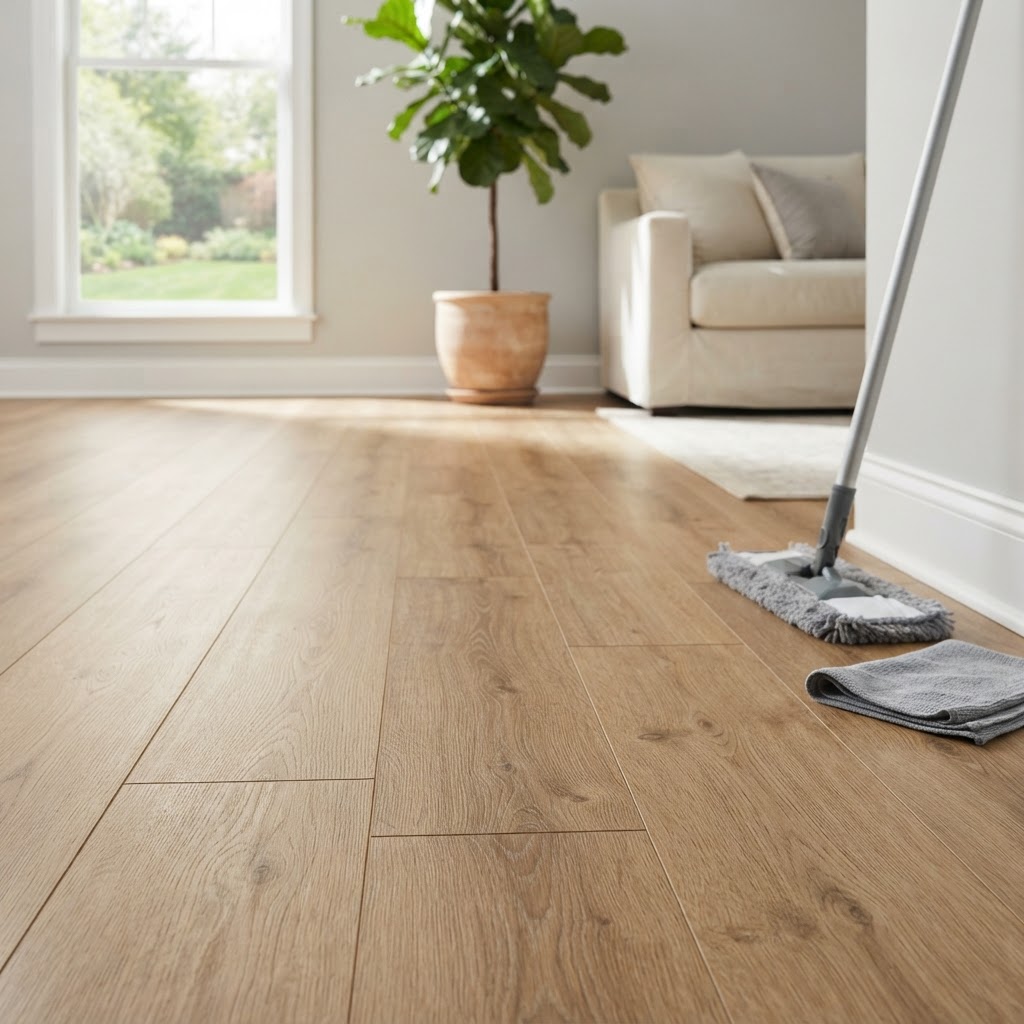
Luxury vinyl plank (LVP flooring) looks tough, and it is. It shrugs off spills, dog nails and a houseful of kids better than most floors. So it is natural to assume it can handle a steam mop, the one cleaning tool that promises to sanitize and shine in a single pass.
The honest answer is that most LVP manufacturers tell you not to use one, and the reasons are worth understanding. Heat and moisture are the two things a vinyl floor handles worst when they are combined and concentrated. This guide explains what a steam mop does to LVP, why warranties usually exclude it, what damage looks like when it happens, and the cleaning routine that keeps a floor looking new for years.
At Floors and Beyond VA, we install LVP flooring in Ashburn, Leesburg, Reston and the rest of Northern Virginia, and we hear this question after almost every installation.
The short answer
Do not steam mop LVP unless the manufacturer of your specific product says in writing that it is allowed. Almost every major brand lists steam cleaning among the things to avoid.
A steam mop pushes very hot vapor and moisture into the surface, and LVP is a layered product with a printed film, a wear layer, a core and sometimes an attached pad. Those layers are bonded together, and the bonds are what a steam mop attacks. The floor may look fine after the first use. The problems tend to show up weeks or months later, which is why so many people believe steam is harmless until it is too late to prove otherwise.
How LVP is built
To see why steam is a problem, it helps to picture the plank. On top is a clear wear layer that protects the print. Beneath it is a printed film that gives the plank its wood or stone look. Under that is the core, which may be a flexible vinyl, a rigid stone composite or a foamed composite. Many planks have an attached pad on the back.
Between each of these layers is a bond. The wear layer is bonded to the print, the print to the core and the core to the pad. Vinyl is a plastic, and plastics soften and expand when they are heated. A steam mop repeatedly heats the top of the plank far above ordinary room temperature while forcing moisture toward the seams. If you want the basics of what LVP flooring is, that guide walks through the layers in plain terms.
What a steam mop actually does
A steam mop heats water in a small tank until it turns to vapor, then pushes that vapor through a cloth pad onto the floor. The vapor is far hotter than anything a normal mop applies. It condenses into water on the surface and runs into whatever gaps it finds.
On sealed tile or stone, that is mostly harmless. On a floating floor with click-lock edges, every seam is a small channel, and the vapor works its way in. On a glued-down floor, the heat can soften adhesive over time. The cleaning result looks good in the moment because the surface is wet and shiny, but the wear on the floor is cumulative.
Why manufacturers exclude steam
Warranties for LVP cover manufacturing defects. They do not cover damage caused by cleaning methods the maker told you to avoid. If a plank curls at the edge and you have been steam mopping, the warranty claim is likely to be denied.
The reasoning is not arbitrary. Manufacturers test their products against normal maintenance, and the care instructions reflect what the product survived. Steam is outside that testing for most lines. Before you buy any steam product for your home, read the care sheet that came with your planks. If you no longer have it, the brand website usually lists it, and your installer can help you find it.
What steam damage looks like
Damage from steam rarely announces itself. Early signs include a dull or cloudy patch where the surface has been overheated, slightly raised or curled plank edges, and visible gaps opening between planks as the material expands and then contracts.
In glue-down installations you may notice individual planks lifting or a hollow sound when you tap them. In floating installations, edges may peak where two planks meet, or the locking joint may separate. Discoloration, a whitish haze or a sticky feel can appear where heat has affected the topcoat. Once the layers have separated, the fix is usually to replace the affected planks, and matching an older floor can be difficult.
SPC, WPC and flexible cores
Some homeowners hope that a rigid core changes the answer. SPC planks have a dense stone composite core that resists dents and holds its shape well. That does help with stability, but the core is not the part steam attacks. The wear layer, the print film and the seams are the same weak points. A rigid-core plank may take longer to show damage, which can make the problem harder to connect to the steam mop.
WPC planks have a thicker, softer core and can be more sensitive to moisture at the edges. If you are not sure which type you have, our guide to SPC versus LVP explains how to tell them apart, and the safe answer for all of them is the same.
Glue-down versus floating floors
How the floor was installed changes how the damage appears but not the advice. A glue-down floor is bonded to the subfloor with adhesive. Heat and moisture over time can weaken that bond, and planks may shift or lift. A floating floor is held together by its own locking edges and rests on the subfloor, so moisture that gets into the seams can reach the subfloor beneath and stay there.
Both kinds are better off with a damp mop than a steam mop. If you are not sure how your floor was installed, our guides to glue-down LVP and floating LVP describe each method and how to recognize it.
The safe way to clean LVP
The routine that works is simple. Sweep or vacuum regularly with a soft brush setting, because grit is what scratches the wear layer. Use a microfiber mop that is damp, not wet. Pair it with a pH-neutral cleaner made for vinyl or a cleaner recommended in the care sheet. Rinse the pad often so you are not spreading dirty water. Wipe up spills when they happen. Dry any standing water from seams.
That is the whole system. It is gentler and quicker than a steam mop, and the floor stays in warranty. Our guide on how to clean LVP flooring goes through the routine step by step.
What to avoid besides steam
Steam is not the only thing that harms vinyl. Avoid wax, polish and oil-based soaps, which leave a film and make the surface slippery and dull. Avoid abrasive pads, scouring powders and stiff-bristled brushes. Avoid rolling heavy furniture on hard casters without protection. Avoid rubber-backed mats that are not labeled safe for vinyl, because some backings can stain the surface over time. Avoid strong solvents and harsh bleach solutions, and check the care sheet before using any disinfectant.
A good rule is that if a product is stronger than what you would use on a painted wall, it is probably stronger than what your floor needs.
What about sanitizing
People reach for steam because they want to sanitize, especially with pets, toddlers and crawling babies. A damp mop with a mild cleaner removes most of what you want gone, and the dirt and oils on a floor are removed by cleaning, not by heat.
If you want a disinfectant for a specific situation, such as an illness in the house, check that the product is safe for vinyl and follow its dwell time. Rinse with a damp cloth afterward to remove residue. Routine cleaning with a clean microfiber pad is the best everyday sanitizing method for LVP because it lifts and traps soil rather than pushing it around.
Pets, spills and accidents
LVP is a good choice for homes with pets because the surface resists scratches and water. Accidents still call for quick action. Soak up liquid right away with a towel. Clean the area with a damp cloth and mild cleaner. For dried residue, a soft cloth with a little cleaner and gentle pressure is usually enough. Do not scrape with metal tools.
Keep pet nails trimmed and place mats at the entry doors to catch grit. If a pet has an accident near a seam, dry the seam thoroughly. These small habits do more for a floor than any gadget, and none of them involve heat.
Kitchens, entries and basements
Kitchens collect grease and food spills, so they may need a mop pass more often than other rooms. Use the damp method and change your cleaning pad as it gets dirty. Entries collect grit, salt and mud in the winter, so a good mat and frequent sweeping protect the wear layer. Basements are often where LVP is installed because it handles moisture better than hardwood, but a basement floor should still be kept clean without flooding it. Our guide to the best flooring for basement moisture issues explains why moisture control under the floor matters.
In every room, the cleaning approach is the same: damp, gentle and dry at the seams.
Seasonal habits in Northern Virginia
Northern Virginia has real seasons, and they affect how a floor is used and cleaned. In winter, road salt and wet boots track into entries and kitchens, and salt residue can dull a vinyl surface if it is left. Wipe it up promptly with a damp mop. In spring and summer, open windows and humid air mean more dust and pollen, so a vacuum pass helps. In homes with strong sun, such as rooms with large south-facing windows in Ashburn or Leesburg, window film or curtains reduce heat on the floor surface. Heat from sunlight is another reason to keep a steam device away from vinyl, since the floor already works hard in summer.
When a steam mop has already been used
If you have already used a steam mop on your LVP, do not panic. Many floors show no damage after occasional use. Stop using it, inspect the floor in good light and look for dull patches, raised edges or gaps. Press along seams to see whether planks feel loose.
If everything looks normal, switch to damp mopping and keep an eye on the floor over the next few months. If you see changes, document them with photos and contact your installer. Do not try to glue down lifted planks yourself, because the wrong adhesive can make later repair harder.
How repair works
Damaged LVP is usually repaired by replacing planks. For floating floors, a few planks can often be lifted from the nearest wall or cut out and replaced with new ones. For glue-down floors, the plank is removed, the old adhesive is cleaned and a new plank is bonded.
The challenge is color and pattern match, because dye lots change. That is why it helps to keep spare planks from the original installation. If you do not have extras, your installer may be able to find a match or a close alternative. Floors and Beyond VA keeps careful records of the products we install so homeowners can find matching material years later.
Keeping a spare box
When you have LVP installed, ask for a few spare boxes to be left in the house. Store them flat in a closed closet or a climate-controlled space, not in a hot garage. Spare planks from the same lot match the installed floor. They are what makes a future repair invisible.
A single box can cover most small repairs, such as a damaged plank under a refrigerator or near a dishwasher. Label the box with the product name and the date. It is a simple habit that avoids a long search later.
What about wall-to-wall cleaning machines
Beyond steam mops, there are wet-dry vacuums and robot mops. Wet-dry vacuums can be fine if they are used with the manufacturer's recommended cleaner and do not leave standing water. Robot mops that spray water in small amounts can work if they are set to the lowest wetness setting. Anything that applies heat, high pressure or large amounts of water is a risk.
When in doubt, test in a closet or low-visibility corner, and check the care sheet. The goal is to maintain the floor, not to find the most powerful tool.
Talk to a specialist before you choose a cleaner
If you are not sure how to care for your floor, the best step is to ask the people who installed it or who sell the product line. Our team can look at your floor, identify the product and tell you what the manufacturer recommends. Schedule an in-home estimate with Floors and Beyond VA if you are planning a new floor or want advice on how to care for an existing one. We bring samples, answer care questions and show you how the product looks in your home's light.
Questions to ask before buying any floor cleaner
Before you buy a new cleaner or tool, read the care sheet for your floor. Check whether the product is labeled safe for vinyl or LVP. Look for pH-neutral formulas. Avoid anything that promises to leave a shine, since shine products often leave a residue. Test on a small hidden area. Ask whether the cleaner needs rinsing. And ask yourself whether you need the product at all, because plain water on a clean microfiber pad handles most daily cleaning.
How long a well-cared LVP floor lasts
A quality LVP floor with a good wear layer, installed correctly and cleaned gently, can last many years in a busy household. The wear layer is the main thing that ages, and abrasive grit, harsh chemicals and heat accelerate that aging. Our guide to the 12 mil wear layer explains how wear layer thickness relates to durability.
Care habits matter as much as the product. A thicker wear layer can survive a lot, but it will not survive steam better than a thinner one.
How Floors and Beyond VA approaches care
Floors and Beyond VA is a family-owned flooring company, and our own crews install every floor. That means we know what each product needs and we can explain it to you plainly. We give homeowners care guidance at the end of every installation, and we are happy to answer questions years later. If you are comparing LVP with other floor types, we help you weigh the maintenance each one needs, because a floor you can care for easily is a floor you will enjoy.
Common myths about cleaning vinyl
One myth is that vinyl is waterproof so it can take any amount of water. The planks may be waterproof, but the seams, edges and subfloor are not. Another myth is that a steam mop kills everything. It does reduce some germs on the surface, but routine cleaning is what keeps a home healthy. Another is that vinegar is always safe. Some manufacturers allow diluted vinegar, others do not, and it can dull some finishes over time. The care sheet is the final word.
Frequently asked questions
Can you steam mop LVP flooring? Most manufacturers say no. Steam heat and moisture can damage the layers and seams and may void the warranty.
Is a steam mop safe on SPC or rigid-core LVP? It is still not recommended by most makers, because the wear layer and seams are vulnerable even if the core is stable.
What is the best way to clean LVP? Sweep or vacuum, then use a damp microfiber mop with a pH-neutral cleaner made for vinyl.
Can steam damage glue-down LVP? Yes. Heat and moisture can weaken the adhesive bond and cause planks to lift over time.
What should I do if I already steam mopped my floor? Stop using it, inspect for dull spots, raised edges or gaps, and contact your installer if you see changes.
Can I use vinegar on LVP? Check your care sheet. Some brands allow diluted vinegar, others advise against it.
The short version of this answer is also in our NoVA Guide: Can you steam mop LVP flooring?.
Ready for a floor that is easy to care for?
If you are thinking about luxury vinyl plank for your Northern Virginia home, the best next step is to see samples in your own rooms and talk through how each product is cared for. Floors and Beyond VA is a family-owned flooring company serving Fairfax, Loudoun, Prince William and Arlington counties since 1987. Schedule an in-home estimate at floorsandbeyondva.com/Contact or call (703) 906-5698.




