
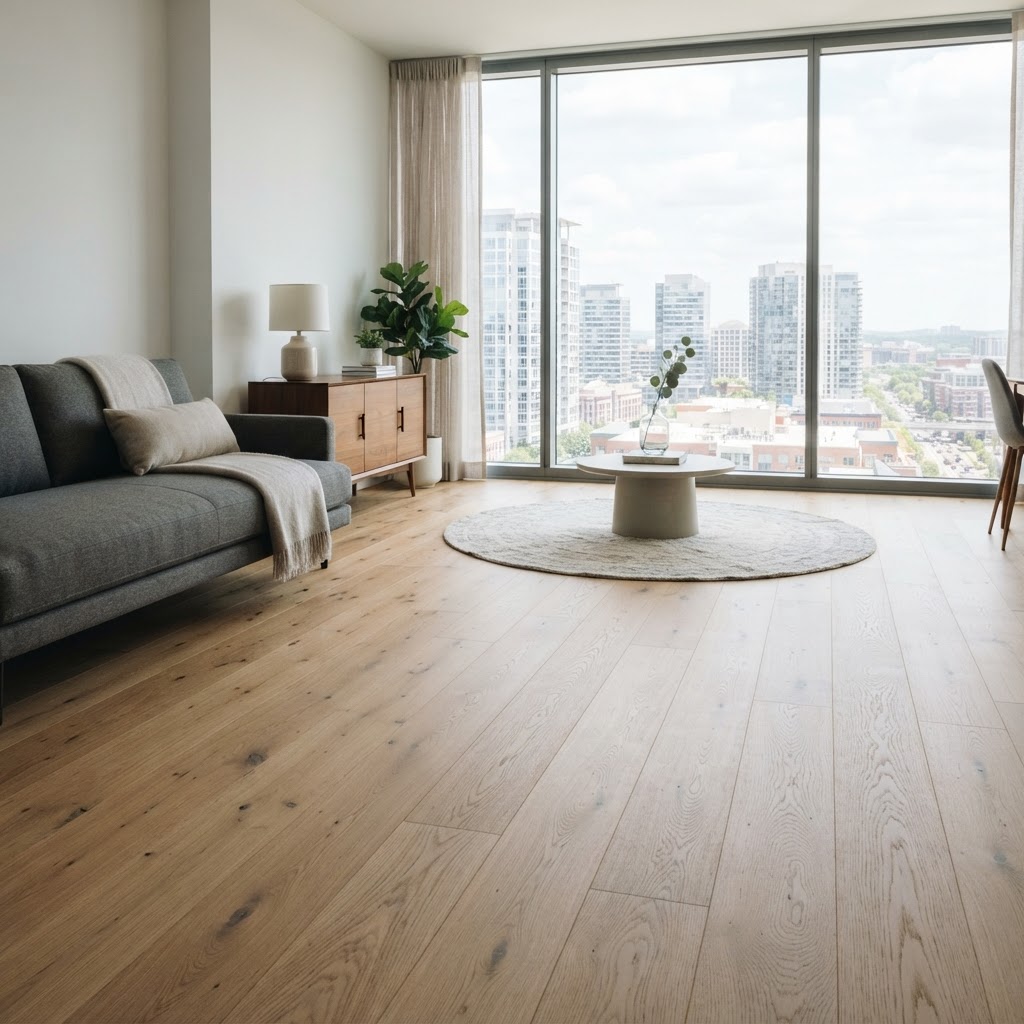
Choosing a flooring company in Arlington means choosing someone who understands a place with older houses, tight lots, busy condo buildings and a lot of people with questions about what is possible. Arlington County packs an unusual range of housing into a small area, from 1920s bungalows in Lyon Park and Cherrydale to mid-century garden apartments, 1950s Cape Cods, townhomes in Shirlington and high-rise condos in Rosslyn, Clarendon and Crystal City. The best flooring choice and the best installer depend on which of these you live in. This guide explains how to choose a flooring company in Arlington, what questions to ask, how condo rules and older homes change the plan and what a good in-home estimate looks like. At Floors and Beyond VA, we have served Arlington, Fairfax, Loudoun and Prince William counties since 1987.
WHAT KIND OF HOME DO YOU HAVE?
The first step is to be clear about your home, because the answer shapes everything else.
Older single-family houses. Arlington's early and mid-century houses often have original hardwood floors, sometimes under carpet or several layers of finish. These floors may be worth restoring, and an inspection can tell you whether they are. Our guide on refinishing pre-war floors and our article on whether refinishing hardwood floors is worth it explain this path.
Newer houses and infill. Teardowns and new builds, which have become common in some neighborhoods, usually have engineered or solid hardwood installed by builders. Their floors may need maintenance or replacement in certain areas.
Townhomes. Many townhomes have wood subfloors, shared walls and carpet in bedrooms and stairs. Sound, stairs and builder-grade materials are the usual questions.
Condos. High-rise and mid-rise condos have concrete slabs, association rules and logistics. Hard flooring requires approval and sound ratings in many buildings. Our guide on LVP flooring in Arlington condos explains the process.
Each type calls for a different conversation, and a company that works in Arlington regularly will recognize them quickly.
THE KINDS OF WORK A FLOORING COMPANY DOES
Flooring companies vary in what they offer. Some install only. Others also refinish and restore existing floors. Some specialize in one material, and others handle several. For homeowners, a company that does both installation and restoration is useful, because it can recommend whichever is right for your floor without a bias toward selling new materials. Floors and Beyond VA installs hardwood and luxury vinyl plank and refinishes and restores hardwood, and we take a refinish-first approach, which means we try to preserve and renew the floor you have before suggesting a new one.
HOW TO EVALUATE A COMPANY
Look at several things. How long have they been in business, and in this area? Do they use their own employees or subcontractors? Do they come to your home before giving an estimate? Do they explain the process clearly? Do they put the scope in writing? Are they licensed and insured? Can they provide references or examples of similar work? Are they familiar with condo requirements if you live in one? How do they handle questions and communication? These are the best clues to what working with them will be like.
WHAT A GOOD IN-HOME ESTIMATE LOOKS LIKE
An estimator visits your home, looks at the floors and subfloors, measures the rooms and asks about your goals and household. They check the condition of existing floors, the age of the home, the transitions between rooms and the stairs. They bring samples, show them in your light and explain the differences. They tell you what they recommend and why, including when a lighter or different solution would do. They put the scope in writing, listing the rooms, the materials, the preparation, the method, the trim and transitions and the schedule. You should leave knowing who will do the work and what to expect. Our guide on choosing a flooring company in Fairfax covers the same points, and the principles are consistent across the region.
QUESTIONS WORTH ASKING
Who will do the work, and are they employees? How will you prepare the subfloor? Will you test for moisture on concrete? What will you do if you find a problem under my old floor? How will you protect my home during the job? What is the schedule? What does the warranty cover, for both the product and the workmanship? Can you work within my building's rules and provide insurance certificates? Can I see examples or references? What would you recommend if you were starting from scratch? That last question is a way to learn what the company really thinks is best for your home.
WARNING SIGNS
A quote without a visit. Reluctance to put the scope in writing. Pressure to sign quickly. Vague answers about who does the work. No discussion of subfloor condition or moisture. A recommendation to replace everything without looking at what is there. Indifference to your building's rules. No questions about your household. A promise of an unusually fast schedule without an explanation. Any of these suggests a company more focused on the sale than the job.
TALK TO A SPECIALIST BEFORE YOU DECIDE
The simplest way to compare flooring companies is to have them look at your home and listen to how they explain what they see. Floors and Beyond VA offers in-home estimates throughout Arlington, including Clarendon, Ballston, Rosslyn, Crystal City, Shirlington, Lyon Park, Cherrydale and Westover. Schedule an in-home estimate at floorsandbeyondva.com/Contact or call (703) 906-5698, and we will inspect the floors, show samples and put a clear scope in writing.
ARLINGTON CONDOS AND HIGH-RISES
Arlington's condo buildings bring specific requirements. Before you order anything, ask management for the renovation policy. It usually covers approval, sound ratings, work hours, elevator reservations, insurance and debris. Concrete slabs need flatness checks and moisture testing. Sound is the issue that most often surprises owners, because hard flooring transmits impact noise to the unit below, and many buildings require documented ratings for the whole assembly. A flooring company that works in condominiums will help you prepare the documents and plan the logistics. Our guide on LVP flooring in Arlington condos gives the full list.
OLDER ARLINGTON HOMES
In older homes, the conversation changes. The question is often whether the existing floor can be saved, and whether the subfloor beneath new flooring is sound. A skilled company inspects for squeaks, movement, moisture and old finishes, and tests for hazards such as lead paint around trim in houses built before 1978. Original oak floors in Arlington homes are often thick and well suited to refinishing, and they may be in better condition than their owners expect. Replacing them with new material can be a mistake if the old floor could have been renewed.
HARDWOOD OR LVP?
Many Arlington homeowners compare hardwood and luxury vinyl plank. Hardwood offers a classic look, can be refinished and often adds a sense of quality to a home. It is more sensitive to moisture and scratches than vinyl, though it can be renewed. LVP offers water resistance, durability and a wide range of styles, but it cannot be refinished. Condos, basements and busy households often lean toward LVP, while living areas in older houses often suit hardwood. The right answer depends on the space. Our guide on what LVP flooring is and our overview of hardwood floor refinishing explain the two options.
STAIRS, HALLWAYS AND TRANSITIONS
Arlington homes and townhomes often have steep stairs, narrow hallways and tight transitions. These areas determine how well a flooring project comes together. Stairs require careful measurement and installation, and the parts must match the floor. Hallways need layouts that run the planks in a pleasing direction. Transitions between rooms and different floors should be safe and look intentional. Ask your flooring company to explain their plan for each.
PERMITS AND REGULATIONS
Most flooring replacement does not require a building permit, but some projects, such as structural repairs or changes affecting egress, may. Condo associations typically have their own approval processes. Ask the company what applies to your project, and keep copies of any approvals. In older homes, lead-safe practices may be required for certain work. A good company knows the rules that apply and helps you comply.
PLANNING THE TIMELINE
Flooring projects take planning. Measuring, ordering and acclimating materials can take days or weeks, depending on the product. Scheduling the crew, moving furniture and coordinating with other trades add time. In condos, elevator reservations and approvals can extend the schedule. Ask the company for a realistic timeline and what you need to do to prepare. If you have a deadline, tell them early.
AFTER THE INSTALLATION
A responsible company leaves care instructions, keeps records of the products and stays reachable if something needs attention. Keep the paperwork, including the scope, product information, warranty and any association approvals. Use mats, felt pads and appropriate cleaners to protect your floors.
HOW FLOORS AND BEYOND VA WORKS IN ARLINGTON
Floors and Beyond VA starts with listening. We visit your home or condo, inspect the floors and subfloors, ask about your goals and household, show samples and explain the options. We recommend the lightest process that will work, whether that is restoring the floor you have or installing a new one, and we put the scope in writing. We prepare condo documents when needed, follow the manufacturer's instructions and use our own crews, not subcontractors. If something unexpected turns up, we tell you and agree on changes before proceeding.
A WALK THROUGH THREE ARLINGTON PROJECTS
Consider three typical homeowners. The first owns a 1940s Cape Cod in Westover with oak floors under carpet. An inspection shows thick, sound boards with tack strip holes along the walls. The recommended plan is to remove the carpet, repair the holes and refinish the floor, which saves the original wood and keeps the home's character. The second owns a Clarendon condo with worn carpet over a concrete slab and a building that requires a sound rating. The plan involves reading the renovation policy, choosing a rated underlayment and a floating engineered or vinyl plank, and preparing documents for management. The third owns a Shirlington townhome with carpeted stairs and a tired main level. The plan includes new flooring on the main level and a stair installation with matched parts, scheduled to keep the family in the home. Each project is different, and the right company recognizes that from the first visit.
SEASONAL AND PRACTICAL CONSIDERATIONS
Arlington's humid summers and dry winters affect wood floors, so the time of year can matter for some projects. Solid and engineered hardwood respond to humidity, and acclimation during the right conditions helps. Refinishing is easier when windows can be opened for ventilation and when drying conditions are good. In condos, building rules about work hours and moving can matter more than the season. A good company plans around these factors and tells you the best timing for your project.
WHAT TO KEEP AFTER THE JOB
Keep the written scope, the product information, the warranty, the installer's workmanship warranty, the care instructions and any approvals from your association. Save a few spare planks if you have new flooring. If you sell your home or condo, these documents help future owners understand what is in the floor and how to maintain it. They also make future repairs easier, because the product and lot information is on hand.
HOW TO PREPARE FOR YOUR FIRST CALL
Gather a few facts before you contact a company. Know the approximate size of the areas, the type of existing flooring, the age of the home and whether it is a house, townhome or condo. Take photos of the floors, stairs and problem areas. Find your building's renovation policy if you live in a condo. Think about what you want, such as a new look, easier maintenance or a repair. Write down your questions and your schedule. With that information, a company can give you a clearer and faster answer.
COMPARING MATERIALS IN PLAIN TERMS
Hardwood is the traditional choice. It can be refinished, ages gracefully and suits many Arlington homes, but it needs care around moisture. Engineered hardwood has a real wood top layer over a stable core and works well over concrete and in condos, though its refinishing life depends on the wear layer. Luxury vinyl plank is water-resistant, durable and available in many styles, but it cannot be refinished, so its life depends on the wear layer and care. Our guides on engineered hardwood installation and on the 12 mil LVP wear layer explain these in more detail. The best material is the one that suits your room, your household and the way you live.
WHY LOCAL EXPERIENCE MATTERS
Arlington is dense, and the details of working here are different from working in a suburb with a wide driveway. Parking can be limited, building access can be tight, and neighbors are close. Condo and townhome associations have their own rules. Older houses have quirks that only show up with experience, such as uneven subfloors, mixed materials and hidden layers. A company that works in the area regularly knows how to plan around these issues, which saves time and prevents frustration. When you ask a company about their experience in Arlington, listen for specifics, such as the kinds of buildings they have worked in and the challenges they have solved.
THE BOTTOM LINE FOR ARLINGTON HOMEOWNERS
The best flooring company for your Arlington home is one that comes to see it, listens to what you want, tells you what the floor and building require and puts everything in writing. Whether you have a century-old house with oak under the carpet or a high-rise condo with strict sound rules, that approach leads to better decisions and fewer surprises. Take your time, compare estimates on substance and choose the company that treats your home as it would its own.
FREQUENTLY ASKED QUESTIONS
How do I know which flooring company to trust? Look for experience in the area, in-person estimates, clear written scopes, their own crews and a willingness to say what you do not need.
Do I need a permit to replace flooring in Arlington? Often not, but condo associations usually require approval. Ask your company and your building.
Can hardwood be installed in a condo? Sometimes, subject to building rules and sound requirements. Engineered hardwood with a rated underlayment is common.
Should I refinish or replace my old floors? An inspection tells you. Many Arlington floors are good candidates for refinishing.
How long does a project take? It depends on the size, the materials and the preparation. Ask for a schedule.
What if I find damage under my old floor? A good company explains the options and agrees on changes in writing before proceeding.
Can you work around my schedule? Many companies can, and in condos the building's rules may set the hours.
READY TO TALK ABOUT YOUR FLOORS?
If you are choosing a flooring company in Arlington, the best first step is a conversation in your own home. Floors and Beyond VA is a family-owned flooring company serving Arlington and the rest of Northern Virginia since 1987. Schedule an in-home estimate at floorsandbeyondva.com/Contact or call (703) 906-5698.




