
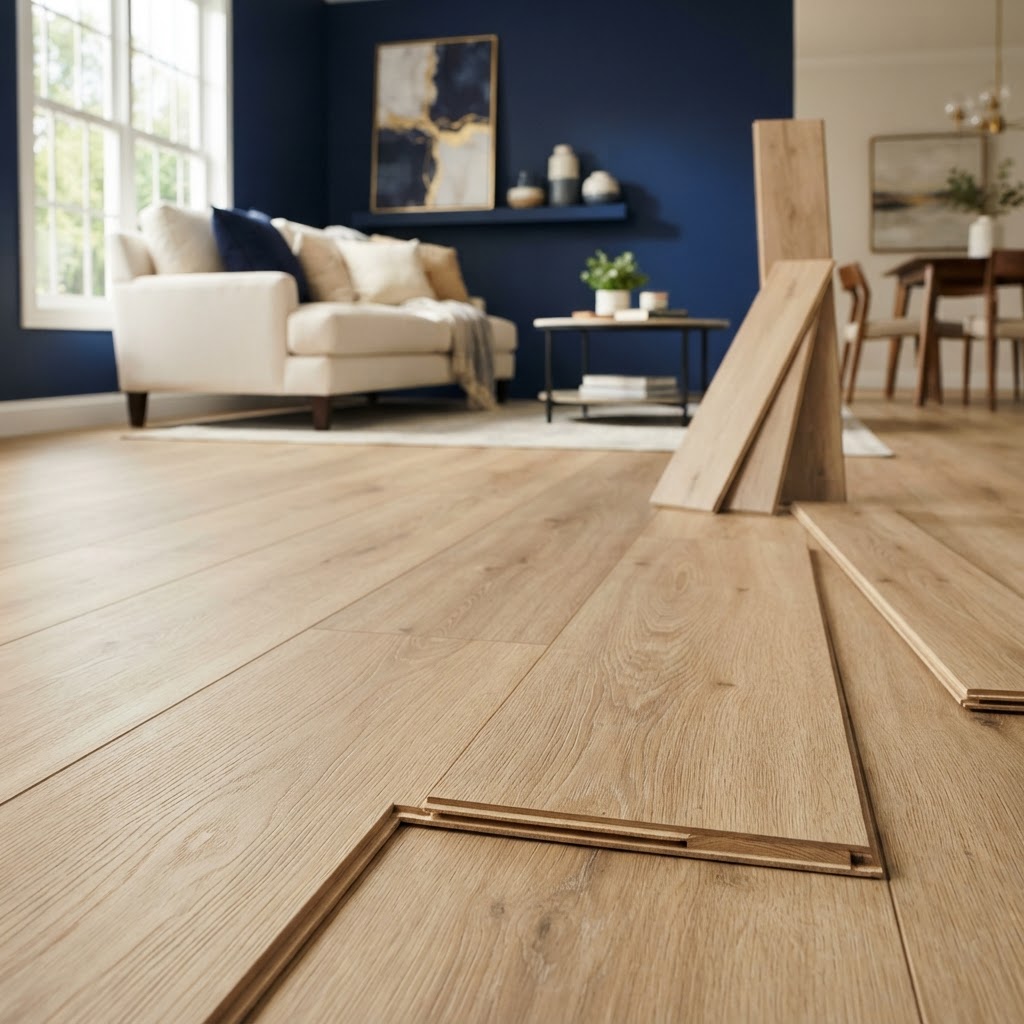
LVP stands for luxury vinyl plank, a layered synthetic flooring that is made in long, narrow planks and designed to look like hardwood. It is waterproof or highly water-resistant, resists scratches and dents better than many other floors, and has become one of the most requested floors in Northern Virginia homes, from condos in Arlington to townhomes in Fairfax and houses in Loudoun County.
If you have heard the term and want to know what you would actually be putting in your home, this guide from Floors and Beyond VA explains what LVP is made of, how it compares with other floors, where it performs best, where it does not, and what to ask before you buy and install it. If you would rather start with the product itself, our LVP flooring page covers the collections we install.
What LVP flooring is
Luxury vinyl plank is a manufactured floor, not a natural material. It is built in layers that are bonded together under heat and pressure, then cut into planks that typically range from about four to nine inches wide and four to six feet long. The surface is printed to look like oak, hickory, walnut, maple or another wood, and it is embossed with texture so the grain feels real under your hand.
The word luxury in the name is a marketing term used to separate today's rigid, realistic products from the thin, flexible vinyl of decades past. It does not tell you that a particular product is high quality, which is why understanding the layers matters.
The layers that make up a plank
Most LVP has four or five layers, and the quality of each one affects how the floor looks and how long it lasts.
The wear layer is the clear top coating that protects the floor from scratches, scuffs and stains. It is measured in mils, which are thousandths of an inch. A thicker wear layer generally means better resistance to traffic. Residential products commonly range from roughly six mils up to twenty-eight or more, and light commercial products go higher. When you compare products, ask for the wear layer number rather than relying on a description.
The print layer is a high-resolution image of wood or stone. The better the photography and the more variation across the planks, the less repetitive the floor looks once it is installed.
The core is the body of the plank, and it is where the biggest differences are. Rigid core planks are stiff and dimensionally stable. Two types are common. SPC, or stone plastic composite, uses a dense core containing limestone, which makes it very rigid and resistant to dents. WPC, or wood plastic composite, uses a foamed core that is slightly thicker and softer underfoot. Flexible core products also exist, and these are often glued down.
The backing or attached underlayment is a layer on the bottom of some planks that adds sound absorption and a little cushion. Some products have it built in, and some require a separate underlayment.
Together these layers produce a floor that is much more stable than the older, thinner vinyl products that many people remember.
LVP versus LVT versus sheet vinyl
You will see several similar acronyms, and they are easy to confuse. LVP is the plank format that imitates wood. LVT, or luxury vinyl tile, is the same construction cut into squares or rectangles that imitate stone or ceramic tile. Many manufacturers sell both under one name, and some people use LVT to mean both. Sheet vinyl is a different product: a continuous roll of thin vinyl with fewer seams, often used in older kitchens and baths. It does not have the rigid core or the realistic planks of modern LVP.
How LVP is installed
LVP can be installed three ways, and the method influences how the floor feels and performs.
A floating, click-lock installation has planks that snap together along the edges and sit on top of the subfloor without being attached to it. This is the most common method for residential rigid-core products. It is quick, it allows the floor to expand and contract slightly, and it is forgiving of minor subfloor imperfections, although it still requires a flat surface. We cover the details of click-lock systems in a separate post on click-lock LVP flooring.
A glue-down installation bonds the planks to the subfloor with adhesive. It is common for flexible core products and for commercial spaces, and it can feel more solid underfoot.
A loose-lay installation uses planks with a special backing that grips the floor without full adhesive. It is less common in homes.
Whatever the method, the quality of the subfloor preparation matters as much as the plank. A floor can only be as good as the surface underneath it.
The advantages of LVP
Homeowners choose LVP for good reasons.
It handles water well. The plank itself does not absorb moisture, so spills, wet pets and humid basements do not make it swell the way some other flooring can. That makes it a natural fit for kitchens, bathrooms, laundry rooms, mudrooms and basements. Water-resistant is not the same as water-proof for the whole assembly, which we address below.
It is durable. A quality product with a thick wear layer resists scratches, scuffs and dents from daily life, including children, pets and furniture. It is also comfortable and a bit warmer and quieter underfoot than tile, especially with a good underlayment.
It has a convincing look. Modern printing and embossing can reproduce wood species and even wide, long plank lengths that can be hard to find in natural wood.
It is low maintenance. It does not need to be sanded, stained or refinished. Regular sweeping and cleaning with an appropriate product is enough.
It works over many subfloors. With proper preparation, LVP can be installed over concrete slabs, plywood and sometimes existing flooring, which can avoid a lot of demolition work.
It offers design flexibility. The range of colors, tones and styles is wide, from pale Scandinavian oaks to dark, rich walnuts and stone looks.
The limitations you should know about
A trustworthy guide has to cover the downsides too, and LVP has some.
It cannot be sanded and refinished. Once the wear layer is worn through, the plank has to be replaced. Hardwood, by contrast, can be refinished several times. If you want a floor you can renew, hardwood or engineered hardwood is the better path.
It can be dented or torn by heavy, concentrated loads. Furniture with narrow legs and heavy appliances can leave marks, especially on softer products. Felt pads and wide casters help.
It can fade or expand in strong sunlight and heat. Large south-facing windows and sunrooms can warm the surface enough to cause movement in some products, so the manufacturer's instructions on sunlight and temperature should be followed.
It needs a flat subfloor. Floating floors can telegraph bumps and dips, and click-lock joints can fail if the surface under them is uneven. This matters in older Northern Virginia homes where subfloors may have settled.
Quality varies enormously. Two floors that look alike can have very different wear layers, cores and warranties. You cannot judge LVP by the photograph alone.
It is not real wood. Many buyers respond well to LVP, particularly in kitchens, baths and basements, but some people prefer the look and feel of real wood in main living areas. It is a matter of taste and your goals.
Waterproof versus water-resistant
This is the most misunderstood point about LVP. The planks themselves are waterproof in the sense that they do not absorb water. But water can still get through the seams or around the edges and sit on the subfloor underneath. If it sits there, it can cause mold or damage to the structure, and the plank above would not show it until the problem was advanced.
A floor is only waterproof if the whole assembly, including the seams, the perimeter and the subfloor moisture conditions, is managed correctly. In a basement, that means testing for moisture and using a vapor barrier where the manufacturer requires it. In a bathroom or kitchen, it means sealing around fixtures and cleaning up standing water promptly. We address this in the context of basements in our guide to moisture barriers under LVP.
Thinking about your own floors? Floors and Beyond VA offers in-home estimates across Northern Virginia. Schedule yours or call (703) 906-5698.
Where LVP works best in Northern Virginia homes
Basements. Many homes in Fairfax, Loudoun and Prince William counties have finished basements on concrete slabs. LVP is a popular choice because it tolerates occasional humidity and does not need an adhesive barrier the way solid hardwood does. A moisture test of the slab is still necessary.
Kitchens and bathrooms. The water resistance and easy cleaning make LVP a practical option where spills happen.
Condominiums and apartments. In buildings around Arlington, Tysons and Reston, association rules often limit hard flooring unless it includes sound-absorbing underlayment. LVP can be installed with a rated underlayment to help meet those rules, but the requirements vary by building. Always read the rules and ask your management office for approval details before ordering.
Townhomes. Many townhomes have narrow staircases, and LVP can be fitted to stairs with the right nosing and installation method. It needs careful workmanship to look right.
Homes with pets and kids. The scratch resistance and ease of cleanup are big advantages. For households with large dogs, a thicker wear layer is worth the attention.
Older homes. Brick colonials and mid-century houses in Arlington and Alexandria often have uneven subfloors or existing layers of old flooring. LVP can work, but the preparation is the real job, and an installer should evaluate the subfloor before promising a result. If the home has original hardwood in good condition, we often recommend refinishing it instead, because that preserves what is already there.
LVP compared with hardwood and laminate
LVP versus hardwood. Hardwood is natural, can be refinished many times and can last for generations, but it is vulnerable to moisture and is best kept out of basements and wet rooms. LVP is water-resistant and low-maintenance but cannot be refinished. We compare the two in more depth in our post on hardwood versus LVP in Northern Virginia and in our NoVA Guide entry on the difference between LVP and hardwood.
LVP versus laminate. Laminate has a wood-based core with a photographic top layer, so it is more sensitive to moisture at the edges. LVP is the better choice where water is a concern.
LVP versus engineered hardwood. Engineered hardwood has a real wood top layer over a plywood core. It looks and feels like real wood and can sometimes be refinished, but it is less water-tolerant than LVP.
The right floor depends on the room, how you live and what you value. We often recommend LVP for basements and kitchens and hardwood for main living areas, but there is no single rule.
What to ask when you choose an LVP
Before you commit to a product, ask these questions.
What is the wear layer thickness in mils? A higher number generally means a longer-lasting surface.
What is the core type, and is it rigid? SPC and WPC behave differently, and the choice affects dent resistance and comfort.
Is an underlayment attached, or do I need to buy one? And is it rated for the sound requirements in my building?
What are the subfloor requirements? Every manufacturer specifies how flat and dry the surface must be, and following these instructions protects the warranty.
What does the warranty actually cover? Read the exclusions. Some warranties require professional installation or specific moisture testing.
Does the product carry an indoor air quality certification? Certifications like FloorScore indicate tested low emissions, which many families care about.
How will it be installed, and by whom? The installer's skill is as important as the product.
How Floors and Beyond VA installs LVP
At Floors and Beyond VA, an LVP project starts in your home, not at a counter. We look at the rooms, the existing floor, the subfloor, the transitions to other rooms and the way you use the space. We measure, talk through product options that suit your needs and explain what preparation will be needed.
Before installation, the planks are allowed to acclimate to the room if the manufacturer calls for it. Our guide on how long flooring should acclimate before installation explains why this matters. The subfloor is then cleaned, repaired and leveled as needed. For basements and slabs, moisture is tested first.
Our crews install the planks, undercut door casings where it makes a cleaner finish, fit the transitions and trim, and clean up. Our installers are our own employees, not subcontractors, and the same people who prepare your floor are the people who finish it. Floors and Beyond VA has been doing this work since 1987, which means we have seen how floors age in Northern Virginia houses, townhomes and condos.
LVP in Arlington and nearby
Arlington homeowners ask about LVP constantly, and the reasons vary. Condo owners near Rosslyn, Ballston and Clarendon want a quiet, water-resistant floor that meets their building's rules. Townhome owners in Shirlington and Columbia Pike want a durable floor that handles stairs and traffic. Owners of older brick houses in neighborhoods like Lyon Park and Arlington Heights want a practical floor for basements and kitchens while keeping hardwood where it exists.
If you are in Arlington, you can read more about our LVP flooring installation in Arlington, VA. We also serve the surrounding communities across Fairfax, Loudoun and Prince William counties, and as a flooring company in Arlington we work with condo and HOA rules in these buildings every week. For a closer look at how LVP fits Arlington homes specifically, see our NoVA Guide answer to is luxury vinyl plank flooring right for your Arlington home.
Caring for LVP flooring
Looking after LVP is simple. Sweep or vacuum regularly with a soft brush, since grit scratches the wear layer. Clean with a pH-neutral cleaner made for hard-surface floors, and avoid wax, oil soaps, harsh abrasives and steam mops unless the manufacturer allows them. Wipe up standing water promptly. Place felt pads under furniture and use mats at entrances. Keep the room within the temperature range the manufacturer recommends, and use window treatments in rooms with strong sun.
Frequently asked questions
What does LVP stand for?
It stands for luxury vinyl plank.
Is LVP real wood?
No. It is a vinyl product with a printed image of wood. If you want real wood, consider solid or engineered hardwood.
Is LVP waterproof?
The planks do not absorb water, but the floor as a whole is only as water-tolerant as its seams, perimeter and subfloor. Manufacturers and installers use the terms differently, so ask what is covered.
How long does LVP last?
It depends on the product, the wear layer and the use. A quality floor that is installed correctly and maintained can last many years. Read the warranty and ask about the wear layer.
Can LVP be installed over my existing floor?
Sometimes. It depends on what the existing floor is, how flat and stable it is, and the manufacturer's instructions. We evaluate this in person.
Can LVP go in a basement?
Yes, in most cases, after the slab has been tested for moisture and prepared as the manufacturer requires.
Is LVP good for stairs?
It can be, with the right nosing and a careful installation. Stairs take more time than flat floors.
Talk to Floors and Beyond VA about LVP
If you are weighing LVP for a room, a basement or a whole home, the best next step is to have someone look at the space. Floors and Beyond VA will walk you through the options, explain what your subfloor needs and give you honest advice about whether LVP, hardwood or another floor is the right fit.
Schedule an in-home estimate at floorsandbeyondva.com/Contact or call (703) 906-5698. If you are in Arlington, start with LVP flooring installation in Arlington, VA.




