
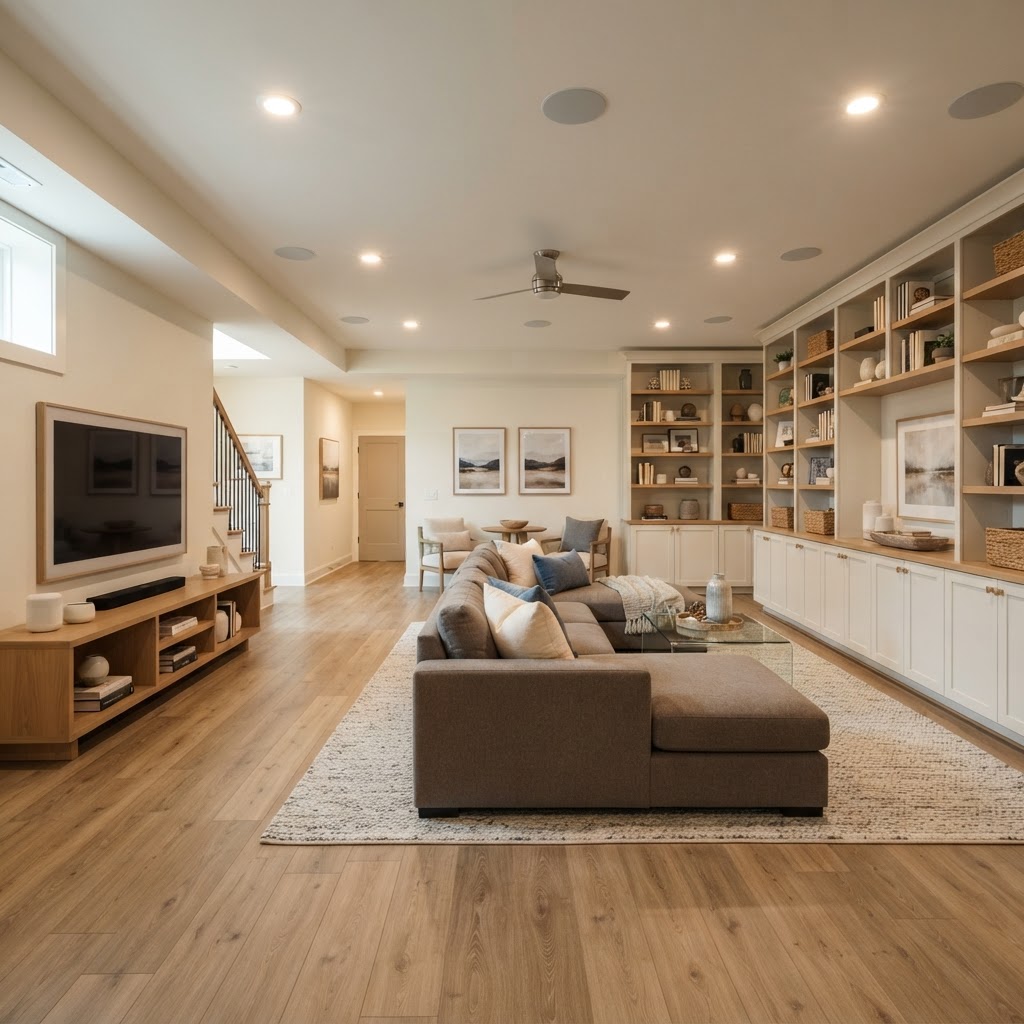
Glue-down LVP is usually the better choice for large open rooms, heavy traffic, rolling loads and concrete slabs that have been tested for moisture, because the planks are bonded to the subfloor and stay put. Floating LVP is usually better for slightly uneven subfloors and for floors you may change later. Floors and Beyond VA decides after looking at your subfloor in person.
How the two methods differ
A floating floor has click-lock edges and rests on the subfloor, often over an underlayment, moving as one connected sheet. A glue-down floor is bonded to the subfloor with the adhesive the manufacturer specifies, so it behaves as part of the structure. Glue-down feels more solid and stays in place under rolling chairs and carts. Floating installs faster, tolerates minor subfloor imperfections better and is easier to remove.
When glue-down is the better fit
Large open areas, finished basements on tested concrete, offices and play areas with rolling loads, and some radiant-heat installations when the manufacturer approves it. Stairs are always glued or fastened.
When floating is the better fit
A subfloor with small dips that a thicker plank can bridge, a space you may redo in a few years, a project that needs a faster schedule or a building where adhesive curing is a concern.
What decides it
The subfloor, because glue-down shows every ridge and bump beneath it. Moisture, because slabs must be tested and meet the product's limits. The product, because only planks approved for glue-down can be bonded. The room, because size and traffic matter. And the manufacturer's instructions, which control the adhesive, trowel and warranty.
Northern Virginia specifics
Basements on concrete in Reston, Herndon and Fairfax homes are common glue-down candidates once moisture is tested. Condos in Tysons and Arlington may favor floating floors with a sound-rated underlayment because of building rules. Older homes in Alexandria may have subfloors that need leveling before either method works.
How Floors and Beyond VA approaches the choice
At Floors and Beyond VA, we check flatness, test moisture on concrete and ask how the room is used before recommending a method. We install both and follow the manufacturer's instructions for adhesive, trowel and rolling. If floating is the better answer, we say so. At Floors and Beyond VA, our crews are our own employees.
Frequently asked questions
Is glue-down harder to remove later?
Yes, because the adhesive has to be scraped off the subfloor.
Can glue-down go over radiant heat?
Only if the manufacturer approves it, within the stated temperature limits.
Does glue-down need a flat subfloor?
Yes. Imperfections can show through the plank over time.
When to call a professional
If you are deciding between the two, have the subfloor evaluated first. Floors and Beyond VA is family-owned and has served Northern Virginia since 1987. Schedule an in-home estimate at floorsandbeyondva.com/Contact or call (703) 906-5698.
Read the full guide: glue down LVP flooring in Northern Virginia.
Learn about our LVP flooring in Reston, VA.




