
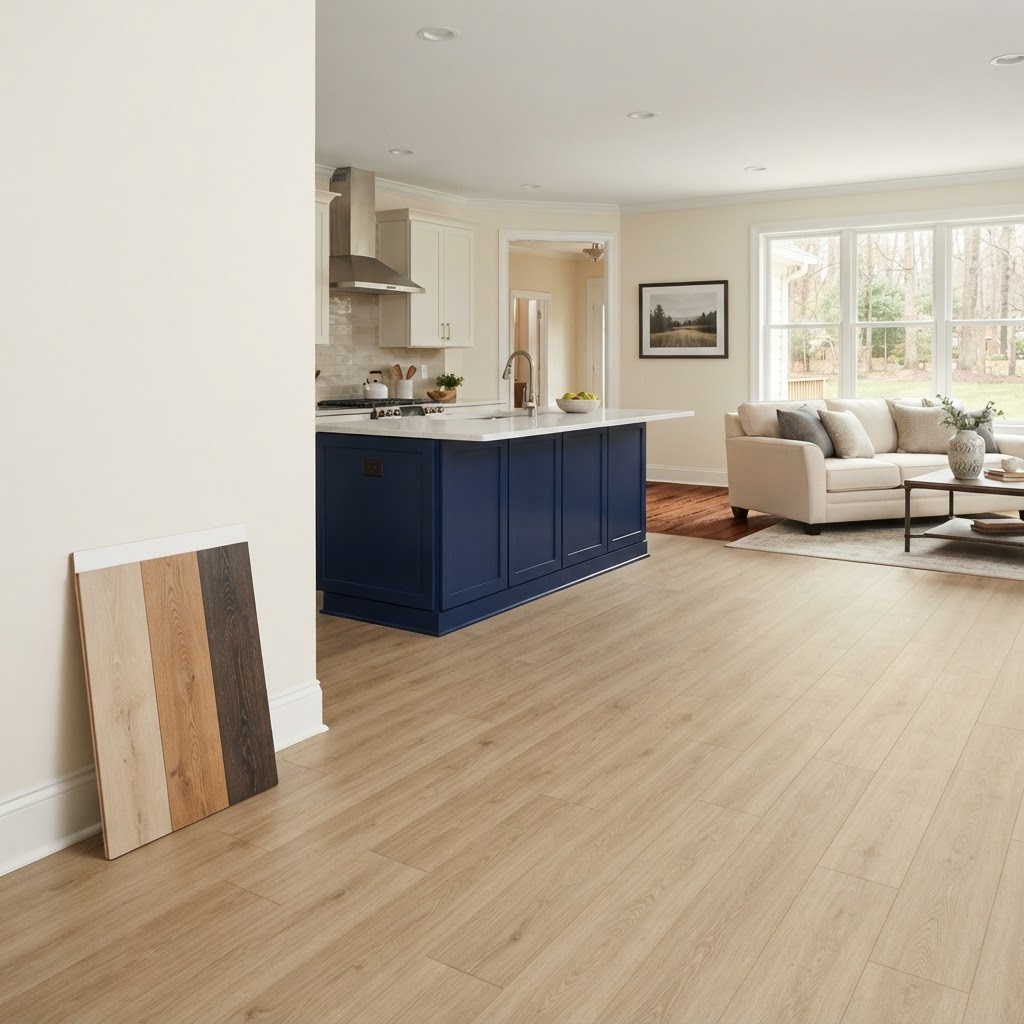
LVP stands for luxury vinyl plank, a water-resistant, layered flooring made to look like wood. For many Northern Virginia homes, especially kitchens, basements, entries and busy family spaces, it is a practical fit. Floors and Beyond VA installs it where it suits the space and recommends hardwood where that is the better choice.
What LVP is made of
LVP is built in layers: a wear layer on top that resists scratches, a printed layer that gives the wood look, a rigid or flexible core, and often an attached underlayment pad. Because the core is not wood, the planks are not damaged by spills the way solid wood can be.
Where it performs well
It performs well in kitchens, mudrooms, finished basements, rental properties and homes with children or pets. It is comfortable and quiet underfoot, goes in quickly, and is easy to clean. Water-resistant is not the same as waterproof for the whole installation, so spills should still be wiped up promptly.
Where hardwood may be better
Hardwood can be sanded and refinished many times and has a traditional character that vinyl does not fully match. In homes with original oak floors, such as many in Arlington and Alexandria, restoring the wood is often the better path. LVP also needs a flat, clean, dry subfloor, and a poor one will show through.
What to check before choosing
Look at the wear layer thickness, the core type, whether an underpad is attached, and the warranty terms. Look at physical samples in your own lighting. Confirm any condo association rules on sound ratings. Ask how the installer will prepare the subfloor, because preparation decides how the floor looks years later.
Northern Virginia specifics
Finished basements across Fairfax and Prince William counties often sit on slabs that need moisture testing before vinyl goes in. Condos in Tysons, Reston and Arlington commonly have sound requirements. Large sunny rooms can warm the floor, so installation instructions on expansion limits matter. Floors and Beyond VA evaluates each of these in person.
How Floors and Beyond VA approaches it
Floors and Beyond VA installs both vinyl plank and hardwood, so we have no reason to push one over the other. Our crews start with the room: the subfloor, the moisture conditions, the traffic, the sunlight and the association rules if there are any. Then we explain what each material would do there. In a basement kitchenette, that often points to LVP. In a living room with original oak, it often points to restoring the wood. Because our crews are our own employees, the person who walks the space with you is the person who stands behind the installation. We would rather you choose the right floor for the room than the trendiest one, and we will say so when the answer is not the one you expected.
Frequently asked questions
Is LVP waterproof?
The planks are water-resistant, but water that sits at seams or under the floor can still cause problems, so clean spills quickly.
Can LVP go over existing flooring?
Sometimes, if the existing floor is flat, sound, clean and dry and the manufacturer allows it. It has to be checked in person.
Does LVP look like real wood?
Modern products have realistic grain and texture, and many look convincing. Some homeowners still prefer the feel of real wood.
When to call a professional
If you are choosing between LVP and hardwood, or you are not sure your subfloor is ready, get an evaluation before you buy. Floors and Beyond VA is family-owned, has served Northern Virginia since 1987 and uses its own crews. We will inspect the space and explain your options. Schedule an in-home estimate at floorsandbeyondva.com/Contact or call (703) 906-5698.
Read the full guide: what LVP flooring is.
Learn about our LVP flooring in Arlington, VA.




