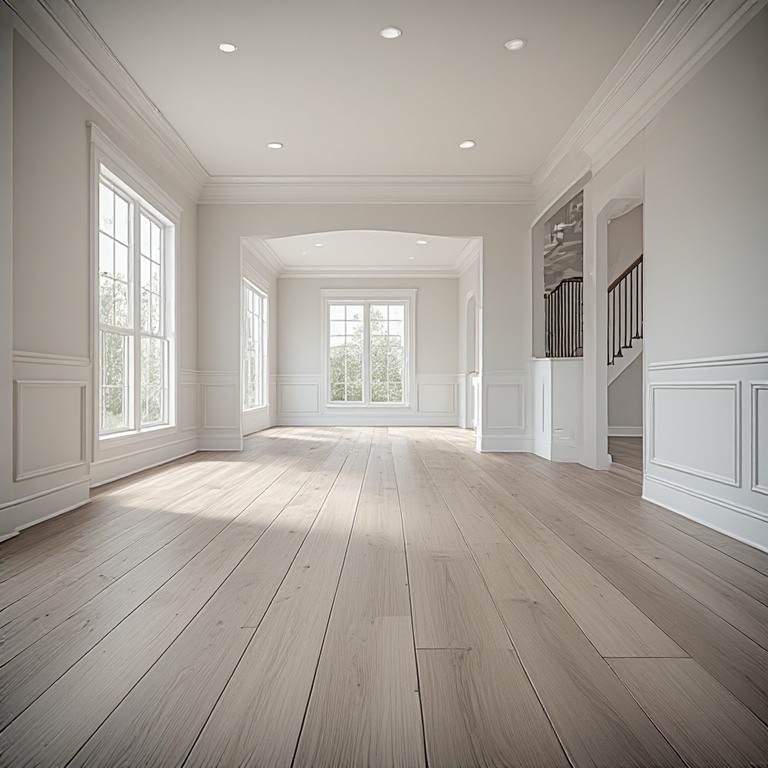
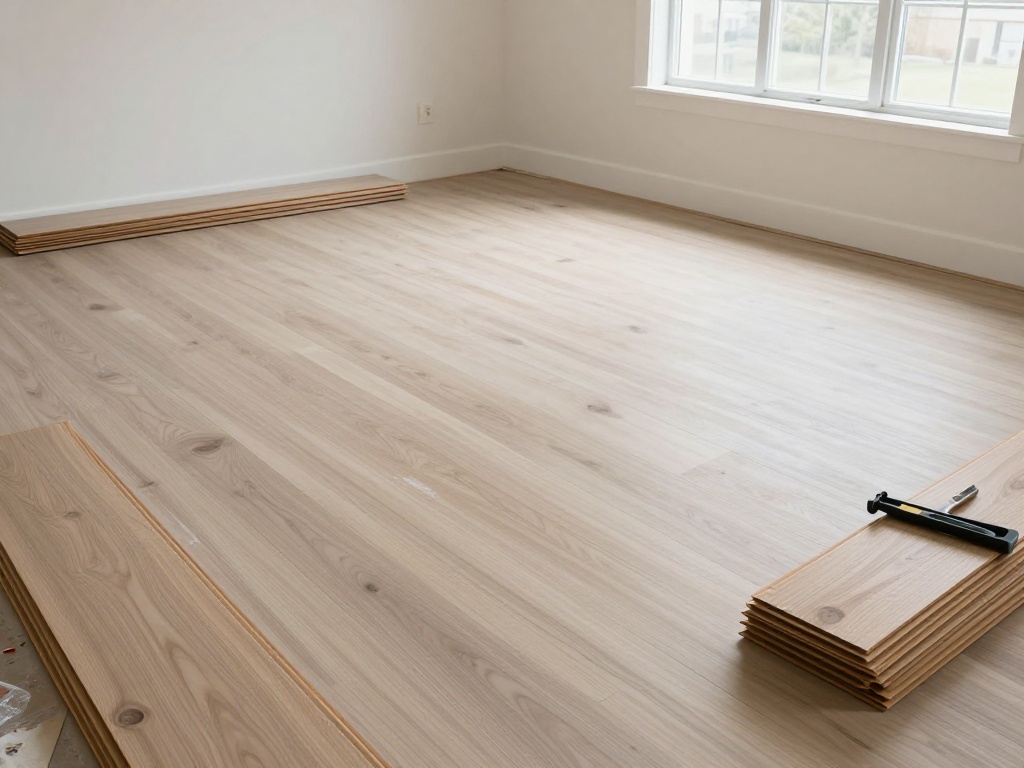
Most wood, engineered, and laminate flooring should acclimate in your home for about 48 to 72 hours before installation, so it reaches equilibrium with the room’s temperature and humidity. Rigid SPC luxury vinyl usually needs a shorter 24 to 48 hours, and tile doesn’t acclimate the same way. This step matters most in Northern Virginia because indoor humidity swings widely between dry winters and humid summers — and a floor installed without acclimating can gap or buckle later. Floors and Beyond VA follows each product’s guidance and the home’s conditions.
How long should flooring acclimate before installation?
Plan on 48–72 hours for wood-based floors; less for rigid vinyl; always follow the product.
Acclimation means letting your new flooring sit inside the home, in the room where it will be installed, long enough to adjust to that space’s temperature and humidity. For solid hardwood, engineered wood, and laminate, that’s commonly 48 to 72 hours; some solid hardwoods benefit from longer. Rigid SPC luxury vinyl is far more stable and typically needs only 24 to 48 hours to reach room temperature. The manufacturer’s instructions always set the exact window, but the principle is constant: the floor should stop moving before it goes down, not after.
Why does acclimation matter so much?
Wood-based flooring moves with humidity — acclimation gets that movement over with first.
It reaches equilibrium
Wood and laminate absorb and release moisture from the air, expanding and contracting as they do. Acclimation lets the flooring balance with the home’s humidity so it’s stable at the moment of install.
Gaps
Install a floor that’s too moist and, as it dries out in a dry Northern Virginia winter, the boards shrink — opening gaps between planks that weren’t there on day one.
Buckling & peaking
Install a floor that’s too dry and, as it takes on moisture in a humid summer, it expands with nowhere to go — buckling, peaking at the seams, or cupping.
A floor that stays put
Properly acclimated flooring, installed with the right expansion gaps, moves far less seasonally — so it looks the same in January and July.
Acclimation time by flooring type
The more a material behaves like solid wood, the more acclimation it needs.
| Flooring | Typical acclimation | Why |
|---|---|---|
| Solid hardwood | 3–5+ days | Reacts most strongly to humidity; needs the most time |
| Engineered hardwood | 48–72 hours | More stable than solid, but still wood-based |
| Laminate | 48 hours | Fiberboard core reacts to temperature and humidity |
| SPC luxury vinyl | 24–48 hours | Very stable; mainly matching room temperature |
| Tile | Not applicable | Doesn’t acclimate; space kept at stable temperature |
These get confused, but they’re different jobs. Acclimation prepares the flooring by letting it balance with the room’s humidity. Moisture testing checks the subfloor — especially a concrete slab — to confirm it’s dry enough to build on. A perfectly acclimated floor can still fail over a wet slab, so Floors and Beyond VA does both, as separate required steps, on installs across Ashburn, Sterling, and Reston.
How to acclimate flooring the right way
Same room, real conditions, boxes open — not stacked in the garage.
Acclimation only works if the flooring experiences the conditions it will actually live in. That means storing it in the room where it will be installed, not a garage or basement that runs colder and damper, with the home’s HVAC running at normal living temperature. Boxes are opened or cross-stacked so air reaches the material, and the flooring is kept off a damp slab. In a Northern Virginia home, where a garage in Sterling or a basement in Woodbridge can read very differently from the living space, that detail matters — which is why Floors and Beyond VA acclimates flooring in-place under real conditions rather than treating it as a box-drop-off.
Frequently asked questions
What happens if you don't let flooring acclimate?
It keeps adjusting to your home’s humidity after it’s installed, which causes movement. In a dry winter it can shrink and gap between boards; in a humid summer it can expand and buckle, peak, or cup. Because Northern Virginia’s indoor humidity swings widely by season, skipping acclimation is one of the most common causes of a floor that looked perfect on day one but failed within months.
Does luxury vinyl or tile need to acclimate?
Rigid SPC luxury vinyl is far more stable than wood, but most manufacturers still call for a short 24 to 48 hours so planks match room temperature. Tile itself doesn’t acclimate, though the space and materials should be at a stable working temperature. Solid and engineered hardwood and laminate are where full acclimation matters most, since they react to humidity like solid wood.
Is acclimation the same as moisture testing?
No — two different steps. Acclimation prepares the flooring by letting it reach equilibrium with the home’s temperature and humidity. Moisture testing checks the subfloor, especially a concrete slab, to confirm it’s dry enough to build on. A floor can be well acclimated and still fail over a slab that reads too high, so a proper installation needs both. Floors and Beyond VA treats them as separate, required steps.
Get the prep right, and the floor lasts.
Floors and Beyond VA acclimates your flooring under real conditions, tests the subfloor, and installs it to move with the seasons, not against them — free assessment, before any work begins.
Schedule Your Free Assessment