
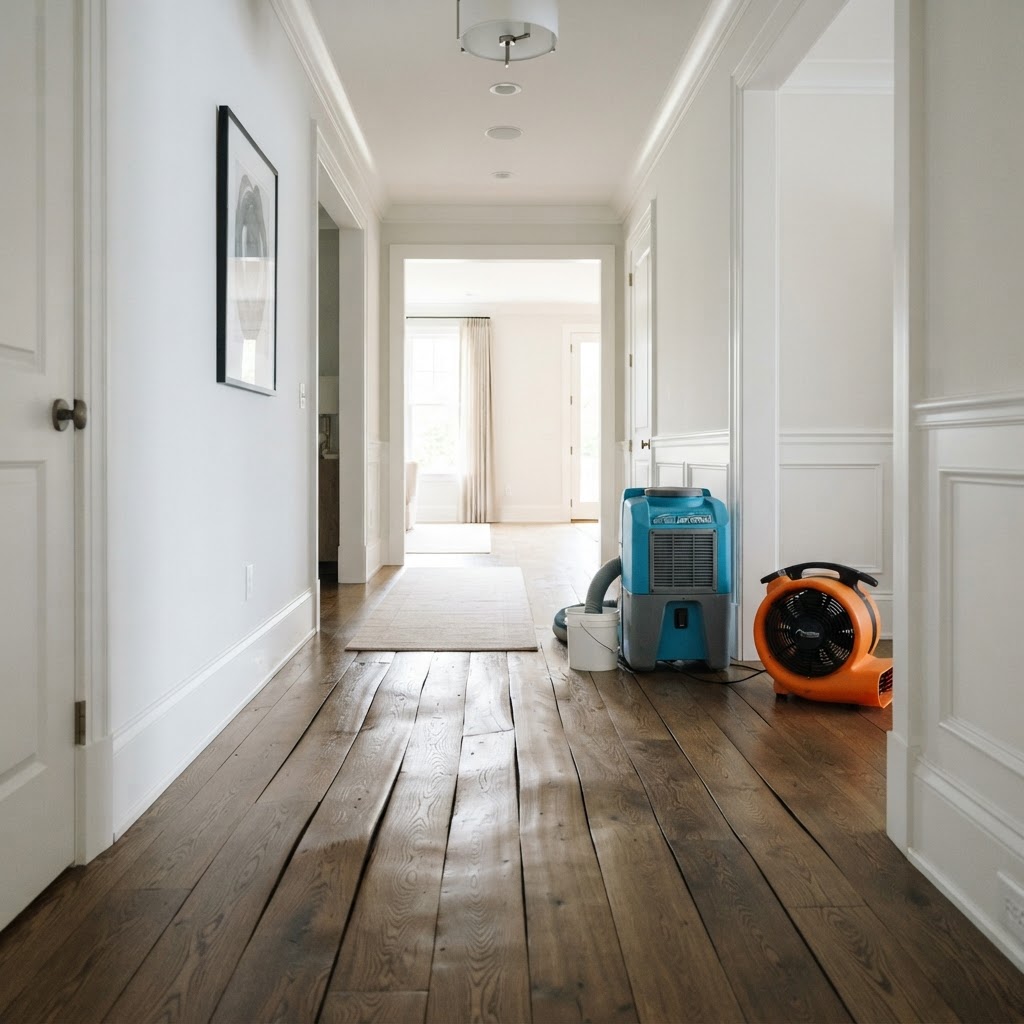
What should you do in the first 48 hours after water damages your floors in a Tysons-area home?
In the first 48 hours after water damages your floors, put safety first by stopping the source of the water if you can do so safely and staying away from electrical hazards, then call a licensed plumber or the appropriate professional to fix the cause, document everything with photographs and notes, contact your insurance company or your condominium association, begin removing standing water and moving belongings out of the wet area, and call a water-mitigation professional to dry the structure, because wet materials left in place can grow mold and cause damage that spreads within days. Only after the building is dried and any damage has been documented should you decide whether the flooring can be saved or must be replaced, and that decision belongs to a careful assessment, not a rush. Floors and Beyond VA, a family-owned Northern Virginia flooring and remodeling contractor serving Fairfax, Loudoun, Prince William and Arlington counties since 1987, handles the flooring assessment, repair and replacement that follows, with in-house crews and no subcontractors. We are not an emergency water-extraction or drying company, and for an active leak or flood you should call a licensed plumber and a water-mitigation specialist first. This guide explains what to do in those urgent hours and how the flooring decision fits afterward, because heating season and aging plumbing make winter leaks common in Tysons, Vienna, McLean, Falls Church and Merrifield homes.
When water gets into a home, everything feels urgent, and it is. A burst pipe, a failed supply line, a leaking water heater, an overflowing washing machine, a dishwasher hose, a roof leak after heavy rain or a neighbor's leak in a condominium can saturate floors, subfloors and walls within hours. In the first two days, what you do determines whether the damage is contained or becomes a larger, more expensive and unhealthy problem. This article is written for homeowners and condominium owners in the Tysons area who are in that situation or who want to be ready. It is general information, not a substitute for professional help or for the instructions of your insurer or association. In an emergency, your safety comes first.
Why winter makes water damage common
Cold weather and heating season bring particular risks.
Frozen and burst pipes. Water expands when it freezes. Pipes in exterior walls, unheated crawl spaces, garages and attics can freeze and split. The damage often appears when the pipe thaws.
Aging plumbing. Older homes in Vienna and Falls Church may have supply lines, fittings and fixtures that fail with age.
Appliance failures. Water heaters, washing machine hoses, dishwasher connections, refrigerator ice-maker lines and humidifiers can leak.
Roof and gutter problems. Ice, snow melt and clogged gutters push water into attics and walls.
Condensation and humidity. Heating season can create indoor moisture issues, though these are usually slower than a sudden leak.
High-rise leaks. In Tysons condominiums and apartments, a leak from a unit above, a riser or a shared system can damage your floors even though the source is not yours.
Knowing where your main water shutoff is, before you need it, is one of the most useful preparations.
The first hour: safety and stopping the source
When you discover water, act in an orderly way.
Protect people first. Make sure everyone is safe. Keep children and pets away from wet areas.
Beware of electricity. Water and electricity are a dangerous combination. If water has reached outlets, appliances, cords or the electrical panel, do not touch them, and do not stand in standing water near them. If it is safe to reach the breaker panel without entering water, turning off power to affected areas may be appropriate. If you are unsure, call a licensed electrician or your utility. Never take chances.
Stop the water if you can safely. Turn off the supply to the leaking fixture or appliance, or shut off the main water valve. Know where it is. In a condominium, you may need building maintenance or management to shut off water to a riser or unit.
Call for help. For burst pipes or active leaks, call a licensed plumber. For a flood or major water intrusion, call a water-mitigation professional. In a condominium, call building management or the emergency number right away, because they may need to shut off water to protect other units. If there is any immediate danger, call emergency services.
Do not use household vacuums on water. Standard vacuums are not designed for it and can be dangerous.
Avoid walking through contaminated water. If water came from a sewage backup or outside flooding, it may be contaminated, and professionals should handle it. Sewage and flood water are different from clean supply-line water.
Hours one through twelve: document and notify
Once safe, start protecting your claim and your options.
Photograph and record everything. Take photographs and video of the source, the affected rooms, the floors, the walls, furniture and belongings before you move or discard anything. Capture date and time. Note what you observe.
Make a list. Write down damaged items and materials.
Contact your insurer. Read your policy, or call your agent or insurer promptly. Ask what is covered, what documentation they need, whether they require you to use particular professionals and what steps they want you to take to prevent further damage. Policies differ, and we cannot say what yours covers.
Contact your association. If you live in a condominium or HOA community, notify management or the board. Many associations have procedures for water events and responsibilities that are divided between the association and unit owners according to governing documents.
Keep receipts. Save receipts for emergency services and temporary measures.
Do not discard damaged materials yet unless a professional or your insurer says it is fine, because adjusters may want to see them. Photograph first.
Hours twelve through forty-eight: remove water and start drying
Time matters. Wet building materials can begin to grow mold within a couple of days, and moisture can migrate into walls and subfloors.
Remove standing water. Professionals use extraction equipment. If you handle small amounts yourself, do so safely with appropriate equipment and without going near electrical hazards.
Get belongings out of the wet area. Move furniture, rugs and stored items to dry spaces. Lift furniture off wet carpet. Place aluminum foil or blocks under furniture legs if items must remain. Remove items from the floor of closets and cabinets.
Call a water-mitigation professional. Drying structures requires professional equipment such as air movers and dehumidifiers, and moisture meters to know when materials are truly dry. They can assess what can be dried in place and what must be removed. Quick action reduces damage.
Ventilate where safe. Fresh air and, when appropriate, dehumidification help. Be careful: in winter, opening windows lets in cold air, and rapid, uncontrolled drying of hardwood can cause damage. Professionals manage drying conditions.
Do not use heat guns, hair dryers or high heat directly on hardwood. Rapid heat can warp or crack wood.
Remove wet carpet and pad if advised. Carpet and pad that have been soaked, particularly by contaminated water, often need removal. Clean-water situations may allow carpet drying, but pad is often discarded. Mitigation professionals advise.
Watch for mold. Musty smells, visible growth and persistent dampness need professional attention. Do not disturb suspected mold without proper precautions.
Protect remaining floors. Place protective barriers where wet items are moved.
Avoid walking on saturated flooring more than necessary.
Assessing the floors: can they be saved?
After the structure is dried, and any hazards addressed, the flooring question comes up. This is where our work begins. We do not rush this decision, because it depends on the material, the type of water and how long the floor was wet.
Hardwood
What happens. Wood absorbs water, swells, cups, crowns or buckles. Finishes may whiten or peel. Subfloors may be affected.
Can it be saved? Sometimes. If water exposure was brief, the water was clean and drying was prompt and controlled, boards may flatten as they dry. Cupping can sometimes be addressed by sanding after the floor has fully dried and stabilized. Severely buckled, rotted, delaminated or long-saturated floors generally need replacement of affected sections or more.
Don't sand too soon. Sanding wet or insufficiently dry wood can cause problems. Wait until moisture readings confirm the wood is ready.
Repair or replace. Damaged boards can be replaced and blended. Our refinish-first philosophy applies: we try to save what can be saved. Our article on flooring damage repair for water, scratches and buckling explains repair options, and our article on whether your hardwood floors can be saved walks through the evaluation.
Engineered hardwood and laminate
These products are more vulnerable to water at seams and in their cores. Swollen edges, delamination and peeling often mean replacement.
Luxury vinyl plank
The plank resists water, but water can get under it through seams and become trapped, leading to mold or odor beneath. Floating planks can sometimes be lifted, the subfloor dried, and the planks reinstalled if undamaged. Glued-down products may need removal. See our article on whether vinyl flooring is waterproof for the nuance, and our vinyl flooring page for our services.
Tile and stone
Tile itself resists water, but grout, setting beds and substrates can be affected. Cracked tile, hollow spots and subfloor damage may require replacement.
Carpet and pad
Often replaced, especially after contaminated water or prolonged wetness. Our carpet page describes options.
Subfloor
The subfloor determines whether the floor above can stay. Wet subfloor must be dried or replaced. Swollen, delaminated or rotted subfloor is replaced.
Concrete slabs
In condominiums and basements, slabs hold moisture. Moisture testing before installing new flooring is essential. Our articles on the best flooring on concrete basements and the best flooring options for basements with moisture issues explain why.
Our free in-home consultation includes an honest assessment of what can be repaired and what should be replaced, along with precise laser measurements at no charge.
Replacement: planning after the damage
When replacement is necessary, a few principles help.
Fix the cause first. New flooring over an unresolved leak or moisture problem will fail.
Make sure the structure is dry. Mitigation professionals can confirm with moisture readings.
Coordinate with your insurer. Understand what is covered, what documentation is needed and how claims affect your choices. Insurers may have preferences or requirements. We provide written estimates that you can share.
Think about the whole floor, not just the damaged section. Matching old and new is a challenge. In open layouts, replacing damaged areas may require extending the work to keep floors consistent. Our article on flooring replacement and when to choose what helps with the decision.
Consider more water-resistant options. If leaks are a risk, such as in kitchens, laundry rooms and basements, water-resistant flooring may be wise. See our tile and stone and vinyl flooring pages.
Use the opportunity. Sometimes replacement is a chance to upgrade layout, finishes or materials. Our kitchen remodeling, bathroom remodeling, basement finishing and whole house remodels services coordinate flooring with larger repairs.
Check hazardous-material concerns. In older homes, some old flooring and adhesive materials may contain hazardous substances. Testing and safe handling are advisable where there is reason for concern. Follow guidance from appropriate authorities.
Condominiums and apartments: special considerations
Water events in multi-unit buildings involve other people.
Notify management immediately. They may need to stop water to protect other units.
Know who is responsible. Governing documents and insurance determine who pays for what, and responsibility may differ depending on the source. We cannot advise on this. Consult your association, insurer and, if needed, an attorney.
Documentation matters. Photograph and record.
Neighbors. If water came from another unit, communicate through management and insurers.
Approvals for repair. Replacement flooring may require association approval, sound-control compliance and contractor insurance certificates. Our article on Tysons condo flooring rules explains what to ask, and our condominium remodeling page describes our work.
Concrete floors. Water may travel and linger in slabs and under floor coverings.
Elevators and logistics. Repair work needs elevator reservations and approved hours. Our article on renovating a Tysons high-rise apartment discusses concrete subfloors.
What not to do
Do not ignore it. Water damage spreads. Delay costs more.
Do not cover it up. New flooring over wet subfloor traps moisture and breeds mold.
Do not sand or refinish wet wood.
Do not use direct high heat on hardwood.
Do not touch electrical equipment in wet areas.
Do not throw everything away before documenting and consulting your insurer.
Do not assume the damage is only what you see. Moisture can hide in walls, under floors and in insulation.
Do not try to handle contaminated water yourself.
Do not skip professional drying. Household fans rarely dry a structure properly.
Do not rush replacement before the structure is verified dry.
Preparing before it happens
A little preparation reduces risk.
Know your main shutoff. Everyone in the household should know where it is.
Insulate exposed pipes and protect vulnerable areas in cold weather.
Maintain appliances. Replace aging hoses and inspect water heaters.
Keep gutters clear and direct downspouts away from the foundation.
Consider leak detectors near water sources.
Keep documents handy. Insurance information and contact numbers.
Know your building's emergency procedures if you live in a condominium.
Photograph your home periodically for records.
What drives the scope of a water-damage flooring project
We do not publish prices in articles, but the factors that shape any estimate are clear. The extent of damage and area affected. The type of flooring and whether it can be repaired. Subfloor condition and any replacement. Drying and moisture verification. Removal of damaged materials. Matching and blending with undamaged areas. Stairs and transitions. Insurance coordination. Building requirements in condominiums. Furniture moving and access. And the company, including its crews, licensing, bonding and insurance.
At Floors and Beyond VA, we provide an honest, all-inclusive estimate, and what we quote is what you pay. Our estimates include old flooring removal, new materials, professional installation, furniture moving, transitions, molding and full cleanup. Our article on flooring cost factors in Northern Virginia explains why estimates differ.
Why homeowners trust Floors and Beyond VA after water damage
After a water event, homeowners need calm, honest help. Floors and Beyond VA has served Northern Virginia since 1987 as a family-owned company, and our refinish-first philosophy means we try to save floors that can be saved before recommending replacement. Our in-house crews, with no subcontractors, handle assessment, removal, subfloor repair and installation, so one accountable team takes you from damage to a finished floor. We are fully licensed, bonded and insured and can provide documentation for insurers and associations. Your free in-home consultation brings samples to your door, includes precise laser measurements at no charge and gives you an honest assessment of what is repairable. Our all-inclusive estimate, in which what we quote is what you pay, can be shared with your insurer. Learn more at floorsandbeyondva.com.
Common mistakes after water damage
The first mistake is waiting to call professionals.
The second is touching electrical equipment in wet areas.
The third is not documenting before cleanup.
The fourth is skipping professional drying.
The fifth is covering wet floors with new flooring.
The sixth is sanding wood before it is dry.
The seventh is using high heat on hardwood.
The eighth is ignoring the cause.
The ninth is forgetting association rules in condominiums.
The tenth is throwing out materials before your insurer sees them.
Frequently asked questions
What should I do first when my floor is wet? Make sure everyone is safe, stay clear of electrical hazards, stop the water if you can safely and call the appropriate professionals.
Do you handle emergency water removal? No. For active flooding, call a licensed plumber and a water-mitigation specialist. We handle flooring assessment, repair and replacement afterward.
Can my hardwood be saved? Sometimes, depending on exposure, drying and damage. We assess honestly.
Should I replace the whole floor? Not necessarily. Sections can often be repaired and blended.
Will my insurance cover it? That depends on your policy. Contact your insurer. We provide written estimates.
How long before I can install new flooring? After the structure is verified dry and the cause is fixed.
Is Floors and Beyond VA licensed and insured? Yes. We are fully licensed, bonded and insured for every project, and our in-house crews work with no subcontractors.
Do you serve my neighborhood? Yes, including Tysons, McLean, Vienna, Falls Church, Merrifield, Dunn Loring, Great Falls and Oakton, along with the rest of Fairfax, Loudoun, Prince William and Arlington counties.
Keep reading
For related planning, see Renovating a Tysons High-Rise Apartment: Which Floors Work on Concrete Subfloors, Why Your Hardwood Floors Are Gapping This Fall in McLean and Vienna (and What to Do Before January) and Hardwood Floor Refinishing in Vienna and Falls Church: When to Refinish Instead of Replace.
Ready to assess and repair your water-damaged floors?
Once the water is stopped and the structure is dry, we are here for the flooring. Floors and Beyond VA brings nearly forty years of Northern Virginia experience, in-house crews with no subcontractors, a refinish-first philosophy and a free in-home consultation with samples and precise laser measurements at no charge.
Request your free flooring estimate today: https://floorsandbeyondva.com/Contact
You can also call (703) 906-5698 or email hello@floorsandbeyondva.com.




