
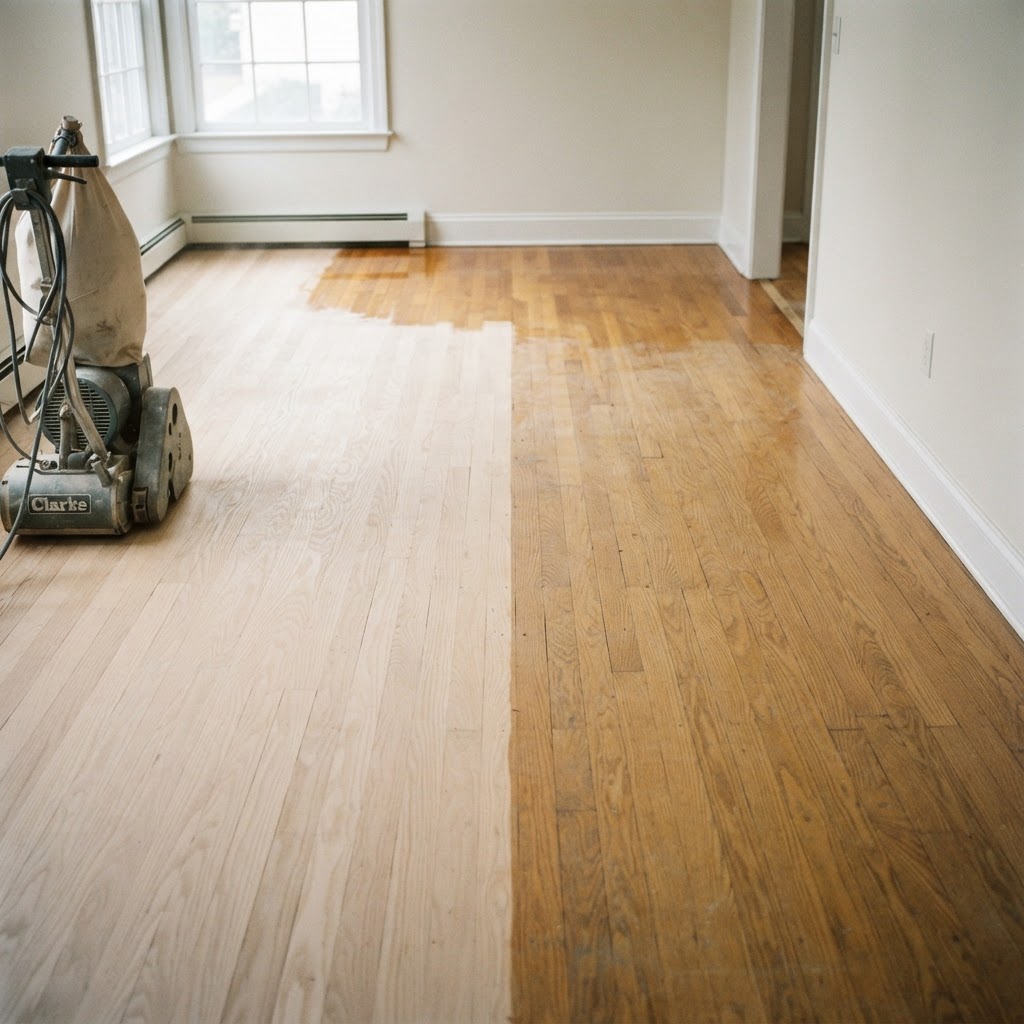
Worn, dull or damaged hardwood leaves homeowners with a real decision. Should you restore the floor you have, or tear it out and start over? In most cases, the floor can be saved, and restoring it is the better path. But not always. This guide explains how to judge your floor, the signs that point to restoring, the signs that point to replacing and how a small test patch can settle the question. Floors and Beyond VA is a family-owned flooring company that has served Northern Virginia since 1987, and we are refinish-first, which means we try to save a floor before recommending a new one.
Why Restoring Is Usually the First Choice
Solid hardwood is thick. Many floors in Northern Virginia homes, especially older ones, have a generous layer of wood above the tongue and groove, which means they can be sanded and refinished several times. Restoring keeps the character of aged wood, avoids the mess and waste of demolition, is often faster than replacing and keeps a floor that cannot easily be duplicated, such as old-growth oak or heart pine. A restored floor can look new and last for decades more.
Signs Your Floor Can Be Restored
- The finish is worn or dull, but the wood is sound. Scratches, scuffs, light stains and sun fading are surface problems that sanding removes.
- The boards are thick enough. Solid planks usually have enough wood to be sanded. Engineered floors can be refinished if the wear layer is thick enough.
- Gaps are small. Seasonal gaps between boards are normal, and they do not mean the floor is failing.
- Damage is limited. Pet stains, water rings and dents in a few areas can often be repaired by sanding or replacing individual boards.
- The floor is flat and secure. Boards that are firmly attached and level can be refinished successfully.
- You want to change the color. Sanding to bare wood lets you stain a different shade.
Signs You May Need to Replace
- The wear layer or wood is too thin. If previous sandings have left little wood above the tongue and groove, or an engineered floor has a paper-thin top layer, there may be nothing left to sand.
- Widespread water or moisture damage. Heavily cupped, buckled or rotted boards over a large area may be beyond saving, especially if the subfloor is damaged. Our guide to water damaged hardwood explains what can be dried and repaired.
- Deep, dark pet stains. Urine can soak into the wood and subfloor and may require board replacement.
- Structural problems. A floor that is sagging, bouncing or loose across a wide area needs more than refinishing.
- Severe pest damage, such as termites. The boards and sometimes the framing need professional treatment and repair.
- Mismatched boards or poor earlier repairs that cannot be blended.
- You are changing the whole layout. Opening a wall, moving a kitchen or switching to a different product may call for a new floor.
- You want a different material. If you prefer luxury vinyl plank or tile, replacing is the way.
How to Check Thickness
Look at a floor vent opening or a threshold where the edge of a board is visible. Remove the vent cover and look at the side of the plank. Solid boards usually show a full-thickness cross section, and you can estimate the wood above the groove. For engineered planks, the top layer may be visible as a thin line. A professional can measure precisely. Where a removal is needed, a tradesperson can pull a board or use a small tool to check.
The Test Patch
The most reliable way to decide is a test patch. A technician sands a small area in a closet or hidden corner down to bare wood and applies a finish. You see the true color, the grain, how deep the damage goes and what the floor looks like in your light. The patch replaces guessing with evidence, and it often shows that a floor that looked hopeless is in good condition under the finish. At Floors and Beyond VA, we do this where the wood allows.
What the Process Looks Like
Restoring usually means moving furniture, repairing damaged boards, sanding the whole floor in stages, vacuuming the dust, staining if you are changing the color and applying coats of finish with drying time between. Dust control, protecting the home and staging the work matter, and a good crew explains the timeline up front. Replacing involves removing the old floor, preparing the subfloor, installing the new floor and finishing it.
If the surface is marked but the wood is sound, some of the repair work may be lighter than a full sand. Our guide to hardwood floor repair for scratches covers those options.
Consider Your Home and Your Goals
Older homes: the floors are often thick and worth saving. Newer townhomes and condos: floors may be engineered or thin, so check first. Homes with pets: depends on staining. Homes with plans for a remodel: coordinate the floor with the other work.
Also think about the finished look. Refinishing hardwood floors can brighten or change tone, repair most surface damage and give you a smooth surface. It cannot change the board width, make the boards flatter if they are cupped beyond reason or repair structural problems.
Restore or Replace Hardwood Floors: A Simple Way to Decide
If the wood is thick, the boards are sound and the damage is on the surface, restore. If the wood is thin, the damage is widespread or structural or you want a different material, replace. If you are not sure, get a visit and a test patch before committing to either one. Saving the original hardwood flooring is almost always the better outcome when it is possible, and it is part of every floor restoration project we take on.
Frequently Asked Questions
Can all hardwood floors be refinished?
Most solid hardwood can. Engineered floors depend on the wear layer, and some are too thin.
How many times can a hardwood floor be sanded?
Solid floors can often be sanded several times over their life, depending on the thickness of the wood.
Is restoring faster than replacing?
Usually yes, and it creates less waste.
What if my floor has water stains or pet stains?
Many can be sanded out, but deep stains may need board replacement.
Can I change the color when restoring?
Yes. Sanding to bare wood lets you pick a new stain.
Can the floor be restored without sanding?
Sometimes: see restoring old wood floors without sanding.
Let Us Look at Your Floor
A short visit can tell you what you have and what the best path is. Floors and Beyond VA serves Fairfax, Loudoun, Prince William and Arlington counties, Alexandria and the Washington, DC area.
Schedule an in-home estimate at floorsandbeyondva.com/contact or call (703) 906-5698.

