
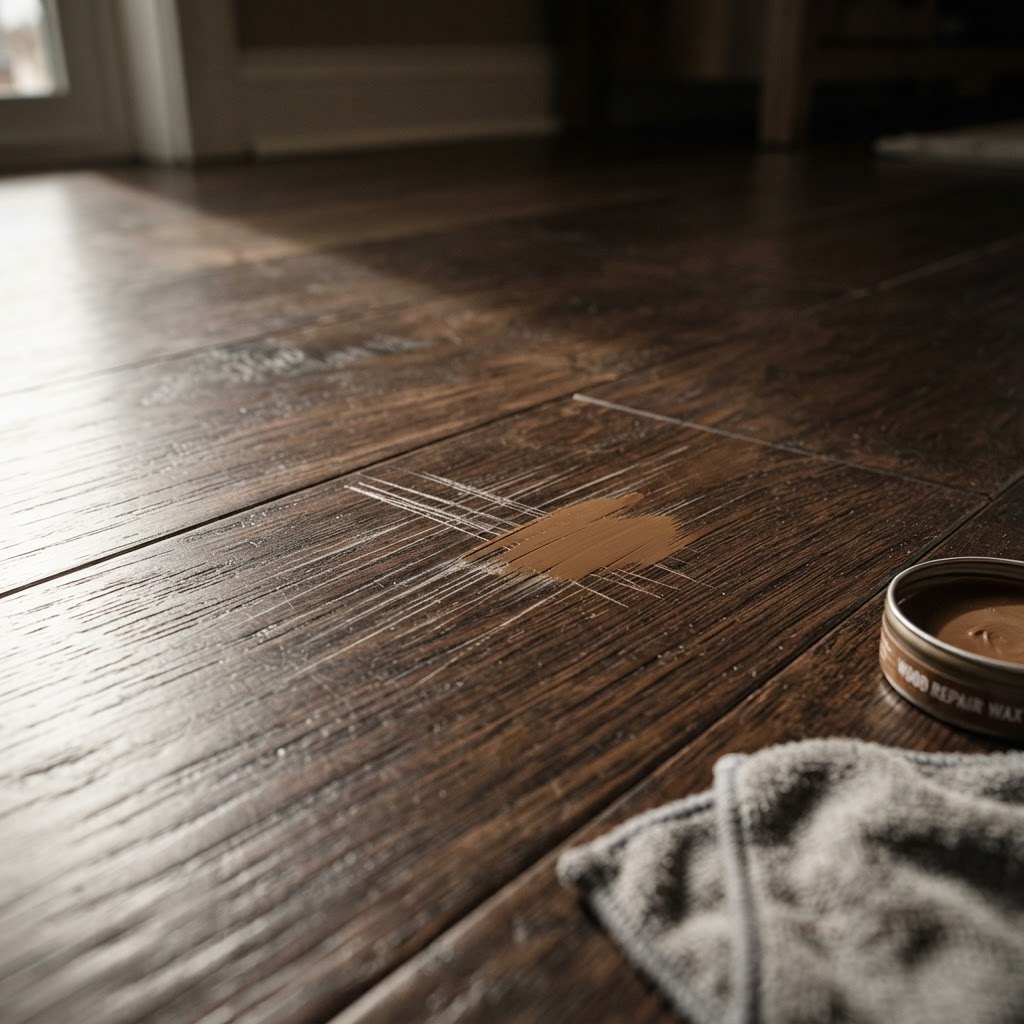
Hardwood floor scratch repair depends on one question: how deep is the scratch? A scratch that is only in the finish can often be hidden or buffed out with simple care, while a scratch that has cut into the wood itself needs filling, sanding or a refinish to disappear. Homeowners in Reston, Herndon, Fairfax and across Northern Virginia deal with scratches from pets, furniture, moving day, children's toys and the grit that comes in on shoes. This guide explains how to tell what kind of scratch you have, what to try at home, when a screen and recoat is the right answer, when spot repair makes sense and when it is time to refinish. It also explains how to prevent the next round of scratches. At Floors and Beyond VA, we repair and refinish hardwood floors across the region, and we always start with the lightest fix that will work.
FIRST, FIND OUT WHAT KIND OF SCRATCH YOU HAVE
Not all scratches are the same, and the right repair depends on the type. A few simple observations help.
Surface scratches in the finish. These are the most common. They look like fine white or hazy lines, often visible only when light hits the floor at an angle. The wood beneath is not damaged, because the protective finish took the abrasion. They are usually shallow enough that you cannot feel them with a fingernail.
Scratches that reach the wood. These are deeper. You can feel them with a fingernail, and the line may look darker or lighter than the surrounding wood. Water may soak into them. They need more than a cleaner.
Gouges and dents. A gouge removes a bit of wood, and a dent compresses it. Dropped objects, furniture legs and heels cause these. Dents can sometimes be lifted, while gouges require filling or board repair.
Wide wear in traffic paths. When the finish has worn thin across a larger area, the floor looks dull and scratches seem to multiply. This is a sign that the finish itself is nearing the end of its life and the floor may need a recoat or refinish, not a scratch repair.
A simple test helps. Wipe the area with a clean, slightly damp cloth. If the scratch seems to disappear while wet and returns as it dries, it is likely in the finish. If it stays visible and the wood looks darker, it has reached the wood. Try the water drop test in a hidden spot as well. If water beads, the finish is intact in that area.
WHAT TO TRY FIRST AT HOME
For fine scratches in the finish, start gently. Clean the area with a cleaner made for hardwood and a soft cloth, because dirt and residue can make scratches look worse. Many hazy lines disappear after a thorough cleaning. If marks remain, a polish or a scratch-concealing product made for hardwood floors can fill and hide light surface scratches. Always read the product label to be sure it suits your type of finish, and test in an inconspicuous area first, such as inside a closet. Avoid household oils, mayonnaise or other folk remedies, which can leave residue that interferes with later refinishing. Avoid steel wool and abrasive pads on a finished floor unless you know what you are doing, since they can create more scratches.
TOUCH-UP PRODUCTS FOR DEEPER MARKS
For scratches that reach the wood, a color-matched touch-up product can reduce their visibility. Wax fill sticks, stain markers and putty-style fillers are available in a range of colors. They work by filling the scratch and matching its color to the surrounding wood. The key is to choose a color that matches the floor in your light and to apply it sparingly. Results vary, and a perfect match is difficult, especially on floors with aged or uneven color. These products are best used for isolated marks in low-visibility areas. Be aware that some wax-based products can interfere with later refinishing, so tell your contractor if you have used them.
LIFTING DENTS
Dents are compressions, not removals, so the wood fibers can sometimes be swelled back toward the surface. Professionals use techniques involving moisture and heat on small dents in some species. These methods can leave a mark or raise the grain if done wrong, and they do not work on every floor, especially one with a thick finish. If a dent is in a visible place and matters to you, ask a professional before experimenting.
WHEN A SCREEN AND RECOAT IS THE RIGHT FIX
If your floor has many fine scratches and dull spots across the traffic paths, but the wood is sealed and undamaged, a screen and recoat is often the best answer. In this process, the existing finish is lightly abraded with a fine screen or abrasive pad, cleaned and covered with a fresh coat of finish. It removes the appearance of fine scratches, renews the protection and restores the sheen, without sanding down into the wood. It is faster and less disruptive than a full refinish, and it preserves the thickness of the wood for future sandings. Our guide on how often hardwood floors need refinishing explains how to tell when this is appropriate.
WHEN SPOT REPAIR MAKES SENSE
Sometimes only a small area is damaged. A deep gouge, a burn mark, a pet stain or a patch where furniture dragged across the floor may need attention while the rest of the floor is fine. A professional can sand the area lightly, fill or repair the damage, apply stain to match and blend new finish into the surrounding floor. In some cases, replacing one or two boards is the cleanest fix. The challenge is blending, because new finish can look different from old finish, and the repair can stand out. Our guide on whether hardwood floors can be spot refinished explains the possibilities and the limits.
WHEN IT IS TIME TO REFINISH
If the scratches are widespread and deep, if the finish has worn through in many areas, if the wood is gray or stained, or if you simply want a new color, it is time for a full refinish. In a full refinish, the old finish and a thin layer of wood are sanded away, which removes most scratches that are not too deep, and fresh finish is applied. Deep gouges may remain visible or need filling beforehand. A full refinish is a bigger project, but it renews the entire floor and gives you a uniform surface. Our guide on the refinishing process in Northern Virginia explains what to expect.
TALK TO A SPECIALIST BEFORE YOU TRY ANYTHING BIG
It is easy to make a scratch worse by trying the wrong fix, and some home remedies make later repair harder. A short inspection can tell you which kind of damage you have and what it needs. Floors and Beyond VA offers in-home estimates across Reston, Herndon, Fairfax, Tysons and the rest of Northern Virginia. Schedule an in-home estimate at floorsandbeyondva.com/Contact or call (703) 906-5698, and we will look at the floor, explain what is happening and recommend the lightest fix that will work.
WHAT CAUSES SCRATCHES IN THE FIRST PLACE
Understanding the causes helps prevent them. Grit and sand tracked in from outside act like sandpaper under shoes. Pet nails scratch, particularly when they are long. Furniture legs without pads drag and gouge. Rolling chairs with hard casters wear paths. High heels concentrate force on a small area and can dent. Moving furniture, appliances and boxes without protection is a common source of the worst damage. Vacuums with beater bars can scratch. Sunlight, humidity swings and dry air do not scratch the floor but can make existing marks more visible by shrinking wood or fading finish.
HOW TO PREVENT SCRATCHES
Put mats at every entrance and ask people to remove shoes, especially high heels. Use felt pads under furniture and replace them when they wear out. Use soft rubber or felt-covered casters on rolling chairs, or put a protective mat beneath them. Keep pet nails trimmed. Lift furniture when moving it, and use sliders or blankets if it has to be dragged. Sweep or vacuum with a hard-floor setting regularly to remove grit. Clean with a hardwood-safe cleaner, not abrasive products. Keep humidity in a moderate range, because dry air makes wood shrink and finishes more brittle. And consider a durable finish if you have a busy household, since some finishes resist scratching better than others.
SCRATCHES AND PETS
Dogs, in particular, are hard on hardwood. Large breeds with long nails can scratch finishes quickly, and accidents can stain the wood. A few habits help. Trim nails regularly. Use runners or area rugs in the paths where pets run. Wipe up accidents promptly, because urine can penetrate the finish and stain the wood. Choose a finish designed for durability and consider a matte or satin sheen, which hides scratches better than gloss. If your floor is already scratched, a screen and recoat can refresh it, and a more durable finish can give the next round better protection.
DIFFERENT FINISHES SCRATCH DIFFERENTLY
Some finishes are harder than others. Oil-based finishes tend to amber over time and can be somewhat forgiving of fine scratches. Water-based finishes are clear and can be formulated for high durability. Factory finishes on prefinished flooring, often with aluminum oxide, are quite resistant but can be difficult to repair seamlessly. Waxed floors in older homes behave differently and need specific care. Your contractor can tell you what you have and what repairs are practical.
SCRATCHES ON ENGINEERED HARDWOOD
Engineered hardwood has a real wood layer on top of a core, and the thickness of that layer determines how deep a scratch can go before it becomes a problem. Light scratches in the finish can often be treated like those on solid hardwood. Deep scratches or gouges that go through the wear layer cannot be sanded out, and the repair may require replacing a plank. Our guide to engineered hardwood floor refinishing explains how to check what you have.
LAMINATE AND VINYL ARE DIFFERENT
Laminate and vinyl plank are not wood, and their scratches cannot be sanded or refinished. If you are not sure whether your floor is hardwood, look at the edge of a plank or a vent opening, or ask a professional. A scratch on laminate or vinyl is usually repaired with fillers or by replacing the plank. Our guide on the 12 mil wear layer explains how vinyl protects its surface.
RESTON AND NORTHERN VIRGINIA SPECIFICS
Reston and nearby Herndon have many townhomes, condos and houses from the 1970s onward, with a mix of solid and engineered hardwood and builder-grade finishes. In many of these homes, the finish wears first along traffic paths and near sliding doors, and a screen and recoat can make a big difference. In condos, building rules may affect what kinds of repairs are allowed, particularly around noise and dust. In older homes elsewhere in the region, original oak floors may have been refinished before, and a thickness check is important. Seasonal humidity swings also affect how scratches look, since gaps and cupping can accentuate marks. Our guide on why hardwood floors gap in winter explains that movement.
HOW FLOORS AND BEYOND VA APPROACHES SCRATCH REPAIR
Floors and Beyond VA does not start by recommending a full sanding. We look at the floor, test the finish, check the wood and ask how the scratches happened. If a cleaner or a touch-up will do, we say so. If a screen and recoat will renew the floor, we recommend it. If spot repair makes sense, we explain how we will blend it. If a full refinish is the honest answer, we tell you why. Our crews are our own employees, and we put the plan in writing so you know exactly what will be done.
A SIMPLE CARE ROUTINE THAT KEEPS SCRATCHES FROM MULTIPLYING
Most scratch problems are made worse by neglect, not by a single accident. A routine helps. Sweep or vacuum with a hard-floor setting a few times a week to remove grit. Mop only with a damp, well-wrung mop and a cleaner made for hardwood. Wipe spills right away. Check the felt pads on furniture every few months and replace worn ones. Rotate area rugs occasionally so that wear is spread out, and use rug pads that are safe for hardwood. Keep humidity moderate, using a humidifier in dry winters if needed. These habits take little time and extend the life of the finish, which in turn reduces the number of scratches that reach the wood.
WHEN TO GET A SECOND OPINION
If a scratch repair you tried made things worse, if you are not sure what kind of finish you have, if the floor has been waxed or if damage seems to be spreading, ask a professional to look before you try anything else. Many problems that look alarming are simple to fix, and a few that look minor are signs of moisture or finish failure that need attention. A short inspection tells you which is which.
THE BOTTOM LINE ON SCRATCHES
Most scratches are less serious than they look. Start by identifying whether the scratch is in the finish or in the wood, try gentle cleaning and appropriate touch-up products for minor marks and call a professional when damage is widespread, deep or you are unsure. The lightest fix that works is almost always the best one, because it keeps the floor protected and the wood intact for future years.
FREQUENTLY ASKED QUESTIONS
Can all scratches be removed? Surface scratches in the finish usually can. Deep gouges may be reduced but not always eliminated without repair.
Will a refinish remove deep scratches? Many sand out, but deep ones may need filling or board repair first.
Is it safe to use steel wool on a hardwood floor? Generally not, unless it is part of a professional process. It can cause new scratches and leave residue.
Do home remedies work? Most do not, and some leave residue that interferes with refinishing. Products made for hardwood are safer.
How do I know if I need a recoat? If the floor is dull and hazy in traffic paths, but water still beads, a screen and recoat may be enough.
Can I repair a scratch on a prefinished floor? Light scratches can often be treated, but matching factory finishes is difficult. A professional can advise.
How long does a screen and recoat take? Often a day or two, depending on the size of the area and drying time.
READY TO FIX YOUR SCRATCHED FLOOR?
If your hardwood floors are scratched and you are not sure what they need, the quickest way to a clear answer is to have them looked at. Floors and Beyond VA is a family-owned flooring company serving Northern Virginia since 1987. Schedule an in-home estimate at floorsandbeyondva.com/Contact or call (703) 906-5698.




