
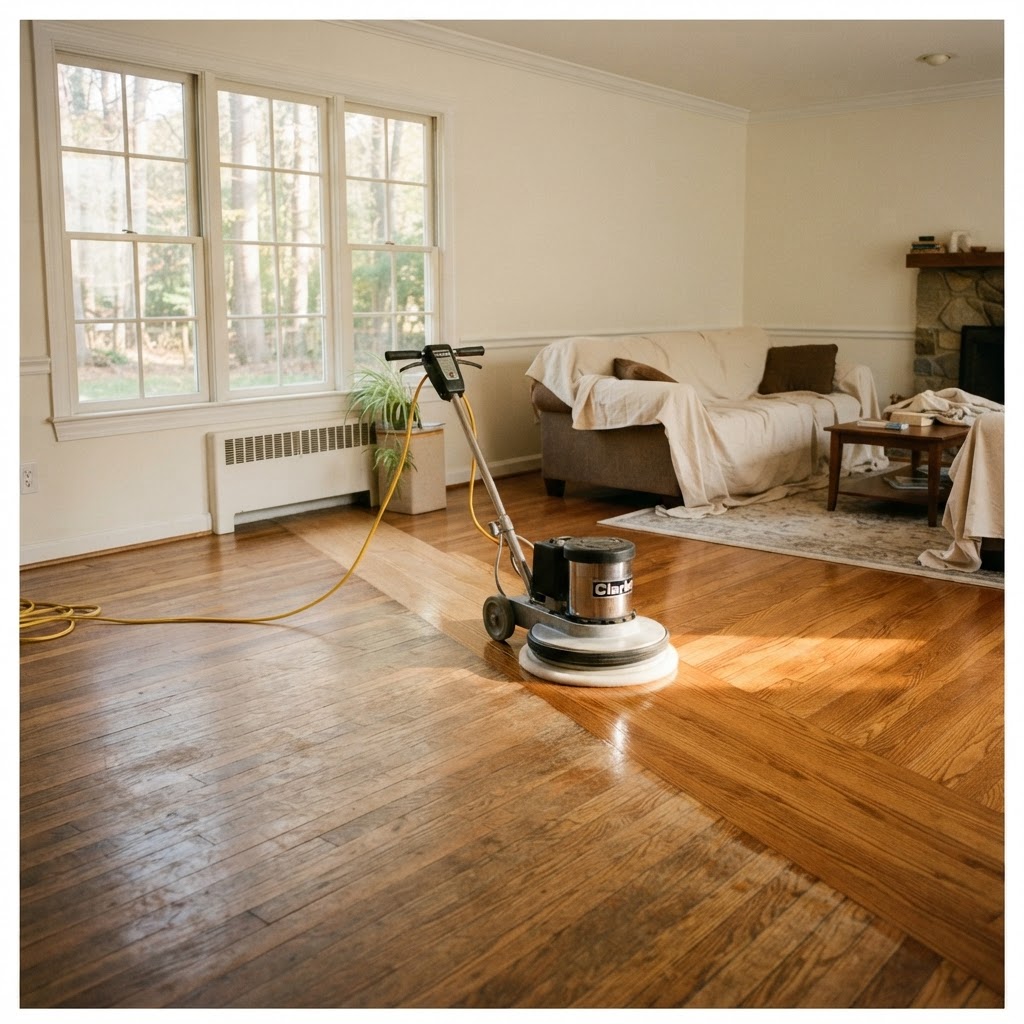
Sanding is loud, dusty and disruptive, and many homeowners ask whether an old wood floor can be brought back without it. Sometimes it can. If the problem is a dull, dirty or worn finish and the wood underneath is in good shape, there are gentler methods. If the wood itself is stained, gouged or bare, sanding is the honest answer. This guide explains which approaches work, how to tell which one your floor needs and what to expect from each. Floors and Beyond VA is a family-owned flooring company that has served Northern Virginia since 1987, and we try the least invasive fix that will really work before recommending sanding.
When You Can Skip Sanding
A no-sanding approach makes sense when the wood is sound, the finish is still present and the problems are on the surface. Typical cases include a floor that has lost its shine from years of wear, a floor with a film of dirt, wax or cleaner residue, light scratches in the finish and traffic areas where the finish is thin but not worn through. If the finish is intact, you can often restore the look without removing it.
When You Cannot
Sanding is needed when finish has worn off in patches and the bare wood has turned gray or dark, when stains have soaked into the wood, when scratches and gouges are deep, when boards are cupped or uneven or when you want to change the color. A recoat cannot fix these, because it only adds finish on top of what is already there. Our guide to hardwood floor repair for scratches helps separate the marks that will clean up from the ones that need sanding.
Test First: Does the Finish Still Exist?
Put a few drops of water on the floor in a worn spot. If the water beads, the finish is intact. If it soaks in and darkens the wood, the finish is gone there. Check several areas, especially in front of sinks, near doors and along traffic paths. Also try to identify the finish. A wax finish needs different treatment than polyurethane, and a recoat over wax can fail. A professional can check this with a small test.
Option One: Deep Cleaning
Years of grime, wax and cleaner residue can make a floor look old and dull, and a deep clean is sometimes all it takes. A professional cleaning uses a product made for hardwood to lift residue without soaking the wood. This is gentle, and it can reveal that the floor is in better shape than it looked. Avoid steam, soaking and harsh strippers.
Option Two: A Restorer or Polish
Hardwood restorers and polishes fill fine scratches and add sheen. They are quick and easy, but they are temporary. They can also interfere with later refinishing if they leave a residue, so tell your refinisher what you used. This works for a floor you want to freshen up for a time without a larger project.
Option Three: Buff and Recoat, Also Called Screen and Recoat
This is the main no-sanding restoration. A machine lightly abrades the existing finish, which scuffs it so a new coat can bond. The floor is cleaned, and a fresh coat of finish is applied. The process removes fine scratches in the finish, restores the sheen and adds protection, without taking the finish off or sanding the wood. It usually takes a day or two, with less dust and shorter downtime than a full refinish. It only works if the finish is still intact and the wood is not damaged. It will not remove stains or deep scratches, and it will not change the color.
Option Four: Spot Repairs
Individual problems, such as a few deep scratches or a stain, can sometimes be fixed locally with filler, board replacement or a small sanded section blended into the floor. This keeps the rest of the floor untouched. The challenge is matching the surrounding color and sheen, so ask to see a sample.
The Chemical Abrasion Route
Some methods use a liquid abrader instead of a machine to prepare the finish for a recoat. These can be useful where a machine cannot reach or where dust must be limited, but results depend on the finish and the product. Ask whether the product is compatible with the existing finish and the new one.
What No-Sanding Methods Cannot Do
- Take out deep scratches.
- Remove stains that have soaked into the wood.
- Level cupped or uneven boards.
- Remove old wax that is soaked into bare wood.
- Change the color of the floor.
If someone promises a total transformation without sanding on a badly worn floor, be cautious.
A Common Mistake: Skipping the Prep
Recoating without cleaning and abrading can cause the new finish to peel. Wax, oil soap and polish residue are common causes of adhesion failure. A good professional tests adhesion before committing to a full recoat, usually in a small area.
How to Decide
- Dull but intact finish and sound wood: deep clean, then buff and recoat.
- Worn through in spots: sand those areas or the whole floor.
- Deep stains or gouges: sanding or board replacement.
- Color change: sanding.
- Not sure: ask for a test patch and an adhesion test so you see the evidence.
If the damage turns out to be broad, it is worth weighing the two paths in our guide to whether to restore or replace hardwood floors.
Is Sanding So Bad?
Modern sanding uses dust containment systems that capture most of the dust, and a good crew protects your home. Sanding a solid hardwood flooring floor also removes only a thin layer of wood and can be done several times over the life of a floor. If your floor needs it, sanding often gives the best long-term result, and it is the core of most floor restoration work.
Frequently Asked Questions
Can you refinish hardwood floors without sanding?
You can renew the finish with a buff and recoat if the finish is intact, but a true refinish that changes color or removes damage requires sanding.
How long does a screen and recoat take?
Typically a day or two, plus drying time.
Does a recoat last as long as a full refinish?
It restores protection and shine, but it does not remove damage in the wood. How long it lasts depends on traffic and the condition of the floor.
Can I recoat a waxed floor?
Not without special preparation. Tell your refinisher if the floor was ever waxed.
Will a restorer polish hurt a later refinish?
It can if it leaves residue. Mention it before refinishing.
Can hardwood floors be refinished without sanding?
The short answer, in our Northern Virginia guide: can hardwood floors be refinished without sanding?
Get an Honest Answer About Your Floor
A short visit, a water test and a small test patch can tell you whether your floor needs a gentle renewal or a full sanding. Floors and Beyond VA serves Fairfax, Loudoun, Prince William and Arlington counties, Alexandria and the Washington, DC area.
Schedule an in-home estimate at floorsandbeyondva.com/contact or call (703) 906-5698.

