
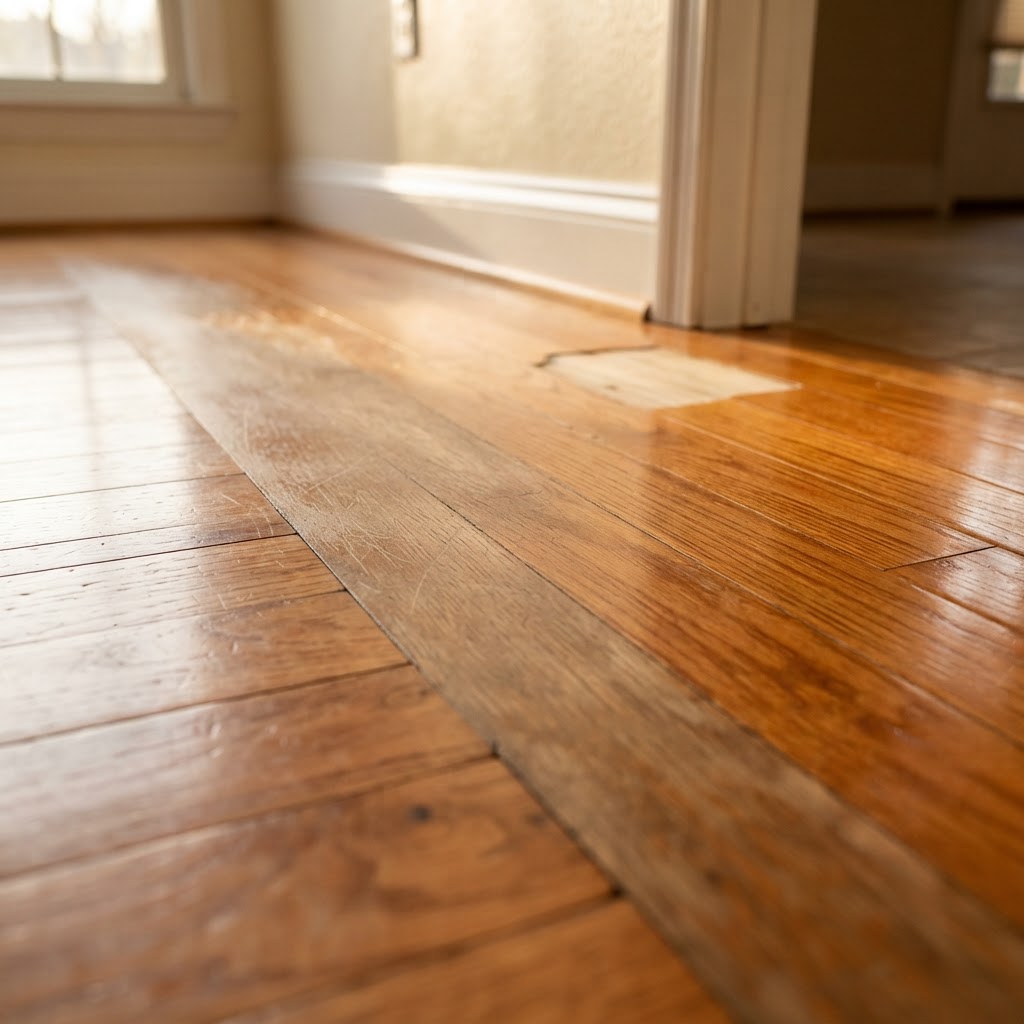
There is no fixed schedule. It depends on traffic, care, finish and the wood. Watch for dull paths, bare or gray wood and failing finish. A maintenance coat before the finish wears through keeps wood protected, and full sanding should be saved for when it is truly needed. Floors and Beyond VA evaluates floors in person.
Homeowners often ask for a number, usually five or ten years. The honest answer is that a floor tells you when it needs work, and the sign to watch for is the condition of the finish rather than the calendar. A quiet household with a good finish may go a decade or more. A busy one with a dog and an entrance on the sunny side may need attention far sooner, and the worst outcome is waiting until the wood itself is exposed.
Maintenance versus full refinishing
A screen and recoat lightly abrades the finish and adds a fresh coat, renewing protection without removing much wood. A full refinish sands to bare wood and is needed when the finish has failed, scratches are in the wood, damage is present or you want a new color. Many floors get several maintenance coats before needing a full sanding.
| Maintenance coat (screen and recoat) | Full refinish | |
|---|---|---|
| What it removes | Only the top of the old finish | All old finish plus a thin layer of wood |
| Wood lost | Effectively none | Small but permanent, each time |
| Time on site | Usually a day or two | Several days, plus cure time |
| Dust and odor | Minimal | Higher, especially with site-finished sanding |
| Can change color | No | Yes, stain can be changed |
| Fixes scratches in the wood | No | Yes |
| Best used when | Finish is worn but still sealing the wood | Finish has failed, damage reaches the wood, or the color must change |
Signs for a maintenance coat
Dull or hazy traffic paths, a worn finish over wood that is still sealed, fine scratches in the finish and a floor that no longer cleans up well. Try the water drop test in a hidden spot: if drops bead, the finish is intact.
The water drop test
- Put a few drops of water on the floor in a hidden spot, such as inside a closet.
- Wait ten to fifteen minutes and wipe them up.
- Beads that sit on the surface mean the finish is still sealing the wood.
- Water that darkens the wood or soaks in means the finish has worn through there.
- Check a traffic path as well, since a closet may be in better shape than the hallway.
Signs for a full refinish
Bare, gray or darkened wood, deep scratches, areas that soak up water, peeling finish, stains in the wood, an outdated color or buildup of old yellowed coatings.
Recoat now
- Dull, hazy traffic lanes.
- Fine scratches only in the finish layer.
- Floor still beads water.
- Cleaning leaves a faint film.
- No gray or bare patches.
Time for a full refinish
- Bare, gray or darkened wood in paths.
- Water soaks in and darkens the boards.
- Peeling, flaking or chipped finish.
- Stains that have reached the wood.
- Deep gouges and pet damage.
- A color change or heavy yellowed buildup.
How many times can a floor be sanded?
Each full sanding removes a thin layer of wood. A solid three-quarter-inch floor can often be sanded several times, though it varies. Engineered floors range from none to several depending on the wear layer. Because wood is limited, lighter maintenance preserves it.
This is the reason a recoat-first approach matters. Every year of protection you get from a maintenance coat is a sanding the floor will not need, and on an older floor that has already been sanded twice, the remaining wood is genuinely limited.
Extending the interval
Mats at entrances, felt pads under furniture, trimmed pet nails, a cleaner made for hardwood, prompt spill cleanup, window treatments against sun and moderate humidity all help.
Sunlight is the factor homeowners underestimate. An unshaded window can age a finish in one room years ahead of the rest of the house, which is why a sunny living room may need attention while the bedrooms are still fine.
Northern Virginia specifics
Humid summers and dry winters move floors through the year, and sunny rooms age finish faster. Newer Loudoun and Prince William homes often have builder-grade finishes that wear first along traffic paths, which makes them good candidates for a maintenance coat. Older Arlington and Alexandria floors may have been sanded several times already.
In Ashburn and the surrounding Loudoun County neighborhoods, the pattern is often a 1990s or 2000s house with a factory finish that has gone thin in the hallway and kitchen, while the wood underneath is still in excellent shape. Those floors usually need a recoat, not a sand.
How Floors and Beyond VA decides
Floors and Beyond VA does not start with the age of the floor. We look at the finish, the wood and its thickness, test the finish in a hidden spot and ask how the household uses the room. Then we recommend the lightest process that will work and put it in writing. At Floors and Beyond VA, our crews are our own employees.
We are family-owned and have served Northern Virginia since 1987. Read the long version in how often do hardwood floors need refinishing, and see our floor restoration in Ashburn, VA page for the local picture.
Frequently asked questions
Is it bad to refinish too often?
Sanding too often removes wood. Maintenance coats are gentler.
How do I know the finish has failed?
Water soaks in, the finish peels or the wood looks gray or bare.
When to call a professional
If you are unsure whether your floors need a recoat or a full refinish, have them evaluated. Floors and Beyond VA is family-owned and has served Northern Virginia since 1987. Schedule an in-home estimate at floorsandbeyondva.com/Contact or call (703) 906-5698.
Find out whether you need a recoat or a sand
A hidden-spot test and a look at the wood tell us which process your floor actually needs, before you pay for a full refinish you may not require.
Floor Restoration in Ashburn, VARead the full guide: how often do hardwood floors need refinishing




