
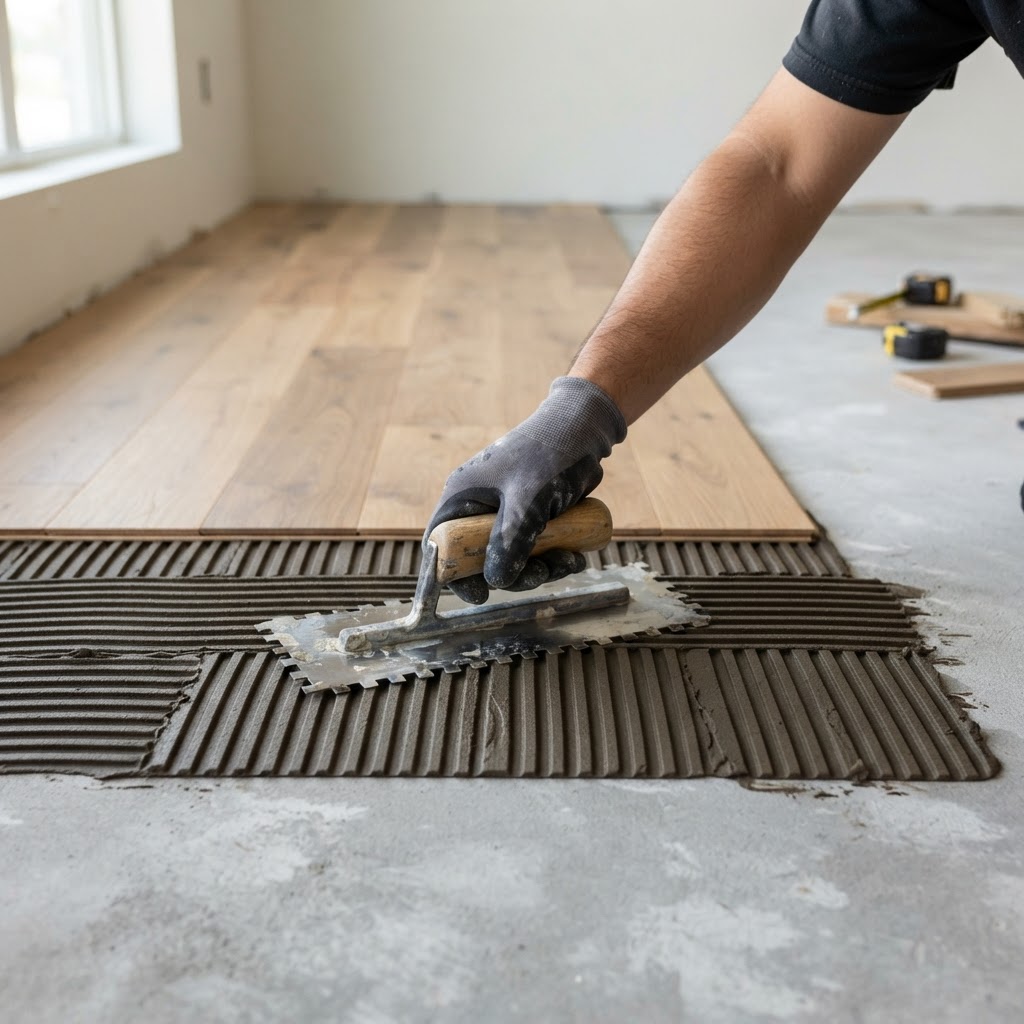
Glue-down is the method that makes engineered hardwood feel most like a solid floor. The planks are bonded to the subfloor with adhesive, which removes the hollow sound some floating floors have and holds the floor firmly in place. It is common over concrete and in homes where quiet and stability matter. It also demands more preparation and a skilled crew, because the adhesive, the subfloor and the room conditions all have to be right. This guide explains how glue-down engineered hardwood works, when it is the better choice and what to ask before you commit. Floors and Beyond VA is a family-owned flooring company that has served Northern Virginia since 1987, and our own crews handle the work from the first visit to the final cleanup.
How It Works
The installer spreads a flooring adhesive over a section of subfloor with a notched trowel, then sets the planks into it, working across the room. Many adhesives also act as a moisture barrier, and some are designed to control sound. Because the floor is bonded, it moves less and feels more solid underfoot. The manufacturer specifies the adhesive and the trowel size, and the warranty depends on using them.
Advantages
A glue-down floor is quiet and feels solid. It resists the small movement that can cause floating floors to creak or flex. It can be a good fit over concrete, where a bonded floor with a moisture-controlling adhesive works well. It handles wide planks and long runs with little movement. It can reduce footstep noise in some assemblies, though condos still need a rated system.
Drawbacks
It needs more preparation. The subfloor must be clean, flat and without dust, oil and old adhesive, and concrete must pass a moisture test. Installation takes more skill and time, and adhesive has an odor during and after the job. Planks are harder to replace later, since they are bonded. Removing a glued floor is also more work than lifting a floating one.
Preparation and Moisture
Concrete slabs are tested for moisture with standard methods, and the results are compared with the adhesive and flooring manufacturers' limits. If readings are high, a moisture barrier or a different method may be needed. The slab is cleaned, ground or patched so the adhesive bonds fully. Wood subfloors must be sound and flat. Room temperature and humidity are controlled during and after installation.
Installation Steps
Layout is planned, adhesive is spread in sections that can be covered within its working time, and planks are set and pressed in. The installer checks that each plank is fully bonded, removes adhesive from the surface right away and uses tape or weights where the instructions call for it. Foot traffic and furniture are kept off for the cure time given by the adhesive maker.
GLUE-DOWN OR FLOATING?
Choose glue-down when you want the most solid, quiet feel, particularly over a slab. Choose floating when you want a quicker install, a replaceable floor or an underlayment for sound or moisture. In a condo, ask about the building's sound requirement before deciding, since either method can work with the right assembly.
Questions to Ask
Which adhesive do you use, and does it meet the manufacturer's requirements? How will the slab be tested? How is the subfloor prepared? How long until we can walk on it and place furniture? Does the warranty cover glue-down installation? Will your own crew do the work?
In Northern Virginia Homes
Glue-down engineered hardwood is a common choice for Northern Virginia basements and ground-level condo units, where the slab and the building's rules both matter. Humid summers and dry, heated winters put stress on any wood floor, and a bonded floor tends to stay tight through those swings. If you live in an association community, ask whether the adhesive and the assembly meet the building's sound requirement, and whether the management office wants the data sheet before approval. Starting that paperwork early keeps the schedule from slipping.
Frequently Asked Questions
Is glue-down engineered hardwood better than floating?
It feels more solid and quiet, but requires more preparation. Neither is better in every home.
Can it go over concrete?
Yes, after a moisture test and proper slab preparation.
Does glue-down have an odor?
Adhesives have some odor while curing. Ventilate and tell us about sensitivities.
Can I replace a plank later?
Yes, but it is more work than with a floating floor.
How long before I can walk on it?
The adhesive maker specifies the cure time. We confirm it in your plan.
Ready When You are
If you are weighing glue-down against floating engineered hardwood, a visit and a slab test will settle the choice. Floors and Beyond VA serves Fairfax, Loudoun, Prince William and Arlington counties, Alexandria and the Washington, DC area. Schedule an in-home estimate at floorsandbeyondva.com/Contact or call (703) 906-5698.

