
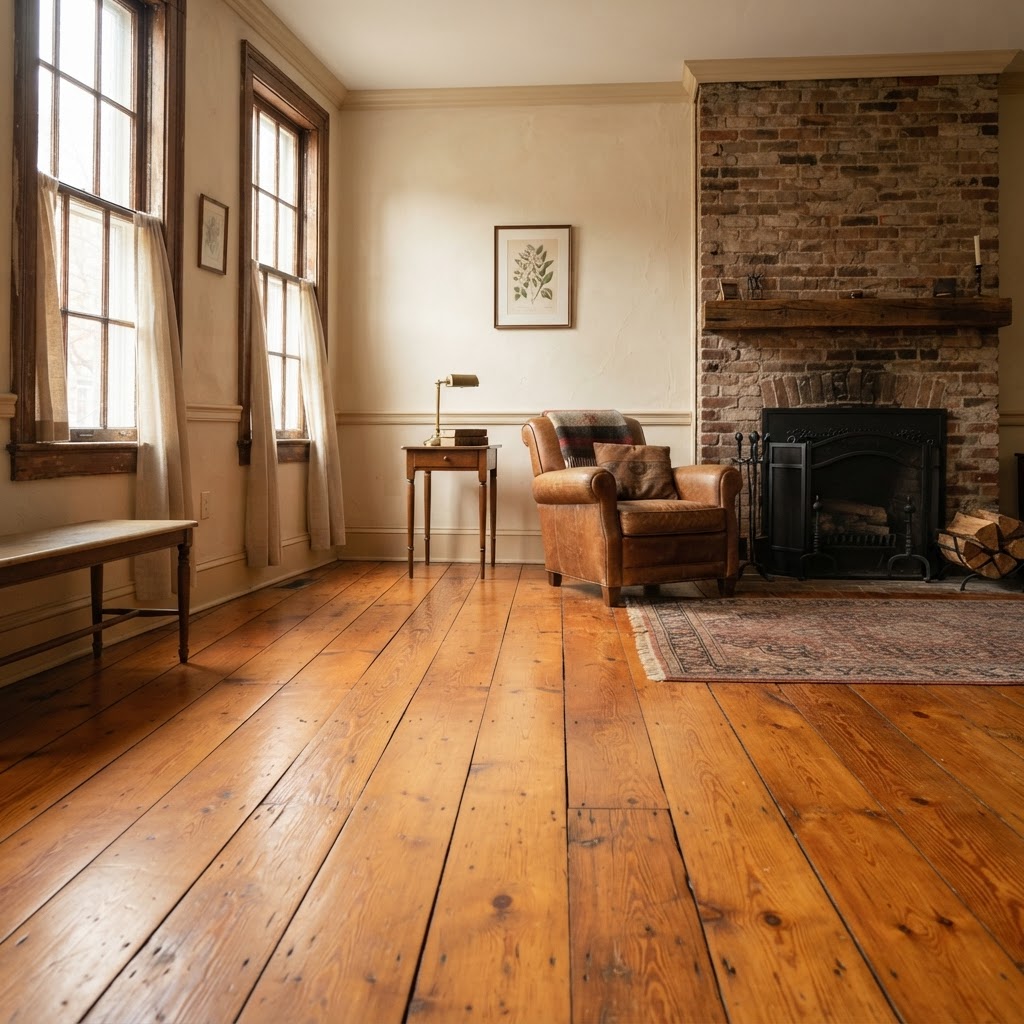
Flooring in Alexandria, VA is shaped by the city's housing. Within a few miles you can find brick rowhouses from the 1800s in Old Town, bungalows and foursquares in Del Ray, garden-style condos along the Route 1 and Eisenhower corridors, townhomes in Potomac Yard and Carlyle, and larger single-family homes in Fort Hunt, Belle Haven and the west end. Each of those has different floors underneath, different building rules and different best choices. A flooring decision that is right for a high-rise condo is wrong for a 1920s house with original oak, and the reverse is also true. This guide explains what tends to work in each kind of Alexandria home, how to decide between restoring what you have and installing something new, what to know about condo rules and historic districts, and how to choose a local flooring company. At Floors and Beyond VA, we are a family-owned company serving Northern Virginia since 1987, and Alexandria is one of the cities we work in most often.
For local project notes, service details and answers to common questions, see our Flooring Company in Alexandria, VA page.
START WITH WHAT YOU HAVE
Before choosing anything new, find out what is under your feet. Many Alexandria houses built before 1950 have solid oak or pine floors that were covered by carpet, vinyl or linoleum in later decades. If that describes your house, there may be a sound hardwood floor waiting. Lift a corner of carpet in a closet, look under a floor register or check where a threshold meets the next room. If the wood is there, refinishing is usually the most economical and the most authentic path. Our guide to refinishing pre-war hardwood floors in Alexandria and our guide on whether refinishing is worth it explain the decision.
OLD TOWN ROWHOUSES AND HISTORIC HOMES
Old Town homes often have narrow, long rooms with uneven floors, thick plaster walls and floor systems that have moved for generations. Original pine or heart pine boards can be wide, soft and full of character, and they respond differently to sanding than modern oak. Gaps, slopes and nail heads are part of the look. Many owners prefer a restoration that keeps the age visible over a perfect modern surface. In the historic district, exterior changes are regulated, but interior flooring is generally the owner's choice. Even so, it is wise to check with your insurance carrier and any applicable preservation easements. If you plan to replace missing sections, matching the species, width and age of the existing boards is the challenge, and reclaimed wood is often the best source.
DEL RAY, ROSEMONT AND ARLANDRIA BUNGALOWS
The bungalows and foursquares of Del Ray, Rosemont and Arlandria often have solid oak strip floors from the 1920s through the 1950s, in good thickness. These floors take refinishing well and often have been sanded only once or twice. Kitchens and bathrooms in these homes may have been updated with newer materials, and the transitions between old and new floors are a common concern. Planning heights and thresholds before work begins keeps these transitions tidy. If you are adding a rear addition, matching the new floor to the old one is easier when the old floor is refinished at the same time.
CONDOS AND APARTMENTS
Alexandria has many condominiums and apartment buildings, from mid-century garden complexes to modern towers. Flooring in these buildings is governed by association rules. Typical requirements include sound-rated underlayment, written approval before work starts, limits on work hours, proof of contractor insurance and rules about elevator use and debris. Hard floors transmit impact sound to the unit below, so many associations specify a minimum rating. A flooring company that works in condos regularly will already know how to prepare the paperwork. Luxury vinyl plank with an approved underlayment and engineered hardwood are both common in condos, and the right one depends on the concrete slab, the building's rating requirement and what the association allows. Our guide on LVP flooring for Arlington condos covers the same issues and applies to Alexandria buildings too.
TOWNHOMES IN POTOMAC YARD, CARLYLE AND LANDMARK
Newer townhomes often have builder-grade carpet or thin engineered flooring, open main levels and stairs between floors. Homeowners usually want a durable, easy-care surface that reads as hardwood. Luxury vinyl plank is popular because it handles pets, kids and spills, and engineered hardwood is the choice for those who want real wood. Stairs are a decision of their own, since the stair parts must match the floor and the product must be approved for stairs. These homes also share walls, so sound control can matter for neighbors.
SINGLE-FAMILY HOMES IN THE WEST END AND FORT HUNT
Post-war colonials, split-levels and ranch houses are common in these areas. Many have oak strip floors under carpet, which refinish well. Some have parquet in entries or dining rooms. Basements are often finished and sit on concrete, which suits engineered hardwood or luxury vinyl plank with proper moisture testing. Our guide on parquet floor restoration explains how to handle block and herringbone floors you may find in mid-century houses.
TALK TO A LOCAL FLOORING COMPANY BEFORE YOU DECIDE
The best way to find out what suits your home is to have someone look at it. Floors and Beyond VA offers in-home estimates in Alexandria, Arlington, Fairfax, Springfield and throughout Northern Virginia. Schedule an in-home estimate at floorsandbeyondva.com/Contact or call (703) 906-5698, and we will look at your existing floors, check the subfloor, bring samples and explain your options, including whether restoring the floor you have is the better choice.
COMPARING FLOORING TYPES FOR ALEXANDRIA HOMES
Solid hardwood. Best for wood subfloors above grade. It can be refinished many times and suits historic and traditional houses. It is sensitive to humidity swings and moisture from below.
Engineered hardwood. A good fit for condos, basements and slab-on-grade homes, where its stability matters. The wear layer decides how many times it can be refinished. Our guide on engineered vs solid hardwood flooring compares the two in detail.
Luxury vinyl plank. A durable, water-resistant choice for kitchens, basements, mudrooms and family rooms. Rigid-core types resist dents, and flexible glue-down types suit large spaces. Our guide on SPC vs LVP flooring explains the differences.
Tile. Common in baths, entries and kitchens, with a long life but a hard, cold surface and a need for a flat, stiff subfloor.
Laminate. A lower-maintenance wood-look product used less often today, as luxury vinyl has taken much of its share.
Carpet. Still a common choice in bedrooms, and often removed to reveal hardwood in older houses.
RESTORE OR REPLACE?
This question comes up in nearly every Alexandria house with old floors. Restoration makes sense when the wood is sound, the boards are intact and the problem is the finish, color or minor damage. Replacement makes sense when the floor is badly damaged by water, rot or insects, when most of the wood has been sanded away or when the layout is changing and the new floor must run across rooms. Partial replacement, where damaged sections are patched with matching boards, sits in between. An honest assessment on site is the only reliable way to decide. A company that only sells new floors has a reason to say yours is beyond saving. We would rather show you what can be kept.
WHAT TO ASK A FLOORING COMPANY
Do you do the work with your own crews or subcontract? How long have you been in business? Can you provide references or recent local projects? Are you licensed and insured, and can you provide a certificate for my condo association? Will you test moisture and check flatness before installing? What does the written estimate include, such as removal, disposal, transitions, stairs, baseboards and furniture moving? How do you protect the rest of the house from dust? What warranty comes with the work? What happens if something goes wrong? Clear, specific answers matter more than a polished brochure.
HOW THE PROCESS WORKS
A typical project starts with an in-home visit. We look at the existing floors, measure the rooms, check the subfloor, discuss your household and show samples. You receive a written estimate describing the scope. After you approve it, we schedule the work and prepare the house. Furniture is moved, the area is protected and the work is done by our crews. On completion, we walk the job with you, explain care and leave written maintenance instructions. For restoration projects, finish drying and cure times are explained in advance.
TIMING YOUR PROJECT
Spring and fall are busy for flooring work in Northern Virginia, and good crews book out ahead. Humid summer weeks slow finish drying, and cold, dry winter air affects wood movement, so a contractor will plan around the season. If you are preparing to sell, start early enough for the floor to cure before showings. If you are renovating, floors usually come after painting and heavy construction, so the new surface is not damaged. Coordination with other trades keeps the project on track.
PROTECTING YOUR FLOORS IN ALEXANDRIA
Alexandria's older housing and humid summers call for some habits. Use mats at entries to catch grit. Put felt pads under furniture. Keep indoor humidity moderate. Wipe spills quickly, especially near radiators, planters and entry doors. In rowhouses and condos, check for small leaks from pipes and appliances, since water is the main enemy of any floor. For hardwood, schedule a maintenance coat before the finish wears through. For luxury vinyl, follow the manufacturer's cleaning instructions and avoid harsh chemicals.
FLOORS AND BEYOND VA IN ALEXANDRIA
We have worked in Alexandria homes of every age, from rowhouses to condo towers. Our approach is refinish-first. We look at what you have, tell you honestly whether it can be restored and recommend a new floor only when it makes sense. Our crews are our own employees, not subcontractors, and we put the plan in writing before work begins. Our pages on flooring in Alexandria, LVP in Alexandria and floor restoration in Alexandria explain the services in more detail.
FLOORING AND STAIRS IN ALEXANDRIA ROWHOUSES
Many Alexandria rowhouses and townhomes are three or four stories, and the stairs are a major part of the flooring project. Original stairs may have solid treads that can be sanded and refinished along with the floors, or they may have been covered with carpet that hides sound wood. New stair treads and risers are available in matching species when a stair is worn beyond repair. Luxury vinyl plank and engineered hardwood can be used on stairs only when the product is approved for it and installed correctly, with proper nosings. A mismatch between stair parts and the floor is a common reason for delays, so we measure and order parts during the estimate stage. Floors and Beyond VA handles the stairs and the floors as one plan so the finished look is consistent from the first step to the top landing.
KITCHENS, BATHS AND ENTRIES
Alexandria kitchens, especially in older homes, have often been remodeled many times, leaving a patchwork of floor layers. Before new flooring goes down, it helps to know what is underneath, because removing old vinyl or tile can reveal an uneven or damaged subfloor. Entries take the most wear from grit and moisture, and a hard, water-resistant surface such as tile or rigid-core vinyl holds up better than wood near the door. Bathrooms call for water-resistant materials and careful sealing at the edges. Planning the transitions between kitchen, hallway and living room in advance lets the whole first floor look intentional.
BASEMENTS AND LOWER LEVELS
Many Alexandria homes have basements that are partly or fully finished. Concrete slabs in older houses may have seen moisture, and some basements have been affected by heavy rain over the years. Before any floor goes in, the slab is tested for moisture, cracks are repaired and low spots are leveled. Luxury vinyl plank with an attached pad and engineered hardwood approved for below-grade use are the usual choices. Solid hardwood is not recommended below grade. If a basement has an active moisture problem, the source needs to be corrected first, because no floor will perform well over a wet slab.
WHAT A HEALTHY SUBFLOOR MEANS
The subfloor is the foundation of any floor, and in older Alexandria houses it can vary a great deal. A healthy subfloor is flat, dry, solid and clean. It should not flex underfoot, squeak badly or show signs of rot. Where it needs help, the fix may be as simple as screwing down loose sections or as involved as leveling a slab or replacing damaged plywood. Skipping this work is the quickest way to ruin a good floor, and an honest contractor will talk about the subfloor before talking about the surface. Our guide on creaky hardwood floor repair explains what loose subfloors sound and feel like.
PLANNING FOR HOMES WITH PETS AND CHILDREN
Alexandria is a city of dog walkers, and the floors show it. Pet nails scratch softer finishes, and accidents can soak into unsealed wood. For households with pets, a durable finish, a matte or satin sheen and regular nail trimming go a long way on hardwood. Rigid-core luxury vinyl plank stands up well to dogs and to spills, and a thicker wear layer adds scratch resistance. Rugs in high-traffic zones and mats near water bowls protect any type of floor. Children add crumbs, toys and spills, and the easiest floors to live with are the ones that clean up with a quick sweep and damp mop.
GETTING A CLEAR WRITTEN ESTIMATE
A good estimate describes the work in plain terms. It lists the rooms, the materials, the method, what is included and what is not. It names transitions, stairs, baseboards, furniture moving, removal of old flooring and disposal. It says how the subfloor will be handled if problems appear. When you compare estimates from two companies, make sure they cover the same scope, because a lower number often leaves things out. Ask what happens if the crew finds damage under the old floor. A written answer now prevents an argument later.
FREQUENTLY ASKED QUESTIONS
What is the best flooring for Alexandria homes? It depends on the house. Restored oak suits older homes, engineered hardwood and LVP suit condos and basements.
Can I refinish the hardwood under my carpet? Often yes, if the wood is sound. A quick check in a closet or corner will tell you.
Do condo associations in Alexandria have flooring rules? Most do. Common rules include sound ratings, approvals and insurance.
Is LVP a good choice for basements? Yes, with moisture testing and proper preparation.
How long does a flooring project take? It depends on the type of floor and the size of the area. Most rooms take a few days, and larger projects take longer.
Do you work in Old Town? Yes. We work throughout Alexandria and Northern Virginia.
Can you match my existing floors in an addition? Often yes. Matching depends on species, age and finish, and refinishing both areas together helps.
READY TO START YOUR FLOORING PROJECT?
If you are planning flooring in Alexandria, the best first step is an in-home visit. Floors and Beyond VA is a family-owned flooring company serving Fairfax, Loudoun, Prince William and Arlington counties and the City of Alexandria since 1987. Schedule an in-home estimate at floorsandbeyondva.com/Contact or call (703) 906-5698.




