
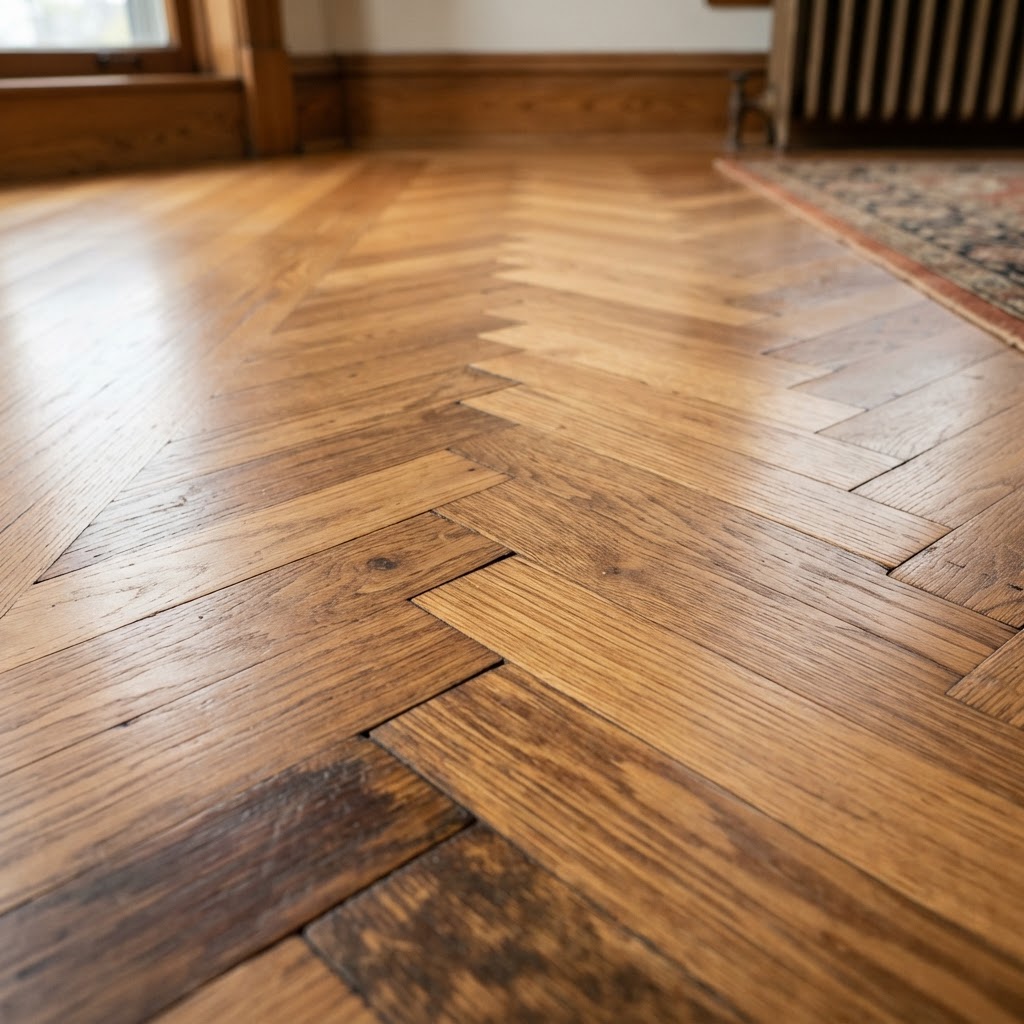
Parquet floor restoration is a specialty job within hardwood work. A parquet floor is made of small pieces of wood arranged in a repeating pattern, such as herringbone, chevron, basketweave or a square block design, instead of long planks running in one direction. That construction is what makes parquet beautiful, and it is also what makes it tricky to restore. The grain runs in several directions at once, the pieces are small, the adhesive underneath may be decades old and the finish may have been built up over many coats. Northern Virginia has a good number of homes with parquet, from mid-century houses in Fairfax and Vienna to apartments and condos in Arlington and Alexandria. Many of those floors are in better shape than they look. This guide explains what parquet is, how restoration works, what problems to expect, what can be saved and how to choose a crew. At Floors and Beyond VA, we restore hardwood floors across Northern Virginia, and our refinish-first approach fits parquet well.
WHAT PARQUET IS
Parquet comes from a French word for a small compartment, and it describes flooring built from geometric pieces. The most common types in Northern Virginia homes include the following.
Block parquet. Square or rectangular blocks, often made of several strips joined together, laid in a basketweave or checkerboard pattern. Many mid-century homes have oak block parquet glued directly to a concrete slab or a wood subfloor.
Herringbone. Rectangular pieces laid in a zigzag where the ends meet at right angles. The pieces may be short and thin, like the ones in older apartments, or longer and wider.
Chevron. Similar to herringbone, but the ends of the pieces are cut at an angle so they meet in a continuous V.
Mosaic and decorative parquet. Smaller, intricate patterns, sometimes with borders in contrasting woods. These are found in older and grander houses.
Engineered parquet panels. Modern products that arrive as pre-assembled panels, usually with a thinner wear layer than older solid parquet.
Knowing which type you have matters, because the thickness of the wood above the tongue and groove decides how much sanding the floor can take.
WHY PARQUET NEEDS SPECIAL HANDLING
On a plank floor, the sander moves with the grain, and the result is uniform. On a parquet floor, the grain changes direction every few inches. A drum sander that moves across the pieces will cut with the grain on some and against it on others, which can leave cross-grain scratches that are hard to remove. The pieces are also more likely to be at slightly different heights, because they have moved independently over the years. Aggressive sanding can cut too deep, expose the tongues, or cut through the thin wear layer on engineered or thin-block parquet. Skilled restoration uses a combination of techniques, often including edging and orbital sanders, careful sequencing of grits and diagonal passes to avoid creating a visible pattern in the finish.
WHAT RESTORATION INVOLVES
A typical parquet restoration follows a sequence. Not every floor needs every step, and a good contractor will tell you which apply.
Inspection. Before any work begins, the floor is checked for loose, cracked or missing pieces, signs of moisture, old adhesive failure and the thickness of the remaining wood. A small test patch may be sanded to see how the wood and finish respond.
Repairs. Loose pieces are re-glued, missing pieces are replaced with matching wood and gaps are filled where appropriate. For floors glued to concrete, the adhesive may have failed in places, and loose areas may need to be lifted and re-bonded. Moisture must be ruled out as the cause first.
Cleaning and finish removal. Wax, polish, old varnish and ground-in dirt are removed. Floors that have been waxed for decades need special care, because wax in the wood can prevent a new finish from bonding. Testing for wax before sanding avoids fisheye and adhesion problems later.
Sanding. The floor is leveled and the old finish is taken off, starting with a grit that is aggressive enough to remove the finish but not so aggressive that it chews the pieces. The grits step up gradually. Edges and corners are sanded by hand or with edgers, and the whole floor is vacuumed between passes.
Staining or natural finish. Some owners choose to keep the original color. Others stain to deepen the tone or even out patches. Stain on parquet needs care because end grain absorbs more than face grain, and the pieces are always showing a mix of both.
Finishing. Several coats of a durable finish are applied with light sanding between coats, according to the product instructions. The sheen is chosen to suit the room and the look you want. Satin and matte finishes hide small marks better than gloss.
Cure and return to use. The floor needs time to dry and cure. Most finishes allow light foot traffic after a day or so and furniture after several days, but full cure takes longer. Your contractor should give you written instructions.
TALK TO A RESTORATION SPECIALIST FIRST
Parquet is not a good place to learn on the job. A heavy-handed sanding cannot be undone, and a mismatched replacement piece stands out for years. Floors and Beyond VA offers in-home estimates in Fairfax, Vienna, Reston, McLean, Arlington and throughout Northern Virginia. Schedule an in-home estimate at floorsandbeyondva.com/Contact or call (703) 906-5698, and we will inspect the floor, check the wood thickness where we can and explain what restoration would involve for your pattern.
COMMON PARQUET PROBLEMS
Loose or popping blocks. Over time, the adhesive can fail, especially on concrete slabs where moisture is present. You may hear a hollow sound or feel a block shift when stepped on. Re-gluing usually fixes it, provided the cause has been addressed.
Gaps between pieces. Parquet expands and contracts with humidity, and the gaps can be more visible than on planks because there are more joints. Small gaps are normal and can be filled in some cases, though filler may crack as the wood moves.
Cupped or crowned blocks. Moisture can make individual blocks curl at the edges. If the moisture source is gone and the wood has dried, light sanding can flatten them. If not, the blocks may need to be replaced.
Dark stains. Pet stains, plant pots and water leaks can leave black marks that go deep into the wood. Some can be sanded out or lightened with treatment, and some require replacing the affected pieces.
Missing pieces. Pieces are sometimes lost when furniture is moved, when a wall was removed or when something was installed through the floor. Matching species, cut and age is the challenge.
Wax and polish buildup. Many parquet floors from earlier decades were waxed. Wax can hide the wood and prevent finish from bonding. It must be removed before refinishing.
Sun fading and uneven color. Areas near windows or covered by rugs can age differently. Sanding evens the surface, but the underlying color can still vary and may call for stain to blend.
Old adhesive. In some floors, the adhesive contains materials that call for caution. If your home is old enough, ask your contractor how they deal with adhesive and old finishes, and follow the safe work practices that apply to older homes.
CAN YOUR PARQUET BE SAVED?
In most cases, yes. At Floors and Beyond VA, we see parquet that homeowners assumed was finished and it turns out to be sound. Parquet was built to be durable, and the wood used in many mid-century floors is thick and high quality. The questions are how much wood is left and whether the base is sound. A floor with plenty of wood above the tongue and a solid bond can usually be refinished more than once. A floor that has been sanded repeatedly, or an engineered parquet with a thin veneer, may be limited to a light screening and recoat, or may not be a candidate for sanding at all. A floor with widespread moisture damage may need partial replacement. We would rather tell you honestly that a floor can be saved than sell you a replacement.
WHEN PARQUET IS BEING REPLACED
Sometimes a parquet floor cannot be saved, or the owner wants a different look. In that case, the existing parquet is removed, which can be a difficult job when the blocks are glued to concrete. The adhesive layer must be dealt with before new flooring goes down. For planned renovations, it is worth asking whether keeping and restoring the parquet might be a better result than removing it, especially if the design of the home fits the pattern.
FAIRFAX, VIENNA, ARLINGTON AND ALEXANDRIA HOMES
Parquet shows up across Northern Virginia in different forms. Mid-century homes in Fairfax and Vienna often have oak block parquet in entries, dining rooms and family rooms. Garden apartments and condos in Arlington and Alexandria sometimes have herringbone or short-strip parquet over concrete. Older townhouses may have decorative borders around the edges of rooms. In each case, the building, the subfloor and the age of the floor shape the plan. Condos have additional rules about noise, work hours and contractor insurance, and we help owners work with their associations. Our guides on wood floor restoration and on what floor restoration includes explain the general process.
SCREEN AND RECOAT VS FULL REFINISH
Not every parquet floor needs sanding. If the finish is dull but the wood is clean and the surface is intact, a screen and recoat can refresh it. The floor is cleaned, lightly abraded to give the new coat something to bond to and given a fresh coat of finish. It is faster, creates less dust and takes nothing off the wood. If the finish has worn through to bare wood, if there are stains in the wood or if the color needs to change, a full sand and refinish is the answer. Your contractor can test a small area to see which route fits.
PROTECTING PARQUET AFTER RESTORATION
A restored parquet floor should last decades with ordinary care. Use felt pads under furniture. Keep sand and grit off the floor with mats at the doors. Clean with a product recommended for your finish and avoid soaking the floor with water. Keep humidity moderate through the year to limit movement and gaps. Avoid wax on a polyurethane finish. Wipe up spills promptly. Move furniture by lifting, not dragging. A refresh coat every several years, before the finish wears through, keeps the wood protected and often avoids the need to sand again.
PARQUET UNDER CARPET OR OTHER FLOORING
Many homeowners discover parquet only when they lift carpet or vinyl. The condition of a floor that has been covered can be surprisingly good, since it was protected from sun and wear. It may also carry tack strips, staple holes, adhesive residue and paint spatter. Removal of old coverings takes care, since adhesive and backing can stick to the wood. A test removal in a closet or corner often tells you what to expect.
HOW FLOORS AND BEYOND VA APPROACHES PARQUET
We start by looking at the floor and listening to what you want. We check thickness, test for wax, look for moisture and examine the pattern. We explain what we find, show you what can be saved and recommend the least invasive route that gives the result you want. Our crews do the work themselves, and we protect the rest of your home with dust containment. We use the sanding and finishing methods that suit the pattern, and we put the plan in writing. Our refinish-first approach means that if your parquet can be restored, we will say so.
PLANNING THE PROJECT AROUND YOUR HOUSE
Parquet restoration is dusty and noisy, even with modern dust containment, so planning matters. Rooms are emptied or furniture is moved to one side and then the other. Vents and doorways are sealed. Appliances in a kitchen may need to be moved, and in some floors the work continues up to the edge of cabinets. Pets and children should stay out of the work area, and anyone sensitive to finish odors should plan to be elsewhere during coating and the first day of drying. Most finishes now are lower in odor than they were years ago, but ventilation still matters. We walk through the schedule with you in advance so there are no surprises.
CHOOSING A FINISH FOR PARQUET
Finish choice shapes both the look and the durability of a restored floor. Oil-modified polyurethane gives a warm amber tone that deepens oak and suits older homes, though it takes longer to dry and yellows with time. Water-based finishes dry faster, stay clearer and keep light woods light, with a lower odor. Hardwax oils give a natural, low-sheen look and can be spot-repaired, but they call for specific upkeep. On parquet, a satin sheen is the most forgiving because it hides the minor height differences between pieces that gloss would reveal. Ask to see a sample board with the finish you are considering, and keep in mind that a finish looks different on a small sample than on a full floor.
HOW LONG DOES A RESTORED PARQUET FLOOR LAST
A properly restored parquet floor can look good for fifteen to twenty years or longer with sensible care, and the wood itself can last far longer. The finish is the part that wears. If you catch it with a screen and recoat before it wears through to bare wood, you can extend the life of the floor again and again without sanding. This is the simplest way to keep a parquet floor beautiful, and it is the reason we encourage owners to schedule a maintenance coat instead of waiting for visible damage.
FREQUENTLY ASKED QUESTIONS
Can parquet floors be refinished? Yes, in most cases. The wood thickness above the tongue and the condition of the base decide how much sanding the floor can take.
How is parquet sanded differently? Because the grain runs in different directions, the sanding is done with care, often using several types of sanders and a gradual sequence of grits.
Can loose blocks be fixed? Usually. They are re-glued once the cause, such as moisture, has been found and corrected.
Can missing pieces be replaced? Yes. Matching the species, cut and color takes skill, and the repair is blended during refinishing.
Is herringbone the same as parquet? Herringbone is one type of parquet pattern.
How long does restoration take? It depends on the size and condition of the floor. Most rooms take several days including finish drying time.
Should I wax parquet? Not if it has a modern finish. Wax interferes with future refinishing.
Will refinishing remove the gaps? No. Gaps come from wood movement, and refinishing does not close them. Some can be filled.
Can I stay in the house during restoration? Many owners do, with the work area sealed off. Fumes and drying time may call for some adjustments.
READY TO RESTORE YOUR PARQUET?
If you have a parquet floor that looks tired, the first step is finding out what is underneath the wear. Floors and Beyond VA is a family-owned flooring company serving Northern Virginia since 1987. Schedule an in-home estimate at floorsandbeyondva.com/Contact or call (703) 906-5698.




