
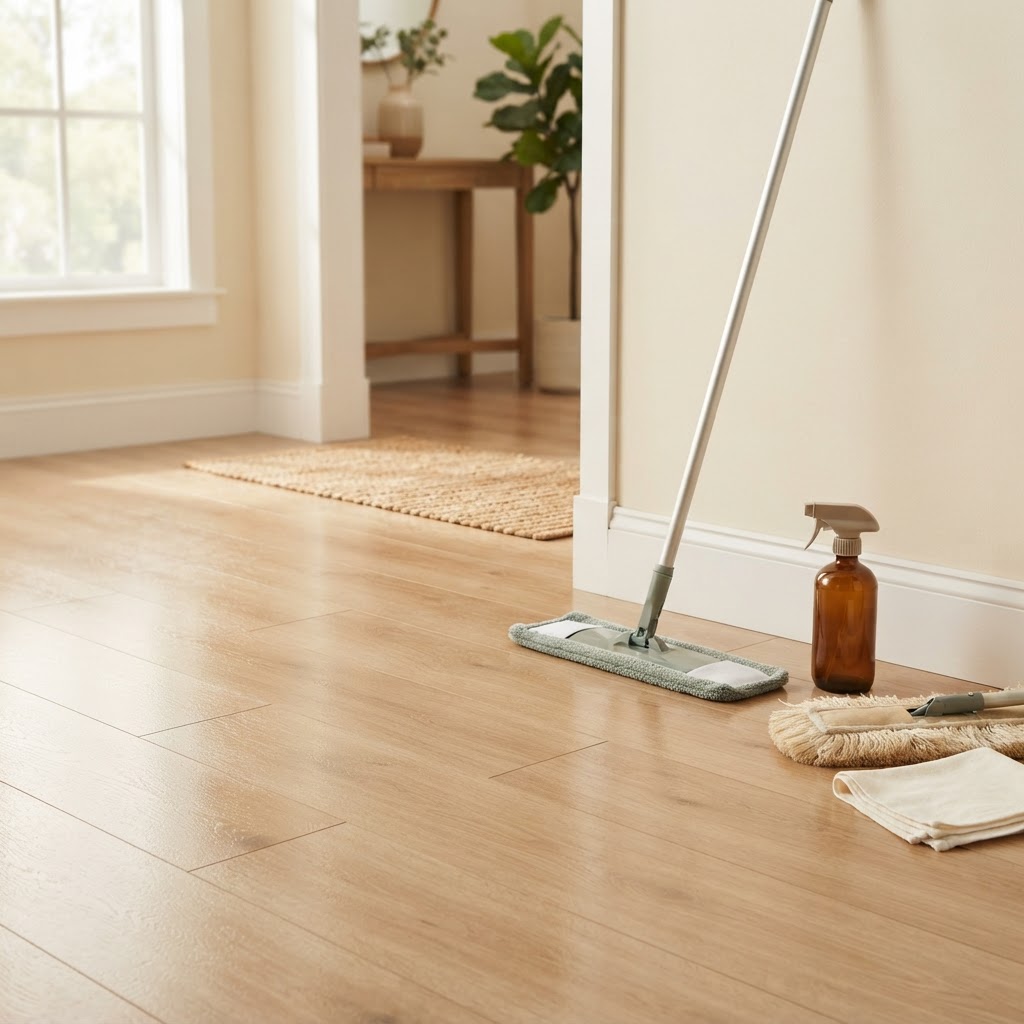
Luxury vinyl plank has a reputation for being easy to care for, and it is. But easy does not mean careless. The wrong cleaner, mop or mat can dull the surface, leave residue, stain the planks or even affect the warranty. The right routine takes only a few minutes a week and keeps a vinyl floor looking good for years. This guide from Floors and Beyond VA explains how to clean LVP flooring: what to do daily and weekly, which products to use, what to avoid, how to remove scuffs and stains, how to protect the floor from damage and what Northern Virginia homeowners in Vienna, Reston and Fairfax can do about the grit and moisture that seasonal weather brings indoors.
New to the material? Start with our explainer on what LVP flooring is, then come back here for the care routine. If you are still choosing a floor, our overview of LVP flooring covers the construction, wear layers and where it fits best.
Start with the manufacturer's instructions
Every vinyl plank manufacturer publishes care instructions, and they are the final authority for your floor. Cleaning recommendations differ between products, and some warranties require approved cleaning methods. Keep the care guide that came with your floor, or look it up using the product name. The advice below reflects general good practice, and where your manufacturer says something different, follow the manufacturer.
Why grit is the real enemy
The most common cause of dull, scratched vinyl is not spills. It is grit. Sand, small stones and dirt tracked in on shoes act like sandpaper under foot traffic. Over time they wear the surface layer and leave a hazy, scuffed look. Protecting the floor from grit is more important than any cleaning product.
Place mats at every entrance, inside and outside. Take shoes off at the door if you can. Sweep or vacuum regularly, especially near doors and in kitchens. In Northern Virginia, mud and wet leaves in fall, snow melt and de-icing material in winter, and pollen in spring all find their way indoors, so entry mats earn their place all year.
The daily and weekly routine
Daily
Sweep with a soft broom or use a dust mop to pick up grit and pet hair. Wipe up spills promptly. Even though vinyl planks are water-resistant, liquid left to sit can find its way into seams and edges.
Weekly
Vacuum with the hard-floor setting or a soft brush attachment, with the beater bar off, then damp mop with an approved cleaner.
Monthly
Do a more thorough cleaning, moving furniture where possible, and check the entry mats, pads and corners where dirt collects.
How to damp mop
Damp mopping is the standard way to clean vinyl plank. The key word is damp.
- Sweep or vacuum first to remove loose grit, so you do not grind it into the floor.
- Use a clean microfiber mop or a soft cloth mop that is wrung out well. The mop should be damp, not dripping.
- Use a cleaner that the manufacturer approves, mixed according to the label. A pH-neutral hard-surface floor cleaner is a common recommendation. Many manufacturers also sell their own cleaner.
- Mop in sections, following the direction of the planks, and rinse the mop often so that you are not spreading dirty water.
- Let the floor air dry or dry it with a clean towel, especially along edges and seams.
- Avoid flooding the floor. Even with water-resistant planks, standing water can seep into the seams and under the floor.
What to avoid
| Do not use | Why |
|---|---|
| Steam mops | Most manufacturers advise against them. Heat and moisture can damage the surface, loosen adhesive, affect seams and void the warranty. |
| Wax, polish and oil soaps | Vinyl does not need wax. Films make the floor slippery, attract dirt and cloud the surface. |
| Scouring pads, steel wool, harsh powders | Abrasive tools scratch the wear layer. |
| Bleach and strong chemicals | Can discolor or damage the surface. Only if the manufacturer approves and the product is diluted as directed. |
| Homemade vinegar mixes | Acidic and alkaline mixtures are not approved by every manufacturer. Check the care guide and test in a hidden spot. |
| Vacuums with beater bars | A rotating brush can scratch the floor. Use the hard-floor setting. |
| Rubber- or latex-backed mats | Some backings stain vinyl over time. Use mats labeled safe for vinyl. |
| Dragging furniture | Lift and carry, or use sliders designed for vinyl. |
Removing scuffs, marks and stains
Always test any method in a hidden area first, such as inside a closet, and follow the manufacturer's guidance.
- Scuffs from shoes and furniture. Many are surface marks that wipe away. Try a clean microfiber cloth with a little approved cleaner, or a soft eraser on stubborn marks. Avoid anything abrasive.
- Grease and food. Wipe up as much as you can with a soft cloth, clean with an approved cleaner, then rinse with a damp cloth and dry.
- Ink and marker. A small amount of rubbing alcohol on a cloth can help on some marks, but test first and use sparingly, because strong solvents can damage some finishes.
- Rust and heavy stains. Rust from metal furniture feet or plant stands can stain. Specialty removers may be needed, and the manufacturer should be consulted because chemicals can harm the floor.
- Paint and adhesive. Fresh paint usually wipes up with a damp cloth. Dried paint is harder, and aggressive scraping can scratch, so use a plastic scraper gently.
- Pet accidents. Clean quickly with a damp cloth and approved cleaner, then dry. Urine left to sit can seep into seams.
Heavy marks that do not come out may need a different approach, such as replacing a plank, depending on how the floor is installed. Keeping a few spare planks from the original lot helps.
Protecting the floor
- Use felt pads under furniture legs and replace them when they wear down.
- Use wide, non-staining casters or mats under rolling chairs. Hard plastic casters can scratch.
- Keep pet nails trimmed.
- Lift rather than drag heavy items.
- Use blinds, curtains or window film in rooms with strong direct sunlight, since sun can fade or warm vinyl.
- Keep the room at a normal living temperature. Very high or very low temperatures can affect floating floors.
- Wipe up spills and tracked-in water promptly, especially at doors, sinks and appliances.
Cleaning specific areas
Kitchens
Grease and food spatter are the main issues. Clean spills quickly and use mats at the sink and stove that are safe for vinyl.
Entryways
Grit is the problem here. Use a good mat system and clean often.
Bathrooms
Water is common, so dry the floor after showers when possible and wipe up splashes.
Basements
Moisture is a larger concern. If the basement is damp, address the source and consider a dehumidifier. Our guide to moisture barriers for LVP flooring explains why it matters.
Stairs
Vacuum with a hose attachment and avoid slippery cleaners.
Thinking about your own floors? Floors and Beyond VA offers in-home estimates across Northern Virginia. Schedule yours at [floorsandbeyondva.com/Contact](/contact) or call (703) 906-5698.
When cleaning is not the problem
- Residue. Too much cleaner, or the wrong one, can leave a film that looks like dirt. Rinse with a damp cloth and clean water, and use less product.
- Surface wear. A scuffed, worn surface in a high-traffic area may be wear on the wear layer, not dirt. Cleaning will not fix it, and a stronger wear layer may be worth considering next time.
- Gaps or lifting seams. These are installation or movement issues, not cleaning issues. They are worth having inspected. We discuss expansion and installation details in our post on click lock LVP flooring.
- Odors. A musty smell may signal moisture under the floor. Do not mask it. Investigate the cause.
What Northern Virginia homes need to watch
Our region brings seasonal grit. Fall leaves and mud, winter salt and slush, and spring pollen all increase the dirt load. Many homes have finished basements and townhome entries that see a lot of traffic. Humid summers can raise moisture in basements. The simplest protections are good entry mats, a shoe habit, a weekly routine and quick attention to spills and leaks.
A simple weekly checklist
If you prefer a routine you can follow without thinking, here is a short one. Check that the entry mats are clean and in place. Sweep or vacuum all vinyl areas, especially the kitchen, entry and pet areas. Damp mop with the approved cleaner, working in sections and drying edges. Wipe baseboards and corners where dust collects. Check felt pads under furniture and replace any that are worn or missing. Look at the floor near doors, sinks and appliances for signs of moisture, such as swelling, discoloration or lifting edges. Rinse and dry the mop, and let it air out so it does not spread odors. A routine like this takes little time and prevents most of the problems that make a floor look old early.
Seasonal care in Northern Virginia
Our seasons change what the floor faces. In fall, wet leaves and mud arrive on shoes, so increase mat cleaning and sweeping. In winter, salt and de-icing products leave white residue, which should be wiped up promptly with a damp mop, because it can leave a film and carry grit. Indoor heating also dries the air, and the floor and the house settle with the change. In spring, pollen and rain return, so keep mats and entry areas under control. In summer, humidity rises, especially in basements, so watch for any musty smell and run a dehumidifier if needed. Sunlight is strongest in summer, and window treatments help protect floors near large windows. Adjusting your routine slightly with the seasons keeps the floor looking its best all year.
When a floor needs more than cleaning
If you have cleaned carefully and the floor still looks worn, or if you see lifting seams, gaps, bubbles, discoloration or a persistent odor, the issue may be installation, moisture or wear rather than dirt. Floors and Beyond VA can look at the floor and explain what is happening. Sometimes the answer is a simple repair, such as replacing a plank. Sometimes the floor needs a different approach to moisture or movement. Catching these problems early makes them easier to fix, and keeping your installation records helps.
Cleaning around pets and children
Pets and children are the two biggest tests of any floor. For pets, wipe up accidents promptly, wash food and water bowl areas regularly and use a mat under bowls that is safe for vinyl. Keep nails trimmed to reduce scratching, and sweep often to remove hair and litter before it is ground into the surface. For children, expect spills, crayon marks and toy traffic. Most spills wipe up with a damp cloth, and stubborn marks usually respond to gentle cleaning. Use soft play mats with a vinyl-safe backing under toys and play areas, and teach everyone to lift rather than drag chairs and toys. These small habits make cleaning easier and keep the surface in good shape for years.
How Floors and Beyond VA can help
Floors and Beyond VA is family-owned and has served Northern Virginia since 1987, and our crews are our own employees. When we install a vinyl plank floor, we give you the manufacturer's care information and explain what to use and what to avoid, so the floor keeps its look and its warranty. If something looks wrong with an existing floor, such as lifting seams or persistent marks, we can evaluate it in person.
If you live in Vienna, Reston or nearby, you can learn more about our LVP flooring in Vienna, VA. We also work in Fairfax, Tysons, McLean and across Northern Virginia. For the short version of this routine, see our NoVA Guide answer on how to clean and maintain LVP flooring, and to compare our company, this page on our work as a flooring company in Vienna is a good start.
Choosing a cleaner
Many homeowners ask which product to buy. The short answer is to use the cleaner your plank manufacturer recommends, or a neutral hard-surface cleaner that states it is safe for vinyl or luxury vinyl plank. Read the label for dilution, because using more than directed leaves residue. Avoid products that promise shine, since they often contain polishes or waxes that build up. If you prefer concentrated cleaners, measure carefully and rinse the mop between sections. If you prefer a ready-to-use spray, mist the mop or cloth rather than the floor, so you do not overwet the seams. When you try a new product, test it in a hidden area first and look at the area after it dries, because residue sometimes only shows once the floor is dry.
Tools that work well
A few simple tools make vinyl care easier. A soft-bristle broom or a microfiber dust mop picks up grit and hair without scratching. A vacuum with a hard-floor setting and soft brush head handles corners and edges. A flat microfiber mop with washable pads damp mops evenly and leaves little water behind. A spray bottle gives you control over how much cleaner you use. Soft cloths and a plastic scraper handle spot cleaning. Felt pads and furniture sliders protect the floor from moving furniture. Keeping these tools clean matters too, because a dirty mop pad spreads grit and grime.
Frequently asked questions
What is the best way to clean LVP flooring?
Sweep or vacuum first, then damp mop with a pH-neutral cleaner approved by the manufacturer. Dry the floor and avoid standing water.
Can I use a steam mop on LVP?
Most manufacturers advise against it, because heat and moisture can damage the floor and affect the warranty. Check your care guide.
Can I use vinegar and water?
Some manufacturers do not approve acidic homemade cleaners. Check your care guide and test in a hidden spot.
How do I remove scuffs?
Try a clean microfiber cloth and approved cleaner, or a soft eraser. Avoid abrasive pads.
Should I wax or polish LVP?
No. Vinyl does not need it, and it can leave a film.
Can I use a robot vacuum?
Many are fine on vinyl, but check that the brush will not scratch the surface and that the wheels are non-marking.
Why does my floor look cloudy?
Residue from cleaner is a common cause. Rinse with a damp cloth and use less product.
How often should I clean?
Sweep or vacuum weekly or more often in busy areas, damp mop as needed and wipe spills right away.
Talk to Floors and Beyond VA
If you want advice on caring for an existing floor, or you are planning a new LVP installation, we would be glad to help. Floors and Beyond VA will look at your floors and answer your questions. Schedule an in-home estimate at [floorsandbeyondva.com/Contact](/contact) or call (703) 906-5698.
Get a Free Estimate



