
Few upgrades change a home as much as replacing carpet with a hard floor. Rooms look brighter and cleaner, allergens have fewer places to hide and the house feels newer. Across Northern Virginia, from Fairfax colonials to Loudoun townhomes to Prince William family homes, carpet replacement is among the most common projects we see.
It is also a project with details that surprise people: what is under the carpet, how a hard floor changes sound and comfort, how heights and transitions work and which product suits which room. This guide explains how to check what you already have, how to choose between hardwood and luxury vinyl plank, what preparation is involved, how stairs fit in and how the work is carried out. Floors and Beyond VA is a family-owned flooring company that has served Northern Virginia since 1987, and our own crews handle every step.
Start by looking under the carpet
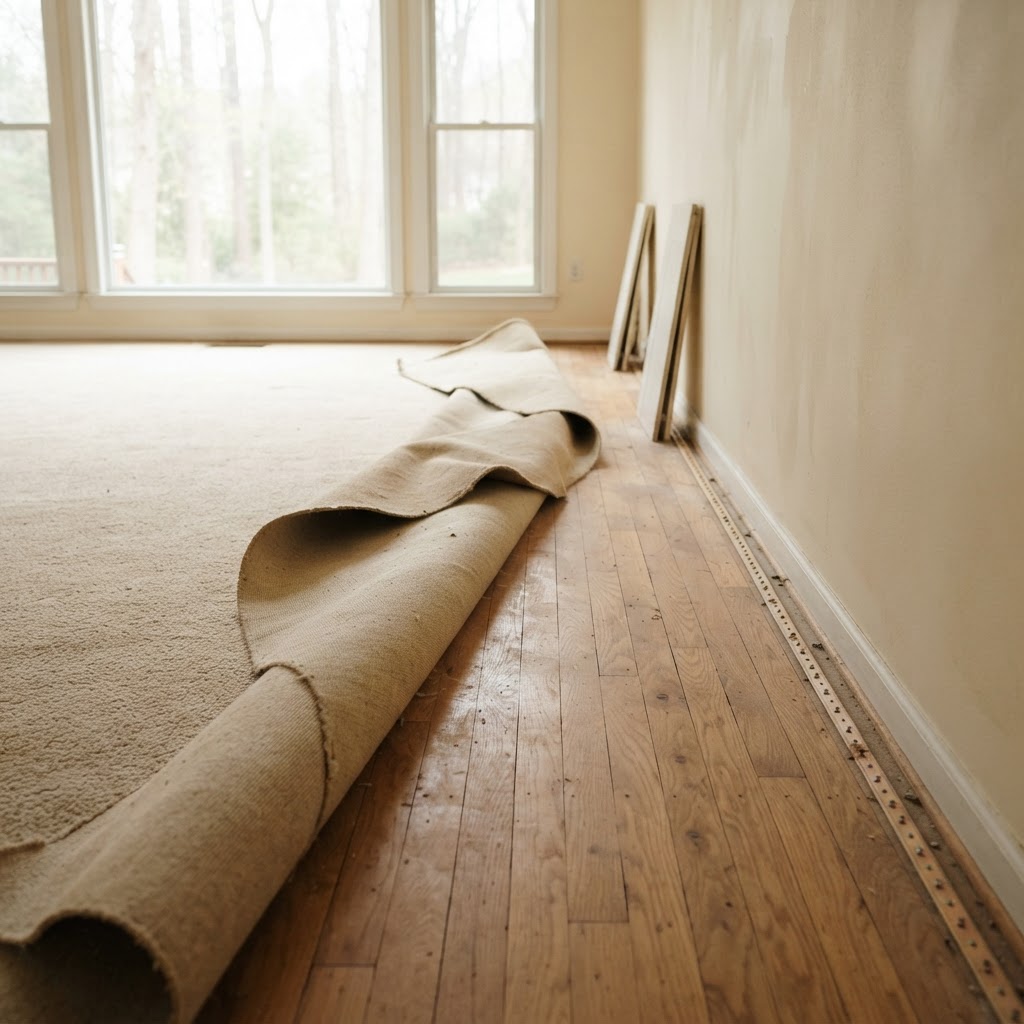
Before you shop for new flooring, find out what is already there. Many Northern Virginia homes built from the 1950s through the 1980s have solid oak strip flooring under wall-to-wall carpet. Carpet protects wood from sunlight and scratches, so the floor underneath is often in better shape than owners expect.
To check, lift a corner of the carpet in a closet or another out-of-the-way spot. Carpet is usually held at the edges by tack strips, so you may need to pry it gently. If you see wood boards, you may have a floor that can be refinished instead of replaced. If you see plywood, particleboard or concrete, you are looking at a subfloor and the choice of new flooring begins from there. If you are not sure, a flooring company can look and tell you in a few minutes.
If hardwood is under your carpet, refinishing it is often the best project. It preserves the original floor, matches the rest of the house and avoids the waste of removing wood that still has life. We take a refinish-first approach and will tell you plainly if a floor cannot be saved. Our floor restoration service covers exactly this work.
What changes when carpet comes out
Replacing carpet with a hard floor changes more than the look.
- Sound. Carpet and padding absorb sound. Hard floors reflect it, so rooms can seem louder and footsteps more audible, especially in two-story homes. Rugs, underlayment and furniture help.
- Temperature. Hard floors feel cooler underfoot, particularly over concrete. Area rugs add warmth, and some floors can be installed over radiant heat.
- Cleanliness. Hard floors do not trap dust, dander and pollen. They are easier to clean and many households find that allergies improve.
- Subfloor visibility. Carpet hides imperfections. A hard floor reveals dips, high spots, loose boards and squeaks, so preparation matters more.
- Height. Carpet and pad are usually thicker than the new floor, so the floor level drops in places. Door clearances, thresholds and stair heights need planning.
- Maintenance. Hard floors require different care, such as felt pads under furniture, mats at doors and appropriate cleaners.
None of these is a reason to avoid the change. They are reasons to plan it carefully.
Hardwood or luxury vinyl plank
The two most common replacements for carpet are hardwood flooring, whether solid or engineered, and luxury vinyl plank flooring.
Hardwood has a natural surface with real grain and warmth. It suits living areas, dining rooms and bedrooms and can often be refinished over its life. Solid hardwood is nailed to a wood subfloor and is best above grade. Engineered hardwood has a real wood surface over a layered core and suits slabs and a wider range of conditions. Hardwood is sensitive to water and humidity, so it is not the best choice for wet areas.
Luxury vinyl plank has a printed wear layer over a stable core. It is waterproof, scratch resistant and dimensionally stable, which makes it popular for busy households, basements, kitchens and rooms with pets. Quality varies, and the thickness of the wear layer matters. It generally cannot be refinished, but individual planks can be replaced in many floating installations.
Which is better depends on the room and the household. Many homes use both, for example hardwood on the main level and luxury vinyl plank in the basement. A flooring company that offers both can give balanced advice.
Choosing by room
- Bedrooms. Many owners choose hardwood or luxury vinyl plank for the warm, clean look, with a rug beside the bed. Comfort and quiet matter, so ask about underlayment.
- Living and dining areas. Hardwood is a classic. A continuous floor through open spaces makes the whole level feel larger.
- Stairs and hallways. These take the most wear. Durable products and careful installation matter most here.
- Basements. Luxury vinyl plank is the common choice because it handles moisture better than solid wood. Slabs should be tested for moisture first.
- Kitchens and baths. Waterproof products, such as luxury vinyl plank or tile, are the usual choice.
Preparation: what happens to the subfloor
When carpet and pad come out, the subfloor is exposed, and it needs attention before any new floor goes down.
- Removal of tack strips and staples. Tack strips leave nail holes and sometimes damage. Staples from padding must be removed so they do not telegraph through the new floor.
- Cleaning and adhesive removal. Old padding glue and debris are scraped or ground off.
- Flatness checks. A straightedge reveals dips and high spots. Dips are filled or shimmed, and high spots are sanded or ground. Floating products in particular need a flat surface.
- Securing loose boards and panels. Loose areas are fastened to eliminate squeaks.
- Repairing damage. Stains or soft spots from leaks are repaired, and the source of any moisture is addressed.
- Moisture testing. On concrete, and in basements, the slab is tested before installation.
This stage is invisible when the job is done, and it is the main reason one floor feels solid and quiet while another feels hollow and noisy.
Heights, doors and transitions
Because carpet and padding are thicker than most hard floors, removing them changes height. Where the new floor meets another floor, such as tile in a kitchen or carpet that remains in a bedroom, the height difference needs a transition. Reducers, thresholds and T-molding bridge different heights and materials, and the choice affects both safety and appearance.
Doors may need to be trimmed to clear the new floor or, less often, raised. Closet doors, interior doors and appliances such as dishwashers and refrigerators should be checked. A good estimator walks through these with you and plans them before the work begins.
Stairs
Carpeted stairs are often part of a carpet replacement project. Once the main floors are hard, carpeted stairs can look dated and tired. Options include converting to wood treads and risers, installing new oak treads over the existing stairs, refinishing existing wood treads if they are underneath and covering stairs with luxury vinyl plank stair parts. A runner can add color and grip if you want it. Our guide to LVP flooring for stairs covers those options in detail.
Plan the stairs along with the floors so the finish, sheen and color match at the top and bottom. Stair work is detailed and takes time, so ask for it to be part of the written plan.
Baseboards and trim
New floors usually mean attention to baseboards and shoe molding. These are removed and reinstalled or replaced so the floor edges are covered and the transition at the wall looks finished. If baseboards are being replaced, painting them before or after the floor goes in is a question to settle with your crew. A flooring company should explain how trim will be handled and whether paint touch-ups are included.
Sound in two-story homes, townhomes and condos
When hard floors replace carpet upstairs or in multi-family buildings, sound transmission becomes a concern. Underlayment helps. A cushioned or acoustic layer under a floating floor reduces impact noise, and some are tested for specific sound ratings. Townhome and condo associations often require a minimum rating, so ask for the rules and choose a documented product. In a single-family home, an underlayment is often worth choosing for upstairs bedrooms even when it is not required. This explanation of underlayment for LVP flooring covers the options.
Pets, children and allergies
Many people replace carpet because of pets, children or allergies. Hard floors make accidents easy to clean and reduce the places dust and dander collect. Scratch-resistant luxury vinyl plank and hardwood with a durable low-sheen finish hold up well. Rugs in play areas protect the floor and soften falls. If allergies are the reason for the change, mention it, because it affects choices such as underlayment and adhesives.
How long the work takes
Timing depends on the scope. A single bedroom of luxury vinyl plank can be finished in a day. A full main level takes several days, and a whole house takes longer. Subfloor repairs, stair work and trim add time. If you are choosing hardwood that must acclimate, allow for that period before installation. Ask for a written schedule and for prompt notice if anything changes.
Living through the work
Plan where you will sleep, cook and work, and where pets will stay. Furniture needs to be moved out or staged in rooms that are not being worked on. Carpet removal is dusty, and professional crews contain it where possible, protect adjacent areas and clean daily. Ask how your crew handles debris and disposal.
Color and style when going from carpet to hard floor
Most people replacing carpet have lived with neutral beige or gray for years, and a wood-look floor is a big visual change. Mid-tone floors with natural variation work in most homes because they hide dust and scratches and suit many paint colors. Lighter floors make small or dark rooms feel brighter, and darker floors add drama in well-lit spaces but show more dust.
Think about the tone of your cabinets, trim and furniture, and look at full-size samples in your own light before choosing. Floors and Beyond VA brings samples to your home so you can see them next to your walls and furniture in morning light and evening lamplight, which is the only reliable way to judge.
Rugs after carpet
Rugs become important once carpet is gone. They add warmth, color and sound absorption, define seating areas and protect high-traffic paths. Choose generous sizes, since a rug that is too small looks like a stamp on the floor. Use a pad that is safe for your floor type, because some rubber pads can discolor vinyl. Rugs also give you a way to change your decor without changing the floor.
When carpet stays in some rooms
Many homes keep carpet in bedrooms or on stairs and change only the main living areas. That is a perfectly good plan, as long as the transitions are handled well. Where hard flooring meets carpet, a transition strip or a carefully cut edge covers the joint, and the height difference needs to be planned. Keeping carpet in bedrooms gives warmth and quiet where they matter most, and keeping it on stairs can add grip. Just be sure the color and style of the remaining carpet work with the new floor.
What to do with old carpet and padding
Carpet removal produces a lot of debris. A professional crew rolls and carries out old carpet and padding and disposes of it, and it should be part of the plan. Ask whether removal and disposal are included, and where the debris will be staged during the work. If you plan to keep any carpet, such as in bedrooms that are not being replaced, tell the crew so they protect it.
Hidden surprises under carpet
Carpet sometimes hides problems. Pet stains can soak through to the subfloor and leave odor. Old water damage can darken boards. Subfloors can have gaps, patches or squeaks. Occasionally, flooring from earlier eras, such as old vinyl tile, lies under carpet, and some very old materials need special handling. A careful crew looks as soon as the carpet is up and tells you what they find. Ask how unexpected conditions are handled and how you will be informed before any changes.
Doing it one room at a time
Some households replace carpet in stages, starting with the rooms that bother them most. That is fine, with one caution. Plan the whole house first, even if you will do the work over time, so the floors and transitions match. Keep a record of the product, color and lot so later rooms can be matched. If you can, buy a little extra material at the start, since products are sometimes discontinued or change slightly between production runs.
How to choose a flooring company for a carpet replacement
Ask a few practical questions. Will someone visit and look under the carpet before giving a plan? Can they tell me if I have hardwood that can be refinished? Do their own crews do the work? How do they prepare the subfloor? How will they handle heights, doors, stairs and trim? What is the schedule? Can they show me samples in my own light?
Floors and Beyond VA has been family-owned since 1987. Our own crews measure, prepare the subfloor and install, and we start with an in-home estimate and a written plan. See what local projects look like on our Flooring Company in Fairfax, VA and Flooring Company in Manassas, VA pages.
Caring for your new floor
Felt pads under furniture, mats at doors and prompt cleanup of spills protect any floor. Use the cleaner the manufacturer recommends and avoid harsh chemicals. Keep humidity steady, since wood moves with the seasons. For hardwood, ask about a maintenance schedule. For luxury vinyl plank, avoid abrasive cleaners and protect against heavy point loads.
Common mistakes to avoid
A few mistakes repeat. Ordering material before checking what is under the carpet can mean replacing a floor that could have been refinished. Skipping subfloor preparation leads to squeaks and flexing. Ignoring height changes leads to awkward thresholds and doors that scrape. Choosing a floor for looks alone and ignoring sound can lead to complaints from the household or neighbors. Forgetting about stairs leaves a dated staircase next to a new floor. Hiring without a visit leads to surprises.
Frequently asked questions
How do I know if there is hardwood under my carpet?
Lift a corner in a closet. If you see wood boards, ask a flooring company to inspect it.
Can hardwood under carpet be refinished?
Often yes, if enough wood remains above the tongue and the boards are sound.
Is luxury vinyl plank or hardwood better to replace carpet?
It depends on the room and household. Hardwood suits living areas, and luxury vinyl plank suits basements, kitchens and busy homes.
Will my floors be louder than carpet?
Hard floors reflect sound. Rugs and underlayment help, and townhomes and condos may require a sound-rated underlayment.
Do stairs have to match the new floor?
Not exactly, but they look best when planned together.
How long does carpet replacement take?
A room can take a day, and a main level several days. Ask for a written schedule.
Ready to replace your carpet?
If you are thinking about replacing carpet in Northern Virginia, the best first step is a visit from someone who will lift a corner and tell you what is underneath. Floors and Beyond VA is a family-owned flooring company serving Fairfax, Loudoun, Prince William and Arlington counties, Alexandria and the Washington, DC area since 1987. Schedule an in-home estimate or call (703) 906-5698.




