
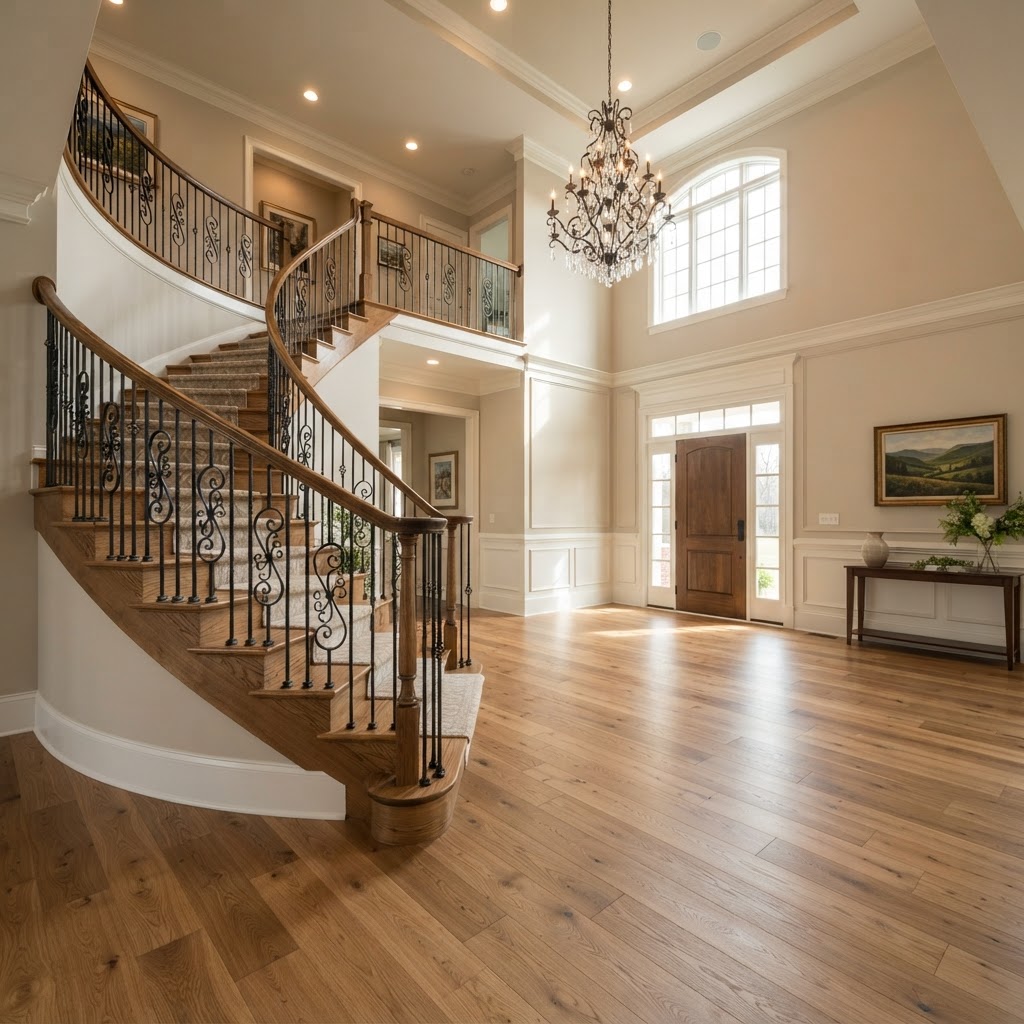
What should Aldie homeowners know about hardwood flooring installation?
Hardwood flooring installation in Aldie comes down to a few decisions that shape everything else: solid or engineered construction, species and plank width, finish and sheen, installation method, and how well the subfloor is prepared. Solid hardwood is a single piece of wood that can be refinished many times and suits above-grade rooms with wood subfloors. Engineered hardwood has a real wood surface over a layered core, which makes it more stable in changing humidity and suitable over concrete, in many basements and over radiant heat. The final cost of a project is driven by the material, the square footage, the condition of the subfloor, removal of existing flooring, stairs, finishing steps and trim, rather than by any single average number. Floors and Beyond VA, a family-owned Northern Virginia flooring and remodeling contractor serving Fairfax, Loudoun, Prince William and Arlington counties since 1987, installs, refinishes and repairs hardwood with in-house crews and no subcontractors, and we explain each decision so you know exactly what you are choosing.
Aldie homeowners come to hardwood from several directions. Some live in newer homes in Stone Ridge, South Riding or Willowsford where builder-grade carpet or laminate covers the main level and they want the warmth and value of real wood. Others own larger properties near Arcola, Gilbert's Corner or Middleburg and want wide-plank floors that suit the scale of the house. Others live in older homes near the historic village of Aldie with original wood floors that may only need restoration. This guide covers the styles, finishes, installation factors and benefits of hardwood in a Northern Virginia climate, and explains the cost drivers without quoting numbers that could never fit your particular home. Our wood flooring page describes the full range of hardwood services we offer.
Solid versus engineered hardwood
The first decision is construction, and it matters more than most people realize.
Solid hardwood
Solid hardwood is milled from a single piece of wood with a tongue and groove along the edges. It is typically nailed or stapled to a wood subfloor. Because the entire plank is wood, it can be sanded and refinished many times, which is why well-maintained solid floors can last for generations. Solid hardwood is a classic choice for main-level living areas, dining rooms, bedrooms and hallways in homes with suitable wood subfloors.
Solid wood responds to humidity by expanding and contracting, mostly across the width of the plank. In Northern Virginia, where summers are humid and heated winters are dry, this movement is normal and is accommodated by perimeter expansion gaps and proper acclimation. Very wide solid planks move more, which is why plank width and installation conditions deserve attention. Solid hardwood is generally not recommended directly over concrete or below grade.
Engineered hardwood
Engineered hardwood is built in layers. The top is a real hardwood wear layer, and beneath it is a core of cross-layered wood or wood-based material. The cross-layered construction restrains movement, so the plank is more stable than solid wood of the same width. That stability is why engineered hardwood is the usual choice for wide planks, for installation over concrete slabs, for many basements with proper moisture control and for radiant-heated floors when the manufacturer approves.
Quality varies. The thickness of the wear layer determines how many times an engineered floor can be refinished, and the quality of the core affects stability and sound. A thick wear layer can be refinished multiple times, while a thin veneer may allow one light refinish at most. Our article on engineered wide-plank flooring in Northern Virginia explains what to look for.
Once installed and finished, a quality engineered floor and a solid floor look and feel the same, because the surface is real wood in both.
Popular species, cuts and plank widths
Species choice affects hardness, grain, color and how the floor takes stain.
Red oak is the traditional favorite in the region, with a warm tone and pronounced grain that takes stain well. White oak has become extremely popular for its more neutral, slightly cooler character, its resistance to moisture and its versatility with natural, matte and gray-toned finishes. Hickory is very hard and has dramatic variation in color and grain. Maple is hard and light with a smooth, even grain suited to contemporary designs. Walnut offers rich, deep tones and a more luxurious feel, though it is softer. Ash and other species provide additional options.
Cut also matters. Plain-sawn boards show a cathedral grain pattern. Quarter-sawn and rift-sawn cuts produce straighter, more linear grain and added stability, and they are favored in refined, contemporary and some traditional designs.
Plank width shapes the character of a room. Narrow strips of about two and a quarter inches are classic and common in older homes. Three to five inches suit most traditional and transitional interiors. Wider planks of six inches or more create a modern, open look and suit the large spaces common in newer Aldie homes with high ceilings and open plans. Wider planks are more sensitive to humidity, so they are most often engineered or installed with particular care.
Grade describes the amount of natural variation. Clear grades are more uniform. Select and common grades show more knots, mineral streaks and color variation, which many homeowners prefer for a lived-in, character-rich look.
Patterns go beyond straight lays. Herringbone, chevron and other patterns add visual interest, and borders or inlays highlight entries and dining rooms. These require more cutting and precision.
Finishes and sheen
The finish protects the wood and defines its appearance.
Stain color. Natural tones highlight the wood's own character. Warm medium browns suit traditional homes. Deeper espresso tones create drama. Soft, lighter or gray-leaning finishes suit contemporary design. White oak in particular takes a wide range of looks, from nearly raw to richly toned. Sample on your actual wood, because stain looks different on each species and in each light.
Sheen. Matte and satin finishes are the most popular today. They hide scratches and dust better than high gloss, and they look natural. Semi-gloss and gloss finishes are bolder and show wear more readily.
Finish type. Water-based polyurethane dries clear, has low odor and cures relatively quickly, and it keeps the wood looking light. Oil-based polyurethane adds a warmer amber tone and is traditionally durable, with a longer cure and stronger odor. Penetrating oils and hardwax oils give a natural, low-sheen look and can be spot-repaired, though they need different care. The right choice depends on the look you want, how the household lives and the schedule.
Prefinished versus site-finished. Prefinished planks arrive with a factory finish, which means faster installation and no on-site sanding or coating, but slight bevels at the edges. Site-finished floors are installed unfinished, then sanded flat and finished in place, which yields a seamless surface and complete control over color and sheen. Each has its place, and we help you decide.
For details on keeping a finish in good condition, see our floor care page.
Installation methods
How a floor is installed affects performance, sound and suitability.
Nail-down or staple-down. The standard method for solid hardwood, and used for many engineered products, over a wood subfloor. It produces a firm, quiet floor.
Glue-down. Planks are bonded to the subfloor with specialized adhesive. Common for engineered hardwood over concrete and for some solid wood installations. It requires a flat, clean, properly prepared surface.
Floating. Planks connect to one another and rest on an underlayment. Available for many engineered products, especially over concrete or existing flooring when conditions allow. Underlayment quality and perimeter gaps matter.
The right method depends on the product, the subfloor and the manufacturer's requirements. Our flooring installation guide explains the full process.
Subfloor preparation and acclimation
Preparation is the foundation of a long-lasting hardwood floor, and it is where shortcuts do the most damage.
Moisture. Wood and subfloor moisture content should both be measured and recorded. Wood subfloors should be within acceptable range relative to the flooring. Concrete slabs should be tested using accepted methods such as calcium chloride or in-situ relative humidity testing, and mitigation may be needed. Our guide to the best flooring on concrete basements in Northern Virginia explains the testing.
Flatness. Subfloors must be flat within the manufacturer's tolerance. Dips and humps can cause squeaks, hollow spots, gaps and stress on the joints. Leveling and sanding are common corrective steps.
Structure. Loose sheathing, squeaks and damaged areas should be repaired.
Acclimation. Wood should be allowed to adjust to the home's indoor environment before installation. Homes in new communities may still be drying out from construction, so humidity conditions deserve attention. Climate control should be operating at normal levels.
Expansion gaps. A perimeter gap, hidden beneath baseboards or trim, allows seasonal movement.
Layout planning. Good installers plan the layout to avoid thin slivers at walls, stagger end joints, blend boxes for color consistency and align boards with sight lines.
Our guide to preparing your home for new floors explains what homeowners can do to help.
The benefits of hardwood in an Aldie home
Lasting beauty and character. Real wood has depth, warmth and natural variation that no printed surface perfectly duplicates.
Renewability. Hardwood can be refinished, recolored and repaired. A floor that looks tired can often be restored instead of replaced.
Long-term value. Well-maintained hardwood is widely appreciated by buyers, especially in main living areas. Our articles on whether houses sell better with carpet or hardwood floors and the best flooring before selling a home explore this.
Easy cleaning. Hard surfaces do not trap dust and allergens the way some carpets can, and routine care is simple.
Design flexibility. Species, width, stain, sheen and pattern allow an enormous range of looks, from traditional to modern.
Longevity. A quality hardwood floor can last for generations.
Hardwood is not right for every room. In basements, bathrooms and laundry rooms with persistent moisture, a water-resistant alternative is usually wiser. Our article on hardwood versus LVP in Northern Virginia helps compare.
Maintenance tips for Northern Virginia homes
Good habits protect a hardwood floor for decades.
Control grit. Sweep or vacuum regularly with a soft brush attachment, and place mats at entries. Grit is the primary cause of surface scratches.
Protect against furniture. Use felt pads under legs and replace them when worn. Lift furniture rather than dragging it.
Manage humidity. Keeping indoor humidity reasonably stable throughout the year reduces seasonal gapping and cupping. Humidifiers in winter and air conditioning or dehumidification in summer help.
Clean correctly. Use cleaners made for hardwood finishes. Avoid steam mops, soaking wet mops, wax and harsh chemicals unless the finish manufacturer approves.
Wipe spills promptly. Standing liquid can work into seams.
Mind pets. Trim nails and clean up accidents quickly.
Use rugs wisely. Breathable rug pads avoid trapping moisture or discoloring finishes.
Limit direct sun. Window treatments reduce fading in strong light.
Plan periodic maintenance. Over time, a light screening and recoating can refresh a finish before wear reaches the wood, while full refinishing restores heavier wear. Our hardwood floor refinishing field guide explains when each is appropriate.
What drives the cost of hardwood installation
We do not publish prices in articles, because a figure that ignores your home's specifics would mislead you. What we can do is explain what shapes the final estimate.
The product you choose is the starting point, including species, grade, width, thickness and whether it is solid or engineered, prefinished or unfinished. Square footage and room layout affect quantities and labor. Subfloor condition determines the preparation and repairs required. Removal of existing flooring, whether carpet, tile, vinyl or old hardwood, and disposal add work. Installation method affects materials and labor. On-site finishing involves sanding, staining and multiple coats, plus cure time. Stairs are detailed work. Patterns such as herringbone increase cutting and time. Trim, molding and transitions finish the edges. Furniture moving and access influence logistics.
Floors and Beyond VA provides an honest, all-inclusive estimate, and what we quote is what you pay. Our estimates include old flooring removal, new materials, professional installation, furniture moving, transitions, molding and full cleanup, so you can compare quotes on scope.
Refinishing instead of replacing
If you already have hardwood, whether original to an older home or installed in a newer one, ask whether it can be saved before ordering new material. Scratches, dullness, fading and outdated color are usually correctable by sanding and refinishing. A professional can measure remaining thickness and assess condition. In many Aldie homes, hardwood that looks dated can be transformed with a new stain and finish, preserving the floor and avoiding the disruption of replacement.
Replacement makes sense when there is structural damage, widespread water damage, thin wear layers or a desire to change materials entirely. Our articles on whether your hardwood floors can be saved and whether refinishing is worth it walk through the decision, and our historic home restoration services help owners of older properties.
Common mistakes to avoid
The first mistake is choosing solid hardwood where engineered is the safer option, such as over concrete or in a basement.
The second is skipping moisture testing and acclimation.
The third is choosing wide planks without considering stability and installation conditions.
The fourth is picking a stain from a small sample. Sample on your wood in your light.
The fifth is selecting a high-gloss finish that shows every scratch.
The sixth is installing over an uneven subfloor.
The seventh is using the wrong cleaning products, especially steam or excess water.
The eighth is neglecting felt pads and entry mats.
The ninth is replacing a floor that could be refinished.
The tenth is hiring a crew without hardwood experience. Nailing, gluing, sanding and finishing are specialized skills.
Frequently asked questions
How much does hardwood flooring installation cost in Aldie? It depends on the product, square footage, subfloor condition, removal, finishing, stairs and trim. A reliable figure comes from an in-home evaluation and a detailed written estimate.
Is solid or engineered hardwood better? Neither is universally better. Solid suits above-grade rooms with wood subfloors; engineered suits slabs, basements, radiant heat and wide planks.
Can hardwood go over concrete? Engineered hardwood can, after moisture testing. Solid hardwood is generally not recommended directly over concrete.
How long does installation take? It depends on the area, product and finishing. Site-finished floors need sanding, coating and cure time. We discuss the schedule at your consultation.
What finish is best? Matte and satin finishes are popular and forgiving. The right choice depends on your style and household.
Can I refinish hardwood more than once? Solid hardwood can be refinished many times. Engineered depends on wear layer thickness.
Is hardwood good with pets? It can be, with a durable finish, trimmed nails and prompt cleanup. Harder species resist denting better.
Does Floors and Beyond VA use subcontractors? No. Our in-house crews handle every project, and we are fully licensed, bonded and insured.
Do you serve Aldie? Yes, including Stone Ridge, South Riding, Willowsford, Arcola, Gilbert's Corner, Middleburg and surrounding Loudoun County communities, along with Fairfax, Prince William and Arlington counties.
Ready to install hardwood in your Aldie home?
A beautiful hardwood floor is the result of good material, careful preparation and skilled hands. Floors and Beyond VA brings nearly forty years of Northern Virginia experience, in-house crews with no subcontractors, a refinish-first philosophy and an honest all-inclusive estimate to every hardwood project.
Request your free hardwood flooring consultation: https://floorsandbeyondva.com/Contact
You can also call (703) 906-5698 or send us a message through our contact page.




