
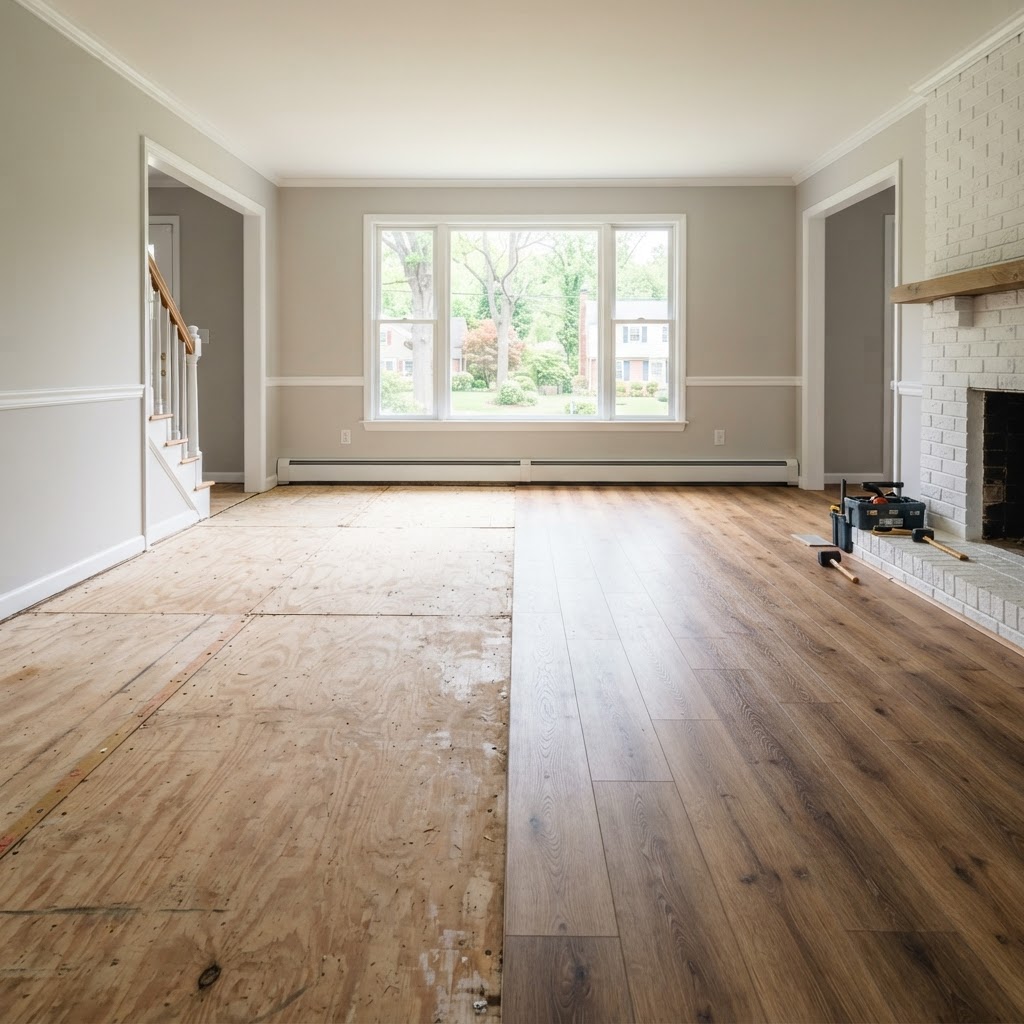
What changes when you replace carpet with hardwood or LVP in an Arlington home?
When you replace carpet with hardwood or luxury vinyl plank in an Arlington home, the look changes, but so do sound, temperature underfoot, maintenance, floor height, door and stair clearances, transitions, subfloor requirements, building rules in condominiums and the way furniture and rugs behave. Hard flooring is louder than carpet, feels cooler, shows dust and pet hair differently, can be slippery in socks, and requires a flatter, better-prepared subfloor than carpet ever did. In multi-level homes and condominiums, the acoustic difference can affect neighbors and downstairs rooms, and in many buildings it is regulated. Floors and Beyond VA is a family-owned Northern Virginia flooring and remodeling contractor serving Fairfax, Loudoun, Prince William and Arlington counties since 1987, and our in-house crews, with no subcontractors, carry out carpet-to-hard-flooring conversions, with free in-home consultations that cover these practical effects before you commit. This article is about what changes besides appearance. It is a different question from what to check if you suspect hardwood already lies under your carpet, and it applies whether you plan to install new hardwood, engineered wood or luxury vinyl plank. If you are speaking with a flooring company in Arlington, VA about making the switch, this is the checklist of consequences worth understanding.
Arlington homeowners make this change constantly. A bungalow in Westover with worn bedroom carpet, a townhouse on Columbia Pike with carpeted stairs and landings, a condominium in Ballston with carpet throughout, a Cape Cod in Maywood with a basement family room: each is a candidate. The motivations are familiar. Hard floors look cleaner and more modern, they are easier to keep free of allergens and pet hair for many households, and they often feel more current for resale. But carpet does several jobs quietly, and when it is removed, those jobs have to be handled another way. Understanding them in advance prevents the common regrets.
Sound: the biggest practical change
Carpet and pad absorb sound. They soften footsteps, muffle voices, reduce echo and dampen impact noise transmitted to the floor below. Hard flooring does none of that on its own.
Echo and room acoustics. Rooms with hard floors, bare walls and large windows can sound hollow. Voices and television sound sharper, and conversation can feel louder. Area rugs, upholstered furniture, curtains and wall art help.
Footfall noise. Footsteps on hard surfaces are louder, especially in shoes and in upper-level rooms. In a two-story Arlington house, bedrooms above a living room will transmit more sound after conversion.
Impact noise in multi-family buildings. In condominiums and apartments, impact sound passes through the structure to the unit below. Many buildings require hard flooring to meet specific sound-control standards, and some restrict hard flooring in upper units entirely. Always check your building's rules before choosing. Our condominium remodeling page and our article on condo remodeling and flooring in Northern Virginia discuss these requirements, and our article on condo remodeling rules and permits adds context.
Underlayments. Acoustic underlayments and specialized assemblies reduce impact noise. Their performance depends on the whole assembly, not just the underlayment.
Townhouse party walls and stairs. Stairs amplify footfall noise, especially when hard treads replace carpet.
If quiet matters, such as in bedrooms, nurseries or home offices, consider keeping or adding carpet in those spaces, or planning rugs.
Temperature and comfort underfoot
Carpet insulates. Hard floors feel cooler, particularly over concrete slabs or unheated spaces.
Winter comfort. Basement and ground-floor rooms with hard flooring can feel noticeably colder in winter. Rugs help, and some owners consider radiant heating, which is a larger project.
Softness. Carpet cushions falls and long periods of standing or sitting on the floor. Children who play on the floor may prefer carpet or rugs.
Wood versus vinyl. Wood feels slightly warmer than tile and often warmer than vinyl, though vinyl with an attached underlayment can feel softer.
Floor height changes
Removing carpet and pad and installing hard flooring changes the finished floor height, and that affects the rest of the house.
- Carpet and pad are thick. When removed, the subfloor is exposed. A thin vinyl plank may leave the new floor lower than the old surface, while thicker hardwood or a floating assembly with underlayment may leave it at a similar or slightly different height.
- Doors. Doors may need trimming or adjustment if the floor rises, or may leave gaps if it drops. Closet doors and bifold doors are common problems.
- Transitions. Where the converted room meets carpet, tile or another floor, the height difference must be managed with transition pieces. Planning ahead reduces awkward steps.
- Stairs. On stairs, changing the surface thickness affects the first and last risers. Riser heights must remain uniform to be safe.
- Appliances and cabinets. Raising the floor in kitchens and laundry rooms can affect clearance for appliances and toe kicks.
- Baseboards. Baseboards that were installed over carpet may need to be raised or replaced, and shoe molding added to cover edges.
Our estimates include transitions and molding, and we plan heights during the consultation.
The subfloor suddenly matters
Carpet forgives a lot. Pad hides small humps, dips and rough spots. Hard flooring, particularly rigid or thin products, does not.
- Flatness. Floors under carpet are often not flat. Humps and dips that went unnoticed will telegraph through vinyl and cause gaps and hollow spots in floating floors. Subfloor leveling, patching or underlayment may be needed.
- Squeaks and movement. Carpet muffles squeaks. After removal, loose subfloor and boards become audible. Fastening and repair may be needed.
- Damage under the carpet. Pet stains, water damage, adhesive residue and tack-strip damage are revealed. Subfloor repair or replacement may be required.
- Staples and tacks. Hundreds of staples and tack strips must be removed completely.
- Old adhesives and materials. In older houses, some old flooring and adhesive materials beneath carpet may contain hazardous substances. Testing and safe handling are advisable where there is reason for concern. Follow guidance from appropriate authorities.
- Moisture. In basements and slab-on-grade rooms, moisture testing is essential before installing hard flooring. Our articles on the best flooring options for basements with moisture issues and flooring for the basement explain why.
Our flooring installation guide describes how we prepare subfloors. The preparation is where the longevity of the new floor is built.
Cleaning and maintenance
The care routine changes, and not always in the direction people expect.
- Dust and allergens. Hard floors do not trap dust the way carpet fibers do, and they can be wiped clean. Many households find them easier for allergies. But dust, hair and pet fur are visible and move with air currents, so more frequent sweeping or vacuuming is common.
- Spills and stains. Hard surfaces handle spills better, though wood needs prompt cleanup and vinyl is more forgiving.
- Scratches and wear. Carpet shows wear as matting and fading. Hard floors show scratches and dents. Hardwood can be refinished. Vinyl can sometimes have planks replaced. Felt pads under furniture and entry mats reduce damage.
- Cleaning products. Hardwood needs wood-safe cleaners and limited water. Vinyl tolerates more moisture but not abrasives. Steam mops are not recommended for hardwood. Our floor care page offers guidance.
- Pet odors. Hard floors do not hold odors as carpet and pad do, but pet accidents can still damage wood. Our article on removing pet odors from carpet explains why carpet is often replaced when odors persist.
- Seasonal care. Wood responds to humidity. Maintaining moderate indoor humidity protects it.
Safety and traction
- Slipperiness. Socks on smooth hard floors can slide, particularly on stairs. Textured finishes, matte sheens and rugs with non-slip pads improve traction.
- Stairs. Carpeted stairs provide grip. Converting to hard treads requires attention to nosings, traction and runners. Our accessibility services emphasize safe stairs and transitions.
- Falls. Hard floors are less forgiving for children and older adults. Area rugs in key spaces help.
- Lighting. Hard floors reflect light, which can create glare.
Hardwood versus LVP: how the choice interacts with these changes
The two most common replacements behave differently in ways that matter for conversion.
Hardwood or engineered hardwood
Wood adds warmth, refinishability and long-term value. Solid hardwood is nailed to a wood subfloor and is not suited to concrete slabs or below-grade rooms. Engineered hardwood is more stable and can be glued or floated. Wood is sensitive to moisture and humidity. It is typically louder than carpet, though the sound of wood is often considered pleasant. Our wood flooring page describes options, and our article on engineered wide plank flooring explains the differences.
Luxury vinyl plank
LVP is water-resistant, comfortable, durable and available in realistic wood looks. It tolerates basements and kitchens better than hardwood, installs quickly on prepared subfloors and often includes attached underlayment for some sound dampening. It cannot be refinished, and quality varies widely, so wear layer and core construction matter. Our vinyl flooring page describes our installations, our article on how to choose luxury vinyl plank explains what to look for and our article on hardwood versus LVP in Northern Virginia compares them directly.
Which is right
If you have a sound wood subfloor, plan to stay and value refinishability, hardwood or engineered wood is a strong choice. If moisture, budget flexibility, pets or durability are priorities, LVP deserves serious consideration. Many Arlington homeowners use both in different rooms. Our article on carpet to hard flooring conversion in Northern Virginia goes deeper into the conversion process.
Room-by-room considerations
- Bedrooms. Many people like carpet's softness and quiet in bedrooms. If converting, plan rugs, consider sound transmission and think about cold floors in winter.
- Living and dining rooms. Hard flooring usually suits these rooms, and echo can be managed with rugs and furnishings.
- Stairs and landings. Converting stairs is detailed work. Treads, risers, nosings and transitions all matter. Consider a runner for traction and quiet.
- Basements. Moisture control and cold floors are the main issues. LVP or tile with rugs is typical. Our basement finishing service handles the whole space.
- Home offices. Hard floors with a chair mat are practical. See our home office design page.
- Children's rooms. Consider keeping carpet or adding generous rugs.
Condominiums and townhouses
In Arlington condominiums, converting carpet to hard flooring is one of the most common requests and one of the most regulated.
- Approvals. Many associations require written approval, a plan and product documentation before work.
- Sound standards. Associations often require specified impact-sound performance for hard flooring, and installation systems may be mandated.
- Insurance and coordination. Contractors may need certificates of insurance and must coordinate elevator reservations and work hours.
- Concrete slabs. Slabs need moisture and flatness checks.
- Penalties. Installing hard flooring without approval can create disputes with the association and neighbors.
Always check your building's rules first. In townhouses, shared walls and stairs make sound especially relevant.
What drives the scope of a carpet conversion
We do not publish prices in articles, but the factors that shape any estimate are clear. The material chosen. The area and number of rooms. Carpet, pad and tack strip removal. Subfloor condition, including repair and leveling. Underlayment or acoustic assemblies. Stairs. Transitions, baseboards and trim. Door adjustments. Furniture moving. Access and building rules. And the company, including its crews, licensing, bonding and insurance.
At Floors and Beyond VA, we provide an honest, all-inclusive estimate, and what we quote is what you pay. Our estimates include old flooring removal, new materials, professional installation, furniture moving, transitions, molding and full cleanup. Our article on flooring cost factors in Northern Virginia explains why estimates differ.
Deciding which rooms should keep carpet
Replacing carpet does not have to be all or nothing. Many of the best conversions keep soft flooring where it does the most good and use hard flooring where it serves the household better.
Consider how each room is used. Bedrooms, especially upstairs, benefit from carpet's quiet and warmth, and a child's room that doubles as a play space may be better served by a soft surface or generous rugs. Living areas, dining rooms, kitchens and entries rarely need carpet and often suffer from it, since spills, crumbs and tracked-in dirt are harder to manage. Home offices work well with hard flooring and a chair mat. Basements depend on moisture conditions and how the space is used, and a warm rug over vinyl or tile can provide softness without the risks carpet brings below grade.
Think about who lives in the home. Households with allergy concerns, pets or frequent spills often prefer hard surfaces. Households with young children, older relatives who worry about falls, or sensitive neighbors below may prefer to keep or add soft flooring in key places. Stairs deserve their own decision: carpet or a runner adds grip and reduces noise, while hard treads look crisp but need careful nosings and traction.
A hybrid plan can also help the budget of effort, because it limits the number of transitions and subfloor repairs. During the consultation, we walk through the house with you and suggest where each type of flooring makes sense, including when keeping existing carpet or installing new carpet is the better answer. Our carpet and luxury carpet pages describe the soft-flooring options we install.
Why Floors and Beyond VA is the right team for a carpet conversion
A carpet conversion touches the subfloor, the stairs, the doors, the transitions and, in many buildings, the rules, which is why it helps to have one accountable company. Floors and Beyond VA handles every step with in-house crews and no subcontractors: we remove the carpet and pad, address the subfloor, install hardwood, engineered wood or luxury vinyl plank, and finish the transitions and molding. Our free in-home consultation brings samples to you, includes precise laser measurements at no charge and gives you a candid view of what will change besides looks, including sound, height and preparation.
Our honest, all-inclusive estimate covers old flooring removal, new materials, professional installation, furniture moving, transitions, molding and full cleanup, and what we quote is what you pay. We are a family-owned Northern Virginia contractor serving homes since 1987, fully licensed, bonded and insured, and our refinish-first philosophy means that if there is hardwood under your carpet, we will tell you honestly whether it can be restored. Find out more at floorsandbeyondva.com.
Common mistakes when replacing carpet
- Underestimating the sound change.
- Ignoring the subfloor and assuming it is ready.
- Forgetting height changes at doors, stairs and transitions.
- Skipping moisture testing in basements and slabs.
- Not checking condominium rules before ordering.
- Choosing slippery finishes for stairs and children's rooms.
- Replacing carpet without checking for hardwood beneath.
- Removing carpet in every room without considering where softness matters.
- Neglecting rugs and furnishings that manage sound and comfort.
- Not planning transitions between rooms.
Frequently asked questions
Is hard flooring louder than carpet? Yes. Rugs, furnishings and acoustic underlayments reduce the difference. In condominiums, sound rules may apply.
Will my floors be colder? Often, especially over concrete. Rugs help.
Do I need to level the subfloor? Often, yes. Hard flooring is less forgiving than carpet.
Can I keep carpet on the stairs? Yes. Many homeowners combine hard floors with carpeted stairs or runners.
Is LVP or hardwood better when replacing carpet? It depends on the room, moisture, subfloor and preferences. We compare them in your home.
Are there hidden costs in converting? Subfloor conditions can add work. Our estimates explain what is included, and we tell you promptly if hidden conditions appear.
Is Floors and Beyond VA licensed and insured? Yes. We are fully licensed, bonded and insured for every project, and our in-house crews work with no subcontractors.
Do you serve my Arlington neighborhood? Yes, including Clarendon, Courthouse, Ballston, Rosslyn, Shirlington, Lyon Park, Lyon Village, Cherrydale, Westover, Ashton Heights, Maywood, Waverly Hills, Arlington Ridge, Aurora Highlands, Fairlington, Columbia Pike and Nauck, along with Fairfax, Loudoun and Prince William counties.
Keep reading
For related planning, see Best Flooring for a Family Home in Arlington, VA: Room by Room and House by House, Preparing a Dense Arlington Home for Flooring Installation and An Arlington Flooring Renovation Start to Finish.
Ready to replace your carpet?
Knowing what changes besides looks makes the decision a confident one. Floors and Beyond VA brings nearly forty years of Northern Virginia experience, in-house crews with no subcontractors and a free in-home consultation with samples and precise laser measurements at no charge. Learn more about our work as a flooring company in Arlington, VA.
Request your free Arlington flooring estimate: https://floorsandbeyondva.com/Contact
You can also call (703) 906-5698 or email hello@floorsandbeyondva.com.




