
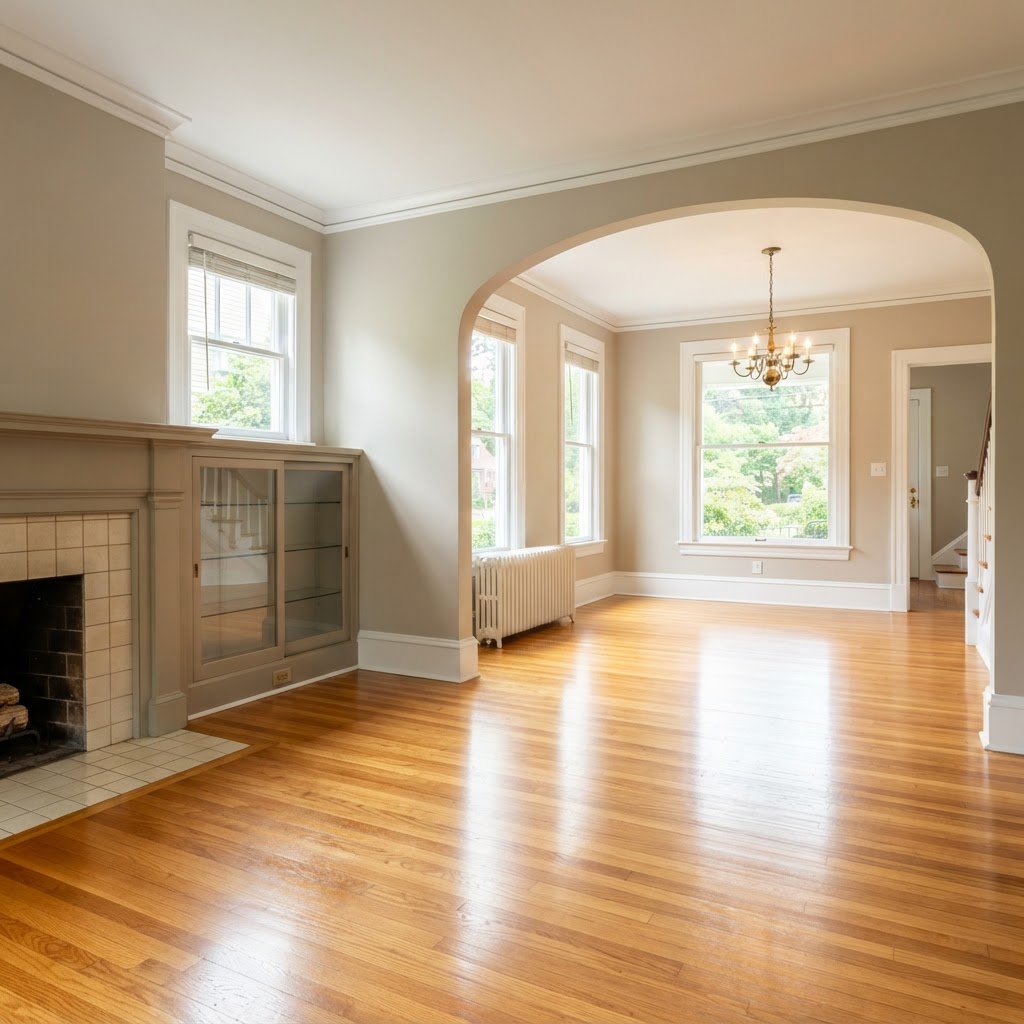
What should you do about flooring before selling an Arlington home?
Before selling an Arlington home, the best flooring decision is usually the one that makes the floors look clean, consistent and cared for across the whole house, which often means refinishing sound hardwood instead of replacing it, replacing only what is genuinely worn out, damaged or inconsistent, and matching floors across connected rooms so the home reads as one coherent space. Buyers walking through a home in Clarendon, Cherrydale, Westover or Ballston respond to flooring quickly and emotionally, and a floor that looks tired, patchy or mismatched can make an otherwise strong house feel like a project. Floors and Beyond VA is a family-owned Northern Virginia flooring and remodeling contractor serving Fairfax, Loudoun, Prince William and Arlington counties since 1987, and with our refinish-first philosophy and in-house crews, with no subcontractors, we help sellers make practical flooring choices that fit their timeline. This guide is written from the flooring side of the sale, which most real estate content skips. It focuses on the two decisions that matter most: whether to refinish or replace, and how to match floors across rooms. We are not real estate agents, and we do not predict sale prices, so talk with your agent about the market. What we can explain is what flooring work does, what it cannot do and how to approach it wisely.
Most of the advice sellers find online comes from real estate professionals, and it tends to be general: update the floors, make the house neutral. That is true as far as it goes, but it does not help you decide what to do with the specific floors in your specific Arlington house. Is the original oak under that carpet worth uncovering? Is the scratched living room floor a candidate for refinishing, or is it too far gone? Should you replace the dated carpet in the bedrooms? What about the kitchen that has a different floor from the dining room? Those are flooring questions with flooring answers. The goal is a house that shows well, is honest about its condition and does not trigger a larger renovation than the sale warrants.
How buyers experience floors
Floors are the largest continuous surface in a home, and buyers register them before they consciously look. A few patterns are worth understanding.
Condition signals care. Scratches, worn paths, stains, gaps, loose boards and odors tell buyers about the home's history. Clean, even, well-finished floors suggest the house has been maintained, and buyers extend that impression to systems they cannot see.
Consistency signals coherence. Floors that change abruptly from room to room, in color, material or height, can make a house feel chopped up. Floors that flow create a sense of space.
Neutral reads as move-in ready. Buyers imagine their furniture on a calm, neutral floor more easily than on a highly personal one.
Light affects perception. Arlington homes range from shaded bungalows to bright high-rise condominiums. Floors that suit the light, rather than fighting it, make rooms feel larger and warmer.
Smell matters. Old carpet, pet odors and damp basements are noticeable in seconds. Replacing or removing the source is often more effective than trying to mask it.
Your agent can tell you what buyers in your price range and neighborhood tend to expect. Our article on whether houses sell better with carpet or hardwood floors and our article on the best flooring before selling a home offer additional context.
The first decision: refinish, replace or leave it
For each floor in the house, you have three options, and the right one depends on condition, material and timing.
When refinishing makes sense
Refinishing is often the strongest move for solid hardwood in good structural condition. Many Arlington houses in Cherrydale, Lyon Park, Westover, Maywood and Waverly Hills have original strip oak that has been scuffed, darkened or dulled by decades of finish and wear. Sanding removes the old finish and a thin layer of wood, and a new finish restores color, depth and protection. The result often looks like a different floor, and because it is the original wood, it carries the character that buyers in older homes value.
Refinishing is usually appropriate when the boards are solid and mostly flat, when damage is surface-level, such as scratches, dullness and worn finish, when stains are light or limited, and when the wood has enough thickness remaining. It is also a good fit when you want a floor that looks original and authentic. Our article on whether it is worth refinishing hardwood floors explains the thinking, and our hardwood floor refinishing field guide describes the process.
A lighter alternative is a screen-and-recoat, in which the existing finish is abraded and a fresh coat applied. It works when the finish is worn but the wood is not damaged, and it is quicker and less disruptive than a full refinish.
When replacement makes sense
Replacement is appropriate when the floor cannot be restored or when it does not suit the house.
- Severe damage. Widespread water damage, rot, deep pet stains, buckling or cupping that does not resolve.
- Insufficient wood. Floors that have been sanded many times may have too little wear layer left, and thin engineered floors may not be sandable.
- Deteriorated materials. Worn carpet, damaged vinyl, cracked tile and failing laminate are replacement candidates.
- Odor and contamination. Carpet and pad with pet odors or mold usually need to go.
- Incompatible style. A dated material that clashes with the rest of the house may be worth replacing if it hurts the overall impression.
- Practical failures. Floors that are uneven, squeaky or unsafe may need correction.
Our article on flooring replacement and when to choose what and our article on flooring damage repair for water, scratches and buckling can help you judge.
When leaving it alone makes sense
Not every floor needs work. If a floor is clean, sound and acceptable, leaving it may be the sensible choice. Spending effort on floors in low-impact areas, such as a rarely used storage room, may not be worthwhile. A thorough professional cleaning may be all that is needed for floors that are simply dirty. Honest advice includes saying when no work is needed, and we say so.
Repairing instead of replacing
Many floors are in between. A few damaged boards can be replaced and blended. A stained patch can be treated. Gaps can be filled. Squeaky areas can be fastened. Repairs followed by refinishing across the whole floor often produce a seamless result at a fraction of the effort of replacement.
Pulling up carpet to find hardwood
Many Arlington sellers have original hardwood under wall-to-wall carpet. Before you decide, check carefully. Lift a corner in a closet or remove a floor register cover to look at the wood. If it is sound, uncovering and refinishing it can be a high-impact improvement. Expect tack-strip holes along the walls and possibly some staining. A careful inspection tells you whether the floor is worth restoring.
The second decision: matching floors across rooms
Matching is the other half of preparing a home for sale, and it is often overlooked. Buyers read floors as a system. A house where the living room is oak, the dining room is a different tone of oak, the hallway is laminate and the kitchen is tile of yet another shade can feel disjointed even if each floor is acceptable on its own.
What matching means
Matching does not mean making every room identical. It means that floors in connected spaces look intentionally related, in species or material family, color, sheen and direction, with clean transitions where they must change.
Connected rooms
Focus first on spaces that are seen together: living room and dining room, entry and hallway, kitchen and family room, and the main level as a whole. Open layouts are especially sensitive, because the eye reads one continuous surface.
Refinishing as the great unifier
One of the most effective ways to match is to refinish all connected hardwood together in the same stain and finish. Variation in tone that results from age, sun exposure, previous finishes and repairs disappears when everything is sanded and finished at once. This is one reason refinishing can be so effective before a sale.
Adding or replacing boards
If a wall was removed, a room was added or damaged sections were repaired, new boards must blend with old. Matching species, cut and width, then sanding and finishing together, produces the best result. Our article on flooring damage repair touches on repair and blending.
Transitions
Where floors meet at doorways, transitions should be neat, safe and level. Height differences between hardwood, tile, vinyl and carpet need thoughtful transition pieces. Cheap or mismatched thresholds draw the eye. Our estimates include transitions and molding.
Stairs
Stairs are a focal point in many Arlington homes. Treads that are worn or mismatched, or railings in a different finish from the floors, can undermine an otherwise good first impression. Coordinating the stair treads with the entry and hall floors adds polish.
Kitchens and baths
Kitchens and bathrooms often have different floors, such as tile or vinyl. They do not need to match hardwood, but they should look intentional and in good repair. Cracked tile, stained grout and peeling vinyl are noticeable. Our kitchen remodeling and bathroom remodeling pages describe related services, though most sellers will want a limited scope.
Basements
A finished basement with damp, stained or smelly carpet is a liability. Moisture-aware flooring and good ventilation matter. Our articles on the best flooring options for basements with moisture issues and flooring for the basement explain options.
Choosing colors and finishes that appeal broadly
Sellers often ask what color to choose. A few principles apply without chasing trends.
Choose calm, natural tones. Medium, warm, natural wood tones and soft neutral finishes appeal to many buyers and photograph well. Very dark or very bold stains show dust and scratches and polarize taste.
Lean toward lower sheen. Matte and satin finishes look contemporary, hide minor wear and avoid glare in photographs.
Respect the house. An older Arlington home should look like itself. Colonial and Cape Cod homes often suit traditional warm tones. A modern condominium may suit lighter, simpler floors.
Consider light. Test samples in the home's actual light.
Avoid personal statements. Unusual patterns and extreme colors can limit appeal.
We bring samples to your home, because the decision belongs in your light. Our article on how to get flooring samples delivered explains how samples reach you, and we have no showroom.
Townhouses and condominiums
Selling in a condominium or townhouse brings its own considerations.
Building rules. If you are installing or changing floors, check your building's rules about approvals, insurance, work hours, elevators and sound control well before listing. Our condominium remodeling page and our article on condo remodeling rules and permits cover these.
Sound requirements. Hard flooring in an upper-level unit may require acoustic systems. Do not assume you can swap carpet for hardwood without checking.
Timing. Elevator reservations and building schedules can lengthen projects.
Smaller footprints. In a compact unit, flooring covers the whole visible space, so consistency matters even more.
Townhouse stairs. Matching stair treatments between levels helps.
Timing the work
Sellers have deadlines, and flooring work should be scheduled with the listing in mind.
Do flooring early. Complete flooring work before photographs and showings, and before final painting touch-ups where possible. Refinishing generates dust and needs cure time before furniture returns.
Plan around moving. Floors being refinished cannot hold furniture for a period, so coordinate with staging.
Allow for surprises. Opening a floor may reveal conditions that change the plan.
Do not rush the finish. A finish applied too quickly can be damaged by early use.
Coordinate with painting and other trades. Sequence matters. Our guide to preparing your home for new floors explains how to get ready.
Because we are a company with in-house crews and no subcontractors, scheduling is a single conversation, which helps when you are working against a listing date.
Being honest about condition
A sale involves disclosure, and flooring is part of a home's condition. If a floor has known water damage, past leaks, pet damage or moisture problems, be candid with your agent about how to handle it. Covering a serious problem with new flooring does not make it go away, and a good contractor will not do that. A responsible approach is to address the cause, repair what needs repair and let your agent advise about disclosure obligations. We are not lawyers or agents, and we do not offer legal advice.
What drives the scope of a pre-sale flooring project
We do not publish prices in articles, but the factors that shape any estimate are clear. The number of rooms and total area involved. Whether the work is refinishing, repair or replacement. The condition of existing floors and any repairs needed. Stain and finish choices. Stairs. Matching and blending across rooms. Removal of existing flooring. Subfloor condition. Transitions and trim. Furniture moving and access. Timeline. And the company, including its crews, licensing, bonding and insurance.
At Floors and Beyond VA, we provide an honest, all-inclusive estimate, and what we quote is what you pay. Our estimates include old flooring removal, new materials, professional installation, furniture moving, transitions, molding and full cleanup. Our article on flooring cost factors in Northern Virginia explains why estimates differ.
A representative example
Because we do not share customer projects without permission, here is a representative scenario, not a particular customer's home. Imagine a bungalow in a neighborhood like Lyon Park. The living room and dining room have original oak that is dull and scratched, the hallway has a different tone because of an old repair, and the bedrooms have worn carpet. The seller's priorities are a tidy, cohesive main level and fresh bedrooms. A sensible plan might be refinishing the oak in the connected rooms together so the tone is consistent, blending the hallway repair, installing new carpet in the bedrooms and making sure the transitions are neat. The kitchen, whose floor is serviceable, is left alone. This is an illustration, and your house will differ.
Why sellers choose Floors and Beyond VA
Sellers work against deadlines, and they need a contractor who can look at the floors, give honest advice and deliver on schedule. Floors and Beyond VA is built for that. Our refinish-first philosophy means we start by asking whether the floors you already have can be brought back, which is often the most effective and efficient pre-sale improvement. Our in-house crews, with no subcontractors, handle the whole job, so scheduling is a single conversation and the people who plan your timeline are the people who do the work. The free in-home consultation brings samples to your house and includes precise laser measurements at no charge, and our honest, all-inclusive estimate covers removal, materials, installation, furniture moving, transitions, molding and full cleanup, with what we quote being what you pay.
We have served Arlington and the rest of Northern Virginia since 1987 as a family-owned company, and we are fully licensed, bonded and insured. If you would like a straightforward opinion on whether to refinish, repair or replace before you list, learn more at floorsandbeyondva.com and request your free estimate.
Common mistakes when preparing floors for sale
- Replacing floors that could be refinished.
- Refinishing floors that are too damaged to restore.
- Leaving mismatched floors across connected rooms.
- Choosing bold or trendy colors with narrow appeal.
- Ignoring odors from carpet, pets or damp basements.
- Forgetting the stairs.
- Overlooking building rules in condominiums and townhouse communities.
- Starting too late and rushing the finish.
- Covering serious problems instead of addressing them.
- Overspending on work the sale does not require.
Frequently asked questions
Should I refinish my hardwood floors before selling? If the floors are solid and the finish is tired, refinishing is often the most effective improvement. We can look at your floors and advise honestly.
Should I replace old carpet before selling? Worn, stained or odorous carpet often should be replaced or removed. If hardwood lies beneath, uncovering it may be a better option.
How do I match floors between rooms? By choosing compatible materials, refinishing connected hardwood together and using neat transitions.
Will new flooring increase my sale price? We do not predict sale prices. Ask your agent about your market.
How long does refinishing take? It depends on the size of the project and finish cure times. We discuss timing during the consultation.
Can I install hardwood in my condominium before selling? Possibly, but building and sound rules apply. Check with management first.
Is Floors and Beyond VA licensed and insured? Yes. We are fully licensed, bonded and insured for every project, and our in-house crews work with no subcontractors.
Do you serve my Arlington neighborhood? Yes, including Clarendon, Courthouse, Ballston, Rosslyn, Shirlington, Lyon Park, Lyon Village, Cherrydale, Westover, Ashton Heights, Maywood, Waverly Hills, Arlington Ridge, Aurora Highlands, Fairlington, Columbia Pike and Nauck, along with Fairfax, Loudoun and Prince William counties.
Keep reading
For related planning, see Updating an Older Arlington Home: Flooring That Modernizes Without Losing Character, Preparing a Dense Arlington Home for Flooring Installation and How to Choose a Flooring Contractor in Arlington, VA.
Ready to get your floors sale-ready?
Smart flooring choices before a sale are about condition, consistency and honest advice. Floors and Beyond VA brings nearly forty years of Northern Virginia experience, in-house crews with no subcontractors, a refinish-first philosophy and a free in-home consultation with samples and precise laser measurements at no charge. Learn more about our work as a flooring company in Arlington, VA.
Request your free Arlington flooring estimate: https://floorsandbeyondva.com/Contact
You can also call (703) 906-5698 or email hello@floorsandbeyondva.com.




