
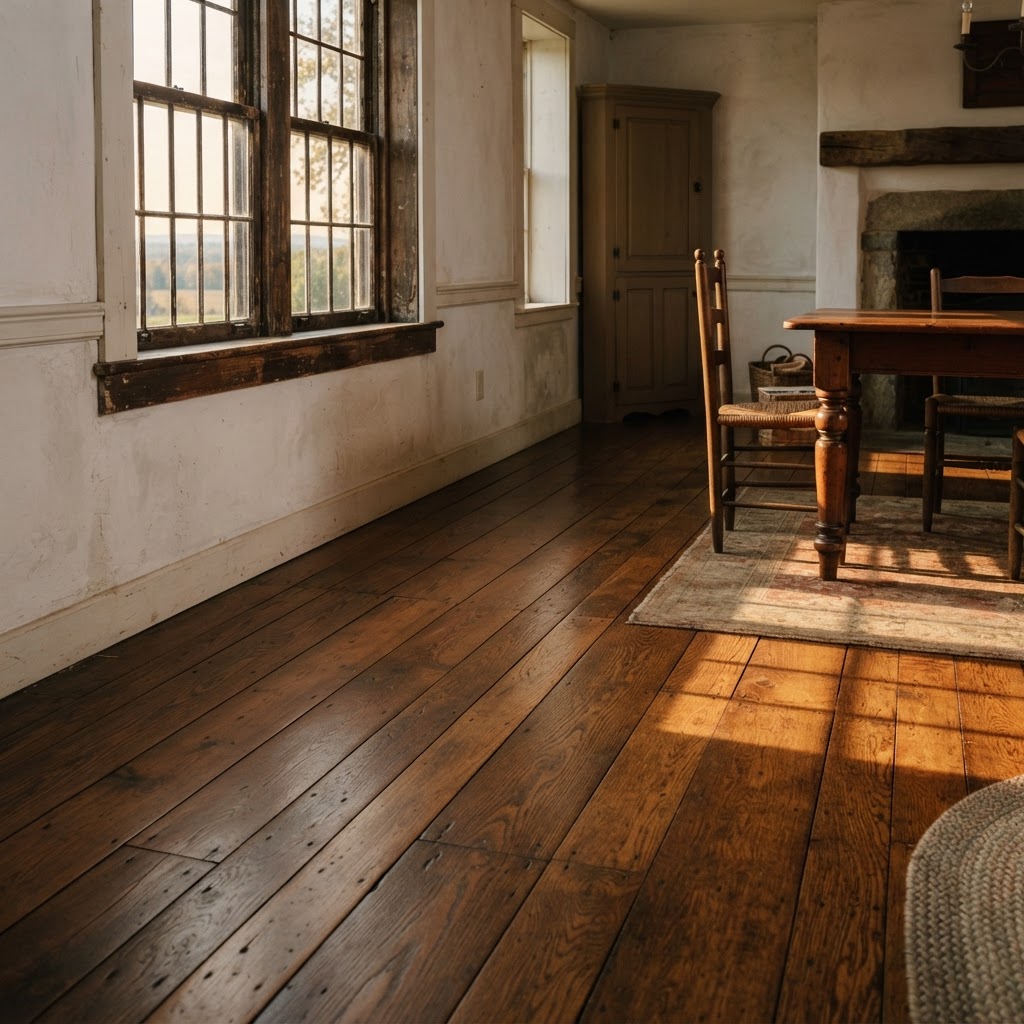
Old hardwood floor restoration is the work of bringing an aging wood floor back to sound, attractive condition, and it is more common and more rewarding in Loudoun County than many homeowners realize. Leesburg, Middleburg, Purcellville, Lovettsville and the villages and farms around them have a deep stock of old houses, from historic town homes and farmhouses to mid-century ranches, and many have wood floors that have been walked on for generations. Some of those floors are wide pine or oak planks that cannot be replaced. Others are ordinary strip floors that have been through a few too many owners. This guide explains how to assess an old floor, what you may find, what restoration involves, how to handle the quirks of older boards and when restoring is better than replacing. At Floors and Beyond VA, we take a refinish-first approach, and old floors are where it matters most.
WHAT MAKES A FLOOR OLD ENOUGH TO NEED SPECIAL CARE
There is no exact age, but floors installed before the 1960s often differ from modern floors in ways that matter. The wood may be old-growth, with tight grain and high density. Boards may be wide, especially in farmhouses and earlier homes, with pine, oak, chestnut and other species in use. The nails may be cut nails, and the boards may be face-nailed rather than blind-nailed. The subfloor may be wide planks or diagonal sheathing. The finish may be shellac, varnish, wax or paint, and generations of owners may have added layers. Houses in Loudoun County include some of the oldest in the state, so it is worth treating every floor as an individual.
START WITH WHAT YOU CAN SEE
You can learn a lot from a careful look. Is the floor flat, or does it dip and ripple? Are boards loose, or do they squeak? Is the finish intact, worn through or flaking? Are there gaps, and if so, how wide? Is the color uniform, or are there dark stains, gray patches or sun-faded areas? Are there signs of past repairs, such as patches, filled holes or mismatched boards? Are there signs of moisture, such as cupping, mold or musty odors? Is the floor under carpet or covered by another material? Write down what you see and take photos. They will help during the inspection.
WHAT MAY BE UNDER OLD CARPET AND COVERINGS
Many old houses have hardwood under carpet, vinyl or linoleum. Carpet is the easiest to deal with, though tack strips leave rows of holes and staples must be removed. Vinyl and linoleum may have been glued down with adhesives that are difficult to remove and, in some older materials, may contain substances that require testing and special handling before disturbance. A responsible contractor asks about the age of the covering and tests when needed. Painted floors, common in some old houses, can be stripped or sanded, but the process depends on the paint and the wood.
HOW MUCH WOOD IS LEFT?
The thickness of the wood above the tongue and groove determines how much sanding the floor can take. Old floors often start thick, but they may have been sanded multiple times. A contractor can check at a heat register, at a threshold or at the edge of a board. If nails are close to the surface, the floor may be near the end of its sanding life, and a lighter process or careful repairs may be the best option. If the wood is thick, a full restoration may be possible. Honest advice here protects wood that cannot be replaced.
THE RESTORATION PROCESS FOR OLD FLOORS
The sequence is similar to other restorations, with extra care at each step. The contractor inspects the wood, finish, fastening and moisture. The area is protected and dust is controlled. Repairs are made, including securing loose boards, replacing badly damaged ones with matching reclaimed wood and patching holes. Wax or other incompatible coatings are removed so new finish will adhere. The floor is sanded in stages, with finer abrasives following coarse ones, and edges and corners are done by hand or with specialized equipment. Stain, if desired, is chosen on samples from the actual wood. Several coats of finish are applied with drying time between them, followed by a cure. Our guide to wood floor restoration in Northern Virginia and our article on what floor restoration includes explain the sequence in more detail.
WIDE PLANKS AND SOFTER WOODS
Wide-plank floors are among the most beautiful and the most sensitive. They move more with humidity, and they often have gaps and slight cupping that are part of their character. Softer woods such as pine dent more easily and show wear faster, though many owners embrace the patina. Sanding softer wood requires care to avoid gouging and uneven results. A contractor who has worked on old farmhouse floors will understand these challenges and set expectations realistically.
GAPS, SQUEAKS AND MOVEMENT
Old floors often have gaps between boards where the wood has shrunk over decades. They may open in winter and close in summer. Some owners like the look, and others want them reduced. Filling them with flexible filler or slivers of wood is possible but can crack with seasonal movement. Squeaks come from boards rubbing against nails or each other, or from a loose subfloor. Some can be reduced with fasteners from above or below, but not all can be eliminated. Our article on why hardwood floors gap in winter explains the underlying movement.
LEAD PAINT AND OLD HOUSES
Houses built before 1978 may have lead-based paint on trim, doors, windows and stair parts. Refinishing a floor does not typically disturb lead paint, but the work around baseboards, door casings and stairs can. A careful contractor asks about the age of the house, protects trim and uses lead-safe practices when needed. If you have children or anyone pregnant in the home, discuss this directly. Federal rules require lead-safe practices for certain renovation work in older housing, and contractors who work in old houses should know them.
TALK TO A SPECIALIST WHO KNOWS OLD FLOORS
An old floor deserves a thorough inspection before any sanding begins. Floors and Beyond VA provides in-home estimates in Leesburg, Ashburn, Purcellville and throughout Loudoun, Fairfax, Prince William and Arlington counties. Schedule an in-home estimate at floorsandbeyondva.com/Contact or call (703) 906-5698, and we will inspect the wood, check the thickness and tell you plainly what your floor can handle.
MATCHING AND BLENDING REPAIRS
When boards must be replaced, matching is the challenge. New wood differs in color, grain and age from old boards, and the repair can stand out if it is not handled well. Reclaimed boards of the same species and width, taken from a hidden area or another source, often blend best. The new boards are installed, sanded with the rest of the floor and stained to match. Even then, a trained eye may notice a repair under the right light. Setting expectations at the start avoids disappointment, and a good contractor shows you how repairs will be blended.
FINISH AND COLOR FOR AN OLD HOUSE
Many owners of old houses want to keep the look of aged wood. Natural or lightly tinted finishes show the grain and the patina of years. Others prefer a darker tone that fits a traditional interior. Water-based finishes keep wood lighter and clearer and have a milder odor. Oil-based finishes bring out a warmer, amber tone that many people associate with old floors. Matte and satin sheens suit older houses, since they look natural and hide wear. A conversation about expectations and samples on your own wood prevents surprises.
STAIRS, LANDINGS AND THRESHOLDS
Stairs in old houses often have worn treads, painted risers and uneven thresholds. Treads can be sanded and refinished with care. Risers may be painted or refinished to match. Balusters and newel posts need protection, and the work may require hand tools. Thresholds between rooms can vary in height because floors were installed at different times. A contractor who has worked in old houses plans for these details.
FARMHOUSES, BARNS AND OUTBUILDINGS
Loudoun's rural properties sometimes include old barns, outbuildings and farmhouse additions with floors of unusual construction. Some have wide boards that have been exposed to weather, animals or machinery. These floors can be restored, but their condition varies, and the goal may be stabilization and protection rather than a polished look. Talk through the intended use of the space, and a contractor can recommend a suitable approach.
RESTORE OR REPLACE?
Restoration is often the better choice when the floor is structurally sound, the wood is thick enough, the damage is mostly on the surface and you care about the character of old wood. Replacement is better when the floor is rotted, severely cupped, sanded down to the nails or damaged beyond repair, or when you want a different material. Sometimes a mix works, with repairs in damaged areas and restoration elsewhere. Our guide on whether refinishing hardwood floors is worth it explains the decision.
CARE AFTER RESTORATION
After restoration, treat the floor gently while the finish cures. Keep heavy furniture off for the time your contractor recommends, and wait before placing rugs. Use felt pads, mats at entrances and a cleaner made for hardwood. Avoid waxes and oil soaps, which can build up and interfere with later refinishing. Keep humidity moderate. A screen and recoat every several years can renew the finish and protect the wood. Our guide on how often hardwood floors need refinishing explains the timing.
HOW FLOORS AND BEYOND VA APPROACHES OLD FLOORS
Floors and Beyond VA begins by respecting what is there. We inspect the wood, check thickness, test the finish, ask about the history of the house and discuss how you want the floor to look. We recommend the lightest process that will work, use lead-safe practices when the house calls for them and control dust with vacuum-connected equipment. We make repairs with matching wood and blend them as carefully as possible. Our crews are our own employees, and we put the plan in writing. If a floor cannot be saved, we say so and explain the alternatives.
A WALK THROUGH AN OLD LEESBURG HOME
Imagine a two-story brick house near Leesburg's historic district with wide pine floors on the second level and narrower oak on the first. The owners are replacing worn carpet and want to know what is underneath. The inspection finds pine boards about five inches wide with face-nailed cut nails, a few shrinkage gaps and a darker area in the hallway where a radiator once stood. The first-floor oak has been refinished at least twice and is thinner than it was. The plan is different for each level. On the second floor, the crew fastens loose boards, replaces two damaged ones with reclaimed pine, sands gently to protect the soft wood and applies a clear, durable finish that lets the patina show. On the first floor, because the oak is thin, the crew recommends a screen and recoat and a few spot repairs instead of a full sanding. The owners end up with two floors that suit their condition, and nothing is removed that did not need to be.
MOISTURE AND VENTILATION IN OLD HOUSES
Old houses often have crawl spaces and basements that were not designed with modern moisture control in mind. Damp crawl spaces can send moisture up into floor joists and boards, causing cupping, mold and decay over time. Before restoring an old floor, it is wise to look at what is beneath it. Is the crawl space ventilated or sealed? Is there a vapor barrier on the ground? Are there plumbing leaks or drainage problems nearby? Fixing a moisture source is a prerequisite for any restoration, because a restored floor over a damp crawl space will not hold up. A contractor who works in old houses will ask about these conditions and may recommend a specialist to address them.
SOUND, SQUEAKS AND SETTLING
Old floors speak. Squeaks and creaks are part of living in an older house, but some can be reduced. Fasteners driven through the floor into joists, shims between the subfloor and joists and fastening from below where accessible can quiet many squeaks. Others are caused by boards rubbing together and cannot be completely eliminated without relaying the floor. A frank discussion about what is realistic helps you decide how much to invest in this part of the project. Our guide on wood floor restoration explains the repairs that are possible.
WHAT TO EXPECT FROM THE FINISHED FLOOR
A restored old floor does not look like a new one, and it should not. You will see variation in color and grain, small imperfections and the occasional mark of the floor's history. The aim is a floor that is clean, protected and attractive, with its character intact. Many owners find that this authenticity is exactly what they wanted. If you prefer a perfectly uniform appearance, replacement may suit you better, and it is worth saying so during the estimate.
QUESTIONS TO ASK BEFORE ANYONE SANDS AN OLD FLOOR
Ask how the contractor will check the thickness of the wood and what they will do if it is thin. Ask whether they have worked on floors of the same age and species and whether they can show examples. Ask how they test the existing finish, deal with wax and handle painted floors. Ask about lead-safe practices and dust control. Ask how they will repair and match damaged boards. Ask who will do the work and whether they are employees. Ask for a written scope, a schedule and care instructions. A contractor who answers confidently and in detail has probably done the work before, and one who gives a quick quote without asking about the house may not have.
FREQUENTLY ASKED QUESTIONS
Can wide-plank floors be sanded? Often, if enough wood remains. A thickness check comes first.
How do I know if my old floor can be saved? An in-person inspection checks thickness, fastening, moisture and finish.
Will gaps close after restoration? Not usually. They are part of how the wood has aged and moved.
Can you match missing boards? Often closely with reclaimed wood, though perfect matches are difficult.
Is lead paint a concern for floor work? It can be around trim and stairs in pre-1978 houses. Ask about lead-safe practices.
How long does restoration take? It depends on the size and the repairs. A main level often takes about a week from start to cure.
Can I live in the house during the work? Usually, though some rooms will be unavailable, and people with allergies may prefer to stay elsewhere during sanding.
READY TO RESTORE AN OLD FLOOR?
If you own an older home in Leesburg or elsewhere in Loudoun County and are wondering what your floors can do, the best first step is a careful inspection. Floors and Beyond VA is a family-owned flooring company serving Northern Virginia since 1987. Schedule an in-home estimate at floorsandbeyondva.com/Contact or call (703) 906-5698.




