
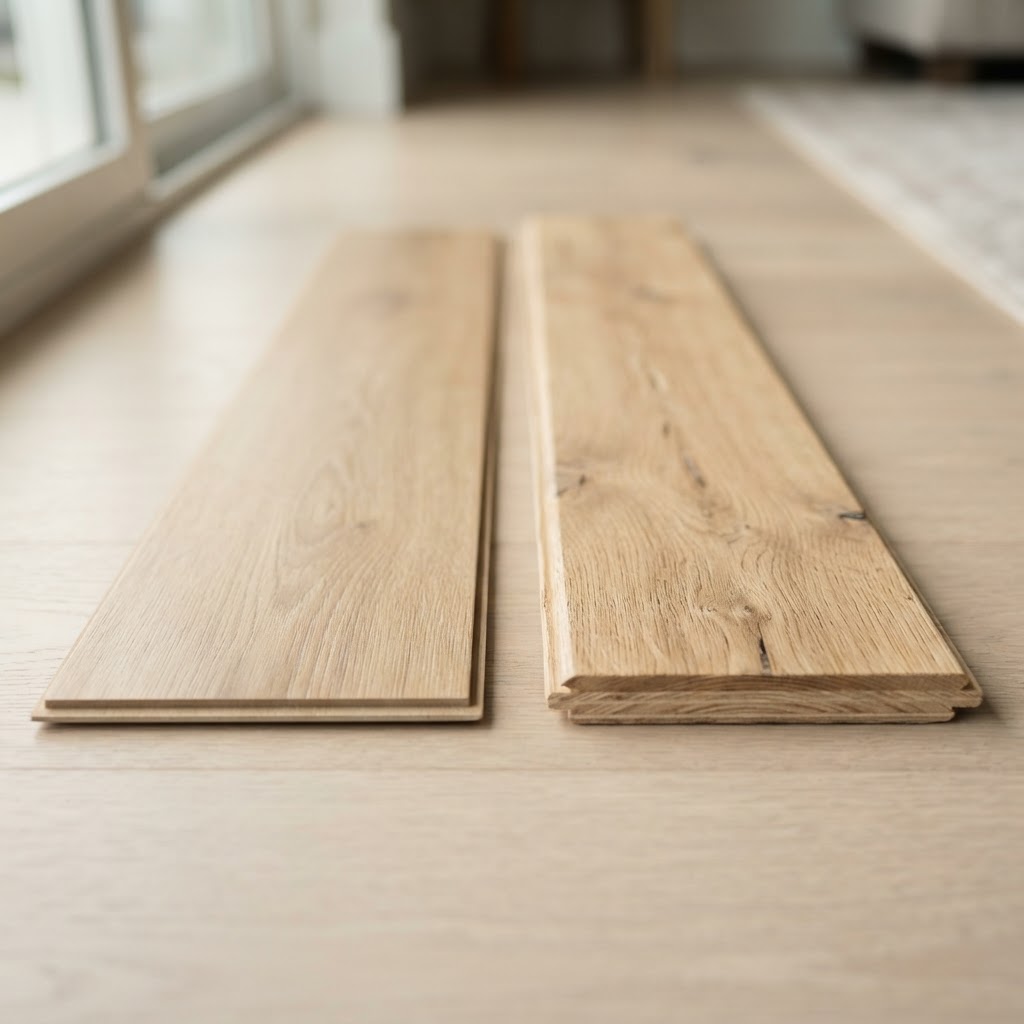
Luxury vinyl plank and engineered hardwood are the two floors most homeowners compare when they want a wood look over concrete, in a basement or in a busy house. One is vinyl printed to look like wood, and the other is real wood on a stable core. They differ in how they handle water and scratches, how they feel and sound, whether they can be refinished and what they do for the look of a home. This guide compares LVP flooring vs engineered hardwood, and engineered hardwood vs LVP, so you can choose by room and by household.
Floors and Beyond VA is a family-owned flooring company that has served Northern Virginia since 1987, and our own crews handle the work from the first visit to the final cleanup. See our luxury vinyl plank flooring and engineered hardwood flooring pages for the products we install.
What Each One Is
LVP is a layered vinyl plank with a printed image of wood and a clear wear layer, often on a rigid or flexible core. Engineered hardwood has a real wood top layer bonded to a core of plywood or similar layers. Both come in click-lock, glue-down and sometimes nail-down formats, depending on the product.
Water and Moisture
LVP resists water, so spills, pet accidents and humidity are less of a concern, and it suits basements, bathrooms and kitchens when installed properly. Engineered hardwood resists moisture better than solid wood, but it is still wood. Standing water, leaks and damp slabs can cause swelling and cupping. Both need a dry, flat subfloor.
Scratches and Dents
A thick wear layer makes LVP durable against everyday scratches, and rigid cores resist dents. Engineered hardwood can scratch and dent, particularly in softer species, though many scratches can be repaired or refinished. Households with large dogs and heavy traffic often prefer LVP for its toughness.
Look and Feel
Hardwood has real grain, warmth and a natural variation that vinyl imitates. Good LVP can look very convincing, but it feels slightly different underfoot and sounds different. Engineered hardwood feels like wood, and glued down it is quiet and solid.
Refinishing and Repair
Engineered hardwood can sometimes be sanded and refinished if the wear layer is thick enough, which extends its life and lets you change the color. LVP cannot be refinished. Damaged planks are replaced. Both can have individual boards replaced, with the right spares.
Sound, Comfort and Radiant Heat
Both can be paired with underlayments that meet condo sound ratings. LVP can feel cooler and slightly harder in some constructions, while wood feels warmer. Many products of both kinds are approved over radiant heat, within the manufacturer's temperature limits.
Where Each Fits Best
Choose LVP for basements, kitchens, bathrooms, rental-style durability, households with pets and children and situations where water is a regular risk. Choose engineered hardwood when you want real wood, the ability to refinish, a natural feel and a floor that matches or flows into solid hardwood elsewhere in the house. Many homes use both: wood on main levels and LVP below grade or in wet rooms.
Questions to Ask Before You Choose
What is the wear layer? Can the floor be refinished, and how many times? How does it handle my slab's moisture? What does the warranty cover? Will it meet my building's sound rule? How will it meet the other floors in the house?
In Northern Virginia Homes
In Northern Virginia, the choice often follows the room. Basements across Fairfax, Loudoun and Prince William sit on concrete and see humidity swings, which favors LVP. Main levels in older Alexandria, Arlington and Vienna homes often have solid oak that engineered hardwood can match as the floor extends into an addition. Condos in Tysons, Reston and Arlington need a sound-rated assembly with either one, so check the building's rules before you buy and ask for the product data sheet.
Frequently Asked Questions
Is LVP or engineered hardwood better?
Neither is better in every case. LVP is tougher against water and scratches, and engineered hardwood is real wood and can be refinished.
Which is better for a basement?
LVP is often the easier choice, though engineered hardwood can work if the slab is dry.
Which is better for dogs?
LVP with a thick wear layer is usually the more forgiving choice.
Can engineered hardwood be refinished?
Sometimes, depending on the thickness of the top layer.
Can I use both in one house?
Yes, with transitions planned so color and height line up.
Ready When You Are
If you are deciding between LVP and engineered hardwood, seeing samples in your rooms and having the subfloor checked usually makes the choice clear. Floors and Beyond VA serves Fairfax, Loudoun, Prince William and Arlington counties, Alexandria and the Washington, DC area. Schedule an in-home estimate at contact Floors and Beyond VA or call (703) 906-5698.
Related reading: SPC vs LVP and engineered vs solid hardwood.

