Is LVP flooring worth it for your home? That question deserves a straight answer, not a showroom pitch.
Luxury vinyl plank is everywhere right now. It looks stunning in photos, the price seems almost too good to be true, and every home improvement show has installed it in at least three rooms this season. But here’s what those photos don’t show: how it feels underfoot at 6 a.m., what it looks like after a large dog runs circuits on it for five years, or how a buyer’s agent in Fairfax County describes it compared to hardwood when the listing goes live. Those are the questions worth answering before you commit.
This guide is a value analysis, not a sales pitch. By the time you finish reading, you’ll know exactly what LVP costs to install and maintain over a realistic ownership horizon, what wear-layer ratings actually mean for your family’s traffic patterns, and how luxury vinyl plank compares to hardwood, laminate, and tile on both durability and resale.
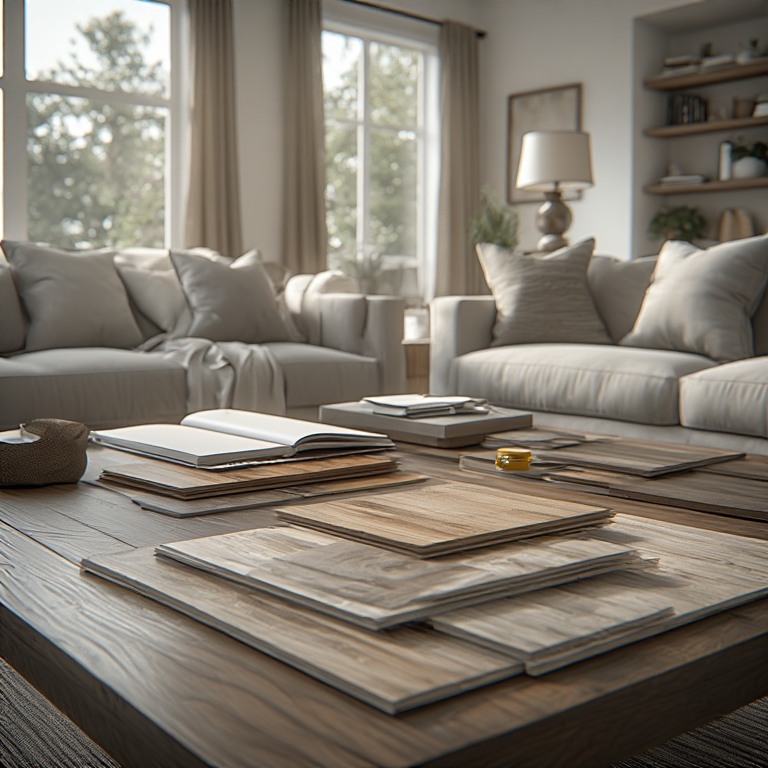
One thing homeowners consistently say after making their flooring decision is that they wished they’d held the actual samples in their hands, in their own living room lighting, before choosing off a website. That’s the kind of practical advantage a good consultation can give you. More on that at the end.
What LVP actually costs in 2026: materials, labor, and what people forget
The price range for luxury vinyl plank is wide enough that “LVP” alone doesn’t tell you much. Understanding the tiers helps you compare apples to apples when quotes start coming in.
Material cost tiers: what you get at each price point
The entry tier. Visually decent, but thinner wear layers and softer cores mean it shows wear fastest.
The family sweet spot. Better wear layers, stiffer cores, and deeper printed grain.
Thickest wear layers, rigid cores, textured embossing, and the longest warranties.
What separates those tiers isn’t just aesthetics: it’s wear-layer thickness, core rigidity, the quality and depth of the printed wood grain, and the length of the manufacturer’s warranty. A budget plank and a premium plank can look nearly identical in a photo. Under daily use, they behave very differently.
Professional installation vs. DIY: where the math lands
Labor adds roughly $2 to $6 per square foot, putting a fully installed floor somewhere between $4 and $12 per square foot depending on product tier and your market. For most Northern Virginia homeowners, the realistic vinyl plank flooring cost per square foot for mid-range LVP, fully installed, lands between $6 and $10. That’s the number to use when comparing it to hardwood or tile.
Click-lock vinyl plank is DIY-friendly on the surface, but the subfloor prep step is where most DIY projects underestimate the work involved. A poor subfloor is one of the leading causes of premature floor failure.
Subfloor leveling, transition strips, old floor removal, and disposal fees can collectively add several dollars per square foot to any project if the existing subfloor isn’t already in good shape. These aren’t reasons to avoid LVP — they’re costs to understand before you get a quote, so you can evaluate bids accurately and avoid surprises mid-project.
How long LVP realistically lasts in your home
Lifespan projections on flooring products are almost always stated at ideal conditions. Real homes have real traffic, real pets, and real sunlight. Here’s how to read wear-layer ratings in terms that actually matter.
What wear-layer thickness means for your family’s traffic patterns
Wear layer is one of the most important specs when weighing LVP flooring pros and cons for your household. There are three practical tiers:
The entry tier. Best in low-traffic spaces like a guest room or short-term rental. Scratches show faster — not well-suited for kitchens, hallways, or anywhere a dog spends time.
The residential sweet spot. Handles living rooms, bedrooms, and kitchens well in most family homes.
Light-commercial territory. The right choice for homes with active kids, large pets, or heavy daily foot traffic.
How LVP lifespan compares to hardwood, laminate, and tile
| Flooring | Realistic lifespan | Refinishable? | The honest edge |
|---|---|---|---|
| LVP, 6 mil | 5–12 years | No | Low-traffic rooms only |
| LVP, 12–20 mil | 10–25 years | No | Pets, kids, kitchens, basements |
| Engineered hardwood | 20–30 years | Yes | Refinishing extends life well beyond that range |
| Laminate | 10–25 years | No | Close to mid-range LVP, but without water resistance |
| Tile | 50+ years | N/A | The clear longevity winner |
The honest summary: 20 mil LVP competes well with entry-level engineered hardwood, but it doesn’t approach tile’s service life, and hardwood’s refinishability gives it a long-term edge that vinyl can’t match. For a deeper side-by-side, see our comparison in Hardwood vs. LVP: Which Floor Is Right for Your Home?
Deep scratches through a thin wear layer can’t be refinished — plank replacement is your only option. UV fading is permanent once the print layer discolors, so window exposure matters. Cupping and lifting trace back almost entirely to subfloor moisture or poor installation prep, not product defects, and adhesive failures in glue-down applications follow the same root cause.
The waterproofing truth: what “100% waterproof” actually covers
Understanding this distinction can save you from a costly mistake, especially if you’re installing LVP in a bathroom or basement.
What the label means — and where it stops being true
The plank itself may be waterproof at the core, but the installed floor is only as water-safe as its seams, edges, and subfloor preparation. Standing water left at seams for an extended period can still seep through and damage the subfloor beneath. That’s not a dealbreaker for LVP in wet-prone rooms; it’s simply a reason to install it correctly and not treat “waterproof” as a license to ignore spills. We break the labels down fully in Water-Resistant vs. Waterproof Flooring: What the Labels Actually Mean.
SPC vs. WPC core: which one belongs in your bathroom or basement
SPC core
- Stone-plastic composite — denser, more rigid
- More dimensionally stable under temperature swings
- The better choice for basements and high-moisture rooms
WPC core
- Wood-plastic composite — softer, quieter underfoot
- Fully waterproof at the core
- Works well in kitchens and laundry rooms where comfort matters
For bathrooms, look specifically for SPC or WPC with at least a 12 mil wear layer and an R10 or higher slip-resistance rating. In any room where kids or frequent wet traffic is a factor, step up to 20 mil. Our guide to SPC core flooring goes deeper on rigid-core construction.
Is LVP worth it vs. hardwood and laminate?
Here’s how the numbers actually compare across a realistic 10–15-year ownership horizon.
Upfront and installed cost comparison
Laminate comes in around $3 to $8 per square foot installed, which overlaps with mid-tier LVP. The overlap zone between $6 and $8 per square foot installed is where the real value question lives. At that price point, LVP and laminate are close competitors — but only LVP wins on water resistance.
Long-term maintenance and repair reality
Hardwood’s key advantage is refinishability: scratches, dents, and surface wear can be corrected by sanding and recoating, which extends the floor’s life and appearance for decades. LVP can’t be refinished; individual plank replacement is the fix, and while that’s usually manageable, it requires keeping extra planks from the same production run on hand. Laminate shares LVP’s non-refinishable limitation but is far more vulnerable to moisture damage. For a rental property or any home with high turnover risk, LVP’s low maintenance cost over 10–15 years is a genuine financial advantage over both laminate and carpet.
Aesthetics: how close does LVP actually get to the real thing?
Modern luxury vinyl plank print technology has closed the visual gap with hardwood considerably. Side by side in a photo, many homeowners can’t tell them apart. The touch and acoustic difference is still real, though. Without a quality underlayment, LVP tends to feel harder and sound slightly hollow underfoot. In higher-end homes where buyers walk the floors carefully, that tactile difference still registers — knowing your buyer profile matters when you’re choosing a product tier.
Does LVP help or hurt your home’s resale value?
LVP helps, but the degree depends heavily on where you live, your home’s price point, and what it’s replacing.
What buyers and appraisers think of LVP in 2026
LVP adds resale value, particularly when it’s replacing worn carpet, dated laminate, or old sheet vinyl. ROI typically lands around 50 to 70% of installed cost in national resale analyses. Hardwood generally returns 70 to 80% and can add 3 to 5% to a home’s sale price. Buyers across most markets increasingly accept luxury vinyl plank as a practical, durable finish, but the premium perception gap with real hardwood hasn’t closed.
LVP is the smarter pre-listing choice when…
- It’s a rental or investment property — durable, no refinishing between tenants
- The home is entry-level or mid-market — buyers prioritize move-in readiness over luxury finishes
- The space is moisture-prone — hardwood would be a liability and full-tile blows the budget
Hardwood is still worth the extra investment when…
- The home is higher-priced — buyers expect premium materials, and appraisers reflect it
- It’s a main living area in Fairfax or Loudoun County markets that respond well to hardwood
- You have existing refinishable hardwood — restoration returns more value per dollar than replacement
How to choose the right LVP before you commit
With the value picture clear, here’s how to translate it into a smart product decision. For any active household, 12 mil is the minimum wear layer worth considering; 20 mil is the right call for pets, kids, or high-traffic areas. Specify SPC rigid core for basements, bathrooms, and any room with temperature fluctuations. A plank thickness of 6mm or more generally provides better underfoot feel and stability, though the right range for your space can vary, so it’s worth discussing with your installer. Factory-attached underlayment can reduce installation steps and often improves sound performance — which tends to matter more than homeowners expect until they’re actually living on the floor. If you’re earlier in the process, our guide to choosing luxury vinyl plank in Northern Virginia walks through product selection step by step.
Room-by-room guidance at a glance
| Room | Recommended spec |
|---|---|
| Basements & bathrooms | SPC core, 100% waterproof certification, 12–20 mil wear layer minimum |
| Kitchens & laundry rooms | WPC or SPC core, 12 mil minimum, factor in slip resistance |
| Living rooms & bedrooms | Any quality 12 mil LVP; this is where the premium aesthetic upgrade pays off visually |
| Rentals & investment properties | Mid-range 12 mil on a realistic budget; durability matters more than premium looks |
Seeing photos of LVP online tells you almost nothing about how it will look in your lighting, next to your furniture, or how it will feel under your feet. The right way to make this decision is with real samples in your actual space. At Floors and Beyond, we bring those samples directly to your home along with accurate measurements and a transparent, all-inclusive estimate — no showroom pressure, no hidden add-ons.
FAQ: Is LVP flooring worth it?
Is LVP flooring worth it for bathrooms?
Yes, when you choose the right product. Look for SPC core with a 12 mil or higher wear layer and an R10 slip-resistance rating. Proper seam sealing during installation is critical — the plank is waterproof, but an improperly installed floor is not.
What are the biggest LVP flooring pros and cons?
Pros: lower installed cost than hardwood or tile, genuine water resistance at the core, low maintenance, and strong performance in high-traffic areas when you choose the right wear layer. Cons: it can’t be refinished (plank replacement only), it doesn’t carry the same resale premium as hardwood in higher-end markets, and the tactile feel underfoot is different from real wood, especially without quality underlayment.
How does LVP compare to luxury vinyl tile (LVT)?
LVP mimics wood planks; LVT mimics stone or ceramic tile formats. Both share the same core technology and waterproof properties. The choice typically comes down to the aesthetic you want and the room — LVT is often preferred in bathrooms and entryways where a tile look is desired without the cold, hard surface of real ceramic.
Is LVP flooring worth it for resale?
In most mid-market and entry-level homes, yes. LVP typically returns 50 to 70% of its installed cost at resale, particularly when replacing worn carpet or dated flooring. In premium markets, hardwood still carries a stronger appraisal premium.
So, is LVP flooring worth it?
Yes — for the right home, the right room, and the right budget. A 12 mil SPC plank installed correctly in a Northern Virginia basement can reliably serve a household for around 15 years, depending on traffic levels, moisture control, and installation quality. A 6 mil budget product in a kitchen with two dogs will frustrate you in three. The specification you choose matters as much as the category itself.
The decision framework is straightforward: match wear-layer needs to your actual traffic patterns, understand that “waterproof” applies to the plank core and not necessarily the installed seams, and run the numbers against what you’d spend on hardwood or tile over a 15-year horizon. LVP wins on cost and moisture resistance. Hardwood wins on refinishability and premium resale appeal. Tile wins on longevity. The right answer depends on which of those variables matters most in your specific situation.
Still weighing LVP for your Northern Virginia home?
Our free in-home consultations cover Prince William, Loudoun, Arlington, and Fairfax counties. We bring LVP options alongside hardwood and tile alternatives, measure your space on the spot, and deliver a transparent all-inclusive estimate before we leave.
Schedule Your Free In-Home Consultation