
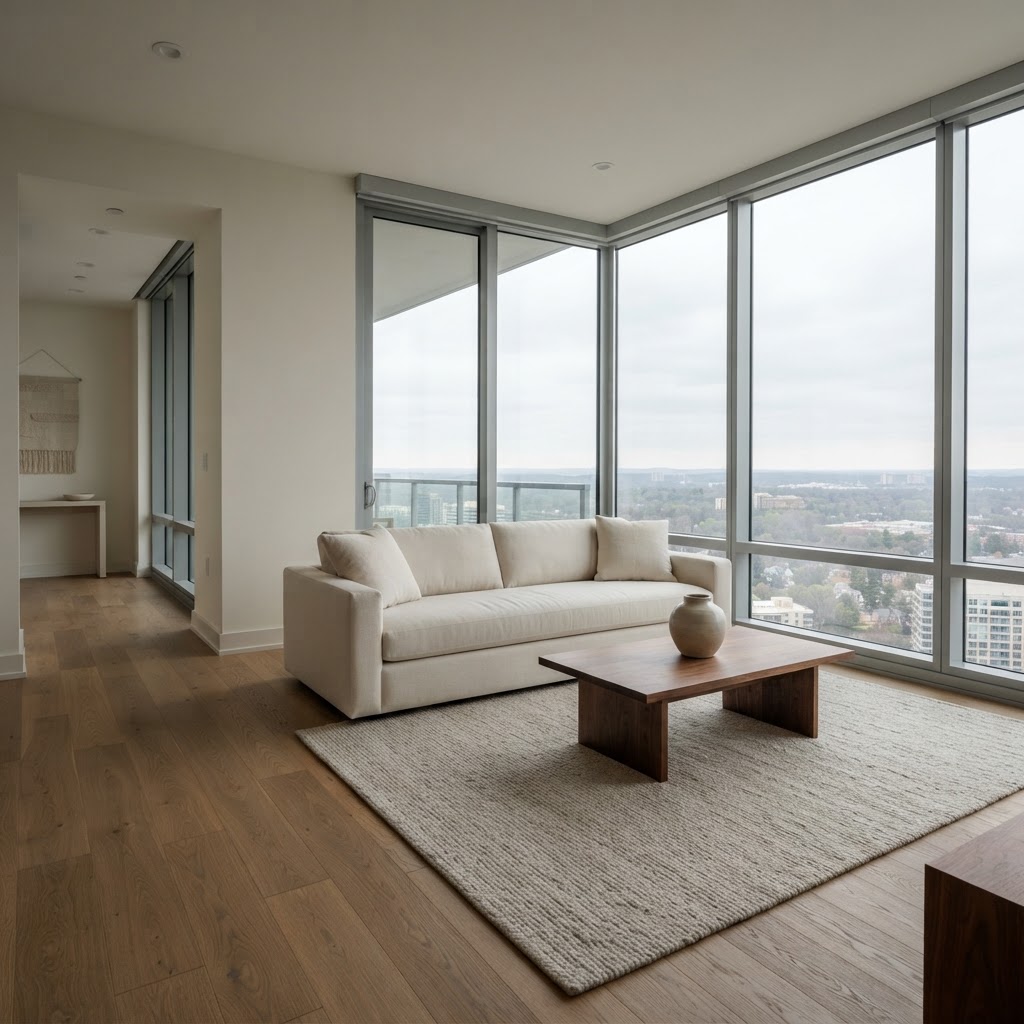
Tysons is the most urban corner of Northern Virginia, and its flooring work is different from almost anywhere else in the region. A flooring company in Tysons, VA might spend one morning in a high-rise tower near the Metro, coordinating an elevator reservation, a certificate of insurance and a sound-rated underlayment, and the afternoon in a 1960s rambler in Pimmit Hills or Idylwood, where original oak has been sitting under carpet for decades. Those two jobs share a zip code and almost nothing else.
This guide explains what makes flooring in Tysons Corner and the surrounding neighborhoods unusual, which floors fit which kinds of homes, how building rules and concrete slabs affect the work, and how to choose a contractor you can trust. Floors and Beyond VA is a family-owned flooring company that has served Tysons and the rest of Northern Virginia since 1987, and our own crews handle every step from the first visit to the final cleanup. You can see how that work looks on our Flooring Company in Tysons, VA page.
What makes Tysons different
For most of its history, Tysons was a crossroads of shopping centers and office parks. Today it is a dense, vertical community of residential towers, apartments and condominiums, mixed with offices, restaurants and transit. Just outside the center, neighborhoods such as Spring Hill, Westpark, Greensboro, Scotts Run, Pimmit Hills and Idylwood have a very different character, with mid-century ramblers, split-levels, townhomes and newer infill houses on quiet streets.
That split matters for flooring. In the towers, the floor is a layer on top of a concrete slab, shared with the neighbors below, and almost every decision is controlled by the building. In the houses, the floor is often solid oak nailed to a wood subfloor, and the question is whether the wood can be saved. A flooring company that works in Tysons has to be good at both, and has to tell you honestly which situation you are in.
High-rise and condo flooring
Condominium buildings in Tysons almost always have written flooring policies. The typical requirements include a minimum impact sound rating for the floor assembly, approval of the specific product and underlayment before work starts, a certificate of insurance from the contractor naming the building, defined work hours and an elevator or loading dock reservation. Some buildings also limit odors, which affects whether a glue-down floor is permitted, and some require a deposit or a signed work agreement.
The practical effect is that the building, not the homeowner, sets the boundaries. A good flooring company asks for the policy before recommending a product. At Floors and Beyond VA, we request the building rules at the first visit, choose underlayment that meets the documented sound requirement and prepare the paperwork the management office needs. We also schedule around building hours so the work moves without complaints from neighbors.
If you own a unit in a Tysons tower, the best preparation is to ask the management office for the flooring policy before you choose anything. Ask for the minimum sound rating, any approved or prohibited products, the insurance language and the permitted work hours. With those in hand, your contractor can specify an assembly that is accepted the first time.
Sound ratings explained
Sound is the reason most buildings regulate flooring. When someone walks across a hard floor, the impact travels through the slab and into the ceiling of the unit below. Associations measure this with an impact insulation rating, and they often require a minimum for hard flooring. Carpet and pad meet the requirement easily. Hard floors need help.
The rating depends on the whole assembly, which includes the plank, the underlayment, the slab and the ceiling beneath. Acoustic underlayments are designed and tested for this purpose, and some carry documented ratings with specific floors. A reliable flooring company will recommend a floor and underlayment combination that is documented to meet your building's requirement, rather than assuming any underlayment will do. When the paperwork is ready before work begins, approval moves faster and the risk of a rejected installation drops.
Which floors work in Tysons condos
Two products dominate. Luxury vinyl plank is dimensionally stable, waterproof and available in realistic wood looks. It works well over concrete, handles humidity changes and cleans easily. Engineered hardwood has a real wood surface over a layered core made to resist movement. It can be floated over an approved underlayment or glued to the slab, and it suits owners who want the look and refinishing potential of real wood.
In some buildings, glue-down installations are limited by odor and cure time, and in others, floating installations are limited by the sound rating. Solid hardwood is generally not recommended directly over concrete. The right choice is the one your building allows and your household needs. If you want the warmth of wood, engineered hardwood is the usual answer, and our hardwood flooring in Tysons page covers those options in more detail. If you want the most forgiving surface for spills, pets or a rental unit, LVP flooring in Tysons is hard to beat.
Concrete slabs: moisture and flatness
Even on a high floor, a concrete slab deserves attention. Slabs can hold residual moisture from the pour, from plumbing or from humid weather, and that moisture moves upward into anything on top of it. A careful installer checks the slab with a calcium chloride test or in-slab relative humidity probes and compares the result to the manufacturer's limits. A high reading may call for a moisture barrier or a different product. If you are weighing a glued installation, this guide to hardwood flooring installation on concrete explains what the readings mean.
Flatness matters just as much. Concrete is rarely perfectly level, and dips and high spots cause floating planks to flex at the joints and eventually squeak or separate. A good crew grinds the high spots and fills the low ones before any flooring goes down. This preparation is invisible when the job is finished, and it is a large part of why one floor feels solid underfoot and another feels hollow.
Nearby houses: Pimmit Hills, Idylwood and beyond
Step outside the towers and Tysons becomes a neighborhood of houses. Pimmit Hills and Idylwood have many mid-century ramblers and split-levels, and Spring Hill, Westpark and Greensboro have a mix of single-family homes, townhomes and newer infill. These houses often have solid oak strip flooring from the original construction, frequently covered with carpet for decades.
When the carpet comes up, the oak underneath is often in better shape than expected, because carpet protects wood from sunlight and scratches. In many cases the floor can be sanded and refinished, with new stain or a natural finish, and it looks like new. At Floors and Beyond VA, we sand a small test patch in houses so you can see the actual wood before deciding anything. That removes the guesswork and lets you choose with confidence.
Refinish before you replace
Refinishing is the right choice when the boards are sound and there is enough wood left above the tongue-and-groove joint. It preserves the original floor, avoids the waste of tearing out wood that still has life and keeps the character of the house. Replacement makes sense when the boards are too thin, badly damaged by water or rot, or when you want a species or width that staining cannot achieve. We take a refinish-first approach and will tell you plainly when a floor cannot be saved. For a closer look at that process, see our guide to hardwood floor refinishing in Tysons Corner.
Water damage and hardwood restoration
Leaks from dishwashers, refrigerators, water heaters and plumbing happen in towers and houses alike. Water can cup, stain or blacken boards, and the damage can spread under the surface. The first priority is stopping the source and drying the area. Then a flooring company can often remove and replace damaged boards, sand the area and finish it so it blends with the surrounding floor. In condos, a leak may involve an insurance claim and the building's management, so documentation matters. We can help with a clear description of the work.
Stairs, entries and transitions
In both towers and houses, entries and stairs take the most wear. In townhomes and houses, stair updates are common, either refinishing existing treads or installing new ones. In condos, entry and hallway floors may transition to other materials, and thresholds need to be planned carefully so they are safe and look intentional. A good plan treats these areas as part of the project from the start.
Rental units, investors and small spaces
Many Tysons units are rented, and owners who rent them have different priorities from owners who live in them. A rental floor needs to survive turnover, resist scratches and spills and look fresh between tenants. Waterproof luxury vinyl plank with a strong wear layer fits that need well, and a floating installation can be replaced plank by plank if a section is damaged. Our guide to LVP flooring for Tysons condos walks through the association side of that decision.
For owner-occupants of small condos, the priority is often making a limited space feel larger. Lighter planks, longer boards and a continuous floor from the entry through the living area help. Running the same floor through every room, instead of changing materials at every doorway, removes visual breaks and makes a compact unit feel open.
Small spaces also make details more visible. A threshold that is slightly too high, a gap along a baseboard or a plank that is not square at the wall shows up quickly in a small room. Good crews take the extra time to scribe planks to uneven walls, set transitions flush and finish the edges cleanly.
New builds and recently renovated units
Newer buildings sometimes come with flooring that the original owner or builder chose, and replacing it may involve different issues. The slab may be post-tensioned, which limits what can be drilled or fastened, so a crew should check the building's guidance before anything is anchored to the concrete. Existing flooring may be glued down, and removing it can leave adhesive that needs to be ground off before the new floor goes in. Renovated units may have a mix of old and new materials, and matching heights between rooms takes planning. Ask your contractor how they will handle removal, adhesive and subfloor preparation before work begins.
Tysons Corner and the wider area
People often say Tysons and Tysons Corner interchangeably, and the area around them extends into McLean, Vienna and Falls Church. Homeowners and condo owners from those places often ask about the same issues: building rules, concrete slabs, older oak and stair updates. Floors and Beyond VA serves the whole area with our own crews. If your property is near Tysons Corner but not within the boundary of the district, the advice in this guide still applies, and we are happy to visit.
Timing work around building schedules
Tysons buildings commonly limit noisy work to weekday daytime hours and may restrict work on weekends and holidays. Move-in and move-out reservations can compete for the same elevator. If you are planning around a lease end, a sale or a family visit, start early and ask your contractor to confirm the approval and the dates in writing. A realistic schedule that accounts for approval time, material delivery and curing prevents last-minute stress.
How to choose a flooring company in Tysons
When you compare contractors, ask a few practical questions. Will someone visit your unit or home before giving a plan? Do they ask for your building rules at the start? Do their own employees do the work, or do they hire subcontractors? Will they provide a certificate of insurance and the product data sheets your management office wants? Can they document a sound rating for the floor and underlayment together? Can they explain moisture testing for concrete? Do they offer both luxury vinyl plank and hardwood, so the advice is balanced? Can they refinish existing oak if you live in a house?
Floors and Beyond VA has been family-owned since 1987. Our own crews measure, prepare the subfloor and install, and we begin with an in-home visit and a written plan so you know what to expect.
What to have ready for the estimate
Preparation makes the first visit more useful. If you live in a condo, gather the flooring policy from the management office, including sound requirements, insurance language, approved products and work hours. Know which rooms are included and whether hallways, closets or stairs are part of the plan. If you live in a house, lift a corner of carpet in a closet to see what is underneath. Tell us about any past leaks, pet stains or squeaks.
When you are ready, schedule an in-home estimate and we will look at your floors, your subfloor and your building rules together, and give you a written plan.
How long Tysons flooring projects take
A condo of luxury vinyl plank can often be completed in a few days once approvals are in place and the slab is ready. Building rules about work hours may lengthen the schedule, and approvals themselves can take a week or two, so start the paperwork early. A house refinish takes longer because sanding, staining and finishing happen in stages with drying time between coats. Ask for a written schedule and for prompt notice if anything changes.
Living through the work
In a tower, neighbors should know when work is scheduled, and the elevator or loading dock needs to be reserved. The crew needs a clear route for materials and debris and should protect hallways and common areas. In a house, furniture should be moved or staged, pets need a plan and rooms that will be refinished should be clear. Professional crews contain dust, protect trim and clean up each day.
Caring for your floor
Felt pads under furniture, mats at entries and prompt cleanup of spills extend the life of any floor. Use the cleaner your floor's maker recommends, avoid harsh chemicals and keep humidity steady. For refinished hardwood, ask about the recommended maintenance coat schedule. For luxury vinyl plank, avoid abrasive cleaners and use protective pads under heavy furniture.
Why local experience matters in Tysons
Tysons rewards experience with buildings. Knowing how a management office processes approvals, how long they typically take, which documents they ask for and how to coordinate the elevator saves time and prevents mistakes. Knowing how mid-century houses in Pimmit Hills and Idylwood tend to be built, with oak over wood subfloors and basements on slabs, helps a crew plan before opening a single box. That familiarity is a large part of what you are choosing when you hire a company that works here regularly.
Common Tysons projects we see
Our regular work in the area includes condo flooring with documented sound ratings, luxury vinyl plank over concrete in apartments, refinishing oak in nearby ramblers, hardwood restoration after leaks, and stair and entry floor upgrades. Each starts with a look at the space, the subfloor and the rules that apply.
Frequently asked questions
Do Tysons condo buildings require sound-rated flooring?
Many do. Ask your management office for the minimum impact rating.
What flooring is best for a Tysons condo?
Luxury vinyl plank and engineered hardwood are the most common choices over concrete, installed with an approved underlayment.
Can I refinish the oak in my Pimmit Hills or Idylwood house?
Often yes, if enough wood remains above the tongue and the boards are sound. We sand a test patch so you can see the wood.
Who prepares the paperwork for my building?
We prepare the documents your management office typically asks for, including product information and proof of insurance.
How long does approval take?
It varies by building. Start the paperwork early.
Can water-damaged boards be repaired?
Often yes. Damaged boards can be replaced and the area refinished so it blends in.
Ready to talk about your Tysons floors?
If you live in a Tysons tower or in a nearby house, the best first step is a visit from someone who will look at your floors and your building rules. Floors and Beyond VA is a family-owned flooring company serving Fairfax, Loudoun, Prince William and Arlington counties, Alexandria and the Washington, DC area since 1987.




