
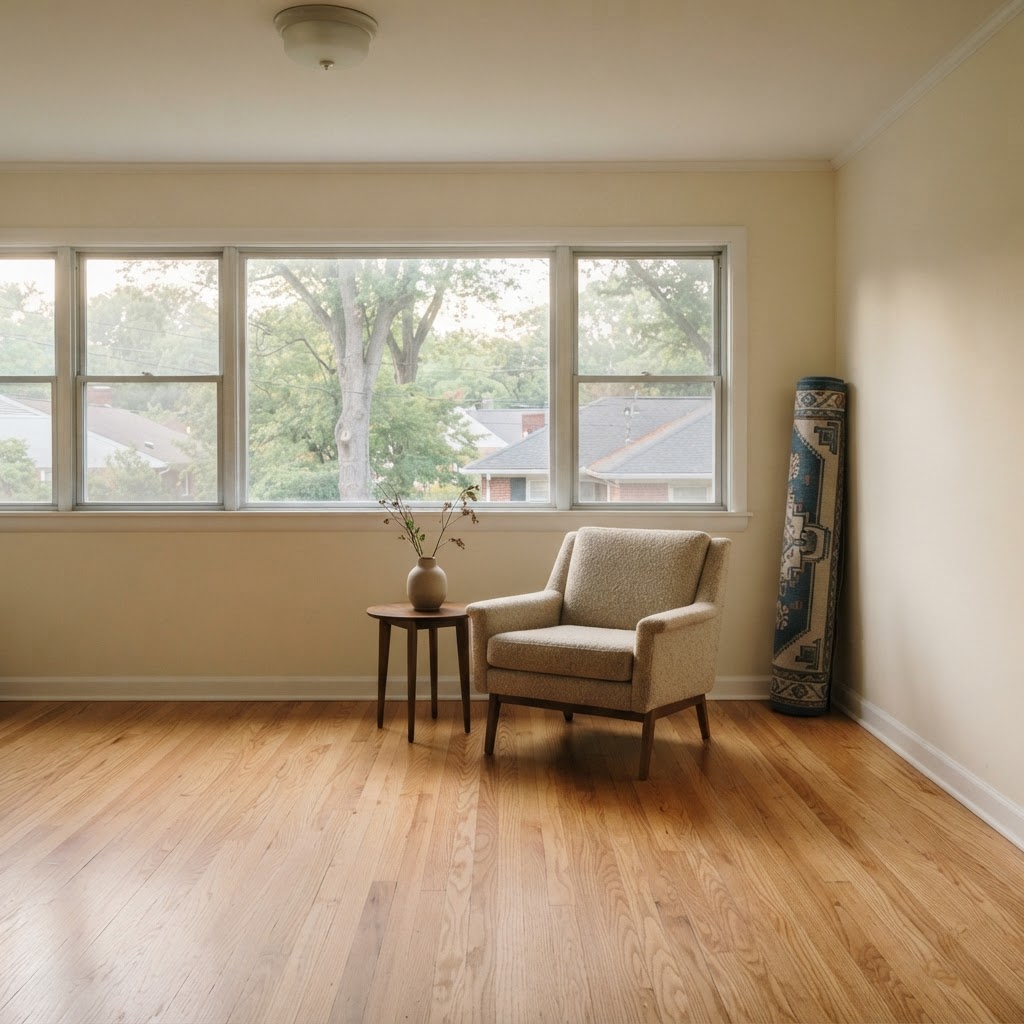
Vienna is a town of established neighborhoods, and the floors in its houses tell you when they were built. Many homes have solid oak that has been in place since the day they were finished, often covered by carpet that went down in a later decade. When homeowners lift a corner and see wood, the first question is always the same: can it be saved? A flooring company in Vienna, VA spends much of its time answering that question and then doing the work.
This guide explains what is typical in Vienna's neighborhoods, how refinishing differs from replacing, how to deal with squeaks, gaps and loose boards, what to do about basements on concrete, and how to choose a contractor. Floors and Beyond VA is a family-owned flooring company that has served Vienna and the rest of Northern Virginia since 1987, and our own crews handle every project from the first visit to the final cleanup. You can see that work on our Flooring Company in Vienna, VA page.
What Vienna homes are like
Vienna's housing is a blend of eras. Windover Heights, Vienna Woods and the neighborhoods around Marshall Road have many mid-century ramblers, split-levels and colonials on established lots. The Maple Avenue corridor and the areas toward the Hunter Mill corridor include newer infill houses and townhomes alongside older homes. Most streets have mature trees and a settled feel, and many families have lived in their houses for a long time.
For floors, that means a lot of narrow oak strip flooring, sometimes under carpet, on wood subfloors, with finished basements on concrete slabs below. Rooms in mid-century houses are often smaller than in newer builds, with more doorways and hallways, and that affects how floors are planned. Details such as transitions and thresholds are more noticeable in small rooms, so a careful crew pays attention to them.
Oak under old carpet
Solid oak strip flooring was the standard main-level floor for much of the twentieth century. It was nailed to the subfloor in narrow boards, sanded and finished on site and then, in many houses, covered with wall-to-wall carpet when styles changed. Carpet protects wood from sunlight and scratches, so the floor underneath is often in better shape than owners expect.
When carpet comes up, a flooring company checks several things. How much wood remains above the tongue-and-groove joint? What is the condition of the boards and the finish? Are there stains from pets or leaks? Are there nail holes from tack strips along the edges, or glue from old padding? Are boards loose or squeaky? In most cases the answers point toward refinishing, which sands the old finish and a thin layer of wood away and applies new stain and finish. The floor looks new and keeps the character of the original.
The test patch
At Floors and Beyond VA, we answer the question of whether your floor can be saved with a test patch before any commitment. We sand a small area so you can see the actual wood, in your own light, with a finish applied if you like. The patch removes the guesswork and lets you decide with real information. If the floor cannot be saved, we say so plainly and explain why.
Refinish before you replace
Refinishing is the right choice when the boards are sound and there is enough wood above the tongue. It preserves the original floor, matches the rest of the house and avoids the waste of removing wood that still has life. Replacing makes sense when boards are too thin from earlier sanding, badly damaged by water or rot, or when the owner wants a species or plank width that staining cannot achieve. We take a refinish-first approach, and the inspection comes before the recommendation. Our floor restoration service exists for exactly this reason: saving a floor that only looks finished.
Screen and recoat for worn finishes
Not every worn floor needs full sanding. If the wood is in good shape and the finish is simply dull or scuffed, a screen and recoat can refresh it. The crew lightly abrades the existing finish and applies a new coat, which restores the shine and adds protection without removing wood. It is faster and less disruptive than a full refinish, and it suits floors that have been cared for. It does not fix deep scratches, stains or color changes, and a good crew will tell you which approach your floor needs. If you are weighing a spot repair against a full sanding, this answer on whether can hardwood floors be spot refinished walks through the cases.
Squeaks, gaps and loose boards
Floors in older homes often squeak, and the noise usually comes from boards that have loosened from the subfloor over decades of seasonal movement. Gaps between boards open and close with humidity, and some are normal. Before refinishing, a crew can secure loose boards with fasteners and address problem areas. This step matters because sanding and finishing over a loose board locks the movement in and the squeak returns. A quiet, solid floor is part of the quality of the job, and it starts with preparation.
Water damage
Leaks from dishwashers, refrigerators, water heaters and plumbing happen in every neighborhood. Water can cup, stain or blacken boards, and the damage may spread beneath the surface. The first priority is stopping the source and drying the area. Damaged boards can often be removed and replaced with matching wood, then sanded and finished so the repair blends with the rest of the floor. A good flooring company checks moisture before covering anything.
Small rooms and transitions
Many Vienna houses have smaller rooms connected by doorways. The floor is interrupted at every threshold, and each transition is visible. Planning them well makes a house feel coherent. Where oak runs from room to room, refinishing the whole level at once gives a continuous look. Where the floor changes from wood to tile, vinyl or carpet, the height and style of the transition matter. A threshold that is slightly too high, too sharp or poorly finished catches the eye and can be a tripping hazard. Floors and Beyond VA plans transitions before work begins and sets them carefully.
Narrower boards, typical in mid-century houses, also affect the choice if you are adding to or extending an existing floor. Matching width and species is often more important than matching color, because stain can be adjusted. Our hardwood flooring pages cover species, widths and how new wood is specified.
Basements on concrete
Many Vienna houses have finished basements, and most sit on concrete slabs. Moisture is the central concern. Concrete in contact with the ground can release water vapor, which can damage adhesive, warp wood and encourage mold. Before installing a floor, a careful crew tests the slab with a calcium chloride test or in-slab relative humidity probes and compares the result to the manufacturer's limits. A high reading may call for a moisture barrier or a different product, and active leaks must be fixed first.
Luxury vinyl plank is the common choice for basements because it handles moisture better than solid wood. Replacing old basement carpet with luxury vinyl plank improves cleanliness and lasts longer, and a waterproof core protects against small spills and seasonal damp. Slab flatness matters too, since dips and high spots make floating planks flex and wear. Grinding and filling the slab before installation is unglamorous but essential. Engineered hardwood can work below grade only when the product is approved for it and the slab tests within limits. Our luxury vinyl plank flooring page covers the products we install.
Stairs
Stairs in Vienna houses see decades of traffic, and they often look tired next to refinished main-level floors. Existing oak treads can be refinished, and painted risers with stained treads are a classic look. New treads and risers are an option when the old ones are damaged. A good plan includes the stairs from the start, so the color and sheen match the floors at the top and bottom.
Newer homes and townhomes near Maple Avenue
Along the Maple Avenue corridor and in newer infill, townhomes and houses often have builder-grade flooring, open layouts and carpeted upper levels. Common upgrades include replacing carpet with hardwood or luxury vinyl plank, installing a continuous floor through the main level and updating stairs. Townhome communities may have rules for sound, approved products and work hours, so we confirm those before ordering material.
Color and finish in mid-century houses
Choosing a color for a Vienna rambler or split-level is partly about the wood and partly about the light. Mid-century houses often have modest windows and lower ceilings, so a natural or lighter stain can make rooms feel brighter and more open, while a deep brown suits larger, well-lit rooms and a traditional style. Oak takes stain evenly when properly sanded, and a natural finish shows the true color of the wood, which many owners prefer after seeing it for the first time in decades. If you want to keep the warm look of the original floor, an oil-modified finish brings back amber tones. If you want a lighter, more neutral look, a water-based finish keeps the wood pale. Look at samples in your own rooms at different times of day before deciding.
Pre-1978 homes and lead safety
Many Vienna houses were built before 1978 and may have lead-based paint on trim, doors or windows. Sanding floors near painted trim can create dust that needs careful handling. Ask any contractor how they handle lead-safe practices, including containment, dust control and cleanup. A professional will answer clearly. Do not hire anyone who dismisses the question, especially if children or pregnant family members live in the home.
Split-levels, sound and stairs
Split-level houses, common in Vienna, have short flights of stairs between levels and floors that sit directly above living spaces. Hard floors can carry sound between levels, and a floating floor over a good acoustic underlayment is often quieter than a glued floor over thin padding. Nailed hardwood over a solid subfloor is usually quiet and stable. If noise matters to your household, tell your crew, and they will recommend an assembly that fits the floor and the house. Short flights of stairs also mean more treads and landings than a typical two-story house, so plan the stair work along with the floors.
Pets and everyday life
Vienna households are active, and floors show it. Dogs scratch finishes, children drag toys and chairs and entries collect grit. A durable low-sheen finish, felt pads, mats at doors and regular cleaning keep a refinished floor looking good for years. If you are replacing basement carpet, luxury vinyl plank has a scratch-resistant wear layer and handles accidents well, which makes it a practical choice for a playroom or a den.
Subfloor checks before any new floor
Whether you are refinishing or installing something new, the subfloor decides how the finished floor behaves. In Vienna's older houses, the subfloor is usually plywood or planks over joists, and decades of seasonal movement can leave it with dips, high spots and loose areas. A careful crew walks the floor, checks flatness with a straightedge, looks for soft spots near bathrooms and kitchens and checks the crawl space or basement ceiling where it is accessible. Problems found early are simple to fix. Problems found after the new floor is down are not, which is why the visit before the estimate matters so much.
How to choose a flooring company in Vienna
Ask a few practical questions. Will someone visit your home and look at the floor before giving a plan? Can they show you the wood under your carpet with a test patch? Do their own employees do the work, or do they hire subcontractors? Do they repair squeaks and loose boards before refinishing? Do they test basement slabs for moisture? Can they match stain and blend repairs? How will they contain dust and protect trim? Can they handle stairs?
Floors and Beyond VA has been family-owned since 1987. Our own crews measure, prepare and finish, and we start with an in-home estimate and a written plan.
What to have ready for the estimate
Before the visit, lift a corner of carpet in a closet to see what is underneath. Decide which rooms and levels are included, and whether stairs are part of the plan. Think about the look you want, and gather photos or color samples. Tell us about past leaks, pet stains and squeaks. If you have a basement project, mention any past moisture or flooding.
When you are ready, schedule an in-home estimate and we will look at your floors, sand a test patch where the wood allows and walk through the options with you.
How long Vienna projects take
A main-level refinish takes several days because sanding, staining and finishing happen in stages with drying time between coats. A screen and recoat is faster. A basement of luxury vinyl plank can often be finished in a few days once the slab is ready. Ask for a written schedule, and keep heavy furniture and rugs off a refinished floor until it has cured. Our guide to how long it takes to refinish hardwood floors breaks down each stage.
Preparing your home
Move furniture out of the work area or arrange for the crew to do so. Remove rugs, wall hangings near the floor and fragile items. Plan for pets and children to stay clear, since dust and finishes need care. Professional crews seal doorways, contain dust, protect trim and clean up each day. Ask how your contractor handles dust and odors.
Caring for your floor
Felt pads under furniture, mats at entries and prompt cleanup of spills protect a floor. Use the cleaner recommended for your finish, and avoid steam mops on wood. Keep indoor humidity steady across the seasons, since wood moves with humidity. Refinished hardwood benefits from a maintenance coat every few years.
Why local experience matters in Vienna
Vienna's houses follow patterns that experience teaches. Mid-century oak over wood subfloors, small rooms with many thresholds and basements on slabs are familiar to a crew that works in the area. Knowing what is typically under the carpet in a Windover Heights rambler or a Vienna Woods split-level shortens the estimate and prevents surprises. That familiarity is a large part of what you gain from hiring a company that works here regularly.
Common Vienna projects we see
Our regular work in Vienna includes refinishing oak found under carpet, screen and recoat for worn finishes, replacing basement carpet with luxury vinyl plank, repairing squeaky and loose boards and stair refinishing. Many homes combine several of these in one plan.
Frequently asked questions
Can I refinish the oak under my Vienna carpet?
Often yes, after an inspection. We can sand a test patch so you see the wood before deciding.
What is a screen and recoat?
A light abrasion of the existing finish followed by a new coat. It refreshes a dull floor without sanding to bare wood.
Can squeaks be fixed?
Often yes. Loose boards can be secured before refinishing.
What is the best floor for a Vienna basement?
Luxury vinyl plank is the common choice after the slab is moisture tested.
Can stairs be refinished to match?
Yes. Treads can be refinished or replaced and finished to match the floors.
Do Vienna townhome communities have flooring rules?
Many do, especially for sound and work hours.
Ready to talk about your Vienna floors?
If you live in Windover Heights, Vienna Woods or anywhere in Vienna, the best first step is a visit from someone who will look at your floors and show you the wood. Floors and Beyond VA is a family-owned flooring company serving Fairfax, Loudoun, Prince William and Arlington counties, Alexandria and the Washington, DC area since 1987.




