
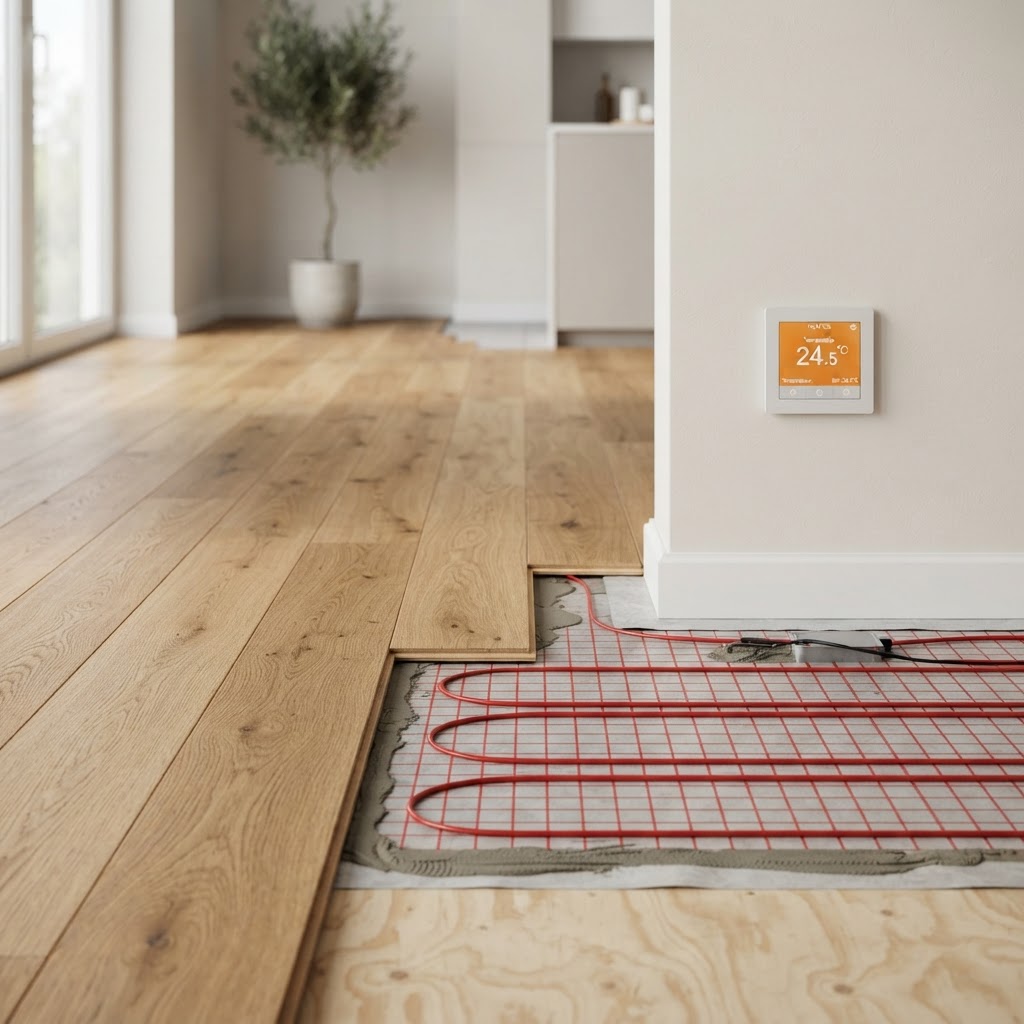
Radiant heat and wood floors can work together, but only with the right product and careful installation. Engineered hardwood is the usual choice because its layered core is more stable than solid wood when temperatures change. Even so, not every engineered floor is approved for radiant heat, and the way the system is brought up to temperature matters. This guide explains engineered hardwood flooring for radiant heat, what to look for, how the installation differs and how to protect the floor over time. Floors and Beyond VA is a family-owned flooring company that has served Northern Virginia since 1987, and our own crews handle the work from the first visit to the final cleanup.
Why Engineered Hardwood
Heat dries wood, and solid planks can shrink, gap or cup over a warm floor. Engineered planks resist this movement because the layers run in different directions. Narrower planks are generally more stable than very wide ones, and the manufacturer may limit width, thickness or species over radiant heat.
Check Approval First
Look for a product that the manufacturer states is suitable for radiant heat, and read its limits. They usually include a maximum floor surface temperature, often around the low 80s degrees Fahrenheit, a maximum rate of temperature change and requirements for the installation method. Following these limits protects the floor and the warranty.
Types of Radiant Systems
Hydronic systems circulate warm water through tubing in or under the floor, and electric systems use cables or mats. Systems can be in a concrete slab or under a wood subfloor. Each has its own requirements for installation and control, and the heating contractor and flooring installer should coordinate.
Installation Methods
Floating floors over an approved underlayment are common, and the pad must be rated for heat and not trap it. Glue-down is also common, with an adhesive approved for radiant systems, and it transfers heat well. Nailing is only appropriate over certain wood-based systems and needs great care to avoid damaging tubing or wiring. The manufacturer's instructions decide what is allowed.
Preparing the System
Before installation, the heating system should be tested and run so the slab or subfloor is dry and warm. Many instructions ask for the system to be turned on and brought to temperature, then reduced to a set point before flooring is installed. After installation, the temperature is raised slowly, a little at a time, to avoid shocking the wood.
Controls and Care
Use a thermostat with a floor sensor and a limit, so the surface does not exceed the maximum. Avoid thick rugs and furniture that block heat for long periods, because they trap warmth and can cause uneven drying. Keep indoor humidity steady, since heated floors lower humidity in winter.
Common Mistakes
Using a product not approved for radiant heat. Using a thick, insulating underlayment. Turning the heat up too fast. Letting the surface exceed the limit. Installing before the system has been tested. Each can cause gaps, cupping or finish damage.
IS IT WORTH IT?
Many homeowners enjoy the comfort of warm wood floors, and with the right product and installation, the combination is reliable. If you are building or remodeling, plan the floor and the heating together.
In Northern Virginia Homes
Radiant heat is more common than people expect in Northern Virginia, in newer homes, bathrooms, basements and some additions and remodels. If you are building or renovating, the best time to choose the flooring is before the heating is installed, because the product limits, the tubing layout and the subfloor all affect each other. If the system already exists, ask the installer to coordinate with the heating contractor, test the system before installation and set the controls so the floor is never heated above the limit.
Frequently Asked Questions
Can you put hardwood over radiant heat?
Yes, with a product approved for it and an installation that follows the limits.
Is solid hardwood safe over radiant heat?
It is riskier, because solid wood moves more. Engineered is the usual choice.
What temperature is safe?
The manufacturer states a maximum, commonly in the low 80s degrees Fahrenheit at the surface.
Can I use any underlayment?
No. It should be rated for radiant heat and not insulate too much.
How should I turn the heat on after installation?
Slowly, in small steps, following the manufacturer's guidance.
Ready When You are
If you are planning wood over radiant heat, we can coordinate the product, the method and the heating limits in one written plan. Floors and Beyond VA serves Fairfax, Loudoun, Prince William and Arlington counties, Alexandria and the Washington, DC area. Schedule an in-home estimate at floorsandbeyondva.com/Contact or call (703) 906-5698.

