
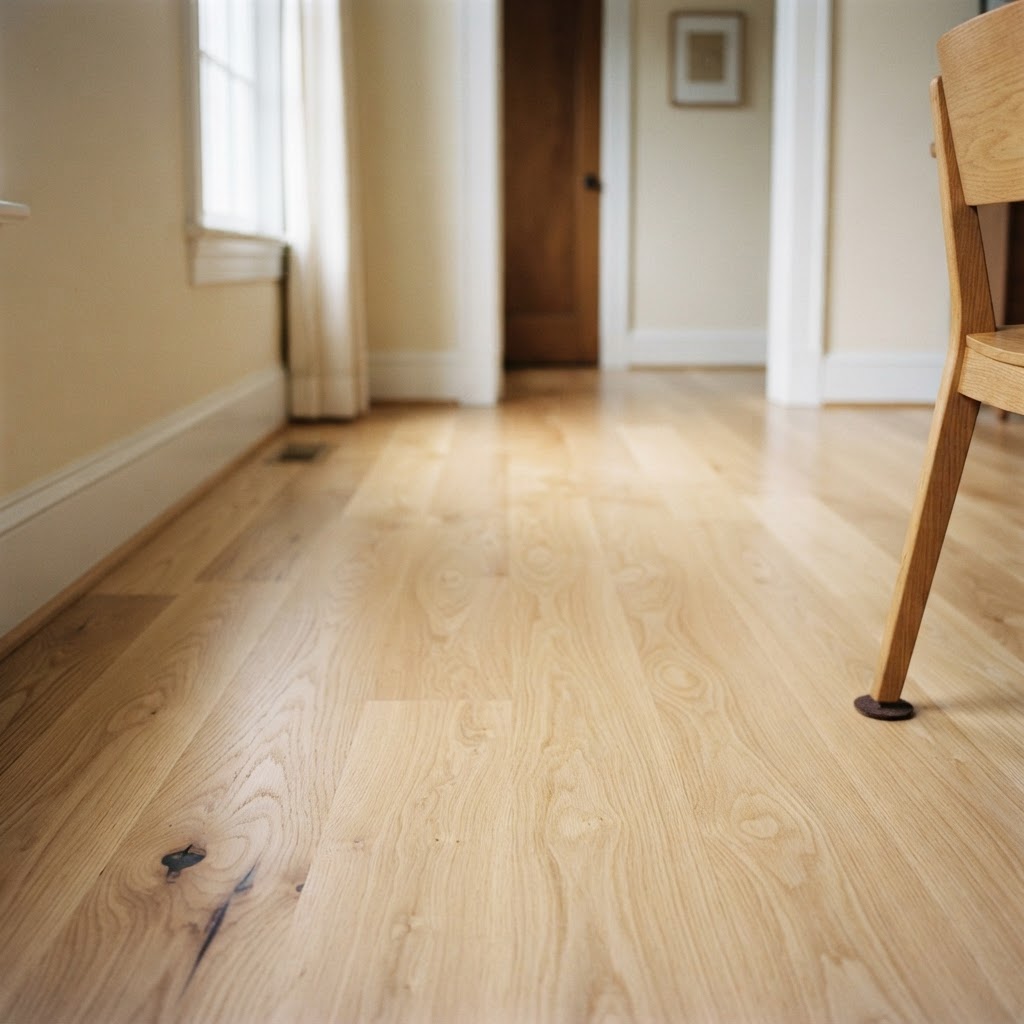
Refinishing can renew a worn finish, remove surface scratches and scuffs, change the stain color and sheen, and make the grain look clearer. It cannot remove deep gouges, dark stains, cupping or gaps, or make a thin floor thicker. Floors and Beyond VA tells homeowners which is which before work starts.
What refinishing can fix
- Dull, cloudy or peeling finish
- Surface scratches and scuffs
- Stain color and sheen
- Yellowed or tired-looking wood
- Worn traffic paths
What it cannot fix
- Deep gouges, dents and burns
- Dark water and pet stains
- Cupped or warped boards
- Gaps from seasonal movement
- A floor sanded too thin
What refinishing can fix
A fresh finish replaces dull, cloudy or peeling protection. Surface scratches and scuffs sand away. A full sanding returns the floor to bare wood, so you can choose a new stain or a natural look, and you can change the sheen from a worn gloss to a modern matte or satin. Old yellowed finish removed from the wood often reveals clearer grain, and worn paths even out so the floor reads as one surface.
What refinishing cannot fix
- Deep damage. Deep gouges and dents may remain or need board repair.
- Stains that soaked in. Dark water and pet stains that have penetrated the wood may not sand out, and sometimes need replacement boards.
- Cupping and warping. Cupped or warped boards need the moisture problem solved first, and they need time to dry before any sanding.
- Gaps. Gaps from seasonal movement are not closed by refinishing.
- The wood itself. The species and grain stay the same, and a floor that has been sanded many times may not have enough wood left for another full sanding.
Engineered floors add one more limit: the wear layer has to be thick enough for sanding. If you are unsure which side of that line your floor is on, our guide to whether engineered hardwood can be refinished explains how to check.
How to judge before and after photos
Compare photos taken in similar light and from the same angle. Remember that a fresh finish can look glossier in the first days than it will once cured. Ask whether the photo shows a screen and recoat or a full sanding with a new stain, because they look very different. A test on your own floor is more reliable than any photo. Our post on hardwood floor refinishing before and after shows what a full sanding actually changes, and what it does not.
Color and sheen
Natural and lighter tones tend to open a room and show less dust, while darker tones add contrast. Matte and satin hide wear better than gloss. Every species takes stain differently, so test samples in a hidden spot and look at them in daylight and evening light. A screen and recoat keeps the existing color; only a full sanding can change it.
Northern Virginia specifics
Older homes in McLean, Arlington, Alexandria and Falls Church often have original oak with decades of history, so refinishing reveals both character and the marks of age. Newer homes often have builder-grade or engineered floors where the result depends on the finish condition and, for engineered floors, wear layer thickness. For older homes, our guide to refinishing or replacing original hardwood covers the decision in more detail.
How Floors and Beyond VA approaches it
Floors and Beyond VA takes a refinish-first approach, which means we try to renew the floor you have before suggesting replacement. We start with an in-person evaluation, point out which marks should sand out and which may remain, and put the scope in writing. Our crews are our own employees, so the person who evaluates your floor is accountable for the result.
We also encourage homeowners to test stain samples on their own wood before choosing, and to remember that a refinished floor settles over a few weeks as the finish cures. We explain the realistic result for your floor before any work begins, so the after looks the way you expect. If you are weighing a full refinish against a smaller repair, our answer on spot-refinishing a damaged area explains why patches usually show.
Frequently asked questions
Will refinishing remove all scratches?
Surface scratches usually do. Deep ones may not, and a gouge may need filling or a board replacement.
Can I change my floor color?
Yes, with a full sanding. A screen and recoat does not change color.
Will the floor look brand new?
It will look renewed, with the same wood and character. Grain, species and any deep marks stay with the floor.
How long does a refinish take, and when can I walk on it?
Usually several days depending on the finish, with light foot traffic after the final coat cures. Our guide to refinishing timelines and walk-on times breaks it down.
When to call a professional
If you are not sure what refinishing could do for your floor, have it evaluated before you choose a stain or a method. Floors and Beyond VA is family-owned, has served Northern Virginia since 1987 and will explain what to expect. Schedule an in-home estimate at floorsandbeyondva.com/Contact or call (703) 906-5698.
See what refinishing can do for your floor
Floors and Beyond VA will evaluate the wood in person, show you which marks will sand out and which will stay, then put the scope in writing. Family-owned, in-house crews, serving Northern Virginia since 1987.
Floor Restoration in McLean, VA



