
Do you need underlayment under LVP, and which kind suits a condo?
Usually not. Most luxury vinyl plank sold today has a pad bonded to the back, and adding a second layer can stress the locking joints and void the warranty. If your planks are bare, the manufacturer's installation guide decides which underlayment is allowed. In a condominium, the building's sound requirement decides it, and the plank, pad and slab must be approved together as one assembly.
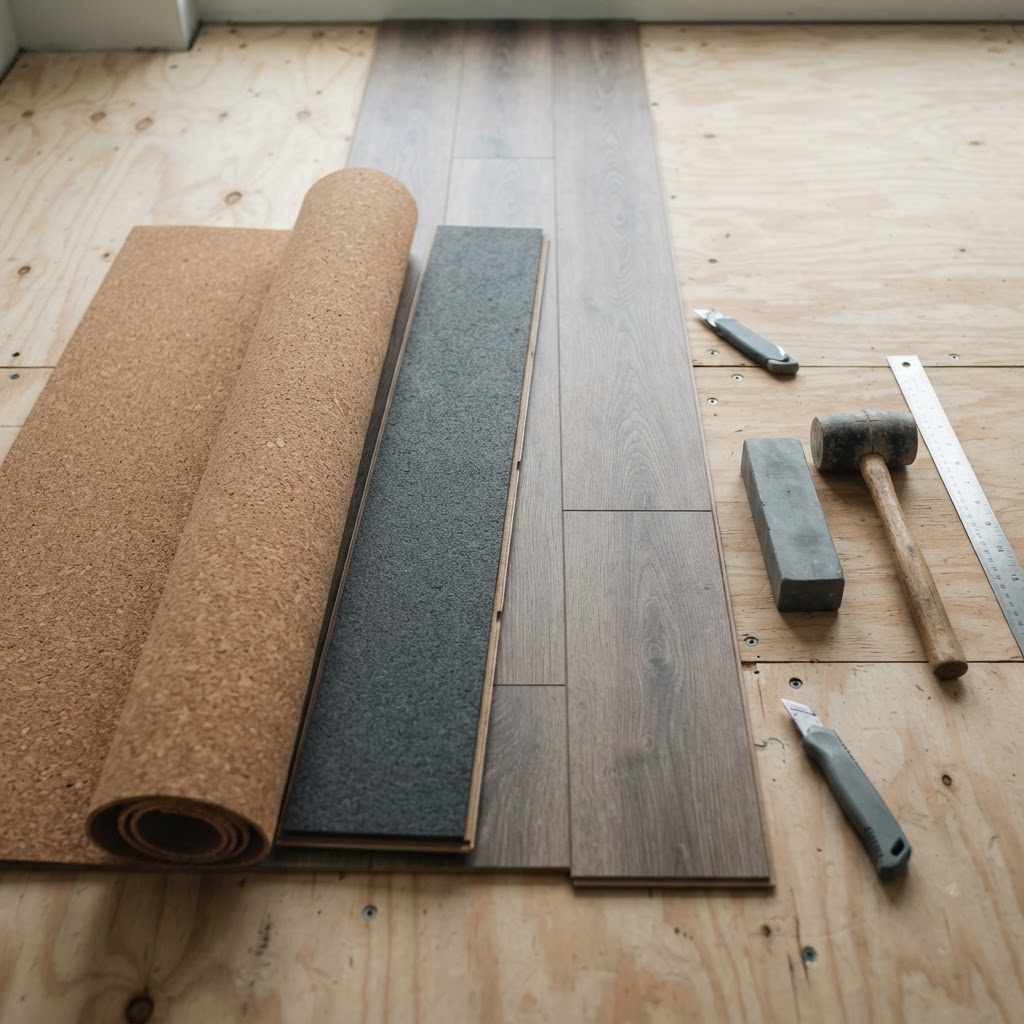
The three cases, in order
Every underlayment decision falls into one of three buckets, and the plank's own paperwork tells you which one you are in.
- Attached pad: add nothing. The pad, plank and locking system were tested together. A second layer makes the floor flex more than the joint is designed for.
- Bare plank, underlayment required: use a product the manufacturer names or a class it approves, at or under the maximum thickness listed.
- Glue-down plank: no cushioned underlayment. The adhesive needs a firm, prepared subfloor.
The words to look for in the guide are required, approved, maximum thickness and not recommended. If an installer proposes something the guide does not mention, ask them to point to where the manufacturer allows it.
Rolling a soft foam pad under planks that already have an attached pad. It feels nicer for a week, then the seams start clicking and the joints open up.
Which kind fits which situation
| Type | Best for | Watch out for |
|---|---|---|
| Basic foam | Budget cushion under lighter floating floors | Often too soft for rigid vinyl planks; check compatibility |
| Cork | Sound absorption with a natural material | Thickness and density vary widely between products |
| Rubber | Impact noise in multifamily buildings | Heavy; needs a plank manufacturer that approves it |
| Felt or recycled fiber | Firm, quiet feel under floating floors | Can hold dust and moisture if the slab is not protected |
| Combination with vapor barrier | Concrete slabs at or below grade | The film must be on the correct side and sealed at seams |
Sound control and moisture control are separate jobs. An underlayment with a barrier slows vapor; it does not fix a leak, and it does not level a floor. For the moisture side, see our guide on moisture barriers for LVP flooring.
Condos and townhomes: the assembly, not the product
Buildings describe sound requirements as impact and airborne ratings. Those ratings belong to a tested assembly, which means the plank, the pad, the slab and any ceiling below all count. A product datasheet alone rarely satisfies a board.
Ask management for the written requirement before you buy materials, then confirm that the exact combination you plan to install can meet it. Some associations ask for a test report or product cut sheets up front and inspect after installation. Northern Virginia buildings from Tysons to Reston to Arlington commonly work this way, and townhome communities often adopt similar language.
Where the board and the plank manufacturer disagree, you need a different product, not a compromise. Installing something unapproved can mean removing a new floor at your expense.
What underlayment will not fix
- An uneven subfloor. Grind the high spots, patch the low ones. A pad telegraphs problems rather than hiding them.
- A moisture problem. A barrier slows vapor; it does not stop water.
- A poor plank. Core quality and the locking profile matter more than what is under it.
- Missing expansion gaps. The floor still needs room to move at the perimeter, and the pad should never be pushed into that gap.
Installation detail matters as much as the material. Our guide to click lock LVP flooring covers joints, gaps and transitions, and why underlayment matters more than the floor explains how the layers work together.
Leesburg specifics
Leesburg pairs historic houses near the old town center with newer Loudoun County neighborhoods. Older homes often present aged, uneven subfloors that need preparation before any pad goes down. Newer homes usually have flatter plywood, plus finished basements on slabs where cold and moisture are the real concerns. Townhomes and condos add sound rules to the list. Humid summers and dry winter heating both affect how a floating floor behaves, which is another reason to follow the plank manufacturer rather than a general rule of thumb.
Quick checklist before you buy
- Find the underlayment section of the plank's installation guide.
- Note whether a pad is attached and whether any extra layer is permitted.
- Identify the subfloor: plywood, concrete slab, existing hard floor or radiant heat.
- Get any association sound requirement in writing.
- Write the exact product name and thickness into the scope of work.
Common questions
Can I add a pad under planks that already have one?
Generally no. It softens the floor and overstresses the locking joints, and most warranties exclude it.
Is a moisture barrier the same as underlayment?
No. A barrier controls vapor. Some underlayments include one, but that is a separate function from sound control.
What thickness can I use?
Only what the plank manufacturer lists as a maximum. Thicker is not better on a click lock floor.
Does underlayment make the floor warmer?
A little, depending on the material. It does not replace insulation or heat in a basement.
For the full walkthrough, including underlayment by subfloor type, transitions and how to test the finished floor, read Underlayment for LVP Flooring: Do You Need It, and Which Kind? on the Floors and Beyond VA blog. For local installation details, see our LVP flooring in Leesburg, VA.
Not sure what should go under your floor?
Floors and Beyond VA checks the subfloor, reads the plank requirements and reviews any association rules before recommending an underlayment. Family-owned, in-house crews, serving Northern Virginia since 1987.
Get a Free Assessment



